The high reflectivity and thermal conductivity of pure copper (Cu) make it difficult to create dense and high-quality parts using the current near-infrared laser powder bed fusion (LPBF) method. Here, we proposed an economical and feasible strategy by introducing high-absorptivity LaB6 microparticles into the Cu matrix. This study investigated the effect of adding Lab6 microparticles on the densification behavior, microstructure evolution, mechanical characteristics, electrical conductivity, and thermal conductivity of Cu samples fabricated by LPBF. Results show that the laser absorptivity of the composite powder increases by 50.4% compared to pure Cu. Consequently, the parameter space width expands by a factor of 1.8, which significantly improves the printability. Microstructural analysis reveals two distinct mechanisms during the LPBF process: the uniform dispersion of larger, unmelted microparticles in the melt pool, and the precipitation derived from smaller, completely melted particles during solidification. The resulting composite samples achieved a relative density exceeding 99.9%. Furthermore, the material exhibited an excellent synergy of mechanical and functional performance, featuring a tensile strength of 385 +/- 6 MPa, yield strength of 260 +/- 7 MPa, electrical conductivity of 87.4% IACS, and thermal conductivity of 359 W center dot m-1 center dot K-1.
Directed Energy Deposition (DED) technology has huge potential in key component repairing with high density energy input, contributing to maintain the mechanical properties of the repaired component. Compared to the conventional infrared laser used in DED, the novel blue laser is promising in the laser assisted manufacturing due to the higher metal absorption rate. However, there are few works reported on the hybrid blue-infrared laser in Al2024 component repairing, which is commonly used in key aerospace component. This work thus focuses on the development of the novel hybrid blue-infrared laser in the Al2024 component repairing. Specially, a series of laser material interaction experiment was conducted, including the single point melting, single track melting and deposition, and defects repairing. Optimal process parameters were further analyzed to fulfill the potential of the hybrid blue-infrared laser. The reported work demonstrates the feasibility of the hybrid blue-infrared laser in the Al2024 component repairing.
Curved 3D concrete printing is promising in various industrial scenarios, while the complex evolution of multi-physical mechanisms during the printing process hinders its effective application. Numerical simulation has been extensively studied for predicting the morphology of 3D printed planar concrete, but its feasibility for guiding curved concrete printing remains unclear. This study focused on two typical curved printing scenarios, i.e. 3D printed arch soffit concrete (3DPC-AS) and 3D printed arch crown concrete (3DPC-AC), with emphasis on the effects of printing process parameters on cross-sectional formation, pore structure, and mechanical performance. Single-layer and multi-layer extrusion models were used as auxiliary tools to interpret the difficult-to-observe pressure and strain-rate fields during the printing process. After validation through 3DPC-AS experiments, the models were applied to guide the selection of process parameters for 3DPC-AC. The results reveal that the proposed models accurately predict the geometries of 3DPC-AS and 3DPC-AC, with the cross-sectional errors controlled within 10%. For 3DPC-AS, the forming quality is mainly governed by the matching relationship between nozzle diameter and U/V, and each nozzle diameter corresponds to an optimal U/V range for improving compactness and mechanical properties. For 3DPC-AC, the sliding mold changes the free-deformation mode of fresh concrete and suppresses continuous pore bands along weak interlayers, but the printable window becomes narrower and higher U/V values are required to maintain filament continuity after mold removal. These findings clarify the forming mechanisms of 3D printed curved concrete and provide mechanistic guidance for customized curved concrete components in building engineering.
Extrusion-based 3D concrete printing (3DCP), extensively applied in constructing complex concrete structures for simplifying production process and enhancing construction efficiency, has yet to be analyzed for its feasibility in the in-situ fabrication of the tunnel linings. This study thus aims to propose an in-situ flexible-embedded rebars integrated 3D printed linings (IFR-3DPL) method, achieving process synergy between the rebar placement and the 3D printed linings. Relations between critical process parameters and the mechanical properties of IFR-3DPL were investigated, including rebar diameter, coating existence, rebar anchorage length, and the printing path of the linings. The results reveal that IFR-3DPL printed with cross-path, featuring coated rebars of 6 mm diameter and 30 mm anchorage length, exhibits a maximum improvement in bond strength of over 95%. Simultaneously, IFR-3DPL printed along the rebar placement direction, featuring coated rebars of the same diameter but 100 mm anchorage length, exhibits the optimal flexural strength. These enhancements in mechanical properties demonstrate the huge potential of applying 3DCP in the future infrastructure industry.
Triply Periodic Minimal Surface (TPMS) Al2O3 ceramic structures hold significant potential for applications in biomedical engineering, catalytic systems, and thermal management technologies, which can be fabricated with high precision using vat photopolymerization-based digital light processing (DLP). However, conventional homogeneous designs for TPMS often do not fully meet advanced performance requirements, while the curing depth, a key parameter governing the dimensional accuracy and mechanical performance, has not been thoroughly investigated. To address these limitations, this study proposes an algorithm based on target porosity for designing complex graded and heterogeneous TPMS structures, followed by fabrication via DLP with optimized process parameters. The results demonstrate that the fabricated gradient-porosity TPMS scaffold under optimal parameters exhibited high performance, including dimensional accuracy exceeding 98.5%, a surface roughness as low as 1.21 μm, and a compressive strength of 38.44 MPa. These findings provide valuable references for both the design optimization and reliable DLP strategies of complex ceramic heterogeneous TPMS structures.
Directed Energy Deposition (DED) technology can precisely deposit and form metal materials, satisfying the manufacturing requirements of complex curved surface components. Controlling the heat distribution in the deposition area during continuous deposition is crucial to ensure the forming quality. However, previous experimental studies suffered from the problems of high manual cost. In this paper, a numerical modeling method supporting free-path deposition for robot-assisted metal DED processes was developed, which can efficiently and accurately predict the thermal field evolution during the DED manufacturing of curved surface components. The model is built based on real physical scenarios and integrates relevant process parameters, highly restoring the dynamic deposition process of metals. The accuracy of the prediction results was verified by comparing with an infrared thermal image camera on a curved surface component deposition. The study carried out parallel multi-track deposition experiments on cylindrical substrates under three laser scanning patterns, and analyzed the results through the corresponding numerical models. The results show that the established numerical model can provide assistance for evaluating the process strategies of curved surface components DED.
Tissue engineering (TE) is a promising strategy to repair large bone defects through inducing endogenous bone regeneration. The ideal bone TE scaffold should possess high porosity (90%), suitable stiffness (1 MPa), and most importantly, the same components (mineralized collagen) and macro to micro cross-scale structures similar to natural bone. However, existing 3D-printed mineralized collagen bone TE scaffold hardly reproduces the cross-scale structure of natural bone, resulting in a small porosity (60%) and poor stiffness (100 kPa). To address this challenge, this study applied cryogenic 3D printing, also being known as low-temperature field-assisted ink direct writing, to achieve 3D mineralized collagen scaffolds with macro to micro cross-scale structure. The inclusion of numerous micro-pores within the extruded fibres resulted in a porosity of 95%. In addition, through the control of scaffold micro-structure and in situ mineralization, the Young’s modulus of cryogenic printed collagen scaffold can be increased by 240% while keeping the porosity of 95%, matching the properties of ideal bone TE scaffold. In summary, this work provides new guidelines for technological innovation and application of cryogenic 3D printing, achieving a biomimetic mineralized collagen bone TE scaffold. In addition, because of the high porosity of the scaffolds produced by this technology, these scaffolds can be used in the fields of impact resistance, wave absorption, thermal insulation, flexible materials, piezoelectric ceramics, and so on.
The magnetic orientation of steel fibers in concrete, extensively studied in formwork-cast concrete for improving crack-bridging capacity, has yet to be analyzed for its feasibility in adjusting fiber orientation via magnetic field in 3D printed concrete. This study thus aims to propose a technique for in-situ magnetization of steel fibers and quantitatively investigate fiber magnetic orientation in 3D printed concrete. Relations between critical process parameters and the fiber magnetic orientation were investigated, including magnetic induction intensity, fiber volume fraction, and fiber types. The results reveal that when the magnetic induction intensity at the center of the nozzle reaches 34mT and the fiber volume fraction is 0.5%, 25 mm bow steel fibers (BF25) exhibit the most significant effect on bridging cracks, with a maximum improvement in mechanical properties of over 50 %. The enhancement of the mechanical properties demonstrates the huge potential of applying fiber magnetic orientation in 3D printed engineering concrete.
Traditional tissue engineering scaffolds commonly consists of straight rods, inducing abrupt structure transition as well as large stress concentration on the rodsu2019intersections. Aiming to overcome this challenge, the triply periodic minimal surface (TPMS) scaffolds offer advantages like high surface area to volume ratio and less stress concentration with smooth surface joints. Especially, gradient porous scaffolds have received extensive attention in the research field of tissue engineering because they can provide an appropriate microenvironment for cell growth and tissue regeneration. However, there are only few studies on how to design the TPMS scaffold with gradient structure. In this paper, a parametric digital modeling method was utilized to design TPMS scaffolds, generating different kinds of gradient TPMS structures. The equivalent stress and strain of the proposed scaffolds were simulated by finite element (FE) models and the equivalent stress cloud diagrams under certain load conditions were obtained. The relations between the TPMS structure type, porosity, and the period number to the mechanical properties of the scaffolds were analyzed. Typical and gradient TPMS scaffold models were printed through FDM and SLA, validating the designing methods and the performance of the TPMS scaffold.
Directed energy deposition (DED) of large metal components has clear potential to revolutionise supply chains in several sectors, including marine & offshore and oil & gas. To insert this technology in production, ensuring part quality and consistency is of primary importance. However, such insertion is hindered by bottleneck issues arising from the manufacturing process, including part distortion and non-uniform mechanical properties. To address this important industrial need, an integrated thermo-metallurgical-mechanical numerical model capable of directly reading the robot tool-path (g-code) as well as the component shape, is here developed in-house and tailored to steel EH36, which is of particular relevance to the marine, offshore and oil & gas sectors. The model computes temperature at part scale, microstructure (phase fraction distribution) and residual stress and distortion, where each step of the chain is informed by the previous one. After demonstrating the framework on a single bead and thin wall geometries, the framework is applied to investigate the role of tool path in printing a more complex geometry. The presented framework allows to digitally correlate part design, process parameters, and tool path with microstructure distribution, residual stresses, and distortion, supporting digital process development in DED of large metal components.
Process industry systems under unstable working conditions are prone to potential anomalies, deviating from the original transition trajectory, and taking longer than expected to return to stability due to persistent disturbances from uncertainties and experience-based regulation errors. The energy waste caused by this situation has not received sufficient attention, and cannot be addressed by existing energy consumption monitoring methods. Herein, an energy consumption mode (ECM) identification and monitoring method under unstable working conditions is proposed, consisting of ECM identification model and multi-mode dynamic monitoring model, focusing on the variation rules of the correlation between energy consumption and other states of the system. In the ECM identification stage, the ECM correlation parameters that reflect the comprehensive production information are selected. Then, given the transfer characteristics of ECM, a Hidden Semi-Markov Model (HSMM) is constructed to fit the migration between modes and the duration within modes. The Variational Bayesian Gaussian Mixture Model is introduced to improve the HSMM, which solves the problem of lacking prior knowledge of ECM and achieves the automatic classification and online identification of ECM. In the dynamic monitoring stage of multi-ECMs, a series of dynamic kernel principle component analysis models are established, and the corresponding monitoring thresholds are set for each ECM. By calculating the maximum of the posteriori probability and the mode thresholds, the ECMs under unstable conditions can be accurately identified and automatically monitored. Compared with previous methods, the proposed method reduces the false detection rate and missed detection rate of abnormal ECM identification to 1.04% and 1.31% in the actual slag grinding production process, which proves its effectiveness.
Biomanufacturing(BM)is a multidisciplinary area incorporating the characteristics of living organisms and engineering prin-ciples to create valuable products for various sectors,including medicine,energy,and the environment.BM has undergone a remarkable transformation in the last two decades,entering the era of BM 4.0 and becoming a pivotal driver of the sustainable revolution.Notably,Japan has made significant advances in BM,contributing to its development through the creation of inno-vative materials,advanced processes,and interdisciplinary applications.However,because of certain development policies,this research has not been widely recognized on an international level.This paper provides a comprehensive summary of the research progress made by renowned Japanese laboratories and researchers in biomedical materials,bio-three-dimensional(3D)printing,and biomedical applications in the last five years.Their unique contributions are introduced and analyzed,illu-minating the distinctive approaches and breakthroughs within each domain.Additionally,this review highlights the current challenges and prospects of BM.The viewpoints presented in this paper are intended to serve as a valuable reference for scholars studying BM in Japan.
Induction immunotherapy may achieve similar survival benefits to consolidation immunotherapy, and the combination of induction and consolidation immunotherapy with cCRT appears to achieve better outcomes. It seems feasible and safe to upfront immunotherapy before CRT, and further investigations on the combination of induction immunotherapy and CRT are warranted.
Path planning is an important task in laser aided additive manufacturing (LAAM). The sliced 2D layers usually need to be partitioned into sub-regions such that appropriate filling toolpaths can be designed for different sub-regions. However, reported approaches for 2D layer segmentation generally require manual interaction that is tedious and time-consuming. To increase segmentation efficiency, this paper proposes an autonomous approach based on evolutional computation for 2D layer segmentation. The algorithm works in an identify-and-segment manner. Specifically, the largest quasi-quadrilateral is identified and segmented from the target layer iteration by iteration. Results from case studies have validated the effectiveness and efficacy of the developed algorithm. To further improve its performance, a roughing-finishing strategy is proposed. Via multi-processing, the strategy can remarkably increase the solution variety without significant sacrifice of solution quality and search time, thus providing great application potential in LAAM path planning. The developed segmentation algorithm has also been experimentally validated by comparing with the benchmarking toolpath generated by Powermill. With the developed segmentation algorithm, the quality of the deposited samples could be significantly improved. To the best of the authors’ knowledge, this work is the first to address automatic 2D layer segmentation problem in LAAM process. Therefore, it can be a valuable supplement to the state of the art in this area.
Heat accumulation is a critical problem in continuous multi-layer laser aided additive manufacturing (LAAM) process, resulting in inhomogeneous mechanical properties and non-uniformity in the deposited height which can deteriorate the deposition process. This work presents a new integrated finite element (FE) simulation and machine learning approach to select a multi-layer laser infill toolpath planning strategy for fabricating quadrilateral parts to minimise localised heat accumulation during the deposition process. After one layer deposition simulation, the approach employs a Temperature-Pattern Recurrent Neural Networks (TP-RNN) model to predict the temperature field after the next layer deposition for each of the candidate infill toolpaths, and a process parameters inspired thermal field evaluation method to select the best candidate toolpath. The approach would significantly improve the computational efficiency of the laser infill toolpath planning, which was validated by improving the flatness of the 20-layer cube deposition samples with two dimensions (20 mm × 20 mm and 30 mm × 30 mm).
Laser aided additive manufacturing (LAAM) is a key metal 3D printing and remanufacturing technology for fabrication of near-net shape parts. Studying thermal field induced by different scanning strategies is important to evaluate and optimize the resultant residual stress and distortion distribution. However, it is very computationally expensive to simulate multi-bead deposition process using existing numerical model to analyze and select appropriate laser scanning strategies. In this paper, we make use of a recently developed and experimentally validated efficient thermal field prediction numerical model for LAAM to generate training data for a physics-based machine learning algorithm. A combined Recurrent Neural Networks and Deep Neural Networks (RNN–DNN) model was developed to identify the correlation between laser scanning patterns and their corresponding thermal history distributions. Subsequently, the developed RNN–DNN model is able to make thermal field prediction for an arbitrary geometry with different scanning strategies. Comparison between the numerical simulation results and the RNN–DNN predictions showed good agreement of more than 95%.
Laser deposition strategies can have significant effect on the temperature distribution for multi-bead multi layered additive manufacturing. Its influence on thermal field will affect the induced residual stress and distortion. In this paper, a computationally efficient numerical model for Laser Aided Additive Manufacturing (LAAM) process was developed for evaluating deposition strategies and understanding how their dynamic temperature evolution can cause significant differences in the residual stress and distortion. The numerical model was calibrated with experimental clad bead dimensions and process parameters for depositing multi-bead SS316L onto the substrate of the same material. The numerical model was validated with experimental results for depositing a rectangular clad layer on a 3 mm thick substrate using Zigzag strategies along the width (x-axis) and length (y-axis) directions. Temperature field measurements using infrared camera and X-ray diffraction residual stress field measurements agreed well with numerical results. The predicted residual stress field showed that the approximately 2.3 times larger distortion along the y-axis direction in width-wise Zigzag scanning is caused by non-uniform stress distribution in the y-axis direction. However, width-wise Zigzag scanning leads to more homogeneous stress distribution in the x-axis and therefore lower distortion in the x-axis direction compared to length-wise Zigzag scanning. (C) 2018 Elsevier Ltd.
Laser aided additive manufacturing (LAAM) is one of the key metal 3D printing technologies for surface cladding or fabrication of near-net shape parts. The study of LAAM scanning pattern is important to understand their relationship with residual stress and part distortion. This paper proposed a framework to both simulate and evaluate laser scanning paths. Firstly, an efficient 3D thermal history analysis finite element (FE) model was developed to predict temperature field evolution for arbitrary scanning patterns. Subsequently, a thermal field based evaluation method was established to determine the optimal scanning pattern with minimal distortion. The effectiveness of the framework was validated experimentally by depositing a rectangular clad on a cuboid substrate with five different scanning patterns. Experiments showed width-wise Zigzag scanning pattern yielded largest distortion. This method with 5 criteria and two evaluation levels were effective to identify an improved width-wise Zigzag scanning pattern by adjusting the deposition paths sequence, while determining the length-wise scanning as the optimal pattern. This work also demonstrated that the temperature field can be used to make qualitative evaluation of LAAM induced distortion which further reduces computational costs.
 Youxiang Chew合作论文数6
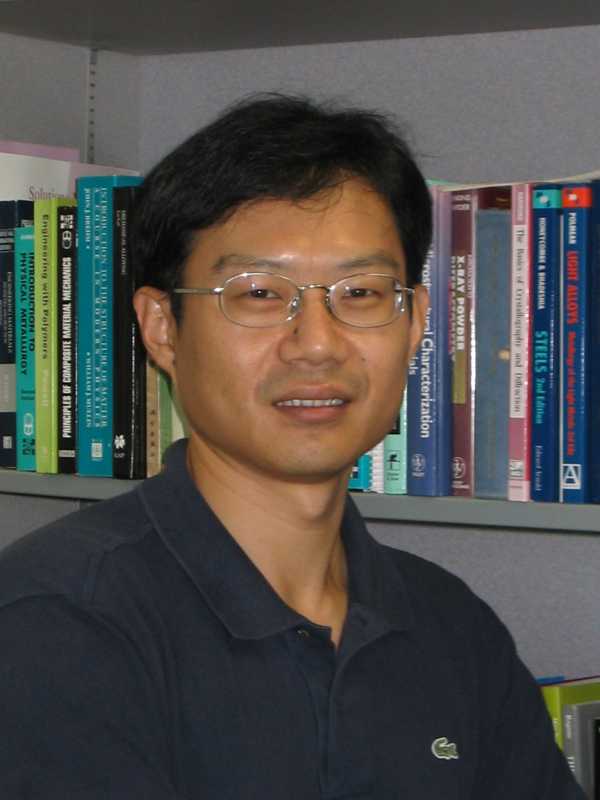 Yunfeng Zhang合作论文数College of Design and Engineering, National University of Singapore;Department of Mechanical Engineering, National University of Singapore5
 Jerry Ying Hsi Fuh合作论文数Department of Mechanical Engineering, College of Design and Engineering, National University of Singapore5
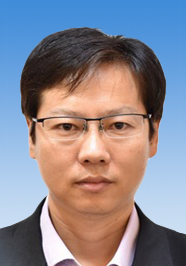 Guijun Bi (毕贵军)合作论文数Guangdong Institute of Intelligent Manufacturing, Guangdong Academy of Sciences5
 Dong Han (韩冬)合作论文数School of Mechanical Engineering, Zhejiang University3Ning Liu合作论文数2
 Bin Wu (吴斌)合作论文数School of Materials Science and Engineering, Huazhong University of Science and Technology2Runyi Deng合作论文数1Athanasius Louis Commillus合作论文数1
 Yong-Wei Zhang (张永伟)合作论文数1Mingrui Zhu合作论文数1Xiaoyang Zhu合作论文数1
 Jakub Mikula合作论文数Institute of High Performance Computing, Agency for Science, Technology and Research1Yangqianhui Zhang合作论文数1
 Wei Zhang (张伟)合作论文数Eastern Institute of Technology, Ningbo1Bing Ye合作论文数1
 Jun Wang合作论文数Department of Preventive Medicine, Feinberg School of Medicine, Northwestern University1
 Wei Huang (黄威)合作论文数School of Naval Architecture & Ocean Engineering of Huazhong University of Science and Technology1
 Huayong Yang (杨华勇)合作论文数School of Mechanical Engineering, Zhejiang University1
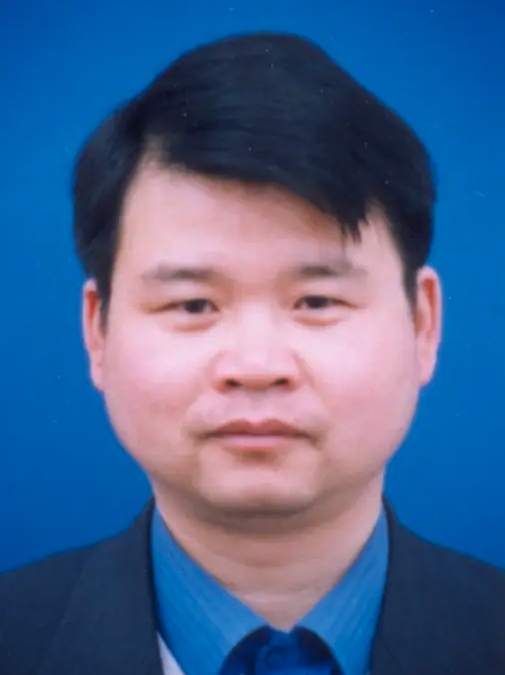 Guofang Gong (龚国芳)合作论文数School of Mechanical Engineering, Zhejiang University;State Key Laboratory of Fluid Power Transmission and Control, Zhejiang University1
 Wencheng Zhang (章文成)合作论文数Tianjin Medical University Cancer Institute and Hospital1
 Jiabin Liu (刘嘉斌)合作论文数School of Materials Science and Engineering, Zhejiang University1
 Yanlong Cao (曹衍龙)合作论文数School of Mechanical Engineering, Zhejiang University1
 Yangjian Ji (纪杨建)合作论文数School of Mechanical Engineering, Zhejiang University1
 Xianglin Zhang (张祥林)合作论文数School of Materials Science and Engineering, Huazhong University of Science and Technology1Rajeev Ahluwalia合作论文数Theoretical Division;Los Alamos National Laboratory;Theoretical Division, Los Alamos National Laboratory1Guglielmo Vastola合作论文数1




