MediaClaw is a multimodal agent platform built on the OpenClaw ecosystem. Its core design follows a three-layer architecture of unified abstraction, pluginized extension, and workflow orchestration. The system is intended to address practical deployment pain points in AIGC adoption, including fragmented capabilities, heterogeneous interfaces, disconnected production processes, and limited reuse of high-quality production workflows. abstracts full-category AIGC capabilities into a unified invocation model, uses plugins to support hot-pluggable capability expansion, and uses task-oriented Skills to turn complex production processes into reusable workflow assets. This report focuses on the architectural design philosophy of MediaClaw, the design logic of its core capability model, and the key engineering trade-offs in implementation. It aims to provide reusable practical reference for building multimodal capability platforms.
Speculative decoding accelerates autoregressive generation by allowing a lightweight drafter to propose future tokens while a target model verifies them in parallel. Its lossless guarantee has motivated a line of work that pushes the drafter itself toward parallel generation. The most recent paradigm is block-parallel generative drafting, including diffusion-based methods such as DFlash and DSpark, achieving up to 3.6x speedup on common daily chatting tasks. While this transition is well studied in text-only LLMs, its applicability to multimodal models remains an open question. Existing multimodal speculative decoding efforts focus on input compression, adapter alignment, candidate coverage, or modality-specific verification; however, block-parallel generative drafting remains largely unexplored. To bridge this gap, this paper combines a modality-centered survey with a cross-architecture empirical study to ask: Is multimodal speculative decoding ready for diffusion-based parallel drafting? In this survey, we systematically analyze a wide spectrum of multimodal models, spanning Vision-Language, Video-Language, Audio, and Vision-Language-Action (VLA) architectures, from the dual perspectives of drafting parallelism and cross-modal information interaction. We introduce a unified taxonomy that isolates drafter-side parallelism from orthogonal design choices such as tree construction and verification strategies. Furthermore, we provide a comprehensive empirical comparison of existing methods under varying degrees of parallelism across standardized multimodal benchmarks, including OCR, VQA, visual reasoning, and image captioning. Finally, we summarize the limitations of current approaches, discuss open challenges, and outline promising future directions for this rapidly evolving field.
Speculative decoding accelerates autoregressive large language model inference by producing low-cost draft work and committing accepted portions after parallel target-side verification. This draft-then-verify process defines the broad family, while recent methods differ in where draft work comes from, how candidate units are logically organized across drafting and verification, what fidelity claim licenses commitment, and how runtime systems realize committed state, control speculation, execute serving paths, and evaluate end-to-end performance. We therefore develop a systems co-design taxonomy with four interdependent aspects---Draft Source, Draft Geometry, Verification Fidelity, and Runtime Execution---and 19 categories. Applying it to 304 works yields Method Profiles that trace individual works through the design space and help researchers navigate the literature, compare methods consistently, and select category-matched baselines. We synthesize recurring combinations and interactions among the four aspects into Co-Design Gates---Representability, Verifiability, State Realizability, and Profitability---that organize open challenges and future directions. Together, the taxonomy, Method Profiles, and Gates frame speculative decoding as a systems co-design problem in which these choices must align to deliver the stated fidelity and end-to-end benefit.
Large language model agents are not merely long-prompt applications: they repeatedly prefill growing transcripts that mix instructions, tool schemas, tool observations, persistent memory, scratchpads, and sub-agent outputs, re-submitting the accumulated context on every turn. This creates a full-session optimization problem in which compression ratio alone is insufficient: practical designs must also preserve cacheable prefixes, recover omitted evidence when it is later needed, maintain provenance across privilege boundaries, and avoid delayed-relevance failures where prematurely discarded detail turns out to matter. This survey reframes context compression as lifecycle management for long-horizon agents rather than one-shot prompt shortening. We organize methods by where information is admitted, placed, compacted, recovered, reused, and governed across a session, then map four method families—natural-language, retrieval and offloading, soft-token, and KV-cache compression—together with learned policy-based methods into this lifecycle, rather than treating them as parallel silos. We analyze how production general-purpose agents instantiate these choices in practice, exposing the triggers, protected regions, and recovery sources that determine whether an agent survives a long run, and we synthesize the fast-moving 2025-2026 frontier in which compression becomes a learned action rather than an external scaffold. Finally, we propose an evaluation protocol that jointly reports task success, peak and total tokens, latency, cache behavior, recoverability, and security-relevant provenance, rather than compression ratio in isolation.
Modern text-to-image (T2I) models often have similar total scores but different strengths, making practical selection difficult. Fine-grained benchmarks decompose prompts into questions, yet often return them to prompt scores and fixed categories, weakening attribution and ignoring complexity. Related requirements are also scored separately or as one total, obscuring basic versus compositional failure. We present QC-T2I-Bench, a question-centric framework that converts open prompts into attributed atomic questions and organizes their dependencies with Davidsonian Scene Graphs (DSGs). We use hierarchy-constrained question aggregation to exclude downstream questions after a prerequisite fails and to prevent simple and complex prompts from receiving the same total weight. We then use the DSG structure to measure joint success within prompts and compare repeated entities across prompts, separating basic realization failures from failures under additional requirements. We evaluate multiple open-source T2I models on English and Chinese prompts. The resulting question-level evidence supports reliable ranking and fine-grained diagnosis: joint completion falls from 80.7% for components with two capabilities to 37.2% for those with seven or more. Finally, we reuse the same records for training-free routing; our cost-aware router matches ERNIE's 89.51-point estimate with 21.3% less GPU-s/MP.
Contrastive vision-language models like CLIP have achieved impressive results in image-text retrieval by aligning image and text representations in a shared embedding space. However, these models often treat text as flat sequences, limiting their ability to handle complex, compositional, and long-form descriptions. In particular, they fail to capture two essential properties of language: semantic hierarchy, which reflects the multi-level compositional structure of text, and semantic monotonicity, where richer descriptions should result in stronger alignment with visual content. To address these limitations, we propose HiMo-CLIP, a representation-level framework that enhances CLIP-style models without modifying the encoder architecture. HiMo-CLIP introduces two key components: a hierarchical decomposition (HiDe) module that extracts latent semantic components from long-form text via in-batch PCA, enabling flexible, batch-aware alignment across different semantic granularities, and a monotonicity-aware contrastive loss (MoLo) that jointly aligns global and component-level representations, encouraging the model to internalize semantic ordering and alignment strength as a function of textual completeness. These components work together to produce structured, cognitively aligned cross-modal representations. Experiments on multiple image-text retrieval benchmarks show that HiMo-CLIP consistently outperforms strong baselines, particularly under long or compositional descriptions.
We propose OTCache, a training-free framework for accelerating diffusion sampling via caching schedule prediction. Existing graph-based caching methods reduce redundant computation by optimizing shortest-path objectives, but rely on an additive independence assumption, which often breaks down in the low NFE regime. To address this issue, OTCache models caching schedules across inference budgets as a smooth evolution in policy space, inspired by Optimal Transport (OT). The framework consists of three stages: (1) obtaining a high-fidelity reference schedule using a graph-based caching method under a conservative budget; (2) performing a lightweight anchor search under an extreme low-budget setting via Optuna optimization with an end-to-end perceptual objective; and (3) predicting schedules for target budgets via quantile interpolation between the reference and anchor policies using continuous warping representations. Experiments on FLUX.1 [dev], Qwen-Image, and HunyuanVideo show that OTCache achieves 4.5x, 4.7x, and 3.66x acceleration, respectively, while consistently improving generation fidelity over state-of-the-art caching baselines. This work provides a new perspective on accelerating diffusion models through Optimal-Transport-inspired schedule modeling. Code:https://github.com/UnicomAI/OTCache
Conversational gestures are essential for enabling natural and intuitive interactions with digital humans. However, the development and application of such gestures remain constrained by the scarcity of high-quality, scalable motion data. In this paper, we introduce a novel approach for controllable data acquisition and generation that combines human design, motion capture, and software synthesis to significantly reduce production costs, accelerate production speed, and ensure high-quality, precisely controlled training data. Building on this foundation, we propose an efficient method for synthesizing high-quality conversational gestures. Our framework integrates a motion feature extraction network extracted from a Transformer-based vector quantized variational autoencoder (VQ-VAE), and a cascaded gesture generation network based on Gate Recurrent Unit (GRU) with adversarial training. To further improve multi-modal data alignment and optimize data utilization, we introduce a dynamic replay buffering technique. Extensive experiments demonstrate the effectiveness of our methodology, showcasing its potential to advance both academic research and practical applications of conversational gestures for digital humans.
Reinforcement learning has recently improved the reasoning ability of Large Language Models and Multimodal LLMs, yet prevailing reward designs emphasise final-answer correctness and consequently tolerate process hallucinations–cases where models reach the right answer while misperceiving visual evidence. We address this process-level misalignment with PaLMR, a framework that aligns not only outcomes but also the reasoning process itself. PaLMR comprises two complementary components: a perception-aligned data layer that constructs process-aware reasoning data with structured pseudo-ground-truths and verifiable visual facts, and a process-aligned optimisation layer that constructs a hierarchical reward fusion scheme with a process-aware scoring function to encourage visually faithful chains-of-thought and improve training stability. Experiments on Qwen2.5-VL-7B show that our approach substantially reduces reasoning hallucinations and improves visual reasoning fidelity, achieving state-of-the-art results on HallusionBench while maintaining strong performance on MMMU, MathVista, and MathVerse. These findings indicate that PaLMR offers a principled and practical route to process-aligned multimodal reasoning, advancing the reliability and interpretability of MLLMs.
We present MeanCache, a training-free caching framework for efficient Flow Matching inference. Existing caching methods reduce redundant computation but typically rely on instantaneous velocity information (e.g., feature caching), which often leads to severe trajectory deviations and error accumulation under high acceleration ratios. MeanCache introduces an average-velocity perspective: by leveraging cached Jacobian--vector products (JVP) to construct interval average velocities from instantaneous velocities, it effectively mitigates local error accumulation. To further improve cache timing and JVP reuse stability, we develop a trajectory-stability scheduling strategy as a practical tool, employing a Peak-Suppressed Shortest Path under budget constraints to determine the schedule. Experiments on FLUX.1, Qwen-Image, and HunyuanVideo demonstrate that MeanCache achieves $4.12\times$, $4.56\times$, and $3.59\times$ acceleration, respectively, while consistently outperforming state-of-the-art caching baselines in generation quality. We believe this simple yet effective approach provides a new perspective for Flow Matching inference and will inspire further exploration of stability-driven acceleration in commercial-scale generative models.
Vision-language agents that orchestrate specialized tools for image restoration (IR) have emerged as a promising method, yet most existing frameworks operate in a training-free manner. They rely on heuristic task scheduling and exhaustive tool traversal, resulting in sub-optimal restoration paths and prohibitive computational cost. We argue that the core bottleneck lies in the absence of a learned policy to make decision, as a vision-language model cannot efficiently handle degradation-aware task ordering and tool composition. To this end, we propose TIR-Agent, a trainable image restoration agent that performs a direct tool-calling policy through a two-stage training pipeline of supervised fine-tuning (SFT) followed by reinforcement learning (RL). Two key designs underpin effective RL training: (i) a random perturbation strategy applied to the SFT data, which broadens the policy's exploration over task schedules and tool compositions, and (ii) a multi-dimensional adaptive reward mechanism that dynamically re-weights heterogeneous image quality metrics to mitigate reward hacking. To support high-throughput, asynchronous GPU-based tool invocation during training, we further develop a globally shared model-call pool. Experiments on both in-domain and out-of-domain degradations show that TIR-Agent outperforms 12 baselines, including 6 all-in-one models, 3 training-free agents, and 3 proprietary models, and achieves over 2.5× inference speedup by eliminating redundant tool executions.
Diffusion models operate in a reflexive System 1 mode, constrained by a fixed, content-agnostic sampling schedule. This rigidity arises from the curse of state dimensionality, where the combinatorial explosion of possible states in the high-dimensional noise manifold renders explicit trajectory planning intractable and leads to systematic computational misallocation. To address this, we introduce Chain-of-Trajectories (CoTj), a train-free framework enabling System 2 deliberative planning. Central to CoTj is Diffusion DNA, a low-dimensional signature that quantifies per-stage denoising difficulty and serves as a proxy for the high-dimensional state space, allowing us to reformulate sampling as graph planning on a directed acyclic graph. Through a Predict-Plan-Execute paradigm, CoTj dynamically allocates computational effort to the most challenging generative phases. Experiments across multiple generative models demonstrate that CoTj discovers context-aware trajectories, improving output quality and stability while reducing redundant computation. This work establishes a new foundation for resource-aware, planning-based diffusion modeling. The code is available at https://github.com/UnicomAI/CoTj.
OpenClaw requests are dominated by long, tool-augmented prefixes, including system prompts, conversation history, and tool outputs fed back into the context window. For this workload, with about 28k-30k input tokens and 500 output tokens per request, serving quality is governed by throughput, TTFT, and tail latency rather than short-prompt throughput alone. This report studies GLM-5 serving-parameter tuning within a MaaS multi-model inference optimization architecture. The scope is the Single-Node Optimization block of the inference-optimization layer, where chunked prefill, tensor parallelism (TP), pipeline parallelism (PP), and request concurrency are tuned for one GLM-5 serving deployment; in this report, "Single-Node Optimization" denotes the architecture block, while experiments run on a two-node, sixteen-GPU cluster. Within the tested space, the best configuration is chunked-prefill-size=3072, tp=4, pp-size=4, and max-running-requests=24. Compared with the conservative 2048/4/4/16 baseline, it increases request throughput from 0.43 to 0.48 req/s and total token throughput from 9029.64 to 9993.23 tok/s, while reducing average TTFT from 8.98 to 6.69 s and latency P90 from 40.23 to 32.64 s. Under the same hardware footprint, this corresponds to an estimated 10.4
Large Language Models (LLMs) based on Mixture-of-Experts (MoE) are pivotal in industrial applications for their ability to scale performance efficiently. However, standard MoEs enforce uniform expert sizes,creating a rigidity that fails to align computational costs with varying token-level complexity. While heterogeneous expert architectures attempt to address this by diversifying expert sizes, they often suffer from significant system-level challenges, specifically unbalanced GPU utilization and inefficient parameter utilization, which hinder practical deployment. To bridge the gap between theoretical heterogeneity and robust industrial application, we propose Mixture of Heterogeneous Grouped Experts (MoHGE) which introduces a two-level routing mechanism to enable flexible, resource-aware expert combinations. To optimize inference efficiency, we propose a Group-Wise Auxiliary Loss, which dynamically steers tokens to the most parameter-efficient expert groups based on task difficulty. To address the critical deployment challenge of GPU load balancing, we introduce an All-size Group-decoupling Allocation strategy coupled with an Intra-Group Experts Auxiliary Loss. These mechanisms collectively ensure uniform computation distribution across GPUs. Extensive evaluations demonstrate that MoHGE matches the performance of MoE architectures while reducing the total parameters by approximately 20
The Convolutional Neural Networks (CNNs) have been the dominant and effective approach for general computer vision tasks. Recently, Kolmogorov-Arnold neural networks (KANs), based on the Kolmogorov-Arnold representation theorem, have shown potential to replace Multi-Layer Perceptrons (MLPs) in deep learning. KANs, which use learnable nonlinear activations on edges and simple summation on nodes, offer fewer parameters and greater explainability compared to MLPs. However, there has been limited exploration of integrating the Kolmogorov-Arnold representation theorem with convolutional methods for computer vision tasks. Existing attempts have merely replaced learnable activation functions with weights, undermining KANs' theoretical foundation and limiting their potential effectiveness. Additionally, the B-spline curves used in KANs suffer from computational inefficiency and a tendency to overfit. In this paper, we propose a novel Kolmogorov-Arnold Convolutional Layer that deeply integrates the Kolmogorov-Arnold representation theorem with convolution. This layer provides stronger method interpretability because it is based on established mathematical theorems and its design has theoretical alignment. Building on the Kolmogorov-Arnold Convolutional Layer, we design an efficient network architecture called KAConvNet, which outperforms existing methods combining KAN and convolution, and achieves competitive performance compared to mainstream ViTs and CNNs. We believe that our work offers valuable insight into the field of artificial intelligence and will inspire the development of more innovative CNNs in the 2020s.
Current 2D-to-3D conversion methods achieve geometric accuracy but are artistically deficient, failing to replicate the immersive and emotionally resonant experience of professional 3D cinema. This is because "geometric reconstruction" paradigms mistake deliberate artistic intent—such as strategic zero-plane shifts for "pop-out" effects and local depth sculpting—for data "noise" or ambiguity. This paper argues for a new paradigm: \textbf{Artistic Disparity Synthesis}, shifting the goal from physically accurate disparity estimation to artistically coherent disparity synthesis. We propose \textbf{Art3D}, a preliminary framework exploring this paradigm. Art3D uses a dual-path architecture to decouple global depth parameters (macro-intent) from local artistic effects (visual brushstrokes) and learns from professional 3D film data via indirect supervision. We also introduce a preliminary evaluation method to quantify cinematic alignment. Experiments show our approach demonstrates potential in replicating key local out-of-screen effects and aligning with the global depth styles of cinematic 3D content, laying the groundwork for a new class of artistically-driven conversion tools.
Abstract. The Tibetan Plateau acts as the "Asian Water Tower" and faces regional amplified warming compared to the global climate change baseline. Given the Tibet Plateau’s pronounced alpine terrain, i.e., significant elevation gradients within short horizontal distances, studies on climate changes/dynamics over this mountainous region fundamentally depend on spatially high-resolution datasets. However, most of currently available spatially high-resolution datasets only extend back to the 1980s, with prolonged temporal coverage data of pre-satellite era remaining scarce, especially for near surface atmospheric humidity. Thus, our study implements a hybrid-structure-based deep learning framework to generate monthly 2 m specific humidity, 2 m temperature and surface pressure at 1/30° × 1/30° horizontal resolution during 1901–2023. Briefly, employing a hybrid-structure model (FourCastNet by NVIDIA®), historical high-resolution fields (1/30° × 1/30° covering 1901–2023) are generated based on long-range low-resolution (0.5° × 0.5° covering 1901–2023 from CRU) and short-range high-resolution fields (1/30° × 1/30° covering 1978–2023 from TPMFD) via spatial downscaling. The produced data were validated against multiple related datasets, with independent in-situ site observations serving as the reference, and showed superior performance compared to most of them. Our study demonstrates that in topographically complex regions like the Tibetan Plateau, where meteorological fields exhibit strong physical dependencies on terrain, the synergistic mapping between total-field signals and subregional terrain constraints can be effectively achieved through hybrid-structure deep learning, thereby enabling this physically-consistent downscaling approach. Open access to this dataset is at https://doi.org/10.57760/sciencedb.36169.
Distilling reasoning capabilities from Large Reasoning Models (LRMs) into smaller models is typically constrained by the limitation of rejection sampling. Standard methods treat the teacher as a static filter, discarding complex "corner-case" problems where the teacher fails to explore valid solutions independently, thereby creating an artificial "Teacher Ceiling" for the student. In this work, we propose Hindsight Entropy-Assisted Learning (HEAL), an RL-free framework designed to bridge this reasoning gap. Drawing on the educational theory of the Zone of Proximal Development(ZPD), HEAL synergizes three core modules: (1) Guided Entropy-Assisted Repair (GEAR), an active intervention mechanism that detects critical reasoning breakpoints via entropy dynamics and injects targeted hindsight hints to repair broken trajectories; (2) Perplexity-Uncertainty Ratio Estimator (PURE), a rigorous filtering protocol that decouples genuine cognitive breakthroughs from spurious shortcuts; and (3) Progressive Answer-guided Curriculum Evolution (PACE), a three-stage distillation strategy that organizes training from foundational alignment to frontier breakthrough. Extensive experiments on multiple benchmarks demonstrate that HEAL significantly outperforms traditional SFT distillation and other baselines.
Long-horizon agents rely on memory mechanisms to compress interaction history, but optimizing memory writing faces a distinct credit assignment challenge: a memory update may be rewarded or penalized due to downstream tool failures, noisy observations, or reasoning errors rather than its own contribution. This causally entangled credit can lead agents to discard useful evidence or preserve irrelevant information. We propose HiMPO, a Hindsight-Informed Memory Policy Optimization framework for assigning less-entangled credit to memory-writing actions in long-horizon agents. HiMPO first estimates the local utility of a memory update by comparing the task-relevant information recoverable from the previous and updated memories under the same pre-write state. It then uses hindsight relevance as a bounded retrospective filter that attenuates memory credit when local utility is not supported by the target outcome. The resulting memory-specific advantage is applied only to memory tokens, while trajectory-level rewards optimize the rest of the agent behavior. Across judge-based open-domain tasks and objective compressive-memory QA, HiMPO improves over strong memory-based and RL-based baselines while preserving compressed-context efficiency. Controlled interventions further show that HiMPO reduces blame leakage from tool-induced errors and improves attribution fidelity of memory updates.
In this paper, a multi-modal model based 3D pop-out video generation framework (CP3) is proposed to solve the shortcomings of the existing video generation technology for accurate control of 3D pop-out effects. 3D pop-out effects create an immersive visual experience by changing the disparity of a particular object so that it appears beyond the screen. However, although software has made some progress in this area, there is currently no effective way to accurately control 3D pop-out effects and generate high-quality video. In addition, the lack of high-quality 3D pop-out effect data sets is also one of the bottlenecks in the field. Therefore, the CP3 framework proposed in this paper utilizes multi-modal models to help 3D video creators make 3D pop-out effects, enhance the audience's sense of immersion and visual comfort, and thus promote the development of 3D effect generation technology. To support the training and evaluation of this framework, a new dataset containing 37000 frames of pop-out effects is constructed, such as text guidance, segmentation results, depth maps, optical flow, and the trajectory of the pop-out target. Through the 3D UNet model based on the potential de-noising diffusion mechanism, combined with the 3D-try module in the CP3 framework and Mask Encoder, this paper has achieved remarkable results in the generation of 3D popout effect videos. The results of the experiment show that the CP3 framework demonstrates its advantages in generating immersive 3D pop-out effects in comparison to existing technologies.
 Shiguo Lian合作论文数China Unicom50
 Zhaoxiang Liu合作论文数AI Department, CloudMinds Technologies Inc.46
 Huan Hu合作论文数Clouminds, Beijing, Peoples R China15Zezhou Chen合作论文数Clouminds, Santa Clara, CA 95054 USA12Kaikai Zhao合作论文数11
 Xuejiao Lei合作论文数7Yibing Nan合作论文数CloudMinds Technol Inc, Beijing 100102, Peoples R China5
 Jinqiang Bai合作论文数School of Electronic Information Engineering, Beihang University, Beijing, China5
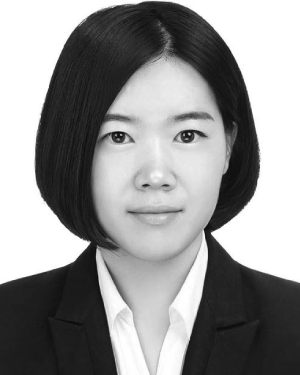 Xiang Wang合作论文数5
 Shuming Shi (史树明)合作论文数5Fuyuan Shi合作论文数CloudMinds Technol Inc, Beijing 100102, Peoples R China4
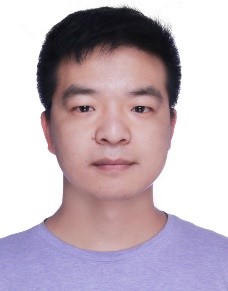 Xingpeng Zhang (张兴鹏)合作论文数School of Computer Science, Southwest Petroleum University4
 Ping Chen合作论文数Data Science & AI Research Institute, China Unicom3Kohou Wang合作论文数3Fenglin Wei合作论文数Coll Comp Sci & Technol, Jilin Univ3Dijun Liu (刘迪军)合作论文数School of Electronic and Information Engineering, Beihang University3
 Xin Wang (王新)合作论文数School of Computer Science, Fudan University3
 Jianmin Zheng (郑建民)合作论文数Division of Computer Science, School of Computer Science and Engineering, College of Computing & Data Science, Nanyang Technological University3
 Seah Hock Soon (谢福顺)合作论文数College of Computing and Data Science, Nanyang Technological University;CACANi Pte Ltd3Huanlin Gao合作论文数China United Network Communications Group Co., Ltd.2
 Kai Tian合作论文数2Che Jiang合作论文数2
 Kaiyan Zhang (张开颜)合作论文数Center for Collaborative & Conversational Intelligence, Department of Electronic Engineering, Tsinghua University2Minjie Hua合作论文数2
 Benjamin Busam合作论文数School of Computation, Information and Technology, Technische Universität München;3Dwe2Guoguang Du合作论文数2
 Yimin Lin合作论文数Beijing University of Posts and Telecommunications, Beijing Univ. of Posts and Telecom.2
 Hong Qi (齐红)合作论文数College of Computer Science and Technoiogy, Jilin University2
 Yu Jiang (姜宇)合作论文数College of Computer Science and Technology, Jilin University2
 Yanlin Qian (钱彦霖)合作论文数Huawei Camera Team2
 Jian-Bing Zhang (张建兵)合作论文数School of Artificial Intelligence, Nanjing University2
 Xinyu Dai (戴新宇)合作论文数Department of Computer Science and Technology, Nanjing University2
 Slobodan Ilic合作论文数School of Computation, Information and Technology, Technical University of Munich;Siemens2Ivan Shugurov合作论文数Technical University of Munich;Siemens2
 Bowen Zhou (周伯文)合作论文数Center for Collaborative & Conversational Intelligence, Department of Electronic Engineering, Tsinghua University2
 Mahdi Saleh合作论文数Department of Computer Science, Technical University of Munich2Fang Zhao合作论文数1Chao Tan合作论文数1Zipeng Wang合作论文数1Xiang Liu合作论文数1Ning Wang合作论文数1Jiangze Yan合作论文数1Wenjing Zhang合作论文数1Jieyun Huang合作论文数1Jian Zhang合作论文数1




