Instance-level segmentation of large-scale 3D point clouds is a fundamental yet challenging task due to complex spatial structures, severe occlusions, and long-range dependencies. These challenges are particularly pronounced in field-scale agricultural scenes, where dense planting, irregular point distributions, and repetitive plant geometries limit the effectiveness of existing point cloud segmentation methods. This paper proposes HiMamba-Net, a Hilbert-serialized Mamba-based framework for efficient and spatially coherent instance segmentation of agricultural point clouds. The core contribution lies in a spatial serialization strategy that leverages Hilbert space-filling curves to preserve geometric locality while enabling linear-complexity sequential modeling via selective state space models. HiMamba-Net integrates patch-based local feature extraction, multi-scale graph context aggregation, and spatially ordered sequence modeling through SAMamba blocks to capture both local structures and global dependencies effectively. A multi-task learning scheme jointly optimizes semantic segmentation, discriminative instance embeddings, and offset regression to achieve accurate instance separation. Experiments on the Crops3D dataset demonstrate that HiMamba-Net outperforms the evaluated baseline methods, achieving 91.8% mIoU and 91.9% mAP for semantic and instance segmentation, respectively. Ablation studies further validate the contribution of Hilbert serialization and selective state space modeling. These results indicate that spatially coherent serialization combined with linear-complexity sequence modeling provides an effective approach for large-scale 3D point cloud instance segmentation.
Current research on watermarking for Neural Radiance Fields (NeRF) primarily focuses on embedding watermarks into rendered images or achieving copyright protection by fine-tuning model parameters. However, directly embedding watermarks into NeRF parameters inevitably alters the original parameter distribution, leading to a degradation in rendering quality. Moreover, existing methods fail to fully exploit the rich 3D information inherent in the radiance field. To address these issues, we propose ZeroW-NeRF, a novel zero-watermark approach for NeRF. Instead of altering model parameters, ZeroW-NeRF encodes scene information via uncertainty at each sampling point, seamlessly integrating the watermark into the rendering pipeline without compromising the integrity of the original model. Leveraging a self-attention mechanism, our approach captures long-range dependencies within the radiance field, enabling holistic scene representation. Consequently, ZeroW-NeRF achieves lossless copyright protection while preserving rendering quality, offering a robust watermarking scheme inherently aligned with the rendering process. We perform extensive evaluations of ZeroW-NeRF on standard NeRF datasets and popular NeRF variants. Experimental results demonstrate that ZeroW-NeRF effectively enforces copyright protection without compromising rendering efficiency or visual quality. Additionally, it exhibits superior performance in terms of watermark capacity and robustness, positioning it as a highly efficient and robust solution for safeguarding the intellectual property of NeRF-based systems.
Motion cues play a vital role in multi-frame infrared small target detection (MISTD). However, most targets in existing datasets exhibit regular and slow motion, which cannot reflect the complex and diverse motion patterns in real-world scenarios. This biased data distribution makes recent data-driven methods highly rely on simplified motion assumptions that tend to fail in irregular or fast motion, resulting in noisy feature representations cluttered with target-irrelevant factors. Hence, we stress that methods for MISTD should also work when targets are in complex motion. To enable this research, we propose a large-scale dataset called MIST for airborne infrared detection scenarios. The dataset is built on a synthetic data engine that models variations in pose, size, and intensity of moving targets while seamlessly blending them into real backgrounds for physical, geometric, and visual realism. Targets in MIST exhibit low signal-to-clutter ratios and complex motion, making it a promising yet challenging benchmark for developing algorithms focused on motion analysis. To tackle the challenges of MIST, we develop MISTNet, a robust baseline based on the Information Bottleneck theory. To handle irregular and fast motion, we propose a shifted neighborhood compensation block to efficiently model multi-scale correspondences for implicit motion compensation. To distill compact representations free from irrelevant cues, we design a progressive distillation decoder to hierarchically filter out redundancy while preserving target-relevant information. We benchmark 31 state-of-the-art methods and find that their performance on MIST drops significantly compared with that on the widely used NUDT-MIRSDT dataset. Our MISTNet outperforms all other methods by a large margin, with an over 6% gain in the IoU metric, demonstrating its superiority. The dataset, code, and model weights are available at https://github.com/GR-ray/MIST.
Images are typically sampled on a uniform grid,despite their non-uniform information distribution—some regions are rich in content while others are not. The mismatch leads to inefficient computation allocation in deep learning models. To address this, recent studies have proposed predictive downsampling methodsthat adaptively downsample images based on predicted per-pixel importance, allocating more pixels to informative areas. However,these methods require high-resolution processing to accurately estimate importance, which undermines their efficiency:the prediction itself must process the full-resolution image,consuming most of the computational budget. This high-resolution importance prediction is necessary because each input may differ significantly in structure and content. In this paper, we take a different approach and introduce a learn-to-downsample paradigmtailored for aligned vision recognition tasks, such as face recognition and palmprint recognition, where input alignment ensures consistent spatial structure across images. This alignment ensures structural consistency across images, allowing a shared, input-agnostic downsampling template applicable to all inputs. Furthermore, instead of relying on implicit importance maps, we introduce a flow-based representation that explicitly models the spatial warping from the original image to the downsampled version. The flow representation is not only more efficient but also more controllable: we regularize the flow using its Jacobian determinant to precisely control the sampling density and coverage,enabling interpretable and tunable sampling patterns. Extensive experiments on two aligned recognition tasks, face and palmprint recognition, demonstrate that our method substantially reduces computational cost with minimal accuracy degradation, achieving a significantly better performance-efficiency trade-off than existing predictive downsampling methods.
High-resolution volumetric magnetic resonance imaging (MRI) is desirable for accurate diagnosis, yet clinical scans are typically acquired as stacks of 2D slices for reduced scan time, resulting in a loss of fine anatomical detail along the through-plane direction. To address this limitation, we propose AICM, an anatomical-prior integrated conditional consistency model for self-supervised through-plane super-resolution MRI. AICM enables single-step generation of high-resolution (i.e., thin) slices, conditioned on low-resolution (i.e., thick) slice inputs. By integrating anatomical priors from a medical foundation model (MedSAM) along with a physics-inspired self-supervised framework, AICM achieves high-fidelity slice super-resolution without paired supervision. Extensive experiments demonstrate that AICM achieves image quality comparable to or superior to that of state-of-the-art generative model-based methods, while providing substantially faster inference, indicating strong potential for clinical deployment. Code is available at: https://github.com/Calvin-Pang/AICM.
Multiparametric Magnetic Resonance Imaging (mpMRI), including T2-weighted imaging (T2), diffusion-weighted imaging (DWI), and dynamic contrast-enhanced (DCE) imaging is an important technique for the diagnosis of clinically significant prostate cancer (csPCa). Unlike T2 and DWI, which capture spatial contrast, DCE-MRI captures the temporal dynamics before, during, and after the administration of the contrast agent. The temporal dynamics of DCE-MRI characterize the microvascular properties of target tissue, offering valuable information for csPCa diagnosis. However, due to the high data dimensionality and spatial-temporal data incompatibility, DCE-MRI has been largely overlooked or underutilized in prevalent deep learning-based csPCa detection methods. In this paper, we propose PCa-Mamba, a state-space model (SSM)-based framework that, for the first time, fully incorporates the temporal dynamics of DCE-MRI alongside the spatial contrast of T2 and DWI for csPCa detection in mpMRI. SSMs are efficient for long-range sequence modeling, making them well-suited for high-dimensional, heterogeneous mpMRI data. PCa-Mamba comprises two SSM modules: (i) a temporal SSM that captures the temporal dynamics, and (ii) a spatial SSM that extracts spatial contrast. Pharmacokinetic (PK) regularization is introduced to constrain the temporal SSM with the Tofts model, allowing the model to learn the PK properties of the target tissue while reducing overfitting. Permuted sequentialization is introduced into the spatial SSM to rearrange spatial patches along different scan directions. This enhances spatial context while preserving local adjacency. The spatial and temporal features are jointly optimized by interactive fusion for integrated spatiotemporal representations, effectively capturing the complementary information for csPCa detection. We further introduce a dropout mechanism that randomly excludes DCE-MRI during training, allowing the model to handle practical scenarios where DCE-MRI is unavailable. Extensive experiments on our in-house dataset and the PI-CAI dataset demonstrate PCa-Mamba’s superiority over existing models for csPCa detection, as well as the advantages of mpMRI over bpMRI in lesion-wise csPCa diagnosis, especially for detecting small lesions and those located in the peripheral zone.
Joint-Embedding Predictive Architectures (JEPAs) provide a simpleframework for learning world models by predicting future latent representations.However, JEPA training is subject to a bias-variance tradeoff.Without sufficient structural constraints, excessive representationalvariance causes the model to collapse to trivial solutions.The recent LeWorldModel (LeWM) shows that this issue can be alleviated bysimply constraining latent embeddings with an isotropic Gaussian prior.However, latent representations inherently lie on low-dimensional manifoldswithin a high-dimensional ambient space, and enforcing an isotropic Gaussianprior directly in this ambient space introduces an overly strong bias.In this work, we propose ame, which seeks a favorable operatingpoint on the bias-variance frontier by applying Gaussian constraints inmultiple random subspaces rather than in the originalembedding space.This design relaxes the global constraint while preserving itsanti-collapse effect, leading to a better balance between trainingstability and representation flexibility.Extensive experiments across fourcontinuous-control environments demonstrate that consistentlyoutperforms LeWM with very clear margins.Our method is simple yet effective, and serves as a strong baseline for future JEPA-based world model research.fdefinedeeemodeThe code is available at https://github.com/intcomp/Sub-JEPA.
Open-vocabulary camouflaged object segmentation (OVCOS) seeks to segment and classify camouflaged objects in arbitrary categories, presenting unique challenges due to visual ambiguity and unseen categories. Recent approaches typically adopt a two-stage paradigm: they first segment objects, and then classify the segmented regions using vision language models (VLMs). However, such methods (i) suffer from a domain gap caused by the mismatch between VLMs' full-image training and cropped-region inferencing, and (ii) depend on generic segmentation models optimized for well-delineated objects which are less effective for camouflaged objects. Without explicit guidance, generic segmentation models often overlook subtle boundaries, leading to imprecise segmentation. In this paper, we introduce a novel VLM-guided cascaded framework to address these issues in OVCOS. For segmentation, we leverage the segment anything model (SAM), guided by the VLM. Our framework uses VLM-derived features as explicit prompts to SAM, effectively directing attention to camouflaged regions and significantly improving localization accuracy. For classification, we avoid the domain gap introduced by hard cropping. Instead, we treat the segmentation output as a soft spatial prior using the alpha channel. This retains the full image context while providing precise spatial guidance, leading to more accurate and context-aware classification of camouflaged objects. The same VLM is shared between segmentation and classification to ensure efficiency and semantic consistency. Extensive experiments on both OVCOS and conventional camouflaged object segmentation benchmarks demonstrate the clear superiority of our method, highlighting the effectiveness of leveraging rich VLM semantics for both segmentation and classification of camouflaged objects. Our code and models are open-sourced at https://github.com/intcomp/camouflaged-vlm.
Vision-language models (VLMs) have been widely adopted for 3D question answering (3D QA). In typical pipelines, visual tokens extracted from multiple viewpoints are concatenated with language tokens and jointly processed by a large language model (LLM) for inference. However, aggregating multi-view observations inevitably introduces severe token redundancy, leading to an overly large visual token set that significantly hinders inference efficiency under constrained token budgets. Visual token pruning has emerged as a prevalent strategy to address this issue. Nevertheless, most existing pruners are primarily tailored to 2D inputs or rely on indirect geometric cues, which limits their ability to explicitly retain semantically critical objects and maintain sufficient spatial coverage for robust 3D reasoning. In this paper, we propose SeGPruner, a semantic-aware and geometry-guided token reduction framework for efficient 3D QA with multi-view images. Specifically, SeGPruner first preserves semantically salient tokens through an attention-based importance module (Saliency-aware Token Selector), ensuring that object-critical evidence is retained. It then complements these tokens with spatially diverse ones via a geometry-guided selector (Geometry-aware Token Diversifier), which jointly considers semantic relevance and 3D geometric distance. This cooperation between saliency preservation and geometry-guided diversification balances object-level evidence and global scene coverage under aggressive token reduction. Extensive experiments on ScanQA and OpenEQA demonstrate that SeGPruner substantially improves inference efficiency, reducing the visual token budget by 91
Morphological transforms are long-standing tools for shape and mask processing, but the de facto reference implementation in the Python ecosystem, i.e. scipy.ndimage, is CPU-only, single-array, and therefore unusable inside a GPU training loop without an expensive device-to-host round trip. GPU vision libraries built on PyTorch cover a narrow subset of these operators, typically restricted to two spatial dimensions and flat structuring elements. We present TorchMorph, a lightweight PyTorch extension that closes this gap. TorchMorph exposes 22 public operators covering binary morphology, greyscale morphology, exact and approximate distance transforms, and entropy-regularised optimal transport, all implemented as fused CUDA kernels that operate directly on (B, C, Spatial...) CUDA tensors with up to eight spatial dimensions. The API deliberately mirrors scipy.ndimage argument-for-argument, including border modes, structuring-element origins and pre-allocated outputs, so that existing pipelines port with a change of import. We describe the layered architecture and the kernel designs behind each operator family. Against single-threaded CPU references, batched execution reaches up to 1.1e3 times the throughput of scipy.ndimage on greyscale morphology and up to 350x on exact Euclidean distance transforms, while the Sinkhorn solver runs up to 42x faster than POT. Binary and chamfer operators reproduce their SciPy counterparts exactly, and every float-valued operator agrees with the CPU reference to within 1.8e-6 absolute error. TorchMorph is released under the MIT licence at https://intcomp.github.io/tm.
According to the Prostate Imaging Reporting and Data System, version 2.1 (PI-RADS v2.1), lesions with an intermediate or high level of suspicion (PI-RADS ≥ 3) typically undergo MRI-targeted biopsy, with or without systematic biopsies. However, among patients with negative multi-parametric MRI (mpMRI) (PI-RADS < 3), there exists a current lack of consensus regarding the circumstances under which systematic biopsies should be performed, which leads to unnecessary biopsies and patient morbidity. To discern patients with negative prostate MRI who could potentially forgo unnecessary biopsies, we employed an integrative feature-enhanced deep learning approach that leverages both imaging and clinical information to predict biopsy results. An Integrative Feature-enhanced Network (IFN) was proposed to predict the prostate biopsy results, confirmed by the histopathologic examination. The IFN was built based on a 3D ResNet with extra proposed feature-enhanced (FE) blocks, and a fully-connected layer combining the imaging and clinical information. The study cohort consisted of 508 patients with negative prostate 3 T mpMRI between 2016 and 2020. The proposed IFN was trained and validated through fivefold cross-validation with bootstrapping, and the model’s performance was measured by area under the curve (AUC), sensitivity, specificity, and negative predictive value (NPV). AUCs were compared via the DeLong test with a 95
Diffusion-based methods have achieved remarkable success in accelerated Magnetic Resonance Imaging (MRI) reconstruction; however, they often suffer from two key limitations: (1) they rely on slow, multi-step sampling to produce high-quality reconstructions, and (2) they are conditioned on a limited number of undersampling patterns, leading to poor generalization capability. In this work, we present HiMaC (Histogram-driven and Mask-aware Consistency Model)-a unified framework that leverages Consistency Models (CMs) to enable one-step or few-step MRI reconstruction with substantially reduced inference cost. However, we observe that plain CM outputs exhibit a brightness shift due to intensity distribution mismatch with fully sampled references. To address this, we introduce a distribution alignment regularization that enforces distributional consistency between the reconstructed and input images by minimizing the divergence between their histograms. Moreover, since undersampling patterns in practical MRI are pre-coded into the scanner, our approach incorporates the downsampling mask as an auxiliary input, explicitly embedding sampling information to guide the reconstruction process. This design not only enhances reconstruction fidelity but also improves generalization across diverse undersampling patterns, achieving fast, high-fidelity, and robust MRI reconstruction.
Diffusion models have achieved impressive performance on various image generation tasks, including image super-resolution. Despite their impressive performance, diffusion models suffer from high computational costs due to the large number of denoising steps. In this paper, we proposed a novel accelerated diffusion model, termed Partial Diffusion Models (PDMs), for magnetic resonance imaging (MRI) super-resolution. We observed that the latents of diffusing a pair of low- and high-resolution images gradually converge and become indistinguishable after a certain noise level. This inspires us to use certain low-resolution latent to approximate corresponding high-resolution latent. With the approximation, we can skip part of the diffusion and denoising steps, reducing the computation in training and inference. To mitigate the approximation error, we further introduced 'latent alignment' that gradually interpolates and approaches the high-resolution latents from the low-resolution latents. Partial diffusion models, in conjunction with latent alignment, essentially establish a new trajectory where the latents, unlike those in original diffusion models, gradually transition from low-resolution to high-resolution images. Experiments on three MRI datasets demonstrate that partial diffusion models achieve competetive super-resolution quality with significantly fewer denoising steps than original diffusion models. In addition, they can be incorporated with recent accelerated diffusion models to further enhance the efficiency.
The automatic segmentation of prostate MRI often produces inconsistent performance because certain image slices are more difficult to segment than others. In this paper, we show that consistency can be improved using Conditional Random Fields (CRFs), which refine the segmentation results by considering pixel relationships pairwise. In practice, however, conventional CRFs are susceptible to noise and MRI intensity shifts due to their use of simple binary potentials involving spatial distance and intensity difference. Such heuristic potential functions are hardly expressive, limiting the network from extracting more relevant information and having more stable potential calculations. We propose a novel end-to-end Neural CRF (NCRF) model that utilizes learnable binary potential functions based on deep image features. Experiments show that our NCRF is a better model for prostate zonal segmentation than state-of-the-art CRF models. The NCRF improves segmentation accuracy in both the prostate transition zone and peripheral zone such that segmentation results are consistent across all the prostate slices, which can improve the performance of downstream tasks such as prostate cancer detection and segmentation. Our code is available at https://github.com/aL3x-O-o-Hung/NCRF.
The morphology of active layer of the organic solar cells (OSCs) tends to transition toward its lowest energy conformation under thermal stress, significantly limiting the stability of OSCs. In this study, ethyl cellulose (EC) is utilized as an additive in the active layer of the typical PM6:Y6 and other systems. Due to the strong interaction between the hydroxyl groups of EC and the heteroatoms in the organic semiconductors, their bulk heterojunction nanomorphology is locked, thereby enhancing device thermal stability. Under thermal stress at 65 °C for 1,000 h, the PM6:Y6 device incorporating EC demonstrates excellent stability nearly without performance loss. Furthermore, compared to the control device, the device exhibits improved thermal stability under a range of more stringent aging conditions. Additionally, the EC additive shows broad applicability in various active layer systems, effectively enhancing their thermal stability. This work offers a promising approach for developing stable nanomorphology structures in OSCs.
Micro-ultrasound (MicroUS) is a novel imaging technology with the potential to provide a low-cost and high-resolution approach for prostate cancer diagnosis. However, MicroUS is acquired in a non-uniform, fan-shaped sweep, where voxel size varies with distance from the probe and across slice angles. This irregular voxel distribution complicates reformatting into other imaging planes, making it challenging to conduct joint evaluations with other modalities such as MRI and histopathology. Existing interpolation-based reformatting methods lead to poor image resolution and introduce severe artifacts. In this paper, we propose MPR-Diff, a self-supervised diffusion model for super-resolution-based multi-planar reformation in prostate MicroUS imaging. Our method addresses the lack of high-resolution reference in the target plane by extracting simulated training patches from acquired slices. We performed both a quantitative evaluation and an expert reader study, demonstrating that our approach significantly enhances image resolution and reduces artifacts, thereby increasing the potential diagnostic value of MicroUS. Code is available at https://github.com/Calvin-Pang/MPR-Diff.
Micro-ultrasound is an emerging imaging tool that complements MRI in detecting prostate cancer by offering highresolution imaging at lower cost. However, reliable annotations for micro-ultrasound data remain challenging due to the limited availability of experts and a steep learning curve. To address the clear clinical need, we propose a click-based, userguided volumetric micro-ultrasound prostate segmentation model requiring minimal user intervention and training data. Our model predicts the segmentation of the entire prostate volume after users place a few points on the two boundary image slices of the prostate. Experiments show that the model needs only a small amount of training data to achieve strong segmentation performance, with each of its components contributing to its overall improvement. We demonstrate that the level of expertise of the user scarcely affects performance. This makes prostate segmentation practically feasible for general users.
Referring Multi-Object Tracking (RMOT) extends conventional multi-object tracking (MOT) by introducing natural language references for multi-modal fusion tracking. RMOT benchmarks only describe the object's appearance, relative positions, and initial motion states. This so-called static regulation fails to capture dynamic changes of the object motion, including velocity changes and motion direction shifts. This limitation not only causes a temporal discrepancy between static references and dynamic vision modality but also constrains multi-modal tracking performance. To address this limitation, we propose a novel motion-aware vision-reference alignment framework, named VMRMOT. VMRMOT introduces a motion modality derived from object dynamics to facilitate the alignment between the vision modality and language references. Specifically, we introduce motion-aware descriptions derived from object dynamic behaviors and encode them into motion features as the motion modality through multi-modal large language models (MLLMs). We further design a Vision-Motion-Reference Alignment (VMRA) module to hierarchically align visual queries with motion and reference cues, enhancing their cross-modal consistency. In addition, a Motion-Guided Prediction Head (MGPH) is developed to explore motion modality to enhance the performance of the prediction head. To the best of our knowledge, VMRMOT is the first motion-aware vision-reference alignment framework for the RMOT task. Extensive experiments on multiple RMOT benchmarks demonstrate that VMRMOT outperforms existing state-of-the-art methods. The code is available at https://github.com/Kroery/VMRMOT.
Organic photovoltaic materials that can be processed via non-halogenated solvents are crucial for the large-area manufacturing of organic solar cells (OSCs). However, the limited available of electron acceptors with adequate solubility and favorable molecular packing presents a challenge in achieving efficient non-halogenated solvent-processed OSCs. Herein, inspired by the three-dimensional dimeric acceptor CH8-4, we employed a molecular isomerization strategy to synthesize its isomers, CH8-4A and CH8-4B, by tuning the position of fluorine (F) atom in the central unit. The differing intramolecular fluorine-sulfur non-covalent interactions among these isomers led to differences in molecular pre-aggregation abilities (CH8-4B<CH8-4<CH8-4A) in o-xylene (o-XY) solution, which significantly influence the film-forming process and the resultant morphological characteristics. Among these, the blend film of CH8-4, characterized by moderate molecular pre-aggregation, achieved optimal bi-continuous donor/acceptor phase separation. Consequently, the o-xylene processed PM6 : CH8-4 device achieved a power conversion efficiency (PCE) of 18.1 %, outperforming that of two other devices. By incorporating L8-BO-D as a guest acceptor, we attained an impressive PCE of 20.0 % for the CH8-4-based ternary device, alongside a high PCE nearing 16 % for the mini-module (13.5 cm2). Our findings underscore the potential of isomerism in 3D dimer acceptors to enhance the performance of eco-friendly OSCs.
Despite the versatile processibility of three-dimensional CH8 series acceptors used in efficient organic solar cells (OSCs), understanding the relationship between the linkage units and performance has been significantly challenging. To address this, we present two dimeric acceptors, CH8-8 and CH8-9, which utilize 3,4-ethylenedioxythiophene and 3,4-dimethoxythiophene as linkage units, respectively, to investigate their effects on molecular properties and device performance. CH8-9 with 3,4-dimethoxythiophene as the central linker exhibited a larger dihedral angle of 37.2 degrees than CH8-8 (23.3 degrees), which is beneficial for avoiding over-aggregation and thus forming a more ideal morphology. Consequently, the morphology of CH8-9 showed a more uniform and smoother surface, leading to enhanced charge transport with more balanced charge-transport mobilities. The resultant PM6:CH8-9-based devices displayed a higher fill factor (FF) and short-circuit current density (Jsc), which led to a higher power conversion efficiency (PCE) of 16.3%, surpassing the PCE of the PM6:CH8-8-based device. Our work provides a comprehensive analysis of the impact of incorporating dioxane- and methoxy-substituted thiophene units on device performance, offering insights into optimizing linkage units in multi-dimensional molecules to improve the photovoltaic performance of OSCs.
 Yongsheng Chen (陈永胜)合作论文数Institute of Polymer Chemistry, College of Chemistry, Nankai University21
 Guankui Long (龙官奎)合作论文数Research Center for Carbon and Polymer Composite Materials, School of Materials Science and Engineering, Nankai University19
 Xiangjian Wan (万相见)合作论文数College of Chemistry, Nankai University12
 Dan Zeng (曾丹)合作论文数School of Communication & Information Engineering, Shanghai University12
 Kyung Hyun Sung合作论文数Department of Radiological Sciences, University of California, Los Angeles;David Geffen School of Medicine, University of California, Los Angeles;Jonsson Comprehensive Cancer Center, University of California, Los Angeles Health11
 Wei Shen (沈为)合作论文数Department of Computer Science and Engineering, Shanghai Jiao Tong University;Artificial Intelligence Institute, Shanghai Jiao Tong University;DeepVisionLab, Shanghai Jiao Tong University9
 Miao Qi (齐妙)合作论文数Northeast Normal University9
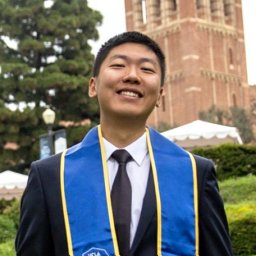 Haoxin Zheng合作论文数Dept Comp Sci, Univ Calif Los Angeles7
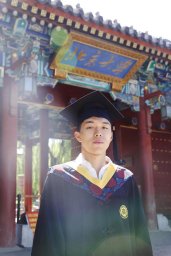 Alex Ling Yu Hung合作论文数Computer Science Department and the Department of Radiological Sciences, University of California7
 Zhaoyang Yao (姚朝阳)合作论文数College of Chemistry, Nankai University6Kaifeng Pang合作论文数5
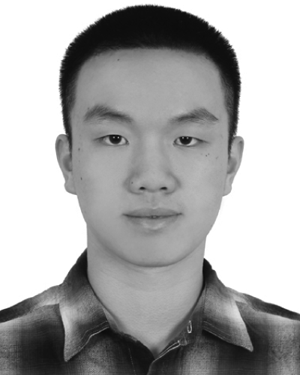 He Xiao合作论文数5Ruixin Zhang合作论文数5
 Kan Bin合作论文数College of Chemistry, Nankai University5
 Ying Wang (王影)合作论文数College of Chemistry, Nankai University5
 Chenxi Li (李晨曦)合作论文数College of Chemistry, Nankai University5
 Ming-Ming Cheng (程明明)合作论文数Department of Computer Science and Technology, College of Computer Science, Nankai University5
 Demetri Terzopoulos合作论文数Computer Graphics & Vision Laboratory, Department of Computer Science, Samueli School of Engineering, University of California, Los Angeles5Tianqi Chen合作论文数4Lei Shen合作论文数Youtu Lab, Tencent4Wenbiao Xie合作论文数4Xiaomei Xie合作论文数4Yingyi Zhang合作论文数These contributed equally to this work.4
 Ran Yan合作论文数Dept Radiol Sci, Univ Calif Los Angeles4
 Steven Raman合作论文数Santa Monica Medical Center, University of California, Los Angeles4
 Yilu Guo合作论文数Zhejiang Univ Ocean Coll4
 Tengfei Zhang (张腾飞)合作论文数College of Materials Science and Technology, Nanjing University of Aeronautics and Astronautics4
 Yanfeng Ma (马延风)合作论文数College of Chemistry, Nankai University4
 Deng-Ping Fan (范登平)合作论文数College of Computer Science, Nankai University4Xinyuan Jia合作论文数3Chen Zou合作论文数3Xiangjian Cao合作论文数3
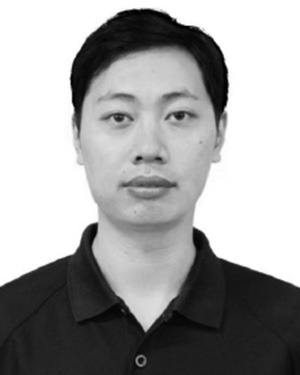 Xin Chen合作论文数3
 Yan Zhou (周彦)合作论文数Xiangtan University3
 Zhen ge合作论文数3
 Alan L. Yuille合作论文数Department of Cognitive Science, Krieger School of Arts & Sciences, Johns Hopkins University3
 Yan Wang (王妍)合作论文数School of Communication and Electronic Engineering, East China Normal University3
 Xinyi Ji (纪欣宜)合作论文数School of Materials Science and Engineering, Nankai University3
 Xiaoqiang Zhu (朱晓强)合作论文数School of Communication and Information Engineering, Shanghai University3
 Wei Jia (贾伟)合作论文数School of Computer Science and Information Engineering, Hefei University of Technology;Hefei Institutes of Physical Science, Chinese Academy of Sciences3Shou-Hong Ding (丁守鸿)合作论文数Youtu Lab, Tencent3Zhaochen Suo合作论文数2Yuyang Bai合作论文数2Shaohui Yuan合作论文数2Kangqiao Ma合作论文数2Fuyao Huang合作论文数2Xingqi Bi合作论文数2
 Qi Han (韩琦)合作论文数MEGVII Technology2Peiran Wang合作论文数2




