Real-time analytics on video data requires substantial computational resources and high energy consumption, and computational offloading has emerged as a promising solution to support such resource-intensive services. Nevertheless, most of the existing research overlook the resource dependencies induced by object-level correlations in dependent video processing tasks. To address this challenges, we propose a theoretical framework employing a novel scaling factor to model resource dependencies among video tasks, enabling accurate estimation of computation and transmission demands for video blocks with multiple interdependent objects. In contrast to conventional single-objective methods, we formulate the problem as a constrained multi-objective optimization and present a decomposition-based meta-deep reinforcement learning (DOMDRL) framework to balance competing objectives. The proposed approach employs meta-learning to train a meta-model, which is then fine-tuned through limited gradient updates to construct the Pareto front. Simulation results based on real-world datasets demonstrate that DOMDRL reduces average task delay by approximately 9.32%, decreases energy consumption by around 6.26%, and improves video analytics accuracy by about 18.9% compared to state-of-the-art task offloading methods.
mmWave radar is an emerging sensing modality that expects to significantly improve the safety and reliability of autonomous vehicles, especially in adverse conditions. A key technology to achieve this vision is to register point clouds between infrastructure and vehicle to improve the sensing ability of the vehicle. In this work, we design Argus, a novel lightweight system that achieves decimeter-level and real-time registration. Argus consists of two components: (i) a point cloud registration network component exploits the complementary advantages of cameras and radars to extract semantics of salient objects (e.g., traffic signs), followed by a keypoint extraction strategy and an early stopping strategy to quickly obtain keypoints and transformation directions for achieving accurate registration; (ii) a multi-vehicle-infrastructure adaptive scheduling component combines two key modules, request scheduler and adaptive trigger, to ensure real-time registration in multi-vehicle scenes. We implement and evaluate Argus with two multi-view image and radar point cloud datasets collected in the campus and indoor scenes. Experimental results show that Argus extends the vehicle's sensing range by 89% with an average end-to-end latency of 25.22 ms, and delivers a 3X improvement in accuracy over state-of-the-art baselines; meanwhile, it requires only an average bandwidth of 0.45 Mbps for each vehicle.
Multivehicle collaborative sensing has emerged as a new paradigm to boost the safety of autonomous vehicles. The cornerstone of this vision is the real-time and accurate registration of mmWave radar point clouds among multiple vehicles. To accomplish this, we design mmReg, an innovative system capable of achieving centimeter-level and real-time sensing fusion between vehicles. mmReg consists of three major components: 1) an SAR imaging-driven point cloud generation component leverages SAR imaging to image sparse and disordered radar point clouds to generate high-quality point clouds; 2) a motion-aware frame synchronization component can achieve the spatiotemporal alignment of point clouds between vehicles for effectively mitigating the impact of asynchronous radar frames; and 3) a shared object-based registration component can capture and understand the unique global position of shared objects, supporting real-time and accurate registration. We implement and evaluate mmReg on CARLA and real-world campus datasets. The results demonstrate that mmReg can improve the vehicle's sensing range by 117% in an average of 99.91 ms, achieving a 4.82 X improvement in accuracy.
Multi-modal fusion has emerged as a promising paradigm for modern object detection systems. However, existing works often involve substantial redundant computation during the stages of feature extraction, processing, and fusion, thereby limiting their ability to achieve both high accuracy and real-time performance. To this end, we propose Eagle, a real-time, high-accuracy detection system that integrates camera and millimeter-wave radar data via the three-level entropy-driven mechanism, which consists of three key components: (i) an entropy measurement-based feature extraction, which quantifies feature uncertainty through entropy computation, generating a weight matrix to adjust feature channels, followed by enhancing the discrimination of informative features while suppressing redundant ones; (ii) an entropy-contrast-based proposal selection, which utilizes the similarity between anchor boxes from camera and radar modalities to calculate a contrast entropy value, where low-quality proposals are filtered based on this metric, thereby reducing both false positives and false negatives; (iii) an entropy-guided-based feature fusion, which dynamically weights the feature mapping according to entropy values, achieving effective multi-modal integration through spatial-level interactions. Experimental results demonstrate that Eagle improves the mean average precision (mAP) and nuScenes detection score (NDS) by 2.3
Accurate traffic flow forecasting is essential for the stable operation and efficient scheduling of intelligent transportation systems. The key lies in identifying the complex spatio-temporal dependencies within the road network structure. In the real world, traffic data are often noisy and incomplete due to sensor failures, communication interruptions, and other unexpected disturbances. To overcome these challenges, this paper proposes an adaptive spatio-temporal self-supervised traffic flow forecasting method based on contrastive learning (ASTSS-CL). At the graph level, structural perturbations are generated by combining node centrality with nonlinear probabilities, while a learnable temporal-periodic parameter matrix and an attention-based fusion mechanism are introduced to adaptively optimize adjacency relationships. At the temporal level, complementary augmentations are designed in both the time and frequency domains. Dynamic interpolation captures continuous traffic variations, while wavelet decomposition and node-adaptive frequency masking balance low-frequency trends and high-frequency details; random masking further improves robustness to missing observations and disturbances. In addition, spatial heterogeneity learning and contrastive consistency learning are jointly employed to enhance representation quality. Experiments on the PeMS04 and PeMS08 datasets show that ASTSS-CL achieves MAE, RMSE, and MAPE values of 17.95, 28.86, and 12.07% on PeMS04, and 13.78, 22.05, and 9.46% on PeMS08, respectively, outperforming the best-performing baseline. These results validate the effectiveness of the proposed method and demonstrate its potential to support traffic management and the operation of intelligent transportation systems.
Millimeter-wave radar-based gesture recognition has emerged as a promising paradigm for human-computer interaction, with applications spanning diverse domains. Nevertheless, the development of robust and generalizable deep learning models in these areas remains hindered by the limited availability of large-scale training datasets, particularly in scenes involving lying postures. Existing radar data synthesis approaches are often inadequate, largely due to the scarcity and narrow scope of available data sources. To this end, we propose RadSyn, a novel system designed to synthesize large-scale, realistic radar data from either video or textual inputs. The central contribution of RadSyn lies in its ability to establish a reliable cross-modal mapping from semantic representations to radar signals. The system comprises four core components: (i) a video feature encoding network, (ii) a text feature encoding network, and (iii) a radar feature encoding network, which independently capture modality-specific representations, and (iv) a data fitting and decoding network that leverages a variational autoencoder-based mechanism to align latent distributions and synthesize realistic radar data at scale. Experimental results demonstrate that, when training the gesture recognition model solely on the synthetic radar data, RadSyn achieves an accuracy improvement of 32.88% over the state-of-the-art method.
As a transformative technology in next-generation digital innovation, digital twin is instrumental in enhancing the efficiency and safety of traffic management while driving advancements in intelligent transportation systems. To this end, we systematically examine the primary challenges associated with the implementation of digital twin technology in transportation and introduce a novel 5 + 2 digital twin model tailored for this domain. Additionally, a comprehensive five-layer architecture is proposed to support the development of digital twin transportation. We further investigate the potential applications of digital twins in critical areas, including traffic flow management, intelligent transportation planning, resource allocation of Internet of Vehicles, traffic safety control, and assisted autonomous driving. Alongside these discussions, we provide an in-depth analysis of the current technological limitations and identify key areas requiring further research. Finally, we explore future development trajectories and the broader impact of digital twin transportation, offering new perspectives and insights to propel the evolution of intelligent transportation systems.
Millimeter-wave (mmWave) radar enables privacy-preserving gesture recognition but is limited by a lack of training data, particularly for lying postures. Existing mmWave radar data generation methods are ineffective due to the insufficient availability of 2D video data. To this end, we propose a novel system, Venus++, that generates realistic radar data for lying postures using few 2D videos, but it faces three key challenges: i) simulating diverse reflected signals, ii) overcoming limited real-world data leading to low data fidelity, and iii) reducing low-quality or redundant generated samples. Venus++ consists of three main components: (i) a gesture sequence generation and signal simulation network, which combines several key modules, movement information extractor, spatio-temporal latent diffusion model, and mmWave signal simulator, to generate various gesture vertex sequences under certain conditions and simulate signal propagation characteristics for obtaining coarse radar data; (ii) a meta-learning domain adaptation network generates realistic radar data with few real-world data via “meta-learning” strategy; and (iii) a newly introduced quality assessment network that evaluates both fidelity and diversity of the generated samples, retaining only high-quality and diverse data for reliable downstream recognition. Extensive experiments on both generated and self-collected datasets demonstrate that Venus++ significantly outperforms state-of-the-art methods in recognizing gestures performed in lying postures.
With the increasing popularity of video streaming platforms, demand for live video traffic has surged. Low latency is crucial for real-time interaction, and mobile edge computing (MEC) offers a promising solution. By proactively caching anticipated content at edge nodes, user-perceived latency can be significantly reduced. However, most existing studies fail to exploit inter-node correlations and collaborative potential, thereby limiting prediction accuracy and affecting the overall performance of caching and scheduling. To address the above challenges, we propose PCCUA, a Prediction-driven Collaborative Caching and User Association algorithm based on attention mechanisms. Specifically, we introduce a gated fusion mechanism to dynamically balance service latency and video quality satisfaction based on individual user characteristics. We further design a multi-edge collaborative prediction model that integrates a Graph Attention Network (GAT) with local behavior modeling, enabling accurate prediction of future user requests by capturing cross-node request pattern similarities. Based on the prediction results, we develop a scalable algorithm that exploits the layered structure of Scalable Video Coding (SVC) to support efficient layered caching and user scheduling at edge nodes, thereby accommodating multi-quality user demands and promoting inter-layer resource sharing. Under typical experimental settings, the proposed prediction model achieves MSE, MAE, and R2 of 1.57, 1.16, and 0.71, respectively, showing clear superiority over existing methods. Leveraging these results, PCCUA further enhances caching performance and user experience, improving cache hit ratio, delay improvement rate, and quality matching degree by 52.50%, 57.15%, and 80.19% compared with prior approaches.
With the rapid advancement of digital twin-enabled intelligent transportation systems, efficient migration has become essential for maintaining real-time responsiveness and reliability. Existing approaches, however, primarily emphasize resource-aware optimization while neglecting the substantial overhead from state synchronization and redundant data transmission. Moreover, they typically treat digital twins as indivisible entities, overlooking optimization opportunities at the sub-model level. This limitation results in excessive migration costs and suboptimal resource utilization. To overcome these challenges, we propose a fine-grained model-level digital twin migration framework, FGDT, featuring three key components: (i) an explicit-implicit fused coupling graph construction captures both functional depen-dencies and latent collaborations among heterogeneous sub-models; (ii) a skew-aware migration pattern selection dynamically balances joint versus independent migration, thereby minimizing communication overhead and improving resource allocation; and (iii) a model-level migration strategy optimization strategy leverages dual-network PPO with a soft-constraint co-placement mechanism to support adaptive, fine-grained migration decisions. Extensive experiments validate the effectiveness of FGDT, which significantly reduces average system latency while maintaining low migration overhead, thereby enhancing both resource efficiency and overall system performance.
With the growing prevalence of privacy risks and data leakage in the Internet of Vehicles (IoV), federated unlearning (FU) has emerged as a promising paradigm to safeguard user privacy by selectively removing client contributions from global models. However, although the existing FU methods based on retraining can achieve complete data influence elimination, their computational overhead is relatively large. Furthermore, most FU methods based on fine-tuning are usually based on static client selection strategies, without considering the model iteration bias caused by the dynamics of vehicle nodes. They also lack a dynamic adjustment mechanism for the intensity of unlearning, and thus are difficult to be applied in the IoV environment. To this end, we propose PSODS-FU, a federated unlearning framework for Internet of Vehicles based on particle swarm optimization and dynamic scoring drive. Firstly, we design a dynamic vehicle node selection strategy, mainly through the particle swarm optimization algorithm to dynamically adjust the weights of the calculation slope, communication load and energy consumption resources, and screen out highly stable nodes to improve the accuracy of the global model. Secondly, we design a dynamic scoring-driven federated unlearning strategy, which dynamically generates unlearning factors based on historical average stability scores and environmental adaptive benchmarks, precisely quantifies and eliminates the influence of target vehicle nodes, and uses knowledge distillation technology to compensate for the performance degradation of the model. The experimental results show that PSODS-FU outperforms existing methods in terms of prediction accuracy, computational time, and attack precision, and performs more closely to the retrained reference model on metrics such as test accuracy gap, parameter distance, and prediction disagreement rate, thereby significantly optimizing the balance between privacy protection and model performance.
3D object detection is a crucial task for autonomous vehicles to perceive traffic environments. Existing methods typically employ tightly coupled feature fusion strategies with fixed sensor combinations, but it fails to adequately capture the modality-specific characteristics, resulting in suboptimal object detection performance. To this end, we propose Chameleon, a novel multi-sensor decoupling system capable of selecting the appropriate sensor combination for object detection across diverse traffic conditions, which consists of two key components: (i) an uncertainty-aware contribution calculation component leverages the uncertainty perceived by sensors to predict the parameters of traffic factors, followed by evaluating their importance; (ii) a mutual information-enhanced sensor combination optimization component leverages mutual information calculations to enhance the mixture of experts and improve the reliability of sensor combination predictions, followed by achieving adaptive multi-sensor decoupling to ensure accurate 3D object detection while reducing inference latency. We implement and evaluate Chameleon using the nuScenes and nuScenes-C datasets. The experimental results show that Chameleon achieves average improvements of 1.10% in the mAP and 0.61% in the NDS compared to the state-of-the-art method across various traffic scenes.
Accurate traffic flow prediction plays a pivotal role in intelligent transportation systems, and the integration of graph neural networks and federated learning offers a novel technological approach in this domain. However, existing methods that combine the two still face several challenges, including the difficulty of adapting static graphs to dynamic traffic changes, the inability of the region partitioning method to capture fine-grained spatio-temporal dependencies, and excessive communication overhead under the federated learning framework. To address these issues, this paper proposes a distributed traffic flow prediction method based on a Node-level Federated Dynamic Graph Convolutional Network (NFDGCN). NFDGCN decouples spatio-temporal correlation learning based on a node-level federated framework: on the node side, a context-enhanced temporal embedding mechanism is constructed and a self-attention network is employed to learn local temporal correlations; on the server side, a flow feature-driven dynamic graph construction method is proposed, and an improved graph convolutional network is utilized to learn global spatial correlations, ultimately achieving accurate prediction of dynamic traffic flow. Furthermore, a co-optimization scheme combining a Top-K sparse communication mechanism and the FedAvg aggregation algorithm is designed to significantly reduce communication burden between nodes and the server under the federated learning framework. Experimental results on two real-world datasets demonstrate that NFDGCN achieves average reductions of 4.91
Federated Learning (FL) has emerged as a key distributed framework for processing real-time vehicular data in the Internet of Vehicles (IoV), aiming to enhance driving experiences and service quality. However, challenges such as network congestion, limited signal coverage leading to latency, and inefficiencies arising from data and device heterogeneity hinder FL performance in IoV environments. To address these issues, we propose HierFed, a hierarchical federated learning algorithm that combines synchronous and asynchronous aggregation strategies, which comprises two components: (i) an asynchronous cache aggregation mechanism, where client-side cache updates are transmitted to the edge server for asynchronous aggregation. By calibrating the relationship between cache updates and model deviations, clients can update models without synchronous waiting, thereby mitigating latency; (ii) a synchronous aggregation mechanism, where the cloud server optimizes global model updates by computing aggregation weights under gradient normalization and constraint conditions, followed by reducing inter-client model inconsistency and enhances overall model convergence. Experimental results show that HierFed outperforms all baselines, achieving an 8.83% improvement in model accuracy at the edge tier (asynchronous FL), a 13.84% improvement at the cloud tier (synchronous FL), and a 10.79% overall improvement in hierarchical FL.
Digital twin (DT) migration technology is pivotal for ensuring seamless synchronization between physical entities and their virtual counterparts. However, in complex urban environments, high device mobility, dynamic network topology, and uncertain wireless channel conditions often lead to suboptimal migration decisions. Such inefficiencies exacerbate resource contention and diminish migration timeliness, thereby increasing DT state deviation and compromising service quality. To address these challenges, this article proposes an AP group-enhanced DT edge network (DITEN) model, where multiantenna access points (APs) are integrated as relay nodes to optimize channel quality and transmission reliability. Building on this, a group-collaborative multiagent proximal policy optimization (GC-MAPPO) migration strategy is presented. The strategy formulates the migration problem as a partially observable Markov decision process (POMDP). Specifically, the K-means++ clustering algorithm is first employed to construct optimal AP collaborative groups for mobile devices; subsequently, the multiagent proximal policy optimization (MAPPO) algorithm is utilized to derive optimal migration policies in dynamic environments. Experimental results demonstrate that, compared to existing baselines, the proposed GC-MAPPO scheme reduces the average synchronization delay by 6.69%-37.05% and decreases DT state deviation by 29.24%-82.91%.
Video transmission, as one of the indispensable core services in the Internet of Vehicles (IoV), is confronted with numerous challenges such as the dynamics in the IoV environment, the limited resources, and the demand of vehicles for high-quality user experience (quality of experience, QoE). In real-time video streaming scenarios, multicast optimization strategies, including convex optimization, game theory, stochastic optimization, and so on, usually only group based on channel quality without considering task types and priorities, which may lead to the mixture of urgent tasks and ordinary tasks, affecting QoE. Therefore, we propose a task-aware three-stage collaborative optimization framework (TARA-IoV). The objective is to prioritize critical mission video services under limited bandwidth while maximizing the overall QoE. The framework first performs dynamic and adaptive vehicle grouping based on multidimensional features, including task type, priority, geographical location, and channel state. Second, it conducts QoE-driven video quality layer selection leveraging scalable video coding (SVC). Finally, it employs a deep reinforcement learning agent to dynamically allocate bandwidth with explicit task-priority awareness under resource constraints. Evaluations on a real-world vehicle trajectory dataset demonstrate that TARA-IoV achieves improved QoE performance and more stable video delivery compared with existing schemes.
Digital twin technology has emerged as a crucial paradigm for enhancing the responsiveness and management efficiency of transportation systems. A key technology to realize this vision is the real-time and accuracy twin placement. However, the limited resources and coverage of edge servers make it challenging to achieve effective twin placement in dynamic environments, where maximizing resource utilization and minimizing communication latency are crucial. To this end, we propose Nereus, which consists of four key modules: (i) a heterogeneous demand prediction module utilizes a heterogeneous graph neural network to capture complex relationships between twins and servers, facilitating accurate prediction of resource demands and loads; (ii) a feature-driven clustering module incorporates multi-dimensional twin features using principal component analysis and dynamic k-means clustering to adaptively generate twin groups; (iii) an adaptive association module exploits an attention mechanism to dynamically adjust twin group assignments; (iv) a multi-level placement optimization module employs a hierarchical actor-critic algorithm to refine twin placement strategies, enhancing resource utilization and minimizing communication latency. Experimental results demonstrate that, compared to state-of-the-art methods, Nereus achieves a 70.24% reduction in communication latency and improves computation resource matching by 52.43%.
The dynamic changes in geographical location and spatial environment cause the visual data collected by vehicle nodes in the Internet of Vehicles (IoV) system to exhibit non-independent and identically distributed (non-IID) characteristics, limiting the generalization ability of the global model. To maintain model effectiveness, vehicle nodes must frequently update their models and transmit parameters, exacerbating uplink channel congestion. To this end, we propose a federated split learning-based solution. First, we integrate a federated split-based vision transformer (FSViT) model into the IoV system, enabling vehicle nodes to extract intermediate visual features using lightweight models and upload them to a cloud server. The vision transformer (ViT) at the server then performs global feature modeling, enhancing the globally aggregated model while reducing computational overhead. Based on this, we design an adaptive gradient quantization method based on model-split contrastive learning (MSCQ), which independently compares the updates of the split head and tail models on each vehicle node to historical model states, evaluates their differences using contrastive analysis, followed by constructing a loss term accordingly. Finally, this loss term guides MSCQ in dynamically adjusting gradient quantization levels for the head and tail models based on training task variations, thereby minimizing redundant gradient transmission while preserving critical gradient information. Experimental results show that MSCQ significantly reduces communication overhead while simultaneously improving the accuracy of the aggregated model. The code is available at https://github.com/FLPole/Federated-Learning.
Millimeter wave radar has recently emerged as a promising modality for enabling pervasive gesture recognition while protecting user privacy. However, personalized user behaviors, interference from unexpected actions, and long-term variability in user gestures significantly degrade the accuracy of gesture and user identity recognition, thereby compromising the quality of user experiences. To this end, we design mmGes with four key modules: (i) a fine-grained feature extractor extracts micro-level features from the time-series radar data to identify users' personalized behaviors; (ii) a user-specific feature classifier extracts coarse-grained features from a global perspective, followed by analyzing the micro-details of gesture features to recognize the user; (iii) a voting-based multi-user recognizer retrieves all pre-trained models from the user model database, followed by obtaining the probability indicators of each to return recognition results; (iv) a lifelong learning model retains previous knowledge while adjusting its feature selection capabilities using newly collected data to adapt to gesture changes. We implement and evaluate mmGes using three self-collected real-world radar datasets, demonstrating its superior performance compared to other state-of-the-art gesture recognition methods.
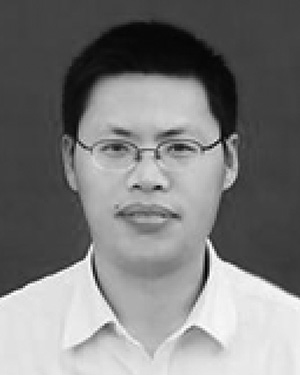 Honghai Wu (吴宏海)合作论文数42
 Ling Xing合作论文数37
 Huahong Ma合作论文数33JianPing Gao (高建平)合作论文数20
 Dong Zhao (赵东)合作论文数Beijing Key Laboratory of Intelligent Telecommunications Software and Multimedia, School of Computer Science, Beijing University of Posts and Telecommunications11
 Huadong Ma (马华东)合作论文数School of Computer Science, Beijing University of Posts and Telecommunications10
 Zihan Zhang (张子涵)合作论文数6
 Shuyue Wang合作论文数5Qiaoyue Han合作论文数4Yating Qu合作论文数3
 Ping Xie (谢平)合作论文数College of Electrical Engineering, Yanshan University3
 Anfu Zhou (周安福)合作论文数School of Computer Science, Beijing University of Posts and Telecommunications3Mingchuan Zhang合作论文数2Kun Zhang合作论文数2
 Ruijuan Zheng (郑瑞娟)合作论文数河南科技大学信息工程学院2Xiaoying Lu合作论文数1Yixuan Lu合作论文数1Jingcheng Ye合作论文数1Yue Ling合作论文数1Zixiao He合作论文数1Kangwen Yin合作论文数1Gui-Jiao Lin合作论文数1Baofeng Ji合作论文数1
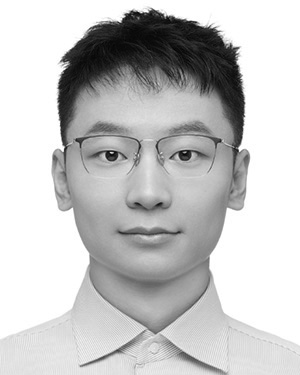 Yizong Wang合作论文数1
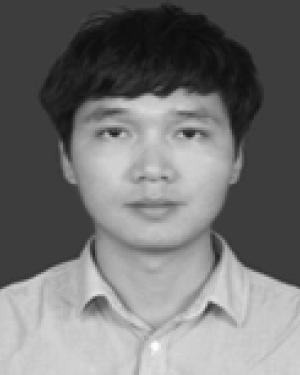 Longshui Zheng合作论文数1Yi-Xuan Li合作论文数1
 Bing Li (李兵)合作论文数School of Computer Science, Wuhan University1Shuqing Zhang合作论文数1
 Qingtao Wu (吴庆涛)合作论文数Henan University of Science and Technology, Henan Province, China1
 Feifei Gao (高飞飞)合作论文数Department of Automation, Tsinghua University1
 Jinsong Guo (郭劲松)合作论文数Chongqing Institute of Green and Intelligent Technology, Chinese Academy of Sciences;College of Environment and Ecology, Chongqing University1Hong Zhao (赵虹)合作论文数1




