Diffusion models have become a leading framework in generative modeling, yet their theoretical understanding – especially for high-dimensional data concentrated on low-dimensional structures – remains incomplete. This paper investigates how diffusion models learn such structured data, focusing on two key aspects: statistical complexity and influence of data geometric properties. By modeling data as samples from a smooth Riemannian manifold, our analysis reveals crucial decompositions of score functions in diffusion models under different levels of injected noise. We also highlight the interplay of manifold curvature with the structures in the score function. These analyses enable an efficient neural network approximation to the score function, built upon which we further provide statistical rates for score estimation and distribution learning. Remarkably, the obtained statistical rates are governed by the intrinsic dimension of data and the manifold curvature. These results advance the statistical foundations of diffusion models, bridging theory and practice for generative modeling on manifolds.
Recent advances in large language models (LLMs) have led to remarkable progress across various domains, yet their capabilities in the humanities, particularly history, remain underexplored. Historical reasoning poses unique challenges for LLMs, involving multimodal source interpretation, temporal inference, and cross-linguistic analysis. Existing general-purpose agents perform well on many current benchmarks but lack the domain expertise needed to address complex historical questions. To address this gap, we introduce HistBench, a new benchmark of 414 high-quality and carefully-reviewed questions stratified by difficulty and designed to evaluate LLM's capacity for historical reasoning. The tasks span a wide range of historical problems—from factual retrieval based on primary sources to interpretive analysis of manuscripts and images, to interdisciplinary challenges involving archaeology, linguistics, or cultural history. Furthermore, the benchmark dataset spans 29 ancient and modern languages and covers a wide range of historical periods and world regions. Finding the poor performance of LLMs and other agents on HistBench, we further present HistAgent, a history-specific agent equipped with carefully designed tools for OCR, translation, archival search, and image understanding in History. On HistBench, HistAgent based on GPT-4o achieves an accuracy of 27.54% pass@1 and 36.47% pass@2, significantly outperforming LLMs with online search and generalist agents, including GPT-4o (18.60%), DeepSeek-R1(14.49%), Grok 3(17.63%) and Open Deep Research by smolagents(20.29% pass@1 and 25.12% pass@2). These results highlight the limitations of existing LLMs and generalist agents and demonstrate the advantages of HistAgent for historical reasoning. Notably, HistAgent also achieves 60.00% pass@1 accuracy on the GAIA benchmark, showing that domain-specific customization doesn't hinder HistAgent's competitive performance on real-world general tasks.
Large Language Models (LLMs) have emerged as integral tools for reasoning, planning, and decision-making, drawing upon their extensive world knowledge and proficiency in language-related tasks. LLMs thus hold tremendous potential for natural language interaction within multi-agent systems to foster cooperation. However, LLM agents tend to over-report and comply with any instruction, which may result in information redundancy and confusion in multi-agent cooperation. Inspired by human organizations, this paper introduces a framework that imposes prompt-based organization structures on LLM agents to mitigate these problems. Through a series of experiments with embodied LLM agents and human-agent collaboration, our results highlight the impact of designated leadership on team efficiency, shedding light on the leadership qualities displayed by LLM agents and their spontaneous cooperative behaviors. Further, we harness the potential of LLMs to propose enhanced organizational prompts, via a Criticize-Reflect process, resulting in novel organization structures that reduce communication costs and enhance team efficiency.
Verification is crucial for effective mathematical reasoning. We present a new temporal consistency method where verifiers iteratively refine their judgments based on the previous assessment. Unlike one-round verification or multi-model debate approaches, our method leverages consistency in a sequence of self-reflection actions to improve verification accuracy. Empirical evaluations across diverse mathematical process error identification benchmarks (Mathcheck, ProcessBench, and PRM800K) show consistent performance improvements over baseline methods. When applied to the recent DeepSeek R1 distilled models, our method demonstrates strong performance, enabling 7B/8B distilled models to outperform all 70B/72B models and GPT-4o on ProcessBench. Notably, the distilled 14B model with our method achieves performance comparable to Deepseek-R1.
Inference-time alignment enhances the performance of large language models without requiring additional training or fine-tuning but presents challenges due to balancing computational efficiency with high-quality output. Best-of-N (BoN) sampling, as a simple yet powerful approach, generates multiple responses and selects the best one, achieving improved performance but with a high computational cost. We propose TreeBoN, a novel framework that integrates a speculative tree-search strategy into Best-of-N (BoN) Sampling. TreeBoN maintains a set of parent nodes, iteratively branching and pruning low-quality responses, thereby reducing computational overhead while maintaining high output quality. Our approach also leverages token-level rewards from Direct Preference Optimization (DPO) to guide tree expansion and prune low-quality paths. We evaluate TreeBoN using AlpacaFarm, UltraFeedback, GSM8K, HH-RLHF, and TutorEval datasets, demonstrating consistent improvements. Specifically, TreeBoN achieves a 65% win rate at maximum lengths of 192 and 384 tokens, outperforming standard BoN with the same computational cost. Furthermore, TreeBoN achieves around a 60% win rate across longer responses, showcasing its scalability and alignment efficacy.
Evaluating aligned large language models' (LLMs) ability to recognize and reject unsafe user requests is crucial for safe, policy-compliant deployments. Existing evaluation efforts, however, face three limitations that we address with **SORRY-Bench**, our proposed benchmark. **First**, existing methods often use coarse-grained taxonomies of unsafe topics, and are over-representing some fine-grained topics. For example, among the ten existing datasets that we evaluated, tests for refusals of self-harm instructions are over 3x less represented than tests for fraudulent activities. SORRY-Bench improves on this by using a fine-grained taxonomy of 44 potentially unsafe topics, and 440 class-balanced unsafe instructions, compiled through human-in-the-loop methods. **Second**, evaluations often overlook the linguistic formatting of prompts, like different languages, dialects, and more --- which are only implicitly considered in many evaluations. We supplement SORRY-bench with 20 diverse linguistic augmentations to systematically examine these effects. **Third**, existing evaluations rely on large LLMs (e.g., GPT-4) for evaluation, which can be computationally expensive. We investigate design choices for creating a fast, accurate automated safety evaluator. By collecting 7K+ human annotations and conducting a meta-evaluation of diverse LLM-as-a-judge designs, we show that fine-tuned 7B LLMs can achieve accuracy comparable to GPT-4 scale LLMs, with lower computational cost. Putting these together, we evaluate over 50 proprietary and open-weight LLMs on SORRY-Bench, analyzing their distinctive safety refusal behaviors. We hope our effort provides a building block for systematic evaluations of LLMs' safety refusal capabilities, in a balanced, granular, and efficient manner. Benchmark demo, data, code, and models are available through [https://sorry-bench.github.io](https://sorry-bench.github.io).
Recent advances in large language models (LLMs) have enabled agents to autonomously perform complex, open-ended tasks. However, many existing frameworks depend heavily on manually predefined tools and workflows, which hinder their adaptability, scalability, and generalization across domains. In this work, we introduce Alita--a generalist agent designed with the principle of "Simplicity is the ultimate sophistication," enabling scalable agentic reasoning through minimal predefinition and maximal self-evolution. For minimal predefinition, Alita is equipped with only one component for direct problem-solving, making it much simpler and neater than previous approaches that relied heavily on hand-crafted, elaborate tools and workflows. This clean design enhances its potential to generalize to challenging questions, without being limited by tools. For Maximal self-evolution, we enable the creativity of Alita by providing a suite of general-purpose components to autonomously construct, refine, and reuse external capabilities by generating task-related model context protocols (MCPs) from open source, which contributes to scalable agentic reasoning. Notably, Alita achieves 75.15% pass@1 and 87.27% pass@3 accuracy, which is top-ranking among general-purpose agents, on the GAIA benchmark validation dataset, 74.00% and 52.00% pass@1, respectively, on Mathvista and PathVQA, outperforming many agent systems with far greater complexity. More details will be updated at $\href{https://github.com/CharlesQ9/Alita}{https://github.com/CharlesQ9/Alita}$.
The scarcity of health care resources, such as ventilators, often leads to the unavoidable consequence of rationing, particularly during public health emergencies or in resource-constrained settings like pandemics. The absence of a universally accepted standard for resource allocation protocols results in governments relying on varying criteria and heuristic-based approaches, often yielding suboptimal and inequitable outcomes. This study addresses the societal challenge of fair and effective critical care resource allocation by leveraging deep reinforcement learning to optimize policy decisions. We propose a transformer-based deep Q-network that integrates individual patient disease progression and interaction effects among patients to enhance allocation decisions. Our method aims to improve both fairness and overall patient outcomes. Experiments using metrics such as normalized survival rates and interracial allocation rate differences demonstrate that our approach significantly reduces excess deaths and achieves more equitable resource allocation compared to severity and comorbidity-based protocols currently in use. Our findings highlight the potential of deep reinforcement learning to address critical health care challenges.
This paper introduces CryptoBench, the first expert-curated, dynamic benchmark designed to rigorously evaluate the real-world capabilities of Large Language Model (LLM) agents in the uniquely demanding and fast-paced cryptocurrency domain. Unlike general-purpose agent benchmarks for search and prediction, professional crypto analysis presents specific challenges: extreme time-sensitivity, a highly adversarial information environment, and the critical need to synthesize data from diverse, specialized sources, such as on-chain intelligence platforms and real-time Decentralized Finance (DeFi) dashboards. CryptoBench thus serves as a much more challenging and valuable scenario for LLM agent assessment. To address these challenges, we constructed a live, dynamic benchmark featuring 50 questions per month, expertly designed by crypto-native professionals to mirror actual analyst workflows. These tasks are rigorously categorized within a four-quadrant system: Simple Retrieval, Complex Retrieval, Simple Prediction, and Complex Prediction. This granular categorization enables a precise assessment of an LLM agent's foundational data-gathering capabilities alongside its advanced analytical and forecasting skills. Our evaluation of ten LLMs, both directly and within an agentic framework, reveals a performance hierarchy and uncovers a failure mode. We observe a retrieval-prediction imbalance, where many leading models, despite being proficient at data retrieval, demonstrate a pronounced weakness in tasks requiring predictive analysis. This highlights a problematic tendency for agents to appear factually grounded while lacking the deeper analytical capabilities to synthesize information.
Performing effective gene-editing experiments requires a deep understanding of both the CRISPR technology and the biological system involved. Meanwhile, despite their versatility and promise, large language models (LLMs) often lack domain-specific knowledge and struggle to accurately solve biological design problems. We present CRISPR-GPT, an LLM agent system to automate and enhance CRISPR-based gene-editing design and data analysis. CRISPR-GPT leverages the reasoning capabilities of LLMs for complex task decomposition, decision-making and interactive human–artificial intelligence (AI) collaboration. This system incorporates domain expertise, retrieval techniques, external tools and a specialized LLM fine tuned with open-forum discussions among scientists. CRISPR-GPT assists users in selecting CRISPR systems, experiment planning, designing guide RNAs, choosing delivery methods, drafting protocols, designing assays and analysing data. We showcase the potential of CRISPR-GPT by knocking out four genes with CRISPR-Cas12a in a human lung adenocarcinoma cell line and epigenetically activating two genes using CRISPR-dCas9 in a human melanoma cell line. CRISPR-GPT enables fully AI-guided gene-editing experiment design and analysis across different modalities, validating its effectiveness as an AI co-pilot in genome engineering. An agent-based large language model (LLM) tool helps with CRISPR-based gene-editing experimental design and analysis.
Many recent studies have found evidence for emergent reasoning capabilities in large language models (LLMs), but debate persists concerning the robustness of these capabilities, and the extent to which they depend on structured reasoning mechanisms. To shed light on these issues, we study the internal mechanisms that support abstract reasoning in LLMs. We identify an emergent symbolic architecture that implements abstract reasoning via a series of three computations. In early layers, symbol abstraction heads convert input tokens to abstract variables based on the relations between those tokens. In intermediate layers, symbolic induction heads perform sequence induction over these abstract variables. Finally, in later layers, retrieval heads predict the next token by retrieving the value associated with the predicted abstract variable. These results point toward a resolution of the longstanding debate between symbolic and neural network approaches, suggesting that emergent reasoning in neural networks depends on the emergence of symbolic mechanisms.
Large language models have demonstrated impressive performance on challenging mathematical reasoning tasks, which has triggered the discussion of whether the performance is achieved by true reasoning capability or memorization. To investigate this question, prior work has constructed mathematical benchmarks when questions undergo simple perturbations -- modifications that still preserve the underlying reasoning patterns of the solutions. However, no work has explored hard perturbations, which fundamentally change the nature of the problem so that the original solution steps do not apply. To bridge the gap, we construct MATH-P-Simple and MATH-P-Hard via simple perturbation and hard perturbation, respectively. Each consists of 279 perturbed math problems derived from level-5 (hardest) problems in the MATH dataset (Hendrycks et al., 2021). We observe significant performance drops on MATH-P-Hard across various models, including o1-mini (-16.49%) and gemini-2.0-flash-thinking (-12.9%). We also raise concerns about a novel form of memorization where models blindly apply learned problem-solving skills without assessing their applicability to modified contexts. This issue is amplified when using original problems for in-context learning. We call for research efforts to address this challenge, which is critical for developing more robust and reliable reasoning models. The project is available at https://math-perturb.github.io/.
RNA plays an essential role in a wide range of biological processes. Gaining a deeper understanding of their functions can significantly advance our knowledge of life's mechanisms and drive the development of drugs for various diseases. Recently, advances in RNA foundation models have enabled new approaches to RNA engineering, yet existing methods fall short in generating novel sequences with specific functions. Here, we introduce RNAGenesis, a foundation model that combines RNA sequence understanding and de novo design through latent diffusion. With a Bert-like Transformer encoder with Hybrid N-Gram tokenization for encoding, a Query Transformer for latent space compression, and an autoregressive decoder for sequence generation, RNAGenesis reconstructs RNA sequences from learned representations. Specifically for the generation, a score-based denoising diffusion model is trained to capture the latent distribution of RNA sequences. RNAGenesis outperforms current methods in RNA sequence understanding, achieving the best results in 9 of 13 benchmarks (especially in RNA structure prediction), and further excels in designing natural-like aptamers and optimized CRISPR sgRNAs with desirable properties. Our work establishes RNAGenesis as a powerful tool for RNA-based therapeutics and biotechnology. ### Competing Interest Statement The authors have declared no competing interest.
Large language models (LLMs) show inherent brittleness in their safety mechanisms, as evidenced by their susceptibility to jailbreaking and even non-malicious fine-tuning. This study explores this brittleness of safety alignment by leveraging pruning and low-rank modifications. We develop methods to identify critical regions that are vital for safety guardrails, and that are disentangled from utility-relevant regions at both the neuron and rank levels. Surprisingly, the isolated regions we find are sparse, comprising about $3$ % at the parameter level and $2.5$ % at the rank level. Removing these regions compromises safety without significantly impacting utility, corroborating the inherent brittleness of the model's safety mechanisms. Moreover, we show that LLMs remain vulnerable to low-cost fine-tuning attacks even when modifications to the safety-critical regions are restricted. These findings underscore the urgent need for more robust safety strategies in LLMs.
This paper presents RNAdiffusion, a latent diffusion model for generating and optimizing discrete RNA sequences. RNA is a particularly dynamic and versatile molecule in biological processes. RNA sequences exhibit high variability and diversity, characterized by their variable lengths, flexible three-dimensional structures, and diverse functions. We utilize pretrained BERT-type models to encode raw RNAs into token-level biologically meaningful representations. A Q-Former is employed to compress these representations into a fixed-length set of latent vectors, with an autoregressive decoder trained to reconstruct RNA sequences from these latent variables. We then develop a continuous diffusion model within this latent space. To enable optimization, we train reward networks to estimate functional properties of RNA from the latent variables. We employ gradient-based guidance during the backward diffusion process, aiming to generate RNA sequences that are optimized for higher rewards. Empirical experiments confirm that RNAdiffusion generates non-coding RNAs that align with natural distributions across various biological indicators. We fine-tuned the diffusion model on untranslated regions (UTRs) of mRNA and optimize sample sequences for protein translation efficiencies. Our guided diffusion model effectively generates diverse UTR sequences with high Mean Ribosome Loading (MRL) and Translation Efficiency (TE), surpassing baselines. These results hold promise for studies on RNA sequence-function relationships, protein synthesis, and enhancing therapeutic RNA design.
The 5' UTR, a regulatory region at the beginning of an mRNA molecule, plays a crucial role in regulating the translation process and impacts the protein expression level. Language models have showcased their effectiveness in decoding the functions of protein and genome sequences. Here, we introduced a language model for 5' UTR, which we refer to as the UTR-LM. The UTR-LM is pre-trained on endogenous 5' UTRs from multiple species and is further augmented with supervised information including secondary structure and minimum free energy. We fine-tuned the UTR-LM in a variety of downstream tasks. The model outperformed the best-known benchmark by up to 42% for predicting the Mean Ribosome Loading, and by up to 60% for predicting the Translation Efficiency and the mRNA Expression Level. The model also applies to identifying unannotated Internal Ribosome Entry Sites within the untranslated region and improves the AUPR from 0.37 to 0.52 compared to the best baseline. Further, we designed a library of 211 novel 5' UTRs with high predicted values of translation efficiency and evaluated them via a wet-lab assay. Experiment results confirmed that our top designs achieved a 32.5% increase in protein production level relative to well-established 5' UTR optimized for therapeutics.
Scarcity of health care resources could result in the unavoidable consequence of rationing. For example, ventilators are often limited in supply, especially during public health emergencies or in resource-constrained health care settings, such as amid the pandemic of COVID-19. Currently, there is no universally accepted standard for health care resource allocation protocols, resulting in different governments prioritizing patients based on various criteria and heuristic-based protocols. In this study, we investigate the use of reinforcement learning for critical care resource allocation policy optimization to fairly and effectively ration resources. We propose a transformer-based deep Q-network to integrate the disease progression of individual patients and the interaction effects among patients during the critical care resource allocation. We aim to improve both fairness of allocation and overall patient outcomes. Our experiments demonstrate that our method significantly reduces excess deaths and achieves a more equitable distribution under different levels of ventilator shortage, when compared to existing severity-based and comorbidity-based methods in use by different governments. Our source code is included in the supplement and will be released on Github upon publication.
Transformer-based autoregressive sampling has been the major bottleneck for slowing down large language model inferences. One effective way to accelerate inference is Speculative Decoding, which employs a small model to sample a sequence of draft tokens and a large model to validate. Given its empirical effectiveness, the theoretical understanding of Speculative Decoding is falling behind. This paper tackles this gap by conceptualizing the decoding problem via markov chain abstraction and studying the key properties, output quality and inference acceleration, from a theoretical perspective. Our analysis covers the theoretical limits of speculative decoding, batch algorithms, and output quality-inference acceleration tradeoffs. Our results reveal the fundamental connections between different components of LLMs via total variation distances and show how they jointly affect the efficiency of decoding algorithms.
 Mengdi Wang (王梦迪)合作论文数Department of Electrical and Computer Engineering, Princeton University;Center for Statistics and Machine Learning, Princeton University25
 Le Cong (丛乐)合作论文数Department of Pathology, School of Medicine, Stanford University6
 Ming Yin合作论文数Princeton University;Amazon Web Services;UC Santa Barbara5
 Minshuo Chen (陈旻硕)合作论文数Princeton University5
 Jason D. Lee合作论文数Department of Electrical Engineering and Computer Sciences, University of California, Berkeley5
 Runzhe Wang (王润喆)合作论文数Department of Electrical and Computer Engineering, School of Engineering and Applied Science, Princeton University4
 Yikuan Li合作论文数Univ Oxford, Oxford Martin Sch, Deep Med, Oxford, England4
 Yangsibo Huang合作论文数Google NYC4
 Prateek Mittal合作论文数Department of Electrical and Computer Engineering, School of Engineering and Applied Science, Princeton University4
 Qi Lei (雷琦)合作论文数Courant Institute of Mathematical Sciences, New York University;Center for Data Science, New York University4
 Xiangyu Qi (漆翔宇)合作论文数OpenAI4
 Sham M. Kakade合作论文数Kempner Institute, Harvard University4
 Peter Henderson合作论文数Center For Information Technology Policy, Princeton University;Department of Computer Science, Princeton University;School of Public and International Affairs, Princeton University4
 Yukang Yang合作论文数Department of Electrical and Computer Engineering, Princeton University3
 Zihao Li (李子灏)合作论文数Department of Electrical and Computer Engineering, Princeton University3
 Boyi Wei合作论文数3
 Hui Yuan (袁慧)合作论文数Department of Electrical and Computer Engineering, School of Engineering and Applied Science, Princeton University3
 Tinghao Xie (谢廷浩)合作论文数Princeton University3
 Jiaqi Yang (杨家齐)合作论文数Citadel Securities3
 Yuan Luo合作论文数3
 Denny Zhou合作论文数Google DeepMind3
 Zheng Yu (俞铮)合作论文数DAMO Research Lab, Alibaba3
 Tuo Zhao (赵拓)合作论文数H. Milton Stewart School of Industrial and Systems Engineering, College of Engineering, Georgia Institute of Technology;Center for Statistical Science, Interdisciplinary Program, Georgia Institute of Technology;Algorithms & Randomness Center, Georgia Institute of Technology3
 Huazheng Wang合作论文数School of Electrical Engineering and Computer Science, College of Engineering, Oregon State University3
 Joseph Chahn Kim合作论文数2
 Luxi He合作论文数Princeton University2
 Jiahao Qiu合作论文数Department of Electrical and Computer Engineering, Princeton University2
 Jiacheng Guo合作论文数Department of Electrical and Computer Engineering, School of Engineering and Applied Science, Princeton University2
 Yi Zeng (曾祎)合作论文数Virginia Polytechnic Institute and State University;Virtue AI2
 Yanyi Chu (褚晏伊)合作论文数Center for Excellence in Molecular Cell Science, Chinese Academy of Sciences;University of Chinese Academy of Sciences2Henry Cousins合作论文数Department of Biomedical Data Science, Stanford University School of Medicine2
 Chengsheng Mao (毛承胜)合作论文数Department of Preventive Medicine, Feinberg School of Medicine, Northwestern University2
 Tianle Cai (蔡天乐)合作论文数Princeton University2
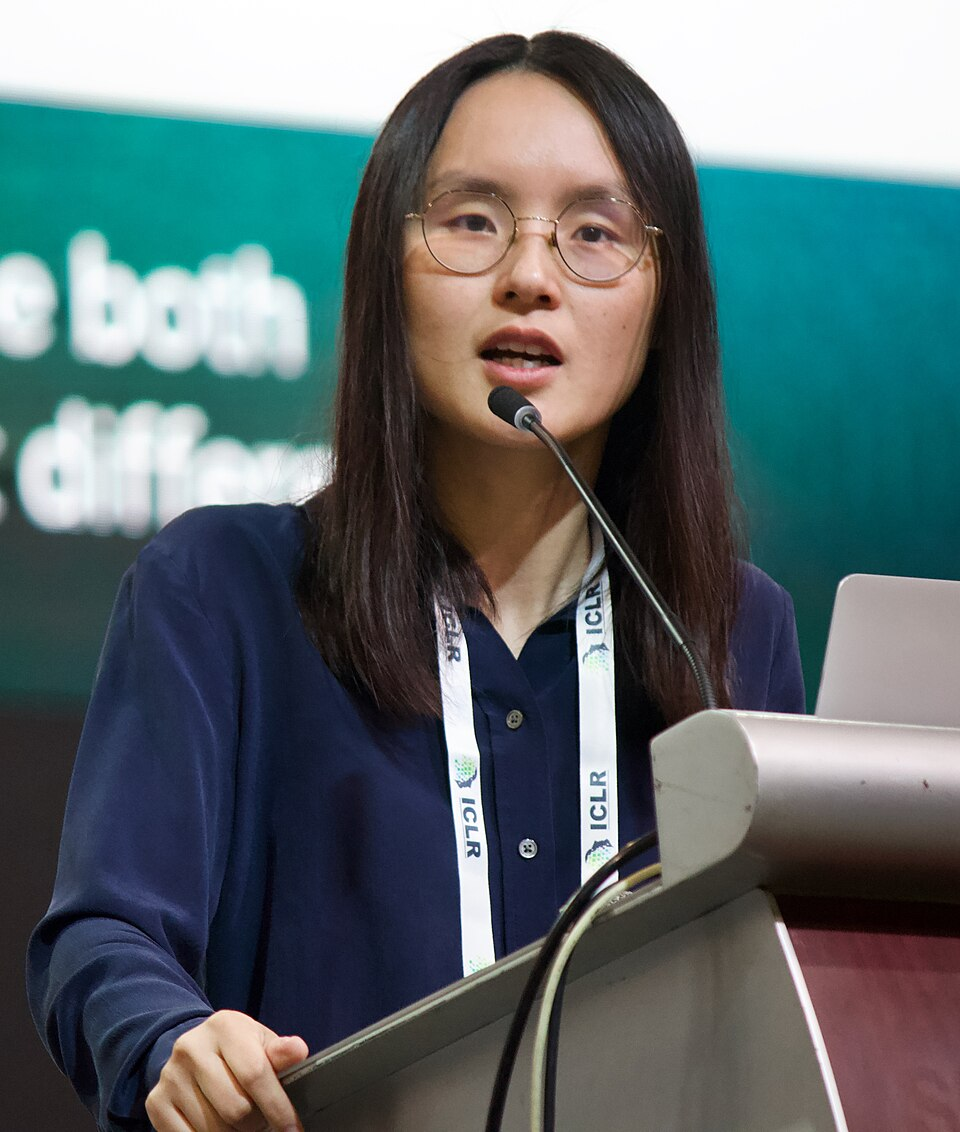 Danqi Chen (陈丹琦)合作论文数2
 Ruoxi Jia合作论文数Bradley Department of Electrical and Computer Engineering, Virginia Tech2
 Chengzhuo Ni合作论文数Two Sigma2
 Qingyun Wu合作论文数College of Information Science and Technology, The Pennsylvania State University2
 Zhihua Zhang (张志华)合作论文数School of Mathematical Sciences, Peking University2
 Bo Li合作论文数Department of Computer Science, Siebel School of Computing and Data Science, The Grainger College of Engineering, University of Illinois Urbana-Champaign;Virtue AI2
 Russ B. Altman合作论文数Department of Bioengineering, Schools of Engineering & Medicine, Stanford University2Declan Campbell合作论文数1Yue Wu合作论文数1Yingqing Guo合作论文数1Kai Li合作论文数1Udari Madhushani Sehwag合作论文数1Baihe Huang合作论文数University of California, Berkeley1
 Yifu Lu合作论文数1




