In-context learning – performing tasks based on examples given in the prompt – is an important capability that has emerged in large language models and has received significant attention in both theory and practice. Existing theoretical work often focuses on settings where the learning uses information purely from the prompt. However, many practical instances of in-context learning require the model to retrieve factual knowledge stored in the model's parameters, with the context serving to identify which knowledge is relevant. In this work, we study how in-context learning leverages factual knowledge recall. We formalize this behavior by introducing the in-context factual recall (IC-recall) task, where a transformer is provided a context of (subject, answer) pairs generated from a hidden relation, along with a query subject, and must both infer this hidden relation and retrieve the corresponding answer. Factual knowledge is modeled by the transformer having access to a simple pre-constructed MLP associative memory storing (subject, relation, answer) triplets. We analyze the supervised fine-tuning dynamics of a one-layer transformer on IC-recall data and prove that the model successfully performs IC-recall by converging to a particular pairwise attention pattern. This fine-tuning stage requires a very small number of samples – only polylogarithmic in the number of stored knowledge triplets. Experiments verify our theoretical predictions and show that the pairwise attention pattern emerges even when the MLP layer is pretrained instead of constructed.
We study the problem of length generalization (LG) in transformers: the ability of a model trained on shorter sequences to maintain performance when evaluated on much longer, previously unseen inputs. Prior work by Huang et al. (2024) established that transformers eventually achieve length generalization once the training sequence length exceeds some finite threshold, but left open the question of how large it must be. In this work, we provide the first quantitative bounds on the required training length for length generalization to occur. Motivated by previous empirical and theoretical work, we analyze LG in several distinct problem settings: $\ell_\infty$ error control vs. average error control over an input distribution, infinite-precision softmax attention vs. finite-precision attention (which reduces to an argmax) in the transformer, as well as for one- or two-layer transformers. In all scenarios, we prove that LG occurs when the internal behavior of the transformer on longer sequences can be ``simulated'' by its behavior on shorter sequences seen during training. Our bounds give qualitative estimates for the required length of training data required for a transformer to generalize, and we verify these insights empirically. These results sharpen our theoretical understanding of the mechanisms underlying extrapolation in transformers, and formalize the intuition that richer training data is required for generalization on more complex tasks.
Long-horizon autoformalization of research mathematics fails not only at hard lemmas, but at scale: statements drift, dependencies tangle, context decays, and local repairs corrupt distant work. We present LeanMarathon, a multi-agent harness for reliable research-level Lean autoformalization. Its core abstraction is an evolving blueprint: a Lean file that serves simultaneously as formal proof skeleton, natural-language proof graph, and shared system of record. Four contract-scoped agents construct, audit, prove, and repair this blueprint. These agents are coordinated by a two-stage orchestrator that first stabilizes target fidelity through adversarial review and then discharges the proof directed acyclic graph (DAG) from its dynamic leaves upward in parallel CI-gated rounds. LeanMarathon turns one brittle multi-hour run into many local, recoverable, parallel transactions. We evaluate LeanMarathon on two recent research papers spanning four Erdős problems (#1051, #1196, #164, #1217). Across three autonomous runs, it formalizes all seven target theorems with no sorry, proving 258 lemmas and theorems. These results show that reliable AI co-mathematics requires not only stronger provers, but durable harnesses that preserve target fidelity across long mathematical developments. The code can be found at https://github.com/YuanheZ/LeanMarathon.
Natural language data follows a power-law distribution, with most knowledge and skills appearing at very low frequency. While a common intuition suggests that reweighting or curating data toward a uniform distribution may help models better learn these long-tail skills, we find a counterintuitive result: across a wide range of compositional reasoning tasks, such as state tracking and multi-step arithmetic, training under power-law distributions consistently outperforms training under uniform distributions. To understand this advantage, we introduce a minimalist skill-composition task and show that learning under a power-law distribution provably requires significantly less training data. Our theoretical analysis reveals that power law sampling induces a beneficial asymmetry that improves the pathological loss landscape, which enables models to first acquire high-frequency skill compositions with low data complexity, which in turn serves as a stepping stone to efficiently learn rare long-tailed skills. Our results offer an alternative perspective on what constitutes an effective data distribution for training models.
Significant recent work has studied the ability of gradient descent to recover a hidden planted direction $\theta^\star \in S^{d-1}$ in different high-dimensional settings, including tensor PCA and single-index models. The key quantity that governs the ability of gradient descent to traverse these landscapes is the information exponent $k^\star$ (Ben Arous et al., (2021)), which corresponds to the order of the saddle at initialization in the population landscape. Ben Arous et al., (2021) showed that $n \gtrsim d^{\max(1, k^\star-1)}$ samples were necessary and sufficient for online SGD to recover $\theta^\star$, and Ben Arous et al., (2020) proved a similar lower bound for Langevin dynamics. More recently, Damian et al., (2023) showed it was possible to circumvent these lower bounds by running gradient descent on a smoothed landscape, and that this algorithm succeeds with $n \gtrsim d^{\max(1, k^\star/2)}$ samples, which is optimal in the worst case. This raises the question of whether it is possible to achieve the same rate without explicit smoothing. In this paper, we show that Langevin dynamics can succeed with $n \gtrsim d^{ k^\star/2 }$ samples if one considers the average iterate, rather than the last iterate. The key idea is that the combination of noise-injection and iterate averaging is able to emulate the effect of landscape smoothing. We apply this result to both the tensor PCA and single-index model settings. Finally, we conjecture that minibatch SGD can also achieve the same rate without adding any additional noise.
The empirical success of deep learning is often attributed to deep networks' ability to exploit hierarchical structure in data, constructing increasingly complex features across layers. Yet despite substantial progress in deep learning theory, most optimization results sill focus on networks with only two or three layers, leaving the theoretical understanding of hierarchical learning in genuinely deep models limited. This leads to a natural question: can we prove that deep networks, trained by gradient-based methods, can efficiently exploit hierarchical structure? In this work, we consider Random Hierarchy Models – a hierarchical context-free grammar introduced by arXiv:2307.02129 and conjectured to separate deep and shallow networks. We prove that, under mild conditions, a deep convolutional network can be efficiently trained to learn this function class. Our proof builds on a general observation: if intermediate layers can receive clean signal from the labels and the relevant features are weakly identifiable, then layerwise training each individual layer suffices to hierarchically learn the target function.
Semiautomata form a rich class of sequence-processing algorithms with applications in natural language processing, robotics, computational biology, and data mining. We establish the first Statistical Query hardness result for semiautomata under the uniform distribution over input words and initial states. We show that Statistical Query hardness can be established when both the alphabet size and input length are polynomial in the number of states. Unlike the case of deterministic finite automata, where hardness typically arises through the hardness of the language they recognize (e.g., parity), our result is derived solely from the internal state-transition structure of semiautomata. Our analysis reduces the task of distinguishing the final states of two semiautomata to studying the behavior of a random walk on the group $S_{N} \times S_{N}$. By applying tools from Fourier analysis and the representation theory of the symmetric group, we obtain tight spectral gap bounds, demonstrating that after a polynomial number of steps in the number of states, distinct semiautomata become nearly uncorrelated, yielding the desired hardness result.
Effective long-context modeling is not merely about retaining more of the past, but about preserving the information that may prove relevant later. Test-time training (TTT) is an appealing approach that performs online parameter updates for long-context modeling, yet existing TTT methods only optimize either reconstruction or online adaptation objectives without considering the future utility of retained information. In this work, we propose Test-Time Context Distillation (TTCD), a TTT framework that introduces a self-supervised objective for allocating limited memory capacity for future use. Specifically, TTCD uses a long-window teacher to supervise the fast weights of a short-window student, where the hidden-state discrepancy between them offers a dense, self-supervised signal guiding the model to memorize the contextual information crucial for future token predictions. We focus on an in-place variant: In-Place TTCD (IP-TTCD), which uses the existing MLP parameters as the fast weights. Experiments on long-context language modeling tasks show IP-TTCD consistently outperforms DeltaNet, Gated DeltaNet, sliding-window attention, and TTT when pre-trained from scratch. Furthermore, IP-TTCD allows pre-trained transformer models to adapt their parameters during inference through continual pre-training, gaining long-context capabilities with only a lightweight architectural augmentation. Our results position TTCD as a step toward architectural continual learning.
In deep learning, a central issue is to understand how neural networks efficiently learn high-dimensional features. To this end, we explore the gradient descent learning of a general Gaussian Multi-index model $f(\boldsymbol{x})=g(\boldsymbol{U}\boldsymbol{x})$ with hidden subspace $\boldsymbol{U}\in \mathbb{R}^{r\times d}$, which is the canonical setup to study representation learning. We prove that under generic non-degenerate assumptions on the link function, a standard two-layer neural network trained via layer-wise gradient descent can agnostically learn the target with $o_d(1)$ test error using $\widetilde{\mathcal{O}}(d)$ samples and $\widetilde{\mathcal{O}}(d^2)$ time. The sample and time complexity both align with the information-theoretic limit up to leading order and are therefore optimal. During the first stage of gradient descent learning, the proof proceeds via showing that the inner weights can perform a power-iteration process. This process implicitly mimics a spectral start for the whole span of the hidden subspace and eventually eliminates finite-sample noise and recovers this span. It surprisingly indicates that optimal results can only be achieved if the first layer is trained for more than $\mathcal{O}(1)$ steps. This work demonstrates the ability of neural networks to effectively learn hierarchical functions with respect to both sample and time efficiency.
Despite the empirical advantages of deep networks over shallow ones, theoretical depth separations largely concern approximation power, while algorithmic results are mostly limited to comparisons between two- and three-layer networks. In this work, we prove the first algorithmic separation between constant-depth and logarithmic-depth networks. Specifically, we identify a class of Boolean functions with hierarchically structured Fourier spectra that logarithmic-depth networks can learn efficiently using layerwise coordinate descent by reconstructing the spectra hierarchically and adaptively. We also exhibit a subclass for which every constant-depth, polynomial-width network with sufficiently regular activations and controlled spectral norms must incur constant L^2 approximation error under the uniform distribution over the hypercube.
On-policy preference learning algorithms for language model alignment such as online direct policy optimization (DPO) can significantly outperform their offline counterparts. We provide a theoretical explanation for this phenomenon by analyzing how the sampling policy's coverage evolves throughout on-policy training. We propose and rigorously justify the \emph{coverage improvement principle}: with sufficient batch size, each update moves into a region around the target where coverage is uniformly better, making subsequent data increasingly informative and enabling rapid convergence. In the contextual bandit setting with Bradley-Terry preferences and linear softmax policy class, we show that on-policy DPO converges exponentially in the number of iterations for batch size exceeding a generalized coverage threshold. In contrast, any learner restricted to offline samples from the initial policy suffers a slower minimax rate, leading to a sharp separation in total sample complexity. Motivated by this analysis, we further propose a simple hybrid sampler based on a novel \emph{preferential} G-optimal design, which removes dependence on coverage and guarantees convergence in just two rounds. Finally, we develop principled on-policy schemes for reward distillation in the general function class setting, and show faster noiseless rates under an alternative deviation-based notion of coverage.
How many key-value associations can a d× d linear memory store? The answer depends not only on the d^2 degrees of freedom in the memory matrix, but also on the retrieval criterion. Under isotropic Gaussian embeddings, we prove a sharp threshold for top-1 retrieval, where every signal must beat its largest distractor: the critical value of d^2/(nlog n) is 2. Above the threshold, we explicitly construct a linear memory that retrieves all n associations with high probability; below it, no data-dependent linear memory can do so. The log n factor is therefore the unavoidable extreme-value cost of winner-take-all decoding. Without the logarithmic factor—that is, when n/d^2∈(0,∞)—simultaneous top-1 retrieval is impossible. The matched target can nevertheless remain near the top of the ranking. We capture this weaker retrieval goal with the Tail-Average Margin (TAM), which, for list size k, compares each signal with the average of its k strongest competitors; a positive TAM margin certifies that the target belongs to the top-k candidate list. When k/n→ r∈(0,1), we learn the memory by empirical risk minimization with a smoothed TAM objective and derive an exact high-dimensional characterization through a two-parameter scalar variational problem. The result gives limiting laws for signal and competitor scores, margins, and percentile ranks. Sending the ridge parameter to zero after the high-dimensional limit yields a closed-form critical load α_c(r) separating vanishing from positive average loss. The analysis in this work also develops a coupled leave-one-out method for matrix-valued empirical risk problems in which each sample enters many dependent comparisons, a tool that may be useful beyond associative memory.
Existing theory suggests that for linear regression problems categorized by capacity and source conditions, gradient descent (GD) is always minimax optimal, while both ridge regression and online stochastic gradient descent (SGD) are polynomially suboptimal for certain categories of such problems. Moving beyond minimax theory, this work provides instance-wise comparisons of the finite-sample risks for these algorithms on any well-specified linear regression problem. Our analysis yields three key findings. First, GD dominates ridge regression: with comparable regularization, the excess risk of GD is always within a constant factor of that of ridge, but ridge can be polynomially worse even when tuned optimally. Second, GD is incomparable with SGD. While it is known that for certain problems GD can be polynomially better than SGD, the reverse is also true: we construct problems, inspired by benign overfitting theory, where optimally stopped GD is polynomially worse. Finally, GD dominates SGD for a significant subclass of problems – those with fast and continuously decaying covariance spectra – which includes all problems satisfying the standard capacity condition.
Spectral optimizers such as Muon have recently shown strong empirical performance in large-scale language model training, but the source and extent of their advantage remain poorly understood. We study this question through the linear associative memory problem, a tractable model for factual recall in transformer-based models. In particular, we go beyond orthogonal embeddings and consider Gaussian inputs and outputs, which allows the number of stored associations to greatly exceed the embedding dimension. Our main result sharply characterizes the recovery rates of one step of Muon and SGD on the logistic regression loss under a power law frequency distribution. We show that the storage capacity of Muon significantly exceeds that of SGD, and moreover Muon saturates at a larger critical batch size. We further analyze the multi-step dynamics under a thresholded gradient approximation and show that Muon achieves a substantially faster initial recovery rate than SGD, while both methods eventually converge to the information-theoretic limit at comparable speeds. Experiments on synthetic tasks validate the predicted scaling laws. Our analysis provides a quantitative understanding of the signal amplification of Muon and lays the groundwork for establishing scaling laws across more practical language modeling tasks and optimizers.
Large language models achieve strong performance on many reasoning tasks when allowed to externalize intermediate steps as Chain-of-Thought (CoT). However, many questions require the model to internalize the multi-step reasoning within a single forward pass before generating the answer. We study this challenge through two-hop reasoning, a representative task where the model must compose multiple pieces of parametric knowledge within a single forward pass. Standard non-recurrent Transformers suffer from a depth-local storage problem: facts learned in earlier layers are unavailable where second-hop retrieval happens. We found that Looped Transformers mitigate this issue by reusing the same memory, but still generalize imperfectly. We show that the remaining bottleneck is representational. In the two-hop reasoning task, the first loop often makes the correct bridge entity nearly perfectly decodable, yet the corresponding hidden state remains poorly aligned with the bridge token embedding. Surprisingly, an easy training-free realignment intervention nearly closes the generalization gap. Building upon this insight, we propose DiscoLoop, a looping architecture whose recurrence carries both a discrete embedding channel and a continuous hidden-state channel. DiscoLoop achieves near-perfect accuracy with substantially fewer training steps across symbolic and synthetic-language multi-hop reasoning tasks. When applied to real-world pretraining, DiscoLoop attains lower training loss and stronger benchmark performance than looped-transformer baselines, suggesting that the mixed-channel design transfers to practical language modeling.
We present the first comprehensive Lean 4 formalization of statistical learning theory (SLT) grounded in empirical process theory. Our en-to-end formal infrastructure implement the missing contents in latest Lean library, including a complete development of Gaussian Lipschitz concentration, Dudley's entropy integral theorem for sub-Gaussian processes, and an application to least-squares (sparse) regression with a sharp rate. The project was carried out using a human-AI collaborative workflow, in which humans design proof strategies and AI agents execute tactical proof construction, leading to the human-verified Lean 4 toolbox for SLT. Beyond implementation, the formalization process exposes and resolves implicit assumptions and missing details in standard SLT textbooks, enforcing a granular, line-by-line understanding of the theory. This work establishes a reusable formal foundation and opens the door for future developments in machine learning theory. The code is provided in https://github.com/YuanheZ/lean-stat-learning-theory.
The success of Reinforcement Learning from Human Feedback (RLHF) critically depends on the quality of the reward model. However, while this quality is primarily evaluated through accuracy, it remains unclear whether accuracy fully captures what makes a reward model an effective teacher. We address this question from an optimization perspective. First, we prove that regardless of how accurate a reward model is, if it induces low reward variance, then the RLHF objective suffers from a flat landscape. Consequently, even a perfectly accurate reward model can lead to extremely slow optimization, underperforming less accurate models that induce higher reward variance. We additionally show that a reward model that works well for one language model can induce low reward variance, and thus a flat objective landscape, for another. These results establish a fundamental limitation of evaluating reward models solely based on accuracy or independently of the language model they guide. Experiments using models of up to 8B parameters corroborate our theory, demonstrating the interplay between reward variance, accuracy, and reward maximization rate. Overall, our findings highlight that beyond accuracy, a reward model needs to induce sufficient variance for efficient optimization.
We study deployment-efficient reward-free exploration with linear function approximation, where the goal is to explore a linear Markov Decision Process (MDP) without revealing the reward function, while minimizing the number of distinct policies implemented during learning. By ``deployment efficient'', we mean algorithms that require few policies deployed during exploration -- crucial in real-world applications where such deployments are costly or disruptive. We design a novel reinforcement learning algorithm that achieves near-optimal deployment efficiency for linear MDPs in the reward-free setting, using at most $H$ exploration policies during execution (where $H$ is the horizon length), while maintaining sample complexity polynomial in feature dimension and horizon length. Unlike previous approaches with similar deployment efficiency guarantees, our algorithm's sample complexity is independent of the reachability or explorability coefficients of the underlying MDP, which can be arbitrarily small and lead to unbounded sample complexity in certain cases -- directly addressing an open problem from prior work. Our technical contributions include a data-dependent method for truncating state-action pairs in linear MDPs, efficient offline policy evaluation and optimization algorithms for these truncated MDPs, and a careful integration of these components to implement reward-free exploration with linear function approximation without sacrificing deployment efficiency.
In-context learning (ICL) is a hallmark capability of transformers, through which trained models learn to adapt to new tasks by leveraging information from the input context. Prior work has shown that ICL emerges in transformers due to the presence of special circuits called induction heads. Given the equivalence between induction heads and conditional $k$-grams, a recent line of work modeling sequential inputs as Markov processes has revealed the fundamental impact of model depth on its ICL capabilities: while a two-layer transformer can efficiently represent a conditional $1$-gram model, its single-layer counterpart cannot solve the task unless it is exponentially large. However, for higher order Markov sources, the best known constructions require at least three layers (each with a single attention head) - leaving open the question: *can a two-layer single-head transformer represent any $k^{\text{th}}$-order Markov process?* In this paper, we precisely address this and theoretically show that a two-layer transformer with one head per layer can indeed represent any conditional $k$-gram. Thus, our result provides the tightest known characterization of the interplay between transformer depth and Markov order for ICL. Building on this, we further analyze the learning dynamics of our two-layer construction, focusing on a simplified variant for first-order Markov chains, illustrating how effective in-context representations emerge during training. Together, these results deepen our current understanding of transformer-based ICL and illustrate how even shallow architectures can surprisingly exhibit strong ICL capabilities on structured sequence modeling tasks.
Language model alignment methods, such as reinforcement learning from human feedback (RLHF), haveled to impressive advances in language model capabilities. However, existing techniques are limited by a widely observed phenomenon known as *overoptimization*, where the quality of the language model degrades over the course of the alignment process. Overoptimization occurs when a language model overfits to inaccuracies in an (either explicit or implicit) offline reward model, and drifts away from preferred responses covered by the data. To discourage such distribution shift, offline alignment methods typically employ KL-regularization, but this, as we show, is too weak to prevent degradation in performance. Then, can we design an efficient algorithm that is provably robust to overoptimization?In this paper, we advance theoretical understanding of sample-efficient offline alignment and introduce a new algorithm called $\chi^2$-Preference Optimization ($\chi$PO). $\chi$PO is a one-line change to Direct Preference Optimization (DPO; Rafailov et al. 2023), that modifies only the logarithmic link function in the DPO objective. Despite this minimal change, $\chi$PO implicitly implements the principle of *pessimism in the face of uncertainty* via regularization with the $\chi^2$-divergence---which quantifies uncertainty more effectively than KL-regularization---and provably alleviates overoptimization, achieving sample-complexity guarantees based on *single-policy concentrability*---the gold standard in offline reinforcement learning. This guarantee makes $\chi$PO the first simple, yet general-purpose offline alignment algorithm that is provably robust to overoptimization.
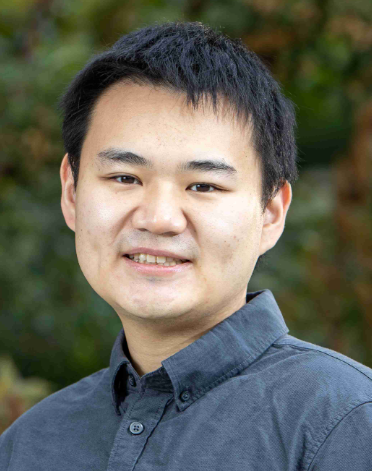 Simon Shaolei Du (杜少雷)合作论文数Paul G. Allen School of Computer Science & Engineering, University of Washington;XAI23
 Qi Lei (雷琦)合作论文数Courant Institute of Mathematical Sciences, New York University;Center for Data Science, New York University19
 Wenhao Zhan合作论文数17
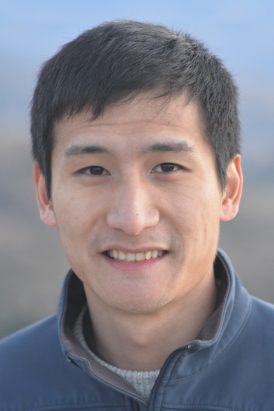 Yuekai Sun合作论文数Department of Statistics, College of Literature, Science, and the Arts, University of Michigan;Michigan Institute for Data Al in Society, University of Michigan17
 Eshaan Nichani合作论文数Department of Electrical and Computer Engineering, School of Engineering and Applied Science, Princeton University16
 Wen Sun合作论文数Department of Computer Science, Cornell University16
 Sham M. Kakade合作论文数Kempner Institute, Harvard University15
 Alex Damian合作论文数Kempner Institute, Harvard University13
 Jonathan Taylor合作论文数Department of statistics, School of Humanities and Sciences, Stanford University11
 Tianle Cai (蔡天乐)合作论文数Princeton University10
 Michael I. Jordan (迈克尔·乔丹)合作论文数Department of Electrical Engineering and Computer Sciences, University of California, Berkeley;Department of Statistics, University of California, Berkeley;Department of Industrial Engineering and Operations Research, University of California, Berkeley10
 Tengyu Ma (马腾宇)合作论文数Department of Computer Science, Stanford University;Institute for Human-Centered Artificial Intelligence, Stanford University;MongoDB10
 Zhuoran Yang合作论文数8
 Qiang Liu合作论文数Department of Computer Science, College of Natural Sciences, The University of Texas at Austin8
 Nathan Srebro合作论文数Department of Computer Science, University of Chicago;Toyota Technological Institute at Chicago8
 Meisam Razaviyayn合作论文数Department of Computer Science, University of Southern California;Department of Industrial and Systems Engineering, University of Southern California;Department of Electrical and Computer Engineering, University of Southern California8
 Masatoshi Uehara (上原雅俊)合作论文数EvolutionaryScale8
 Daniel Soudry合作论文数Department of Electrical Engineering, Technion - Israel Institute of Technology7
 Kyunghyun Cho合作论文数Center for Data Science, New York University;Courant Institute of Mathematical Sciences, New York University;Genentech Research & Early Development7
 Suriya Gunasekar合作论文数Microsoft Research, Redmond7Baihe Huang合作论文数University of California, Berkeley6
 Zhaoran Wang合作论文数Departments of Industrial Engineering & Management Sciences, Northwestern University;Departments of Computer Science, Northwestern University6
 Gaurav Mahajan合作论文数Institute for Foundations of Data Science, Yale University6
 Yuxin Chen合作论文数Department of Statistics and Data Science, The Wharton School, The University of Pennsylvania;Department of Electrical and Systems Engineering, School of Engineering and Applied Science, The University of Pennsylvania6
 Yunwei Ren (任云玮)合作论文数Department of Electrical and Computer Engineering, Princeton University5
 Jiaqi Yang (杨家齐)合作论文数Citadel Securities5
 Rong Ge合作论文数Department of Computer Science, Trinity College of Arts & Sciences, Duke University;Department of Mathematics, Trinity College of Arts & Sciences, Duke University5
 Nathan Kallus合作论文数Cornell Tech, Cornell University;Netflix5
 Kaixuan Huang (黄凯旋)合作论文数Department of Electrical and Computer Engineering, Princeton University5Ruosong Wang (王若松)合作论文数5
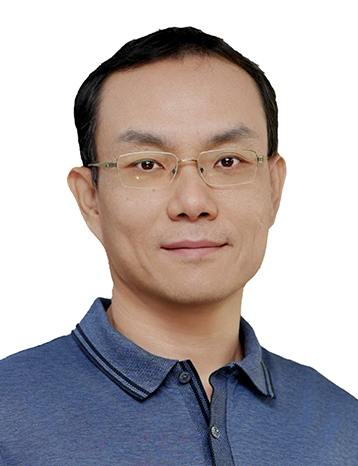 Liwei Wang (王立威)合作论文数Department of Machine Intelligence, School of Electronics Engineering and Computer Science, Peking University;School of Intelligence Science Technology, Peking University5
 Wei Hu (胡威)合作论文数Michigan Institute for Data & Al in Society, University of Michigan;College of Engineering, University of Michigan5
 Maziar Sanjabi合作论文数Meta AI;Facebook AI5
 Zihan Zhang (张子晗)合作论文数Network and Information Security Lab, Tsinghua University;Institute for Network Science and Cyberspace, Tsinghua University4
 Zihao Wang合作论文数Peking University4
 Cho-Jui Hsieh合作论文数Department of Computer Science, Samueli School of Engineering, University of California, Los Angeles;Arena4
 Ruiqi Gao合作论文数Google DeepMind4
 Zhiyuan Li (李志远)合作论文数4
 Kianté Brantley合作论文数Kempner Institute, Harvard University;School of Engineering and Applied Sciences, Harvard University4
 Haochuan Li合作论文数Laboratory for Information & Decision Systems, Schwarzman College of Computing, Massachusetts Institute of Technology4
 Kaifeng Lyu (吕凯风)合作论文数Institute for Interdisciplinary Information Sciences, Tsinghua University4
 Yu Bai合作论文数OpenAI4
 Harold Vincent Poor (文森特·珀尔)合作论文数Department of Electrical and Computer Engineering, School of Engineering and Applied Science, Princeton University;Center for Statistics and Machine Learning, Princeton University;High Meadows Environmental Institute, Princeton University4
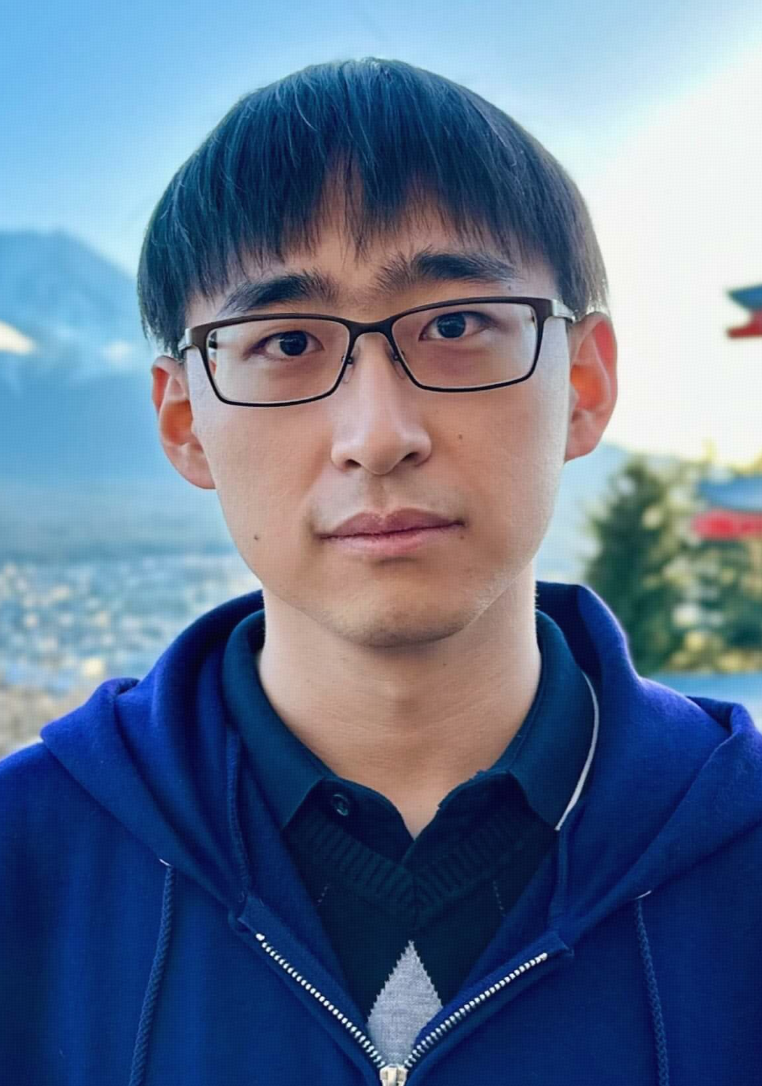 Denny Wu合作论文数Center for Data Science, New York University;Center for Computational Mathematics, Flatiron Institute4Dennis L. Sun合作论文数4
 Zixuan Wang (王子轩)合作论文数Pervasive Human Computer Interaction Laboratory, Department of Computer Science and Technology, Tsinghua University3
 Runzhe Wang (王润喆)合作论文数Department of Electrical and Computer Engineering, School of Engineering and Applied Science, Princeton University3
 Dijia Su合作论文数3




