Motility is a beneficial attribute that enables cells to access and explore new environments and to escape detrimental ones. The organelle of motility in Escherichia coli is the flagellum, and its production is initiated by the activating transcription factors FlhD and FlhC. The expression of these factors by the flhDC operon is highly regulated and influenced by environmental conditions. The flhDC promoter is recognized by sigma(70) and is dependent on the transcriptional activator cyclic AMP (cAMP)-cAMP receptor protein complex (cAMP-CRP). A number of K-12 strains exhibit limited motility due to low expression levels of flhDC. We report here a large number of mutations that stimulate flhDC expression in such strains. They include single nucleotide changes in the -10 element of the promoter, in the promoter spacer, and in the cAMP-CRP binding region. In addition, we show that insertion sequence (IS) elements or a kanamycin gene located hundreds of base pairs upstream of the promoter can effectively enhance transcription, suggesting that the topology of a large upstream region plays a significant role in the regulation of flhDC expression. None of the mutations eliminated the requirement for cAMP-CRP for activation. However, several mutations allowed expression in the absence of the nucleoid organizing protein, H-NS, which is normally required for flhDC expression.IMPORTANCEThe flhDC operon of Escherichia coli encodes transcription factors that initiate flagellar synthesis, an energetically costly process that is highly regulated. Few deregulating mutations have been reported thus far. This paper describes new single nucleotide mutations that stimulate flhDC expression, including a number that map to the promoter spacer region. In addition, this work shows that insertion sequence elements or a kanamycin gene located far upstream from the promoter or repressor binding sites also stimulate transcription, indicating a role of regional topology in the regulation of flhDC expression.
Cells of Escherichia coli are able to swim up gradients of chemical attractants by modulating the direction of rotation of their flagellar motors, which spin alternately clockwise (CW) and counterclockwise (CCW). Rotation in either direction has been thought to be symmetric and exhibit the same torques and speeds. The relationship between torque and speed is one of the most important measurable characteristics of the motor, used to distinguish specific mechanisms of motor rotation. Previous measurements of the torque–speed relationship have been made with cells lacking the response regulator CheY that spin their motors exclusively CCW. In this case, the torque declines slightly up to an intermediate speed called the “knee speed” after which it falls rapidly to zero. This result is consistent with a “power-stroke” mechanism for torque generation. Here, we measure the torque–speed relationship for cells that express large amounts of CheY and only spin their motors CW. We find that the torque decreases linearly with speed, a result remarkably different from that for CCW rotation. We obtain similar results for wild-type cells by reexamining data collected in previous work. We speculate that CCW rotation might be optimized for runs, with higher speeds increasing the ability of cells to sense spatial gradients, whereas CW rotation might be optimized for tumbles, where the object is to change cell trajectories. But why a linear torque–speed relationship might be optimum for the latter purpose we do not know.
We describe a new method for synchronizing bacterial cells. Cells that have transiently expressed an inducible mutant 'sticky' flagellin are adhered to a volume of glass beads suspended in a chromatography column though which growth medium is pumped. Following repression of flagellin synthesis, newborn cells are eluted from the column in large quantities exceeding that of current baby machine techniques by approximately 10-fold. Eluted cultures of 'baby cells' are highly synchronous as determined by analysis of DNA replication, cell division and other events, over time after elution from the column. We also show that use of 'minutes after elution' as a time metric permits much greater temporal resolution among sequential chromosomal events than the commonly used metric of cell size (length). The former approach reveals the existence of transient intermediate stages that are missed by the latter approach. This finding has two important implications. First, at a practical level, the baby cell column is a particularly powerful method for temporal analysis. Second, at a conceptual level, replication-related events are more tightly linked to cell birth (i.e. cell division) than to absolute cell mass.
Flagellated bacteria swim up gradients of chemical attractants by modulating the direction of rotation of their flagellar motors, but how this switching mechanism works is not understood. Here we show that the probability of the motor rotating in the clockwise direction increases under high load, when the motor spins slowly (at less than 50 Hz). We suggest that either the switch is responding to small changes in torque — the torque increases only fractionally between 50 Hz and stall — or it senses motor speed, perhaps by means of proton flux.
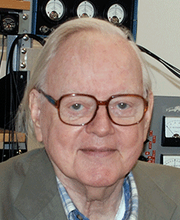 Howard C. Berg合作论文数Department of Molecular and Cellular Biology, Harvard College, Harvard University;Department of Physics, Harvard University9
 Jane Chui合作论文数Dept Civil & Environm Engn, MIT3
 Harold Auradou合作论文数FAST3
 Ruben Juanes合作论文数Departmrnt of Civil and Environmental Engineering, School of Engineering, Massachusetts Institute of Technology3Linda Turner合作论文数2
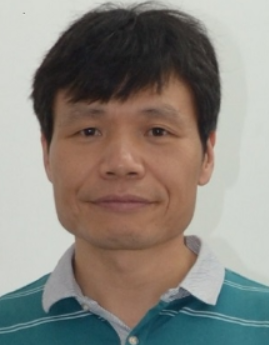 Junhua Yuan (袁军华)合作论文数School of Physical Sciences, University of Science and Technology of China2
 William Ryu合作论文数Department of Physics, University of Toronto;Donnelly Centre for Cellular and Biomolecular Research, Temerty Faculty of Medicine, University of Toronto1
 Carine Douarche合作论文数Centre National de la Recherche Scientifique, Université Paris-Sud1
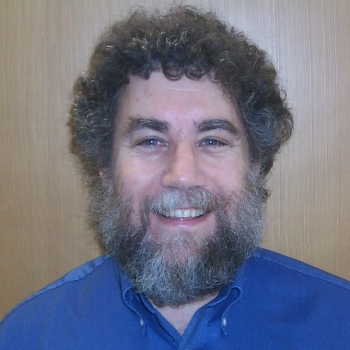 Steven M. Block合作论文数Department of Applied Physics, Stanford University;Department of Biology, School of Humanities and Sciences, Stanford University1
 John S. (Sandy) Parkinson合作论文数School of Biological Sciences, College of Science, The University of Utah1
 Nancy Kleckner合作论文数Department of Molecular and Cellular Biology, Harvard University1
 Andrew Mellor合作论文数Faculty of Medical Sciences, Newcastle University1Hilary Bullman合作论文数1
 Richard Flavell合作论文数Flavell Lab, Department of Immunobiology, Howard Hughes Medical Institute, School of Medicine, Yale University1Lynn Golden合作论文数1
 Elisabeth Weiss合作论文数Department of Biology II, Faculty of Biology, Ludwig-Maximilians-University of Munich1
 Erik Boye合作论文数Department of Radiation Biology, Institute for Cancer Research, Division of Cancer Medicine, Oslo University Hospital;Institute for Biosciences, University of Oslo1David O. Bates合作论文数1James J. Devlin合作论文数1Sanjay Krishnaswamy合作论文数1Birgit E. Scharf合作论文数Department of Molecular and Cellular Biology;Harvard University;Rowland Institute for Science;Rowland Institute for Science, Harvard University1Harm Tiddens合作论文数1




