This article analyses the prevailing types of interaction between two important actors, namely, Danish municipalities and the EU-funded LEADER Local Action Groups (LAGs), in a qualitative case study of LAG-Djursland. In addition, parallels are drawn to the national implementation of the programme through a quantitative study. The analysis addresses interaction at the policy-making (board) level, the operational (staff) level and the implementation (project) level and employs inter-organizational theory. The analysis concludes that at LAG-Djursland, the policy-making level has the least integrated mode of interaction with the municipalities, followed by the operational level, and the implementation level is the most integrated. However, the analysis indicates that the operational level is most important for achieving the objective of delivering rural development. The study shows that the municipalities are valuable partners in fulfilling the LAG objectives; however, it is difficult to define the inflection point at which municipalities become too dominant and come into conflict with the rationale behind the LEADER approach to self-governance in LAG partnerships.
The lack of generic methods to assess the environmental consequences of agricultural practices and the lack of consensus on monitoring and evaluation of environmental, agricultural and socio-economic effects of agri-environment schemes (AES) in EU Member States call for better evaluation methods. The ‘Agri-environmental Footprint’ project proposed to deal with these problems by establishing a new evaluation method, the Agri-Environmental Footprint Index (AFI). The AFI is an index customised to local stakeholder preferences, using expert knowledge for assessment of impacts and sensitivity, and indicators of the environmental state at farm level. In a Danish test case, agricultural practices at twenty-five farms in two groundwater protection zones were assessed. Data was collected from databases, registers, maps and interviews with farmers. The index was calculated for 1996/7 and 2006/7 to track temporal development and effects of entering an agri-environmental scheme. The Danish case demonstrated that the index can be used to track changes in environmental impacts and that entering agri-environmental scheme had a positive impact on the index value. However, the index should be used with caution. It is important to consider the robustness of each indicator: to assess whether changes will occur over time; whether changes are linked to management practices or external factors; and whether data are available up to date. Indicators dependent upon uptake data from agri-environmental schemes should be used with great caution. Retrospective use of stakeholder preferences is subject to uncertainty because preferences may have changed over time.
The Agri-Environment Footprint Index (AFI) has been developed as a generic methodology to assess changes in the overall environmental impacts from agriculture at the farm level and to assist in the evaluation of European agri-environmental schemes (AES). The methodology is based on multi-criteria analysis (MCA) and involves stakeholder participation to provide a locally customised evaluation based on weighted environmental indicators. The methodology was subjected to a feasibility assessment in a series of case studies across the EU. The AFI approach was able to measure significant differences in environmental status between farms that participated in an AES and non-participants. Wider environmental concerns, beyond the scheme objectives, were also considered in some case studies and the benefits for identification of unintentional (and often beneficial) impacts of AESs are presented. The participatory approach to AES evaluation proved efficient in different environments and administrative contexts. The approach proved to be appropriate for environmental evaluation of complex agri-environment systems and can complement any evaluation conducted under the Common Monitoring and Evaluation Framework. The applicability of the AFI in routine monitoring of AES impacts and in providing feedback to improve policy design is discussed. (C) 2011 Elsevier Ltd. All rights reserved.
Using a theoretical framework, the study proposes an index that can measure the social capital of local action group (LAG) projects. The index is founded on four indicators: number of ties, bridging social capital, recognition, and diversity, which are aggregated into one social capital index. The index has been tested in LAG-Djursland, Denmark, and the study further investigates whether the organisational affiliation, project financing, and LAG co-financing can explain the degree of social capital accumulation. Furthermore, the author has tested if there are connections between motivation for pursuing development projects similar to those implemented previously and the degree of social capital. The paper concludes that there are indications that projects hosted by municipalities tend to show the most social capital, there is no connection between the amount of project financing and social capital, and a high level of motivation leads to increased social capital.
This paper analyses the degree of interaction between Danish municipalities and the EU-funded LEADER Local Action Groups (LAGs), using the case of LAG–Djursland, and draws parallels with the national implementation of the program. The analysis deals with interactions at the board, operational, and implementation levels, and it employs interorganisational theory. The analysis concludes that at LAG–Djursland, the board level has the least integrated mode of interaction and that the operational and implementation levels were most integrated. The operational level is perceived as the most important level. This paper concludes that the municipality is a valuable partner in fulfilling LAG objectives; it is, however, difficult to define the point at which the municipality becomes overly dominant and thus in conflict with the rationale behind the LEADER approach.
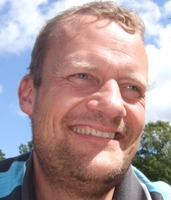 Henrik Vejre合作论文数Department of Geosciences and Natural Resource Management, Faculty of Science, University of Copenhagen3
 Annette Aagaard Thuesen合作论文数Danish Institute of Rural Research and Development;University of Southern Denmark;Danish Institute of Rural Research and Development, University of Southern Denmark3
 Jens Peter Vesterager合作论文数Forest and Landscape, University of Copenhagen3
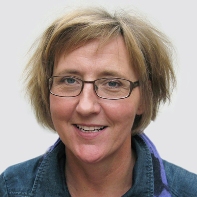 Lone Søderkvist Kristensen合作论文数Department of Geosciences and Natural Resource Management, Faculty of Science, University of Copenhagen2
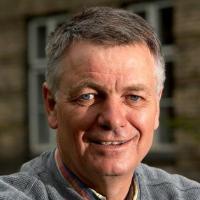 Jørgen Primdahl合作论文数Department of Geosciences and Natural Resource Management, Faculty of Science, University of Copenhagen2
 Laura Kröger合作论文数1
 Katalin Balazs合作论文数1George Vlahos合作论文数1
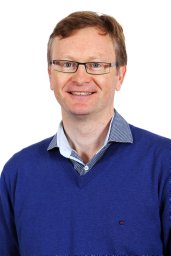 John A. Finn合作论文数Environm Res Ctr, TEAGASC1Gordon Purvis合作论文数1
 Laszlo Podmaniczky合作论文数1Stamatios Christopoulos合作论文数1Geertrui Louwagie合作论文数1
 Simon R. Mortimer合作论文数Dept. of Agriculture, University of Reading1
 Karlheinz Knickel合作论文数1Julian Park合作论文数1
 Karen A. Haysom合作论文数1
 Duncan B. Westbury合作论文数Dept. of Agriculture, University of Reading1Anja Yli-Viikari合作论文数1
 Alice Mauchline合作论文数1Greg Northey合作论文数1
 Jyrki Juhani Aakkula合作论文数Economic Research, MTT1Nadia Kasperczyk合作论文数1




