This book constitutes the refereed proceedings of the nine workshops co-located with the 15th International Conference on Practical Applications of Agents
In the future patients will have a more active role in strengthening and maintaining their own health. Telehealth can empower and motivate patients by giving them the chance to stay in their own homes instead of going to the hospital. A telehealth system is deployed in a patient's home hence it will influence his or her everyday live. Therefore we believe that a telehealth system shall adapt its behavior so that it will not be a burden for the patient/resident to use. To this aim we have extended an existing telehealth platform to reason about activities of daily living in a smart home scenario. The extensions have been tested on up to three of the CASAS datasets. The extensions are two algorithms: one for understanding the resident's everyday habits and one for predicting the resident's next activity. The prediction algorithm correctly predicts 69.76%, 73.06%, and 65.14% in the CASAS datasets.
Ambient Intelligence (AmI) is a recent paradigm emerging from Artificial Intelligence, where computers are used as proactive tools assisting people with their day-to-day activities, making everyone’s
Patients using telehealth systems have different needs and hence their treatments must differ accordingly. Different compositions of smart home sensors, telehealth devices, and services are used depending on the needs of the individual. This paper presents an open and flexible infrastructure implemented as an agent-based environment to handle the problem of seamless integration between the technologies used in telehealth deployments. The environment uses an ontology to facilitate semantic interoperability. Data providers are easily and transparently wrapped in JADE gateway agents, committed to the ontology, to integrate to the infrastructure.
This book constitutes the refereed proceedings of the workshops which complemented the 13th International Conference on Practical Applications of Agents and Multi-Agent Systems, PAAMS 2015, held in Salamanca, Spain, in June 2015. The36 revised full papers presented were carefully reviewed and selected from91 submissions. This volume presents the papers that have been accepted for the following workshops: Workshop on Agents and multi-agent Systems for AAL and e-HEALTH, Workshop on Agent-Based Solutions for Manufacturing and Supply Chain, Workshop on MAS for Complex Networks and Social Computation, Workshop on Intelligent Systems for Context-based Information Fusion, Workshop on Multi-agent based Applications for Smart Grids and Sustainable Energy Systems, Workshop on Multiagent System based Learning Environments, Workshop in Intelligent Human-Agent Societies.
Introduction: Telehealth is the use of information technology to provide healthcare services e.g. consultations and remote patient monitoring over distances. Telehealth has the potential to help lower the number and duration of hospital stays, strengthen patient empowerment etc. One of the major barriers for telehealth implementations on national scales is the lack of national ICT infrastructures to support it. This study outlines national telehealth infrastructure initiatives in the Nordic countries, where available. The starting point for this study was a 2010 report series by the European Commission on eHealth Strategies in the member states of EU and EEA. Where available and found, infrastructure documents published by the national governments are used.
Abstract This chapter starts with an introduction of a more decentralized approach for controlling systems for manufacturing and material handling. Different approaches for intelligent control is discussed, and finally two cases of material handling is presented, one large‐scale complex system of baggage handling in an airport and the other a case of scheduling items through a manufacturing process. A conceptual introduction to agent technologies is given which summarizes some of the important characteristics about both the single agent and when they collectively become a multiagent system. Architectures which describe the internal structure of the agent were discussed in the perspective of different agent types. Reactive agents directly respond to perceived inputs, whereas deliberative agents proactively pursue their own goals. This chapter introduced a number of structures to facilitate this, such as a hierarchical or team‐based organization.
This paper presents an ontology for the telehealth domain, a domain that concerns the use of telecommunication to support and deliver health related services e.g. patient monitoring and rehabilitative training. Our vision for the future of telehealth solutions is that they adapt their behavior to the needs, habits, and personality of the patient through user modeling and context awareness. The ontology will be our foundation for user modeling of patients in the telehealth domain, and hence it is one of the initial steps toward our vision. Compared to other ontologies within the domain, ours has explicit focus on: 1) personality traits of the patient, which is vital for fulfillment of our vision in term of adaptability, and 2) use of international standards to describe diseases, functioning and physiological measurement – ICD, ICF and SNOMED respectively – to promote interoperability with external systems. Besides being the foundation for user modeling, the ontology is a component in the Patient@home infrastructure, where it will ease the integration of applications to the platform, and facilitate semantic interoperability between the applications.
This paper presents an overview and recommendations of ICT infrastructures and reference architectures for telehealth in the Nordic countries (Denmark, Finland, Iceland, Norway, and Sweden). This study shows that so far only Denmark has designed a complete reference architecture, and by the end of 2015 Norway expects to complete their reference architecture. The foundation for both reference architectures is the framework by Continua Health Alliance. Of the remaining countries Sweden seems to be closing in on adopting Continua. So far, however, Sweden, Finland and Iceland has focused more on eHealth in general and not designed reference architectures or done implementations for telehealth specifically. This paper recommends that all the Nordic countries join Continua and collaborate to gain more influence on the organization's decision making.
On government level, Denmark has published both strategies and technical guidelines to strengthen implementation and use of telehealth in the Danish healthcare sector in the future. Consequently telehealth solutions will become an integrated part of the daily life of the patients equipped with these solutions. This paper proposes an architecture for a multi-agent system to be implemented together with the telehealth solution in a patient’s home. The purpose of the multi-agent system is to incorporate more intelligence into the gathering of healthcare related data and thereby learn about the behavior and level of physical activity of the patient, and other interesting context information.
This book constitutes the refereed proceedings of the workshops which complemented the 12th International Conference on Practical Applications of Agents and Multi-Agent Systems, PAAMS 2014, held in Sa
This book constitutes the refereed proceedings of the workshops which complemented the 12th International Conference on Practical Applications of Agents and Multi-Agent Systems, PAAMS 2014, held in Salamanca, Spain, in June 2014. This volume presents the papers that have been accepted for the following workshops: Workshop on Agent-based Approaches for the Transportation Modeling and Optimization (AATMO 2014); Workshop on Agent-based Modeling and Simulation of Complex Systems: Engineering and Applications (ABSEA 2014); Workshop on Agents and Multi-Agent Systems for Ambient-assisted Living and e-Health (A-HEALTH 2014); Workshop on Agent-based Solutions for Manufacturing and Supply Chain (AMSC 2014); Workshop on Intelligent Systems for Context-based Information Fusion (ISCIF 2014); Workshop on Multi-Agent based Applications for Smart Grids and Sustainable Energy Systems (MASGES 2014); Workshop on Active Security Through Multi-Agent Systems (WASMAS 2014); Workshop on Intelligent Human-Agent Societies (WIHAS 2014).
Ambient Intelligence (AmI) is a recent paradigm emerging from Artificial Intelligence (AI), where computers are used as proactive tools assisting people with their day-to-day activities, making everyo
Ambient Intelligence (AmI) is a recent paradigm emerging from Artificial Intelligence (AI), where computers are used as proactive tools assisting people with their day-to-day activities, making everyones life more comfortable.Another main concern of AmI originates from the human computer interaction domain and focuses on offering ways to interact with systems in a more natural way by means user friendly interfaces. This field is evolving quickly as can be witnessed by the emerging natural language and gesture based types of interaction.The inclusion of computational power and communication technologies in everyday objects is growing and their embedding into our environments should be as invisible as possible. In order for AmI to be successful, human interaction with computing power and embedded systems in the surroundings should be smooth and happen without people actually noticing it. The only awareness people should have arises from AmI: more safety, comfort and wellbeing, emerging in a natural and inherent way.ISAmI is the International Symposium on Ambient Intelligence and aiming to bring together researchers from various disciplines that constitute the scientific field of Ambient Intelligence to present and discuss the latest results, new ideas, projects and lessons learned, namely in terms of software and applications, and aims to bring together researchers from various disciplines that are interested in all aspects of this area.
In this article a case study about m-learning for elderlies using mobile devices is presented. The study focuses on a practical study about language learning for elderly students that attend classes in the so-called Inter-university program for Elderly People. The recent surge of university programs for elderly people requires novel solutions related to learning methods, directed by the special needs of this sector of the society.
 Yves Demazeau合作论文数Laboratoire d'Informatique de Grenoble;Centre National de la Recherche Scientifique;University of Southern Denmark;A2i Systems ApS10
 Javier Bajo合作论文数Universidad Politécnica de Madrid6
 Daniel Bjerring Jorgensen合作论文数6
 Vicent Botti合作论文数Computer Systems and Languages
Tecnologia Informatica-Inteligencia Artificial at the Universidad Politecnica de Valencia (UPV), Spain.5
Vicent Botti合作论文数Computer Systems and Languages
Tecnologia Informatica-Inteligencia Artificial at the Universidad Politecnica de Valencia (UPV), Spain.5 Pedro Valente合作论文数Comp Sci Lab, CNRS4
 Dante I. Tapia合作论文数Departamento Informática y Automática, Universidad de Salamanca4
 Paulo Novais合作论文数Universidade do Minho Departamento de Informatica4
 Pawel Pawlewski合作论文数Pozna, Poznan University of Technology4
 Jorge J. Gomez-Sanz合作论文数2
 J.M. Corchado合作论文数Department of Computer Science and Automation, University of Salamanca2Goreti Marreiros合作论文数Knowledge Engineering and Decision Support Group2
 Davy Preuveneers合作论文数Department of Computer Science, KU Leuven2Bent Bruun Kristensen合作论文数2Bjørn Grønbæk合作论文数2
 Rainer Unland合作论文数Institut für Informatik und Wirtschaftsinformatik, University of Duisburg-Essen;Department of Computer Science and Software Engineering, University of Canterbury2Shabbir Hossain合作论文数2
 Pedro García-Teodoro合作论文数Dpt. of Signal Theory, Telematics and Communications, University of Granada2
 Benoit Gaudou合作论文数Toulouse Comp Sci Inst IRIT, Univ Toulouse 1 Capitole2
 Juan Manuel Corchado Rodríguez合作论文数IoT Digital Innovation Hub, University of Salamanca2
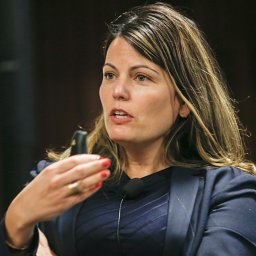 Nayat Sanchez-Pi合作论文数Inst Log Filosofia & Teoria Ciencia ILTC, Niteroi, RJ, Brazil2
 Jaroslaw Kozlak合作论文数Department of Computer Science, AGH University of Science and Technology in Kraków2Néstor D. Duque-Méndez合作论文数1V. Julian合作论文数1
 Vicente Julian合作论文数1Ana Paula Rocha合作论文数1
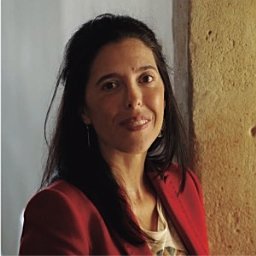 Amparo Casado Melo合作论文数Fac Educ, Pontif Univ Salamanca1
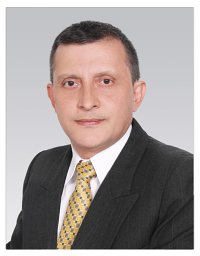 Nestor Duque合作论文数1
 Sara Rodriguez合作论文数University of Salamanca1
 José M. Molina合作论文数Grupo de Vida Artificial;Departamento de Informática;Universidad Carlos III de Madrid;Departamento de Informática, Universidad Carlos III de Madrid1
 Zita Vale合作论文数Knowledge Engineering and Decision Support Research Center, GECAD1
 Juan Francisco De Paz合作论文数Departamento Informática y Automática, Universidad de Salamanca1
 Philippe Mathieu合作论文数University of Lille Nord de France;Centre de Recherche en Informatique, Signal et Automatique de Lille, Université de Lille1
 Amparo Jimenez Vivas合作论文数1Juan M. Corchado合作论文数Facultad de Ciencias, Universidad de Salamanca;Departamento de Informatica y Automatica1
 Johan Holmgren合作论文数Remote Sensing Laboratory, Swedish University of Agricultural Sciences1Ask Just Jensen合作论文数1
 Elena Del Val合作论文数Departamento de Sistemas Informáticos y Computación, Universidad Politécnica de Valencia1
 Luis P. Reis合作论文数Artificial Intelligence and Computer Science Lab., Univ. Porto, Portugal and Faculty of Engineering of the University of Porto, Portugal1
 Alvaro Luis Bustamante合作论文数Univ. Carlos III de Madrid1Antonia Macarro合作论文数Pontifical University of Salamanca1
 Fernando de la Prieta合作论文数Department of Computer Science and Automation, University of Salamanca1




