This release contains errors in several files. Please use http://hdl.handle.net/11234/1-1983 instead.
Slovak Dependency Treebank (Slovenský zavislostný korpus) was created as part of the Slovak National Corpus at the Ľ. Stur Institute of the Slovak Academy of Sciences. The annotation follows the guidelines of the Prague Dependency Treebank (Czech), slightly modified in the spirit of Slovak grammatical tradition. Morphological tags, lemmas and dependency relations have been assigned manually to every word. The present dataset is a subset of the original treebank. We automatically selected the sentences where the two human annotators 100% agreed on the analysis. This increases the quality and trustworthiness of the data but it also results in selecting short sentences most of the time. An extended version may be published in the future when manually merged and checked annotation is available. The selected sentences have been converted to the CoNLL-X file format (original token IDs are preserved in the FEATS column). This PDT-style annotation will serve as the source for the first Slovak dataset in the Universal Dependencies (to be published separately).
Universal Dependencies is a project that seeks to develop cross-linguistically consistent treebank annotation for many languages, with the goal of facilitating multilingual parser development, cross-lingual learning, and parsing research from a language typology perspective. The annotation scheme is based on (universal) Stanford dependencies (de Marneffe et al., 2006, 2008, 2014), Google universal part-of-speech tags (Petrov et al., 2012), and the Interset interlingua for morphosyntactic tagsets (Zeman, 2008).
The paper presents a comparison of time expressions translations from Slovak to Bulgarian language using existing Bulgarian-Slovak/Slovak-Bulgarian electronic text corpora. It uses techniques of concordances and collocations generation from sentence aligned parallel bilingual text corpora to compare semantic content and related translations. The approach is applicable in language teaching and is useful for teaching less resourced languages. (C) 2015 The Authors. Published by Elsevier Ltd.
 Mária Šimková合作论文数6Hanna Nurmi合作论文数4Sam Bowman合作论文数4Katalin Simkó合作论文数4Catalina Maranduc合作论文数4Prokopis Prokopidis合作论文数4
 Dag Trygve Truslew Haug合作论文数Department of Philosophy, Classics, History of Art and Ideas, Faculty of Humanities, University of Oslo4
 Veronika Laippala合作论文数University of Turku4
 Timothy Dozat合作论文数Google4
 Vitaly Nikolaev合作论文数Google4Hanzhi Zhu合作论文数4
 Marcos Garcia-Fuentes合作论文数4Richárd Farkas合作论文数4Berta Gonzáles Saavedra合作论文数4Nina Mustafina合作论文数4Bohdan Moskalevskyi合作论文数4Lena Shakurova合作论文数4Matias Grioni合作论文数4Verginica Mititelu合作论文数4Hüner Kaşıkara合作论文数4
 Nguyen Thi Huyen合作论文数4Daniel Galbraith合作论文数4Shadi Saleh合作论文数4Elena Pascual合作论文数4Kira Droganova合作论文数Fac Math & Phys, Charles Univ Prague4
 umut sulubacak合作论文数4natalia silveira合作论文数4Jussi Piitulainen合作论文数4Memduh Gökırmak合作论文数4Anna Missilä合作论文数4Miriam Connor合作论文数4André Martins合作论文数4Jan Mašek合作论文数4Viktor Varga合作论文数4Mo Shen合作论文数4Shunsuke Mori合作论文数4Lars Ahrenberg合作论文数Linkopings universitet4Alane Suhr合作论文数4
 Kaja Dobrovoljc合作论文数University of Maribor4Zsolt Szántó合作论文数4
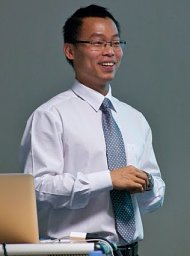 Phuong Le-Hong合作论文数VNU Univ Sci4
 Linh Ha合作论文数4
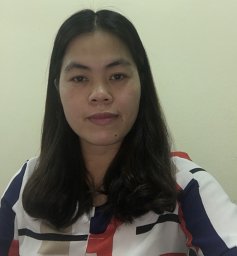 Thi Luong Nguyen合作论文数4
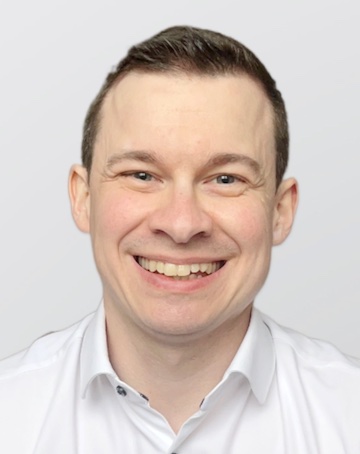 Sebastian Schuster合作论文数Faculty of Computer Science, University of Vienna4
 John Bauer合作论文数Vicarious AI4Jenna Kanerva合作论文数4
 Alexandre Rademaker合作论文数School of Applied Mathematics, Escola de Matemática Aplicada, Fundação Getúlio Vargas4
 Giuseppe G. A. Celano合作论文数Department of Computer Science, Leipzig Univerisity4
 Joakim Nivre合作论文数Department of Linguistics and Philology, Faculty of Languages, Uppsala University;Research Institutes of Sweden4




