Short Abstract From now on, authors writing in Transactions will no longer be expected to count their reference lists within the 10,000‐word limit. In this editorial, we take the opportunity to lay out the reasons behind this decision, encouraging prospective authors to critically reflect on how they cite, and highlighting the role of journals, reviewers, and editors in moving towards more inclusive citational practices.
In this paper, we explore how commercialised microfinance institutions and banks leverage remittance-related information to assess and provide microfinance loans to households in Cambodia. We argue that (microfinance) debt regimes profitably sustain precarity in the Cambodian translocal context. Building from five studies undertaken between 2014 and 2022, we illustrate our argument through a two-pronged approach. First, we critically unpack the empirical realities of the relationship between migration, remittances, and debt repayment. We show that the lending strategies of microfinance institutions and banks take into account the remittances received by rural households from adult children who have moved to cities or overseas. It is the social obligations within the family to remit money home – or ‘filial debts’ – that are being collateralised. As the monetary expression of these social obligations, remittances serve as a form of what we call ‘translocal collateral’ which (re)constitutes connections among family members across space to mitigate repayment risks for the microfinance industry, often at the expense of the well-being of its borrowers. Second, we contend that these financial institutions’ lending practices – and the development programmes and policies that promote them – rely on translocal strategies of social reproduction that are unstable and fragile. Sudden interruptions in remittance flows can have significant ramifications for rural households, forcing them to deal not only with decreases in income but also looming debts to repay. This should serve as a call for caution among development practitioners and policymakers promoting the leveraging of remittances for financial inclusion.
ABSTRACT This Intervention reflects on the multiple, contradictory and ambivalent relations human geography has with ‘the new’. Some sort of relation with the new is an inescapable and necessary part of all practices of knowledge generation. Newness, whether it be an empirical finding, an idea, a concept or an approach, can fuel the interest, wonder, urgency or surprise that can animate and sustain academic life. Yet, relations with the new are fraught. Claims of newness are enrolled into materially consequential systems and practices of audit, and the desire for newness is inseparable from the digitally mediated political economy of academic publishing. Questions persist about whether contemporary human geography is too beholden to the same or too enamoured by the new. Developing from a plenary panel at the RGS‐IBG 2025 annual conference, five contributors reflect on their own and (sub)disciplinary relations with the new in the context of these necessary but fraught relations. In doing so, the aim of the Intervention is to generate reflection and discussion about the place of newness in our research, what kinds of newness geography values, and the political and ethical implications of different ways of relating to and valorising the new.
The adoption of the Social Protection Floors Recommendation (SPFR) by the International Labour Conference in 2012 is widely recognised as an "historic" (Deacon 2013) and "radical" (Cichon 2013) reorientation of social protection, promising a new "universal and comprehensive" approach. Despite the SPFR's bold ambitions, however, the implementation of social protection floors at global- and national-level has proven uneven. In practice, the social protection floors initiative has generally been "subordinate" (Seekings, 2019) to the Decent Work agenda. Particularly in many lower-income settings in the global South, for instance, vertical expansion of benefits to waged workers through social insurance has taken precedence over the SPFR's more radical promise to horizontally expand the frontiers of social assistance. In Cambodia, for example, entrenched norms of fiscal and social conservativism have focused policy attention on expanding benefits provided to the 700,000 workers in the country's largest formal industry - the garment sector - rather than expanding the scope of social protection to include the yet more numerous informal or agricultural sector workforce. In this paper, we examine the consequences of this lopsided social protection strategy for its apparent beneficiaries: women working within the garment industry. We argue that the focus on extending support for formal workers, at the exclusion of informal workers is, in fact, detrimental to both groups. To illustrate these arguments, we draw on original data from the GCRF-funded ReFashion project, a longitudinal study tracing the impacts of the Covid-19 pandemic on a cohort of 200 garment workers in Cambodia over 24 months. We use this rich and grounded data to develop an emic perspective on social protection programming that shows how, in the absence of a robust social protection floor, gendered norms in Cambodia compel women to fill the gaps in social protection programming by the state. Women workers in the garment sector effectively fund a social safety net for family members through remittance transfers. However, garment sector salaries alone are insufficient for this task, leading to a "debtfare" (Soederberg 2014) model, in which workers finance these costs through increasing resort to personal debt. The result is a crisis of over-indebtedness among workers in the garment industry that undermines the achievement of Decent Work in the sector. We suggest that Covid-19 offers a moment for reflection, like that which followed the Global Financial Crisis of 2008 and inspired the SPRF itself, to learn from the vulnerabilities exposed by the pandemic and recentre a radical vision of social protection that delivers for all.
ABSTRACT A short statement on academic freedom in the current political climate as it relates to academic geographers, from representatives of the RGS‐IBG RHE Committee and the Editors of TIBG .
This paper evidences how many rural poor Cambodians are sick of debt. Based on original, mixed-method data (2020-2022), exploring credit provisioning in this context, the aim of this paper is to illuminate some of the conditions leading to rural Cambodians taking on debt to bolster their health, and the effects this is having on borrowers’ physical, psychological, emotional and social health. Specifically, we show how the health of our participants is constrained by a range of major illnesses that many suffer from and their poor food conditions, both exacerbated by the effects of climate change. Against this backdrop, many resort to debt-taking from multiple sources, including microfinance, as a coping strategy to pay for out-of-pocket health expenses and to cover food costs. While such loans offer a short-term means of sustaining health, we show that the extent of debt needed is leading to over-indebtedness which ultimately undermines health in the longer-term. Debtors are pushed to make further undue sacrifices to their food, treatment options and living conditions, specifically to service debt. We show how they are then rendered vulnerable to being exposed to, and experiencing, the negative effects of health and economic shocks, as well as to different forms of psychological, physical, emotional, social, and moral suffering to meet payments. Being sick of debt is especially acute for overindebted women who take on an increased double shift of productive and reproductive work to pay loans. While some of the adverse effects of over-indebtedness are made visible here, we warn that other forms of suffering potentially remain hidden, and will likely be expressed as longer-term population patterns of ill-health. In this context, over-indebtedness is hampering the government’s aim of achieving universal health coverage and interventions are needed that reduce the debt crisis among the rural poor in order to improve health.
This Symposium aims to replenish geographical thinking in relation to the depletion that is entailed through social reproduction labour, and the wider, structural depletion of social reproduction that is continuing apace in capitalist times. In this introduction, we trace the existing contours of how depletion through social reproduction has come to be conceptualised. Thereafter, we focus on four areas of development that the four spatially oriented papers of the Symposium probe at: first, on the links between harm and depletion; second, on depletion both through and of social reproduction; third, on the methods that are harnessed to examine depletion; and fourth, on the possibility and limits of appreciation and repair.
This paper is based on the ReFashion study which used mixed-method longitudinal research to track and amplify the experiences and coping mechanisms of 200 women garment workers in Cambodia as they navigated the financial repercussions of the COVID-19 pandemic. It develops the idea and practice of 'feminist longitudinal research' (FLR) through re-centring the too often marginalised knowledges and ways of knowing of Cambodian researchers and research participants. Hearing and learning from their experiences reveal the labours and care-work involved in the 'doing' of longitudinal research during a time of extraordinary crisis, and the potential for feminist consciousness raising and solidarity that can arise both within and beyond the confines of an academic study. The paper advocates for geographers and other social scientists to go beyond technically-framed issues of participant 'attrition' and 'retention' in longitudinal studies to think more creatively and critically about the process of longitudinal research and what it means for those taking part in it. FLR not only evidences the temporally contingent gendered impacts of a phenomenon, but can be distinguished by its intentionality and/or potential to challenge the patriarchal status quo, both in the lives of researchers and participants.
For a discipline so oriented around the study of wakeful geographies, the lack of direct conceptual engagement with the notion of wakefulness—a cognitive state in which the mind is conscious of, and responsive to, the external world—is all-the-more remarkable. In this article we advance geography by probing and revealing the links that exist between wakefulness and indebted life under capitalism. We show how villagers in rural Cambodia experience wakefulness in their day and nighttime lives through a punitive alertness to, and excessive rumination on, the pressures and challenges they face to repay microfinance debts on time. Capitalist debt demands a keen alertness and submission to the clock time of repayment obligations, and with this fosters a hyperalertness to debt that works to the consequential exclusion of sleep. The article evidences the enforced isorhythmic alignment between the demands of creditors and the bodies and minds of borrowers, thus demonstrating the importance of thinking about the debt relation through the heuristic tool of rhythm. This claim is evidenced further through the arrhythmic (discordant) impacts of the COVID-19 pandemic and the intensifying climate crisis, which are further undermining borrowers' hopes for debt-free lives. Ultimately, the mixed-method interview and photographic data presented in the article demonstrate the significance of the 24/7 nature of debt and broader trend toward diurnal expansionism. Both are leading to the physical, emotional, and existential enclosure of bodies and homes habituated into the rhythms and impetuses of capitalism.
In this paper I share insights and thoughts on the 'doing' of creative practice for representing and communicating lived experiences of slow violence. Reflecting on two UKRI GCRF studies I have been part of in Cambodia, and which both harnessed creative practice in their methodologies, I focus specifically on the slow violence of over-indebtedness effecting garment workers and farmers during, but also pre-dating, the COVID-19 pandemic. The paper intentionally 'makes space' for the films and portraiture photography from these studies to be viewed and exalted – the aim being to encourage political geographers to become more attuned to, and themselves embrace, the 'doing' of creative practice. Together they show first how the 'doing' of creative practice can deepen and add new dimensions to growing work on embodied relations and temporalities of debt and over-indebtedness. Second, the insights offered in this paper underscore the ethical importance of care, responsibility, and trust in geographical knowledge creation and the management of research projects concerned with slow violence. The paper ultimately impresses the dual value of the 'doing' of creative practice and its myriad politics, and being more attentive to what can be learned through creative practice itself about the political geographies of slow violence encountered in people's lives.
This is the first in a series of occasional editorials in which we guide our readers through groups of papers that we consider to be ‘way‐finding’ contributions to geographical debates. Our emphasis on ‘way‐finding’ and navigating through scholarly work engages a tension we identified around Transactions ' remit of publishing so‐called ‘landmark’ papers which are likely to stimulate and shape research agendas in Geography. We use this editorial as an opportunity to refocus attention away from the landmark paper as a static object of high repute that people come to visit, and towards the active role of landmarks as way‐finders used to navigate and engage with a landscape. The papers spotlighted in the editorial provide noteworthy examples of recent efforts to understand non‐human lifeworlds and the legitimisation of concepts and experiences constructed in/by Majority World scholarship. The papers are also notable for their careful approach to shaping agendas, marked by an awareness of past and present geographical scholarship, while also envisioning the discipline's future.
While legal geographers have considered the geography of legal processes, there has been less attention on how geographers are contributing to the making of law. By orientating attention to the experiences and attitudes of the geographical profession, this paper examines how specific forms of knowledge become legally useful and the ensuing ethical, legal, and disciplinary implications. We are interested in the situated nature of these productions, as scholars seek to advocate for specific communities, interests, or environments, practices that are set within and, at times, against personal or institutional priorities. We argue that geographical legal work involves transgressing established professional practices and locations of knowledge production. Through our interviews with geographers, we explore three aspects of transgression as a situated practice: the experiences of boundary crossing, the costs and benefits of entering new epistemic communities, and the lasting impacts of intervening in legal processes. In conclusion, we outline the mechanisms through which geographical legal work could be better accommodated within the work of professional geographers.
In this introduction to the collection of papers 'Qualitative Longitudinal Methodologies for Crisis Times', we argue that two main characteristics or 'qualities' of qualitative longitudinal methodologies (QLMs) can be identified for researching crisis. The first is that QLMs can function to repudiate crisis exceptionalism. The papers denounce the discrete and time-limited, instead impressing the ongoingness of crisis from the past, the present, and into the future. The second overarching point made in the introduction is that QLMs protect against 'helicopter' research, a heightened risk when studying crisis times. Together the papers offer a close and complex introspection on the use and outcome of QLMs in spaces and times of crisis from the perspective of researchers undertaking the research, and in multiple instances, research participants enrolled in them. There are two main contributions of qualitative longitudinal methodologies (QLMs) as told through the eight papers in the Special Section: first that QLMs guard against crisis exceptionalism, and second that they can mitigate against 'helicopter' research.
This report shows how geographical research and expertise is being used to shape law and legal expertise is being used to shape law and legal proceedings.
This paper focuses on how stigma is constructed and deconstructed through linguistic and aesthetic dimensions of “Rapid Build” housing in Dublin, Ireland. Through analyses of in-depth interviews and focus groups with residents and stakeholders, we explore how the nomenclature and brick-clad modular construction of the builds influenced residents’ experiences of stigma. Emphasizing the importance of the symbolic dimensions of housing materialities in mediating stigma, we argue resident experiences reflect the importance of understanding relationships between social housing construction and stigma power in three interrelated ways. First, the nomenclature and materiality of housing has a profound effect on social imaginaries of residents and their self-perceptions. Second, stigmatized groups are not devoid of agency within constructions of stigma, and are both actors in the embedding of, and resistance to, its production. Third, engaging with residents’ experiences is integral to better understanding, and resisting, the role of architecture in the “stigma machine”.
Drawing on 203 quantitative surveys with women workers in Cambodia and a further set of semi-structured interviews with 60 original participants, this paper is one of the very first to present empirically grounded research from garment workers on the financial challenges of navigating the first year of the COVID-19 pandemic. We show how in the making of clothes to be worn by Western consumers, poorly paid garment workers are reducing their eating to repay long-term debts and those newly taken on to cope with wage reductions resulting from factory closures, suspensions, and cuts in working hours. In its examination of this phenomenon, the paper improves understanding of the gendered contingencies of the COVID-19 pandemic and the 'wearing out' of garment workers through their attempts to reproduce life under (pre-existing) conditions of privation. We argue that the debt-hunger nexus is not new but reflects problems within Cambodia's capitalist development, and capitalism itself, as the costs of social reproduction and risk are privatised and financialised in the body politic. The COVID-19 pandemic is consolidating relations with financialised life such that they will outlast its duration and have long-lasting implications for workers and their families globally.
The operations of microfinance are exalted in mainstream development thinking as a key means of supporting smallholder farmers facing growing crises of agricultural productivity in the context of daily, ongoing, and often slow-onset climate disasters. Microfinance products and services are claimed to enhance coping and adaptative capacity by facilitating both risk recovery and reduction. Challenging the status quo, this paper brings together original and mixed-method data collected between 2020 and 2022 in Cambodia to critically examine the "green finance" agenda by highlighting the ways in which microfinance contributes to reproducing and exacerbating climate precarity and harm for many. We evidence how credit-taking can lead to more dangerous and individualised efforts to cope with, and adapt to, existing conditions at home, often at the cost of emotional and bodily depletion. By doing so, we contribute to answering calls for connecting literatures and thinking on social reproduction, depletion, and climate change adaptation.
 Laurie Parsons合作论文数Dept Geog, Royal Holloway Univ London17
 Nithya Natarajan合作论文数Department of International Development, School of Global Affairs, Faculty of Social Science & Public Policy, King’s College London16
 Sabina Lawreniuk合作论文数School of Geography, Faculty of Social Sciences, The University of Nottingham9
 Vincent Guermond合作论文数Royal Holloway Univ London6
 Lauren McCarthy合作论文数Royal Holloway Univ London5
 Bradley Lannes Garrett合作论文数Department of Geography, University of London5
 Ella Harris合作论文数Dept Geog, Univ London4Mel Nowicki合作论文数School of Social Sciences, Oxford Brookes University4Avril Maddrell合作论文数4Theavy Chhom合作论文数3Hengvotey So合作论文数3Dana Cuomo合作论文数Women's, Gender and Sexuality Studies, Lafayette College3
 Fiorella Picchioni合作论文数Nat Resources Inst, Univ Greenwich3Michele Lancione合作论文数DIST Dipartimento Interateneo Sci Progetto & Poli, Politecn Torino3
 Ayona Datta合作论文数Department of Geography, Faculty of Social and Historical Sciences, University College London3Dalia Iskander合作论文数Anthropology, Faculty of Social & Historical Sciences, University College London3
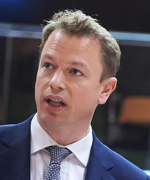 Alex Jeffrey合作论文数Department of Geography, University of Cambridge/Department of Politics and International Studies, University of Cambridge3
 Fiona McConnell合作论文数School of Geography and the Environment, University of Oxford3
 Colin Mcfarlane合作论文数Department of Geography, Faculty of Social Sciences & Health, Durham University3
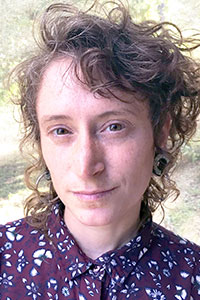 Erin McElroy合作论文数Department of American Studies, College of Liberal Arts, University of Texas at Austin2sarah l evans合作论文数2
 Amber Martin-Woodhead合作论文数Sch Geog, Univ Nottingham2
 Melissa Fernández Arrigoitia合作论文数Bowland Coll, Univ Lancaster2
 Professor Anna Tarrant合作论文数University of Lincoln2
 Brenda S.A. Yeoh合作论文数Department of Geography, Faculty of Arts and Social Sciences, National University of Singapore2
 W. Nathan Green合作论文数Department of Geography, Faculty of Arts and Social Sciences, National University of Singapore2
 Melissa Stepney合作论文数Department of Psychiatry, Medical Sciences Division, University of Oxford2
 Kath Browne合作论文数School of Geography, University College Dublin2Zanello Giacomo合作论文数2
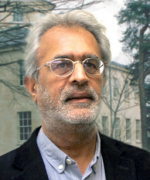 Ash Amin合作论文数Department of Geography, University of Cambridge2
 Alex Vasudevan合作论文数School of Geography and the Environment, University of Oxford2
 Sylvia Chant合作论文数Department of Geography and Environment, London School of Economics and Political Science2
 Kate Maclean合作论文数2
 Kendra Strauss合作论文数Department of Geographical and Earth Sciences, University of Glasgow2
 Milford Bateman合作论文数2
 Julie MacLeavy合作论文数School of Geographical Sciences, University of Bristol2
 Rosa Yi合作论文数1David Brown合作论文数1Long Ly Vouch合作论文数1Sebastien Michiels合作论文数1Thomas Cristofoletti合作论文数1Dave McLaughlin合作论文数1Christopher Ives合作论文数1
 William Jamieson合作论文数Royal Holloway, University of London1Maria Platt合作论文数Australia-Indonesia Centre, Monash University1James Esson合作论文数1
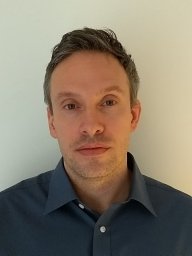 Markus Breines合作论文数Dept Infect Dis Epidemiol, London Sch Hyg & Trop Med1
 Anna Jackman合作论文数Royal Holloway Univ London1Jessica Hope合作论文数1




