Monitoring teacher well-being over time is essential in both research and practice to understand changes, evaluate interventions, and support occupational health. This study examines the longitudinal measurement invariance of the Dutch versions of three commonly used scales related to well-being: the Perceived Stress Scale (PSS-10), the Emotional Exhaustion subscale of the Maslach Burnout Inventory (MBI), and the Positive and Negative Affect Schedule (PANAS). Utilizing three bimonthly waves of data collected from a cohort of elementary school teachers in Flanders (n = 237), we evaluated the scales' configural, metric, scalar, and residual invariance over time. Confirmatory factor analyses indicated that all three scales demonstrate adequate longitudinal measurement invariance, supporting their stability and reliability for repeated measurement. Notably, this is among the first studies to test longitudinal measurement invariance of these widely used scales over a 6-month period in an applied occupational setting. These findings strengthen confidence in their use for monitoring well-being over time.
While the COVID-19 pandemic challenged the general public's health and well-being, it exacerbated the pre-existing well-being issues in the educational sector in many countries. Mindfulness-based interventions are often applied to protect and promote occupational well-being. To investigate how the well-being benefits of these interventions arise, we selected one accessible technique that is used in most of them: focused attention meditation. In the middle of the COVID-19 pandemic, 199 teachers voluntarily practiced five to ten minutes of meditation together with their pupils, every morning for six months. We employed a three-wave longitudinal design to follow any changes in the meditating teachers' well-being and compared these changes to a waitlist control condition of 42 teachers. Three dimensions of well-being were measured at baseline, half-time, and post-intervention: emotional, cognitive, and physical well-being. Latent growth curve models revealed that the meditation technique not only improves well-being but also prevents the development of well-being problems. The practice of focused attention meditation resulted in improvements in emotional and physical well-being and prevented the development of cognitive well-being problems that were observed within the control condition. The effects were strongest for emotional and cognitive well-being and followed a linear trend. This paper shows that the well-being effects of mindfulness-based interventions are at least in part due to the focused attention meditation that is practiced in them. Occupational groups that experience emotional, cognitive, or physical well-being issues can benefit from a few minutes of focused attention meditation per day.
Numerous initiatives are set up to gain insight into the (non-academic) careers of doctorate holders. Unfortunately, these initiatives use different methodologies, target specific groups and tap into different career aspects, making it difficult to make comparisons across groups, universities, countries and time. This article offers recommendations on how to get optimal insight into doctorate holders’ careers.
This study provides new insights into the long-term dynamics of LMX relationships. In line with the core tenets of LMX theory, we posit that the evolution of LMX relationships follows a pattern characterized by an increase from its start and a decrease towards its end. However, we suggest that at any time this pattern may be disrupted and changed by asymmetric exchange, e.g. a one-sided investment in the relationship that is abruptly higher or lower than usual, and thus diverges from the previous exchange pattern. On the basis of a longitudinal sample of 789 members, covering seven datapoints over one year, and using discontinuous growth curve modeling, we found that LMX evolution during development was bell-shaped and decreased towards dissolution. Positive asymmetric exchange led to an instant rise of LMX quality and was followed by gradual improvement of LMX quality. Negative exchange had a detrimental effect on the relationship, without subsequent restoration to previous quality levels. Our findings stress the need for further longitudinal research on LMX and how and why it may change.
 Anneleen Mortier合作论文数29Ronan Van Rossem合作论文数28
 Christophe Vanroelen合作论文数Department of Medical Sociology Brussels, Vrije Universiteit25
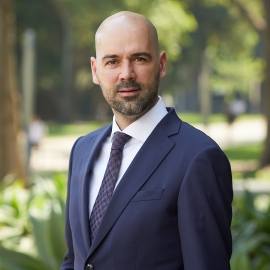 Frederik Anseel合作论文数School of Management & Governance, Business School, The University of New South Wales23
 Piet Bracke合作论文数Department of Sociology, Ghent University20
 Alain De Beuckelaer合作论文数Institute for Management Research, Radboud University16
 Jan Vranken合作论文数University of Antwerpen14
 Josephine Foubert合作论文数Department of Sociology, Ghent University11
 Sarah Van de Velde合作论文数10Christina Kling合作论文数9Murat Güneş合作论文数9Brian Cahill合作论文数9Janet Metcalfe合作论文数9
 Stephanie Gauttier合作论文数Univ Twente9
 Jana Lasser合作论文数Max Planck Inst Dynam & Self org, Am Fassberg 17, D-37077 Gottingen, Germany9
 Darragh McCashin合作论文数Univ Coll Dublin Sch Psychol9
 Susan Guthrie合作论文数9
 Katarzyna Wac合作论文数University of Geneva9
 Gábor Kismihók合作论文数Corvinus University of Budapest9
 Mohamad Nadim Adi合作论文数Univ. of Salford9
 Jesper Dahlgaard合作论文数Department of Clinical Biochemistry and Genetics, Odense University Hospital9
 Stefan Thomas Mol合作论文数9Fred Louckx合作论文数9
 Caroline Dewilde合作论文数Department of Sociology and Anthropology, University of Amsterdam9Mathias Schroijen合作论文数8
 Martin Grund合作论文数August8Lieze Stassen合作论文数7Guy Moors合作论文数Department of Methodology and Statistics, University of Tilburg7Justine Van de Velde合作论文数6
 Sharon Baute合作论文数Dept Polit & Publ Adm, Univ Konstanz6Femke de Keulenaer合作论文数5Noëmi Debacker合作论文数5
 Johan H.A. Van der Heyden合作论文数5
 Lydia Gisle合作论文数5Freddy Louckx合作论文数4Alessia Romagnoli合作论文数4
 Chiara Giorgi合作论文数Dipartimento Filosofia, Sapienza Univ Roma4
 Elena Ronda合作论文数4
 Lore Van Praag合作论文数Department of Sociology, Ghent University4
 Wendy Christiaens合作论文数4hanne derycke合作论文数3
 Ina Lodewyckx合作论文数3
 Karen Vandevelde合作论文数3Henk Roose合作论文数3
 Karen Van Aerden合作论文数3
 Vives Alejandra合作论文数3Love John G合作论文数3
 Joan Benach合作论文数Universitat Pompeu Fabra3
 Fernando Garcia Benavides合作论文数School of Public Health, University of Texas;Center for Research in Occupational Health, Universitat Pompeu Fabra;Departament de Ciències Experimentals i de la Salut, Universitat Pompeu Fabra3




