Styryl dyes have been among the most widely used probes for mapping membrane potential changes in excitable cells. However, their utility has been somewhat limited because their excitation wavelengths have been restricted to the 450–550 nm range. Longer wavelength probes can minimize interference from endogenous chromophores and, because of decreased light scattering, improve recording from deep within tissue. In this paper we report on our efforts to develop new potentiometric styryl dyes that have excitation wavelengths ranging above 700 nm and emission spectra out to 900 nm. We have prepared and characterized dyes based on 47 variants of the styryl chromophores. Voltage-dependent spectral changes have been recorded for these dyes in a model lipid bilayer and from lobster nerves. The voltage sensitivities of the fluorescence of many of these new potentiometric indicators are as good as those of the widely used ANEP series of probes. In addition, because some of the dyes are often poorly water soluble, we have developed cyclodextrin complexes of the dyes to serve as efficient delivery vehicles. These dyes promise to enable new experimental paradigms for in vivo imaging of membrane potential.
ADVERTISEMENT RETURN TO ISSUEPREVCommunication to the...Communication to the EditorNEXT3-Dimensional Submicron Polymerization of Acrylamide by Multiphoton Excitation of Xanthene DyesPaul J. Campagnola, David M. Delguidice, Gary A. Epling, Kurt D. Hoffacker, Amy R. Howell, Jonathan D. Pitts, and Steven L. GoodmanView Author Information Department of Physiology and Center for Biomedical Imaging Technology, University of Connecticut Health Center, Farmington, Connecticut 06030, Department of Chemistry, Stamford High, Stamford, Connecticut, Department of Chemistry, University of Connecticut, Storrs, Connecticut, and Center for Biomaterials, University of Connecticut Health Center, Farmington, Connecticut 06030 Cite this: Macromolecules 2000, 33, 5, 1511–1513Publication Date (Web):February 4, 2000Publication History Received29 June 1999Revised9 November 1999Published online4 February 2000Published inissue 1 March 2000https://doi.org/10.1021/ma991042eCopyright © 2000 American Chemical SocietyRIGHTS & PERMISSIONSArticle Views976Altmetric-Citations83LEARN ABOUT THESE METRICSArticle Views are the COUNTER-compliant sum of full text article downloads since November 2008 (both PDF and HTML) across all institutions and individuals. These metrics are regularly updated to reflect usage leading up to the last few days.Citations are the number of other articles citing this article, calculated by Crossref and updated daily. Find more information about Crossref citation counts.The Altmetric Attention Score is a quantitative measure of the attention that a research article has received online. Clicking on the donut icon will load a page at altmetric.com with additional details about the score and the social media presence for the given article. Find more information on the Altmetric Attention Score and how the score is calculated. Share Add toView InAdd Full Text with ReferenceAdd Description ExportRISCitationCitation and abstractCitation and referencesMore Options Share onFacebookTwitterWechatLinked InReddit Read OnlinePDF (89 KB) Get e-AlertsSUBJECTS:Fluorescence,Lasers,Manufacturing,Polymerization,Power Get e-Alerts
 Ananda G. Lugade合作论文数3
 Ewald Terpetschnig合作论文数2J.P. Wuskell合作论文数1bruce jc bernard合作论文数1Veronica D. Thomason合作论文数1Md Wei合作论文数1
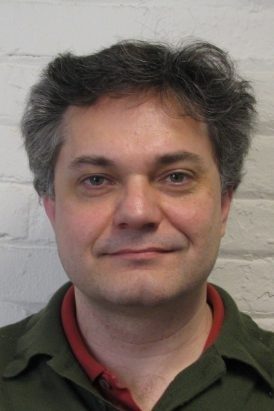 Michal Zochowski合作论文数College of Literature, Science, and the Arts, University of Michigan-Ann Arbor1
 Larry Cohen合作论文数Lawrence Cohen Lab, Department of Cellular and Molecular Physiology, School of Medicine, Yale University;Center for Functional Connectomics, Korea Institute of Science and Technology1Pitts J D合作论文数1
 Paul Campagnola合作论文数Department of Biomedical Engineering, College of Engineering, University of Wisconsin–Madison;Department of Medical Physics, School of Medicine and Public Health, University of Wisconsin–Madison;LOCI1
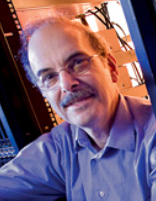 Leslie M. Loew合作论文数UConn Health;Department of Cell Biology, University of Connecticut1
 Lei Jin合作论文数1Gary A. Epling合作论文数1Amy R. Howell合作论文数Department of Chemistry, University of Connecticut1David Boudreau合作论文数1Ravikrishna Chebolu合作论文数1Reimund Engl合作论文数1Josef Kerimo合作论文数1
 Steven L. Goodman合作论文数1Andrew Bullen合作论文数1
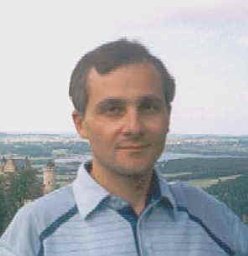 Leonid D Patsenker合作论文数STC “Institute for Single Crystals”, the National Academy of Sciences of Ukraine1
 Charles J. Collins合作论文数1




