We present a system that detects cancer on slides of gastric tissue sections stained with hematoxylin and eosin (H&E). At its heart is a classifier trained using the semi-supervised multi-instance learning framework (MIL) where each tissue is represented by a set of regions-of-interest (ROI) and a single label. Such labels are readily obtained because pathologists diagnose each tissue independently as part of the normal clinical workflow. From a large dataset of over 26K gastric tissue sections from over 12K patients obtained from a clinical load spanning several months, we train a MIL classifier on a patient-level partition of the dataset (2/3 of the patients) and obtain a very high performance of 96% (AUC), tested on the remaining 1/3 never-seen before patients (over 8K tissues). We show this level of performance to match the more costly supervised approach where individual ROIs need to be labeled manually. The large amount of data used to train this system gives us confidence in its robustness and that it can be safely used in a clinical setting.We demonstrate how it can improve the clinical workflow when used for pre-screening or quality control. For pre-screening, the system can diagnose 47% of the tissues with a very low likelihood (< 1%) of missing cancers, thus halving the clinicians' caseload. For quality control, compared to random rechecking of 33% of the cases, the system achieves a three-fold increase in the likelihood of catching cancers missed by pathologists.The system is currently in regular use at independent pathology labs in Japan where it is used to double-check clinician's diagnoses. At the end of 2012 it will have analyzed over 80,000 slides of gastric and colorectal samples (200,000 tissues).
A monoclonal antibody (mAb) specific to triacetone triperoxide (TATP) was produced from the stable hybridoma cell line 15B-1E, generated by the fusion of myeloma cells with spleen cells isolated from a mouse immunized with a conjugate of 3,3'(9,12-dimethyl-7,8,10,11,13,14-hexaoxaspiro[5.8]tetradecane -9,12-diyl)dipropanoic acid (DHTDA) with the carrier protein, keyhole limpet hemocyanin. The mAb, 15B-1E, bound DHTDA with a dissociation constant (K-D) of 4.7 x 10(-7)M. The binding of the mAb to TATP was examined by a competitive indirect enzyme-linked immunosorbent assay (ciELISA) and a surface plasmon resonance (SPR) assay. The K-D value of mAb 15B-1E to TATP was 5.2 x 10(-5)M. Using an mAb raised against DHTDA, we found that 1.8 mu M TATP could be detected using mAb 15B-1E.
TheBiophysicalSociety of Japan General IncorporatedAssociation with different initial ve]ocities and each simulation was executcd for a few hundred nanoscconds.We observed that ligand moleeules entcred into the correct lggand binding pockets, These results suggest that coarse-grailled simulation is a good approach te studying the protein-ligand bindjng processes.To obtain further deta{]s.we ca]culated the distributions and the flows of tigand molceulcs on the pTotein surfaee.We discuss thc dirference in the binding process between the proteins with different types of binding pockets. 3DI024MHfiUti;,FteatsOlstrexeM\[eS6fiX CIassificatioll of protein-]igand complexes by mathematicfi] topo]ogyMasanori Yamanaka (CSZ Nihon Llaiv.
The cytochrome P450 enzyme engineered for enhancement of vitamin D-3 (VD3) hydroxylation activity, Vdh-K1, includes four mutations (T70R, V156L, E216M, and E384R) compared to the wild-type enzyme. Plausible roles for V156L, E216M, and E384R have been suggested by crystal structure analysis (Protein Data Bank 3A50), but the role of T70R, which is located at the entrance of the substrate access channel, remained unclear. In this study, the role of the T70R mutation was investigated by using computational approaches. Molecular dynamics (MD) simulations and steered molecular dynamics (SMD) simulations were performed, and differences between R70 and T70 were compared in terms of structural change, binding free energy change (PMF), and interaction force between the enzyme and substrate. MD simulations revealed that R70 forms a salt bridge with D42 and the salt bridge affects the locations and the conformations of VD3 in the bound state. SMD simulations revealed that the salt bridge tends to be formed strongly when VD3 passes through the binding pocket. PMFs showed that the T70R mutation leads to energetic stabilization of enzyme-VD3 binding in the region near the heme active site. Interestingly, these results concluded that the D42-R70 salt bridge at the entrance of the substrate access channel affects the region near the heme active site where the hydroxylation of VD3 occurs; i.e., it is thought that the T70R mutation plays an important role in enhancing VD3 hydroxylation activity. A significant future challenge is to compare the hydroxylation activities of R70 and T70 directly by a quantum chemical calculation, and three-dimensional coordinates of the enzyme and VD3 obtained from MD and SMD simulations will be available for the future challenge.
Hepatocellular carcinoma (HCC) is one of the most common and aggressive human malignancies. Although several major risks related to HCC, e.g., hepatitis B and/or hepatitis C virus infection, aflatoxin B1 exposure, alcohol drinking and genetic defects have been revealed, the molecular mechanisms leading to the initiation and progression of HCC have not been clarified. To reduce the mortality and improve the effectiveness of therapy, it is important to detect the proteins which are associated with tumor progression and may be useful as potential therapeutic or diagnosis targets. However, previous studies have not yet revealed the associations among HCC cells, histological grade and AFP. Here, we performed two-dimensional difference gel electrophoresis (2D-DIGE) combined with MS for 18 HCC patients. To focus not on individual proteins but on multiple proteins associated with pathogenesis, we introduce the supervised feature selection based on stochastic gradient boosting (SGB) for identifying protein spots that discriminate HCC/non HCC, histological grade of moderate/well and high α-fetoprotein (AFP)/low AFP level without arbitrariness. We detected 18, 25 and 27 protein spots associated with HCC, histological grade and AFP level, respectively. We confirmed that SGB is able to identify the known HCC-related proteins, e.g., heat shock proteins, carbonic anhydrase 2. Moreover, we identified the differentially expressed proteins associated with histological grade of HCC and AFP level and found that aldo-keto reductase 1B10 (AKR1B10) is related to well differentiated HCC, keratin 8 (KRT8) is related to both histological grade and AFP level and protein disulfide isomerase-associated 3 (PDIA3) is associated with both HCC and AFP level. Our pilot study provides new insights on understanding the pathogenesis of HCC, histological grade and AFP level.
We have developed a high-throughput, two-dimensional-mapping (isoelectric point [pI], mass-to-charge ratio [m/z]) method by combining a capillary isoelectric focusing chip sealed with removable resin tape and a matrix-assisted laser desorption/ionization time-of-flight mass spectrometer. Sample proteins are separated in a meandering channel on the chip and immediately frozen. The tape is then removed and the proteins are freeze-dried. The freeze-drying maintains the separation state of the proteins and prevents movement of the sample solution, which can reduce pI resolution. A matrix solution is then applied and mass spectrometry is carried out by laser irradiation. The whole process takes less than 70 min, more than 10 times faster than with two-dimensional, polyacrylamide gel electrophoresis.
プロテオーム解析におけるデータ共有のためのXML記述方式を提案する.さらに,本XML記述を使ったプロトタイプを開発した.プロテオーム解析は,細胞内で発現しているタンパク質の網羅的同定やタンパク質の機能解明を目的とする.プロテオーム解析では,解析対象となる試料情報,タンパク質の分離手法,解析結果である分離されたタンパク質名称,機能情報などを扱う.特に,解析データを共有,交換し,実験の再現や比較を行うには,実験結果だけでなくタンパク質の分離手法などの実験手順情報も重要となる.我々は,バイオ研究者間のデータ共有をより簡単に行うことを目指し,プロテオーム解析結果だけでなく,実験手順情報も記述できるXMLを用いたデータ記述方法を提案する.さらに,実験手順に応じて情報を入力し容易にXMLデータを作成できるエディタと,このXMLデータを登録検索できるデータベースサーバシステムを開発した.
We have proposed an XML format, HUP-ML (Human Proteome Markup Language), for proteomics database to exchange proteome data among researchers and to accelerate their collaboration. HUP-ML data model is proteome-analysis-oriented so as to incorporate such information as sample source, details of sample preparation, 2-D gel electrophoresis images, spot identification, amino acid sequences, MS spectrum data, and so on. We have developed prototypes of HUP-ML Editor and web-based database system as a tool for creating HUP-ML documents and a platform for sharing HUP-ML documents, respectively.
 Hiroaki Fukunishi合作论文数4Akira Tsugita合作论文数4Jiro Shimada合作论文数4Kenji Miyazaki合作论文数4Bo Xu合作论文数2Yoshifumi Fukunishi合作论文数Biological Information Research Center (BIRC), National Institute of Advanced Industrial Science and Technology (AIST)2
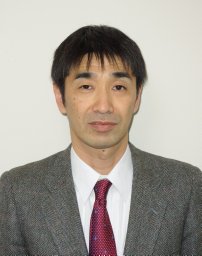 Mitsutaka Okumura (奥村光隆)合作论文数Quantum Chemistry Lab, Department of Chemistry, Graduate School of Science, Osaka University2
 Yutaka Yoshida合作论文数Graduate School of Engineering, Nagoya University2Hiroshi Isobe (磯部寛)合作论文数Research Institute for Interdisciplinary Science, Okayama University2
 Eishin Yaoita合作论文数2Hirotaka Yagi合作论文数2Hironori Mizuguchi合作论文数2atsushi marugame合作论文数1Masao Sato合作论文数1
 Wataru Hattori合作论文数Green Platform Res Labs, NEC Corp Ltd1Hiroko Someya合作论文数1Pierre-Francois Laquerre合作论文数1Tabuse Y合作论文数1
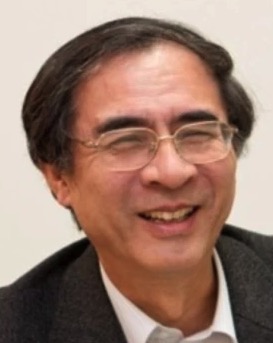 Akira Harada (原田明)合作论文数The Institute of Scientific and Industrial Research, Osaka University1
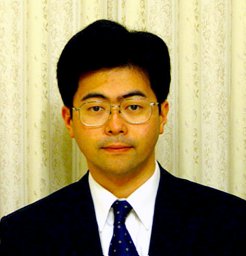 Hiroyasu Yamaguchi合作论文数Department of Periodontics and Endodontics, Tsurumi University School of Dental Medicine1
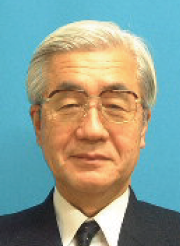 Kizashi Yamaguchi (山口兆)合作论文数Osaka University1
 Masao Honda (本多政夫)合作论文数Institute of Medical, Pharmaceutical and Health Sciences, Faculty of Health Sciences, Kanazawa University1
 Shuichi Kaneko (金子周一)合作论文数Division of Medical Sciences, Graduate School of Medical Sciences, Kanazawa University;Department of Information-Based Medicine Development, Kanazawa University1Tadashi Yamamoto合作论文数1
 Akira Saito合作论文数1
 Hans Peter Graf合作论文数NEC Laboratories America1Teruyuki Ueda合作论文数1
 Christopher Malon合作论文数NEC Labs America1Akihisa Kenmochi合作论文数1Yoko Takaki合作论文数1
 Reiji Teramoto合作论文数Sumitomo Pharmaceuticals Co., Ltd.1Toru Matsumoto合作论文数School of Dentistry, Aichi-Gakuin University1
 Hisao Kawaura合作论文数1
 Eric Cosatto合作论文数NEC Laboratories America1Hirotaka Minagawa合作论文数1Tomoharu Kiyuna合作论文数1Miyako Akiyoshi合作论文数1
 Takehiro Matsunaga合作论文数1




