Horticultural crops propagated vegetatively are at risk of infections by vascular pathogens, which are transmitted from infected cuttings. In grapevine nurseries, plants contaminated by fungi that cause grapevine trunk disease are widely documented. Detection of trunk diseases in the nursery could be an efficient approach to prevent their spread to vineyards. Early detection, however, is confounded by a delay of up to a year before visual symptoms appear. This incubation period exceeds the 6 to 8 months grapevines are grown in the nursery; visual inspection for leaf symptoms is thus not a means of detection. We evaluated hyperspectral imagery as a non-destructive alternative. Host responses (anatomical, physiological, transcriptomic) have been documented within weeks of infection. Such responses may be associated with changes in hyperspectral reflectance of asymptomatic leaves. For 14 weeks, we compared hyperspectral reflectance (410 to 1000 nm) of asymptomatic leaves on potted grapevines, the woody stems of which were either inoculated with fungi that cause trunk diseases Botryosphaeria dieback (Neofusicoccum parvum) and Esca (Phaeomoniella chlamydospora and Tropicoporus texanus), are were non-inoculated (controls). Destructive sampling of woody stems, at weeks 2, 8 and 14, revealed the largest internal wood lesions in N. parvum-inoculated plants. Normalised difference spectral indices (NDSIs) revealed spectral shifts among inoculated plants, for example, in the VIS spectrum (e.g., 670 nm) and at the ‘red edge’ (700–730 nm), at weeks 8 and 9. However, separate Principal Component Analyses (PCAs) of the VIS and NIR spectra, at weeks 8, 9, and 14, revealed high within-treatment variation among samples and PERMANOVA was not significant. Further, partial least-squares discriminant analyses (PLS-DAs), under a 2-class model, distinguished leaves of control plants versus each inoculation treatment with low to moderate discriminant accuracies of 55 to 79 %. High variation among plants within a treatment may have been due to some leaves having connections via the vascular network with infected cells in the woody stem, whereas other leaves did not. Further research under nursery conditions and for a longer incubation period may achieve higher discriminant accuracies between infected plants and healthy plants, to substantiate the prospects of hyperspectral imaging as an early detection tool for grapevine trunk diseases.
Armillaria mellea is the most virulent causal species of Armillaria root disease in California. Rootstocks widely planted in almond orchards, namely, peach genotypes (e.g., 'Lovell'), are highly susceptible. Here we report on resistance of newly screened, diverse genotypes: plum hybrids '14-4', 'Magnus', and 'Rootpac R'; complex hybrid 'Viking'; and peach × almond hybrid 'SG 1'. The assay involved rooting clonal genotypes in semisolid media, inoculating media with A. mellea, and assessing phenotypic traits (plant mortality, canopy necrosis, stem necrosis) weekly for 8 weeks. Effects of assay conditions on traits of noninoculated plants were also monitored. A precise propagation schedule accommodated inoculations on different dates. Included were Armillaria-resistant controls 'Krymsk 86' and 'MP-29' (plum hybrids), susceptible control 'Lovell' (peach), and previously screened 'Hansen 536' (peach × almond hybrid) and 'Marianna 2624' (plum hybrid). Genotypes were compared at inflection points in trait development and when controls were significantly different (canopy and stem necroses at week 4, mortality at week 7). Based on consistent patterns among traits of inoculated plants, most resistant were '14-4', 'Hansen 536', 'Magnus', and 'SG 1' (statistically similar to 'Krymsk 86' and 'MP 29'). 'Rootpac R' and 'Viking' were most susceptible (statistically similar to 'Lovell'). However, high mortality and canopy and stem necroses of noninoculated plants of 'Lovell', 'Rootpac R', and 'Viking' suggest these rootstocks were intolerant of the assay. 'Magnus', 'Marianna 2624', and 'SG 1' were statistically similar to resistant and/or susceptible controls, depending on the trait. Ongoing field trials will further evaluate performance of the rootstock genotypes.
Fungal trunk diseases are of major concern for tree fruit, nut, and grape growers throughout the world. These diseases include Eutypa dieback of grape, caused by Eutypa lata, band canker of almond, caused by Neofusicoccum mediterraneum and Neofusicoccum parvum, and twig and branch dieback of walnut, caused by N. mediterraneum, Botryosphaeria dieback of grape, caused by Diplodia mutila, Diplodia seriata, N. mediterraneum, and N. parvum, and esca of grape, caused by Phaeomoniella chlamydospora and Phaeoacremonium minimum. Given the common occurrence of mixed infections, and the similar wood symptoms at the macroscopic level, species-specific detection tools are needed. Fatty acid methyl ester (FAME) profiling can be an effective and inexpensive diagnostic tool. FAME analyses were conducted on pure cultures of multiple isolates per species to characterize profiles and assess whether this technique could result in consistent identification. FAME profiles were dominated by oleic acid (18:1 ω9c) and palmitic acid (16:0), with less abundant FAMEs in different ratios for each species and isolates within species. Canonical discriminant analyses revealed which minor FAMEs were most variable, with a total of 20 different FAMEs that can explain 69.01% of profile variance in the first two canonicals. Using these analyses, samples were self-tested and correctly sorted 97.18% of the time. Within species, canonical discriminant analyses were able to separate isolates further, often by original geographic location or by host plant species. These results further suggest that potential novel species, subspecies, or races may be present among the isolates analyzed, demonstrating the capacity of FAME profiling to have a role in discovering cryptic species and accurately identifying fungal pathogens in conjunction with other molecular techniques and genomic analyses.
Eutypa lata is a fungal pathogen of grapevine that causes widespread economic damage and threatens vineyard longevity worldwide. This study was initiated to further understanding of how grapevines resist E. lata infections, using an integrated approach combining inoculation assays in the greenhouse with physiological and biochemical measurements. Resistant 'Zinfandel' and susceptible 'Syrah' grapevines were subjected to control and inoculation treatments, and assessed for gas exchange, water status, photosynthetic biochemistry, hydraulic conductivity, wood chemistry, and fungal spread (lesion length). Infection reduced leaf photochemical function and gas exchange in Zinfandel and increased these variables in Syrah (P<0.05). Infection produced shorter lesions in Zinfandel (P<0.05), suggesting that down-regulating gas exchange limited pathogen spread by reducing the carbon supply to the pathogen or fungal movement in the transpiration stream. Neither cultivar up-regulated wood defense compounds in response to infection, but proanthocyanidin and catechin levels were constitutively higher in Zinfandel, and stilbenoid and flavonoid contents were constitutively higher in Syrah (P<0.05). Altogether, this study is the first to show that, counterintuitively, down-regulating physiological function in response to infection improves long-term resistance to E. lata. Screening responses in photochemical function or gas exchange could provide a high-throughput alternative to measuring lesion lengths in assessing resistance.
Grapevine trunk diseases, such as Esca, Botryosphaeria dieback, and Eutypa dieback, are caused by various Ascomycota and Basidiomycota fungi that colonize wood and form internal lesions. Basidiomycota fungi, such as Fomitiporia species, are associated only with the trunk disease Esca, and are wood-decay fungi. Variation in the extent of lesion development among the fungal pathogens reflects a combination of fungal virulence and host susceptibility. To evaluate factors that may affect lesion development, we compared in vitro wood-decay abilities and tolerance of host secondary metabolites (cell-wall and soluble phenolic compounds) of four fungi that cause trunk diseases: Eutypa lata (Eutypa dieback), Fomitiporia polymorpha (Esca), and Diplodia seriata and Neofusicoccum parvum (Botryosphaeria dieback). Fungi were grown on autoclaved blocks of Vitis vinifera 'Merlot' wood for six months, to examine fungal colonization of wood cells and percentages of wood components remaining after decay. Fungi were also grown on medium amended with starch, pectin, lignin, cellulose, hemicellulose, tannic acid, gallic acid, magnesium sulfate, or grape wood powder, to determine cell wall-degrading enzyme activity and impacts on fungal growth. Lastly, to determine tolerance of phenolic compounds, fungi were grown in medium amended with piceid, rutin, epicatechin, or gallic acid. Our novel findings for F. polymorpha include its preferential degradation of hemicellulose and pectin (and detection of corresponding enzymatic activities), but no degradation of lignin, in spite of growth in lignin-amended media and detection of laccase, lignin peroxidase, and peroxidase activities. Together, these findings suggest F. polymorpha has characteristics of both brown-rot and white-rot fungi. The type of wood decay caused by D. seriata and N. parvum, based on their degradation of pectin, cellulose, hemicellulose, and lignin (and detection of corresponding enzymatic activities), is characteristic of a soft rot, similar to that of E. lata. Unique among these three Ascomycetes was induction of N. parvum growth by piceid, rutin, epicatechin, and gallic acid, and efficient metabolism and/or detoxification of these phenolic compounds by N. parvum. As all four fungi metabolize components of the wood as substrate, and also can metabolize/detoxify host-defense compounds, a clearer understanding of their roles as wood-decay fungi might further research on managing the chronic wood infections.
The permanent organs of grapevines (Vitis vinifera L.), like those of other woody perennials, are colonized by various unrelated pathogenic ascomycete fungi secreting cell wall-degrading enzymes and phytotoxic secondary metabolites that contribute to host damage and disease symptoms. Trunk pathogens differ in the symptoms they induce and the extent and speed of damage. Isolates of the same species often display a wide virulence range, even within the same vineyard. This study focuses on Eutypa lata, Neofusicoccum parvum, and Phaeoacremonium minimum, causal agents of Eutypa dieback, Botryosphaeria dieback, and Esca, respectively. We sequenced 50 isolates from viticulture regions worldwide and built nucleotide-level, reference-free pangenomes for each species. Through examination of genomic diversity and pangenome structure, we analyzed intraspecific conservation and variability of putative virulence factors, focusing on functions under positive selection and recent gene family dynamics of contraction and expansion. Our findings reveal contrasting distributions of putative virulence factors in the core, dispensable, and private genomes of each pangenome. For example, carbohydrate active enzymes (CAZymes) were prevalent in the core genomes of each pangenome, whereas biosynthetic gene clusters were prevalent in the dispensable genomes of E. lata and P. minimum. The dispensable fractions were also enriched in Gypsy transposable elements and virulence factors under positive selection (polyketide synthase genes in E. lata and P. minimum, glycosyltransferases in N. parvum). Our findings underscore the complexity of the genomic architecture in each species and provide insights into their adaptive strategies, enhancing our understanding of the underlying mechanisms of virulence. [Formula: see text] Copyright © 2024 The Author(s). This is an open access article distributed under the CC BY-NC-ND 4.0 International license.
Trunk renewal was evaluated as a treatment for highly susceptible 'Sauvignon blanc' wine grapes with moderate leaf and wood symptoms of the trunk disease Esca in a 17-year-old vineyard 7 years after symptoms first appeared. The trunk was cut above the graft union, removing all woody parts of the vine above it, including infected wood. A new trunk was retrained from a shoot off presumably healthy wood at the base of the trunk. Prior to trunk renewal, we detected Esca pathogens from 26% of 97 symptomatic vines. Five years after trunk renewal, 72 retrained vines were still asymptomatic, 24 were replanted (i.e., did not produce a shoot after trunk renewal), and one had leaf and fruit symptoms. Chemical composition of asymptomatic fruit from asymptomatic-retrained vines (RV-AF) was compared to that of vines that were not retrained, the latter of which included asymptomatic fruit from asymptomatic vines (AV-AF) and both asymptomatic fruit (SV-AF) and symptomatic fruit (SV-SF) from the same symptomatic vines. Given the high proportion of asymptomatic retrained vines after five growing seasons, trunk renewal was an effective cultural practice. Although there were no differences in chemistry parameters used to make harvest decisions (total soluble solids, pH, and titratable acidity), SV-SF was unique in having the highest concentrations of the flavonoids catechin and epicatechin and the lowest concentrations of the volatile-aroma compounds hexanal and 2-hexanal. These findings in all three blocks among fruit with visible spots may reflect a host-defense response and/or the effect of Esca on fruit ripening.
Some Basidiomycete fungi are important plant pathogens, and certain species have been associated with the grapevine trunk disease esca. We present the genomes of four species associated with esca: Fomitiporia mediterranea, Fomitiporia polymorpha, Tropicoporus texanus, and Inonotus vitis. We generated high-quality phased genome assemblies using long-read sequencing. The genomic and functional comparisons identified potential virulence factors, suggesting their roles in disease development. Similar to other white-rot fungi known for their ability to degrade lignocellulosic substrates, these four genomes encoded a variety of lignin peroxidases and carbohydrate-active enzymes (CAZymes) such as CBM1, AA9, and AA2. The analysis of gene family expansion and contraction revealed dynamic evolutionary patterns, particularly in genes related to secondary metabolite production, plant cell wall decomposition, and xenobiotic degradation. The availability of these genomes will serve as a reference for further studies of diversity and evolution of virulence factors and their roles in Esca symptoms and host resistance.
Eutypa dieback of grapevine is a trunk disease that impacts vineyard productivity worldwide. Grape germplasm is typically evaluated for resistance to Eutypa dieback through controlled inoculations in the greenhouse, although the high level of replication required of this approach (40 plants per genotype) can limit the total number of genotypes evaluated. An alternative approach is to evaluate naturally infected genotypes in the field. We rated the incidence and severity of vines with the diagnostic leaf symptoms of Eutypa dieback and the incidence of mortality among such vines of 973 Vitis vinifera accessions (planted in duplicate) at the US Department of Agriculture, National Clonal Germplasm Repository in Davis, CA, USA, which is maintained as a living collection for grape research. Across 3 years and spanning a total of 5 years (2011, 2013, and 2015), 120 accessions had leaf symptoms in one or more years (“susceptible accessions”). Courbu blanc [Davis Vitis identification tag (DVIT) 2313], Frankenthal blanc (DVIT 2115), and Pinot gris (DVIT 0907) were the only accessions with leaf symptoms each year. Accessions with the most severe leaf symptoms (a rating of 5 points) were Chasselas Napoleon (DVIT 0375) and Queen of the Vineyard (DVIT 0496). We identified susceptible accessions—namely, those related to ‘Chasselas’ and ‘Muscat’—with a shared genetic background, based on a previous single nucleotide polymorphism genotyping effort of the collection. Especially for grapevine, a long-lived perennial that is meant to produce a crop for decades, knowledge of susceptible accessions and their pedigrees can help inform breeding programs and studies on the host response to infection.
Eutypa dieback of grapevine is a trunk disease that affects vineyard productivity. Wood symptoms of this disease develop consistently in greenhouse-grown plants, after inoculation of woody stems with the causal fungus Eutypa lata. Wood symptoms are a common measure of host cultivar resistance and E. lata isolate virulence. Leaf symptoms of the disease also develop in the greenhouse, although reports of low correlations between severity of wood and leaf symptoms (for some cultivars and isolates) indicate that a definitive procedure is required for evaluating cultivar resistance. Three ‘phenotyping assays’, replicated with two E. lata isolates (BX1-10 and M14), were assessed for quantifying resistance of a set of Vitis vinifera cultivars (‘Black Corinth’, ‘Carignane’, ‘Husseine’, ‘Merlot’, ‘Muscat Hamburg’, ‘Palomino’, ‘Peloursin’, ‘Primitivo’, and ‘Thompson Seedless’). The methods were: Assay 1 (leaf and woody-stem symptoms measured 1 year post-inoculation on plants propagated from rooted, dormant cuttings); Assay 2 (green stem symptoms measured 4 months post-inoculation on plants propagated from rooted, green cuttings); and Assay 3 (leaf symptoms measured 6 weeks post-inoculation on plants propagated from rooted, dormant cuttings). High rates of mortality among some cultivars (‘Merlot’) in Assay 3 confounded results based on leaf symptoms. Results from Assays 1 and 2 were more consistent with each other, especially for the most resistant cultivars [‘Merlot’ and ‘Primitivo’ (aka ‘Zinfandel’)]’, than they were for these cultivars in Assay 3. Compared to resistant cultivars, there was more variation in the most susceptible cultivar, including ‘Black Corinth’, ‘Carignane’, ‘Husseine’, and ‘Thompson Seedless’, regardless of the assay. Assay 1 with isolate BX1-10 was the most repeatable and provided data on wood and leaf symptoms for cultivar comparisons. Assay 2 was the most rapid, and gave results similar to those from Assay 1. Assay 2 also accommodated germplasm that can only be propagated from green cuttings.
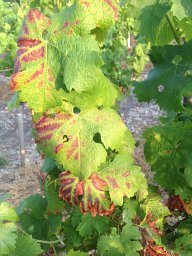
Xylem anatomy may change in response to environmental or biotic stresses. Vascular occlusion, an anatomical modification of mature xylem, contributes to plant resistance and susceptibility to different stresses. In woody organs, xylem occlusions have been examined as part of the senescence process, but their presence and function in leaves remain obscure. In grapevine, many stresses are associated with premature leaf senescence inducing discolorations and scorched tissue in leaves. However, we still do not know whether the leaf senescence process follows the same sequence of physiological events and whether leaf xylem anatomy is affected in similar ways. In this study, we quantified vascular occlusions in midribs from leaves with symptoms of the grapevine disease esca, magnesium deficiency and autumn senescence. We found higher amounts of vascular occlusions in leaves with esca symptoms (in 27% of xylem vessels on average), whereas the leaves with other symptoms (as well as the asymptomatic controls) had far fewer occlusions (in 3% of vessels). Therefore, we assessed the relationship between xylem occlusions and esca leaf symptoms in four different countries (California in the USA, France, Italy and Spain) and eight different cultivars. We monitored the plants over the course of the growing season, confirming that vascular occlusions do not evolve with symptom age. Finally, we investigated the hydraulic integrity of leaf xylem vessels by optical visualization of embolism propagation during dehydration. We found that the occlusions lead to hydraulic dysfunction mainly in the peripheral veins compared with the midribs in esca symptomatic leaves. These results open new perspectives on the role of vascular occlusions during the leaf senescence process, highlighting the uniqueness of esca leaf symptoms and its consequence on leaf physiology.
Background and goals Grapevine trunk diseases in the Columbia River Basin of eastern Washington include Cytospora dieback, Eutypa dieback, and Esca. Although some of the causal fungi are known (as Cytospora viticola, Eutypa lata, and Phaeomoniella chlamydospora, respectively), basic epidemiology is not. This makes it difficult to time management practices. The common assump-tion is that these pathogens infect through pruning wounds during the dormant season, as has been shown for causal fungi of some grapevine trunk dis-eases in California. As such, we evaluated fungicides for protecting wounds after pruning under eastern Washington conditions. Methods and key findings In March 2019, 2020, and 2021, we evaluated the protection efficacy of pyraclostrobin + fluxapyroxad and thiophanate-methyl sprayed within three days of pruning at an established Vitis vinifera Chardonnay vineyard in Prosser, WA. Within two days of fungicide treatment, C. viticola, E. lata, or P. chlamydospora (2000 spores per wound) were inoculated separately onto spurs, and molecular-detection attempts were made five to eight weeks later (after budbreak). Compared to water-treated spurs, detection rates of C. viticola and P. chlamydospora from thiophanate-methyl-treated spurs were lower in all three study years. Detection rates of E. lata from thiophanate-methyl-treated spurs were lower in one year. Conclusions and significance This suggests that dormant-season spray applica-tions of thiophanate-methyl as a pruning-wound pro-tectant can reduce grapevine spur infection by these pathogens. Little to no rain during the dormant sea-son in eastern Washington may limit opportunities for disease spread, but winter injury to the permanent, woody structure of the vine may create additional infection courts.
As grapevines mature in California vineyards they accumulate chronic wood infections by the Ascomycete fungi that cause trunk diseases, including Botryosphaeria dieback (caused by Diplodia seriata and Neofusicoccum parvum) and Esca (caused by Phaeomoniella chlamydospora). It is thought that such mixed infections become localized to separate internal lesions/cankers of the permanent, woody structure of an individual vine, but nonetheless the fungi all colonize the same vascular system. In response to infection by one pathogen, the host may initiate systemic biochemical changes, which in turn may affect the extent of subsequent infections by other pathogens. To test this hypothesis, we measured changes in phenolic compounds in the wood and lesion lengths of the pathogens, during sequential co-inoculations with different or identical pair-wise sequences of infection by D. seriata, N. parvum, or P. chlamydospora. Prior fungal infections only affected the development of subsequent D. seriata infections. Effects of fungal infections on phenolic compounds were variable, yet initial infection by D. seriata was associated with significantly higher concentrations of most phenolic compounds distally, compared to all other initial inoculation treatments. It was hypothesized that pre-existing phenolic levels can slow initial lesion development of fungal trunk pathogens, especially for D. seriata, but over time the pathogens appeared to overcome or neutralize phenolic compounds and grow unimpeded. These results demonstrate that effects of one fungal trunk pathogen infection is generally unable to distally affect another long-term, albeit shifts in host phenolics and other plant defenses do occur.
Grapevine trunk diseases cause serious economic losses to grape growers worldwide. The identification of the causal fungi is critical to implementing appropriate management strategies. Through a culture-based approach, we identified the fungal species composition associated with symptomatic grapevines from wine grapes in southeastern Washington and table grapes in the southern San Joaquin Valley of California, two regions with contrasting winter climates. Species were confirmed through molecular identification, sequencing two to six gene regions per isolate. Multilocus phylogenetic analyses were used to identify novel species. We identified 36 species from 112 isolates, with a combination of species that are new to science, are known causal fungi of grapevine trunk diseases, or are known causal fungi of diseases of other woody plants. The novel species Cadophora columbiana, Cytospora macropycnidia, Cytospora yakimana, and Sporocadus incarnatus are formally described and introduced, six species are newly reported from North America, and grape is reported as a new host for three species. Six species were shared between the two regions: Cytospora viticola, Diatrype stigma, Diplodia seriata, Kalmusia variispora, Phaeoacremonium minimum, and Phaeomoniella chlamydospora. Dominating the fungal community in Washington wine grape vineyards were species in the fungal families Diatrypaceae, Cytosporaceae and Sporocadaceae, whereas in California table grape vineyards, the dominant species were in the families Diatrypaceae, Togniniaceae, Phaeomoniellaceae and Hymenochaetaceae. Pathogenicity tests demonstrated that 10 isolates caused wood discoloration similar to symptomatic wood from which they were originally isolated. Growth rates at temperatures from 5 to 35°C of 10 isolates per region, suggest that adaptation to local climate might explain their distribution.
Armillaria root rot (ARR) is a major threat to the long-term productivity of stone fruit and nut crops across the major production areas in the US. There are no efficient methods of eradicating the long-lived inoculum buried in the soil before replanting, nor are there therapeutic methods to offset reduced productivity and tree death. Loss of productive land for the stone fruit and nut producers due to ARR is already happening. Without immediate short- and long-term actions, prime Prunus orchard land will be permanently out of production, resulting in a devastating effect on the industries and local communities. Causal pathogenic fungi consist of three geographically isolated species: Armillaria mellea in California, A. solidipes in Michigan, and Desarmillaria tabescens in the southeastern US. The most economical and sustainable approach to prevent the loss of peach, cherry, and almond production due to Armillaria infection is to develop ARR-resistant, horticulturally acceptable rootstocks. A trans-disciplinary, multi-crop, multi-institutional team of researchers, growers and nursery representatives are dedicated to finding short- and long-term solutions for the ARR replant issue affecting the US stone fruit industry. This project will provide the 'building blocks' needed to enable and accelerate on-going Prunus breeding programs, as well as support the testing of cultural practices for short-term solutions to increase tree longevity on replant sites.
Grapevine trunk diseases threaten grape production worldwide. In California, preventative practices (delayed pruning, fungicide applications after pruning) that reduce infections of pruning wounds by pathogen spores produced with rain are timed during the dormant season, when high spore-trap counts of the causal fungi are reported from studies in mature, symptomatic vineyards. Similar studies in young, asymptomatic vineyards are lacking. Given infrequent usage by California growers of preventative practices in young vineyards, empirical data on spore detection may provide convincing evidence to start preventing trunk diseases before symptoms appear. Active and passive spore traps were examined after rain from December to March for four years (2013-2017) in six young, asymptomatic (<5-years-old in year 1) and six mature, symptomatic (13-18-years-old in year 1) vineyards, in Lodi and Napa, California, USA wine-grape regions. We compared detection of spores of causal fungi of Botryosphaeria-, Eutypa-, and Phomopsis diebacks, which are common and widespread trunk diseases in California. From 769 samples, we isolated 15 species in culture, with DNA sequencing of 2 bar-coding loci for species-level identification. Detections (defined as presence of a species at least once per timepoint per site) were sparse in years 1 and 2, and so statistical analyses of detections pooled across timepoints and sites were restricted to years 3 and 4. Most common among all 12 sites and both trap types were Diplodia seriata and Diaporthe chamaeropis. Our novel species-level detections of six Diaporthe species fill a gap in the knowledge of which species can spread during California's dormant season. Overall, detections in young sites in years 3 and 4 (10 and 29 detections, respectively) were significantly lower than those of mature sites (31 and 57 detections, respectively). The presence of spores in young sites, even with no symptomatic vines, suggests preventative practices are needed in young vineyards. Nonetheless, our findings of more detections in mature sites reinforces higher usage by growers of preventative practices in mature, symptomatic vineyards.
The Botryosphaeriaceae is a fungal family that includes many destructive vascular pathogens of woody plants (e.g., Botryosphaeria dieback of grape, Panicle blight of pistachio). Species in the genera Botryosphaeria , Diplodia , Dothiorella , Lasiodiplodia , Neofusicoccum , and Neoscytalidium attack a range of horticultural crops, but they vary in virulence and their abilities to infect their hosts via different infection courts (flowers, green shoots, woody twigs). Isolates of seventeen species, originating from symptomatic apricot, grape, pistachio, and walnut were tested for pathogenicity on grapevine wood after 4 months of incubation in potted plants in the greenhouse. Results revealed significant variation in virulence in terms of the length of the internal wood lesions caused by these seventeen species. Phylogenomic comparisons of the seventeen species of wood-colonizing fungi revealed clade-specific expansion of gene families representing putative virulence factors involved in toxin production and mobilization, wood degradation, and nutrient uptake. Statistical analyses of the evolution of the size of gene families revealed expansions of secondary metabolism and transporter gene families in Lasiodiplodia and of secreted cell wall degrading enzymes (CAZymes) in Botryosphaeria and Neofusicoccum genomes. In contrast, Diplodia , Dothiorella , and Neoscytalidium generally showed a contraction in the number of members of these gene families. Overall, species with expansions of gene families, such as secreted CAZymes, secondary metabolism, and transporters, were the most virulent (i.e., were associated with the largest lesions), based on our pathogenicity tests and published reports. This study represents the first comparative phylogenomic investigation into the evolution of possible virulence factors from diverse, cosmopolitan members of the Botryosphaeriaceae .
In California vineyards, spore dispersal of fungi that cause grapevine trunk diseases Botryosphaeria dieback and Eutypa dieback occurs with winter rains. Spores infect through pruning wounds made to the woody structure of the vine in winter. Better timing of preventative practices that minimize infection may benefit from routine spore-trapping, which could pinpoint site-specific time frames of spore dispersal. To speed pathogen detection from environmental spore samples, we identified species-specific PCR primers and protocols. Then we compared the traditional culture-based method versus our new DNA-based method.•PCR primers for Botryosphaeria-dieback pathogen Neofusicoccum parvum and Eutypa-dieback pathogen Eutypa lata were confirmed species-specific, through extensive testing of related species (in families Botryosphaeriaceae and Diatrypaceae, respectively), other trunk-disease pathogens, and saprophytic fungi that sporulate in vineyards.•Consistent detection of N. parvum was achieved from spore suspensions used fresh or stored at -20°C, whereas consistent detection of E. lata was achieved only with a new spore-lysis method, using zirconia/silica beads in a FastPrep homogenizer (MP Biomedicals; Solon, Ohio, USA), and only from spore suspensions used fresh. Freezing E. lata spores at -20°C made detection inconsistent.•From environmental samples, spores of E. lata were detected only via PCR, whereas spores of N. parvum were detected both via PCR and in culture.
Fatty acid methyl ester (FAME) analyses can be useful for distinguishing microbial species. This study conducted FAME analyses on 14 fungal species known to cause grapevine trunk diseases. FAME profiles were dominated by oleic acid, albeit profiles were characteristic enough to separate species. Discriminant analyses suggested that palmitoleic acid/sapienic acid, pentadecylic acid, and an unsaturated 17-carbon fatty acid (17:1ω8 c)could explain 79.8% of the variance in the profiles among species in the first three discriminant functions. FAME profile libraries were created for use in a commercialized software, which was able to accurately identify isolates to the species level, with a low rate (9.4%) of samples to be reassessed. Dendrograms created using neighbor-joining cluster analyses with data from FAME profiles were compared with those using internal transcribed spacer (ITS) region sequences. This revealed that FAME profiles, albeit useful for tentative species identification, should not be used for determining phylogenetic relationships because the dendrograms were significantly unconcordant. Regardless, these results demonstrated the potential of FAME analyses in quickly and initially identifying closely related fungal species or confirming conclusions from other species identification techniques that would require independent validation.
 Travadon Renaud合作论文数Department of Plant Pathology, University of California38
 Daniel A. Lawrence合作论文数Department of Molecular & Integrative Physiology, University of Michigan Medical School;Department of Internal Medicine, University of Michigan Medical School20
 Fujiyoshi Phillip合作论文数15
 Rolshausen Philippe E合作论文数Dept Bot & Plant Sci, Univ Calif Riverside14
 Dario Cantu合作论文数Department of French and Italian, College of Letters and Science, University of California, Davi9
 Jonathan D. Kaplan合作论文数U. S. Army Research Institute8Erin R. Galarneau合作论文数7Rosa Figueroa-Balderas合作论文数Univ Calif Davis, Dept Viticulture & Enol, Davis, CA 95616 USA7
 Morales-Cruz Abraham合作论文数Department of Viticulture and Enology, University of California, Davis7Christopher M. Wallis合作论文数7
 Mark N. Lubell合作论文数Department of Environmental Science and Policy, University of California, Davis6
 Vicken Hillis合作论文数Graduate Group in Ecology;University of California , Davis;Graduate Group in Ecology, University of California , Davis6
 Gary D Foster合作论文数5Wayne Frank Wilcox合作论文数5Andy M Bailey合作论文数School of Biological Sciences, University of Bath5Xiaomei Cheng合作论文数5Barka Diarra合作论文数4
 Jadran Francisco Garcia合作论文数Univ Calif Davis, Dept Viticulture & Enol, Davis, CA 95616 USA4
 Pascal Lecomte合作论文数Bordeaux Sciences Agro, Université de Bordeaux;UMR1065 SAVE, INRA;ISVV, Université de Bordeaux4Lance Cadle-Davidson合作论文数Department of Plant;Cornell University;Department of Plant, Cornell University4
 Patrice Rey合作论文数Laboratoire de Biodiversité et Ecologie Microbienne ESMISAB, Université de Bretagne Occidentale-Brest Technopôle Brest-Iroise4
 Max Norton合作论文数Vancouver Sch Econ, Univ British Columbia3Albre Brown合作论文数3
 Melanie Massonnet合作论文数Cantu lab, Department of Viticulture and Enology, University of California, Davis3Chloe EL Delmas合作论文数3
 Andrea Minio合作论文数Department of Biotechnology, University of Verona3
 Kathryn L. Ford合作论文数3Monica L. Cooper合作论文数3Larry Bettiga合作论文数3
 Alexander H Purcell合作论文数3
 Sarah E. Bergemann合作论文数University of Wyoming;Botany Department;Botany Department, University of Wyoming3
 Beatrice Henricot合作论文数3
 Thomas Burr合作论文数Department of Plant Pathology, College of Agriculture and Life Sciences, Cornell University;New York State Agricultural Experiment Station2Gwenaelle Comont合作论文数2
 Martin P. A. Coetzee合作论文数2Allison Tally合作论文数2
 Bruce Reisch合作论文数School of Integrative Plant Science Horticulture Section Plant Breeding, College of Agriculture and Life Sciences, Cornell University/Genetics Section Cornell AgriTech, College of Agriculture and Life Sciences, Cornell University2
 David Gadoury合作论文数School of Integrative Plant Science Plant Pathology, College of Agriculture and Life Sciences, Cornell University/Plant-Microbe Biology Section Cornell AgriTech, College of Agriculture and Life Sciences, Cornell University2Ojeda Hernán合作论文数2
 Barba Paola合作论文数2
 Jerome Pouzoulet合作论文数Loire Viti Vini Distribution (LVVD), Z.A du Landreau, 49610, Mozé sur Louet, France.2Kluepfel Daniel A合作论文数2J. D. MacDonald合作论文数2
 Serge Savary合作论文数INRAE2
 David Renault合作论文数UMR CNRS 6553 Ecobio, Université de Rennes 12
 Guo-Liang Wang (王国梁)合作论文数Institute of Plant Protection, Chinese Academy of Agricultural Sciences2
 David M. Rizzo合作论文数Department of Plant Pathology;University of California , Davis;Department of Plant Pathology, University of California , Davis2Megan M. Kennelly合作论文数2John H. Andrews合作论文数2




