毫无疑问,近年来计算技术取得了长足的进步.但是,在未来的十年,主流计算技术中新的工作量、使用模式的出现及变化对未来的计算平台提出的要求,与过去十年所取得的进展也差不多,这些巨大的要求包括:更高的性能、更低的功率密度、更好的功能可扩展性.倘若出现这些使用计算机的震撼性的变化,我们怎样定义和构架未来的计算平台,就将不得不做出引人注目的改变.要整体地理解和满足的,不仅仅有计算的需要,而且还有接口以及系统基础设施的需要.Intel对这三个基础平台要素的演化的长期设想,以及驱动演化的架构的创新和核心能力,即是我们称之为平台2015(P1atfom 2015)的内容.除了考察相关的趋势、使用、平台处理含意之外,本文将集中在平台201 5的计算单元,描述Intel微处理器架构在未来十年的演化.
The BiiN operating system executive, an extensible multiuser, multitasking, object-based operating system that provides symmetric multiprocessing, distributed computing, transaction processing, and support for real-time programs, is discussed. Key system functions are embedded in VLSI to increase performance, reliability, availability and security. The operating system extends the hardware object support by providing a persistent object store. The complex data structures programmers create to describe entities like compound documents and engineering drawings can be stored as a collection of interconnected objects. The relationship between these objects is embodied in the pointers from one object to another. The operating system can store this collection of objects, as well as the pointers between objects, in the BiiN object store. The operating system provides the requisite synchronization and data integrity primitives to allow different programs to access the same objects simultaneously.<>
The conclus ion of Fiscal Year 1984 (7/83 7 /84) saw SIGOPS con t inue to improve its financial health, d e s p i t e our b e s t e f for t s to b u d g e t for an annual loss. As ] n o t e d in last y e a r ' s repor t , ACM has fair ly c o n s e r v a t i v e b u d g e t guidelines. These t e n d to keep budge t ed expenses h ighe r t h a n ac tua ts . The r e s u l t in this c a se was tha t we c losed the y e a r with a $17,000 s u r p l u s for the y e a r and an overall fund ba l ance of $121,000. Early indica t ions a re tha t t he FY 1985 b u d g e t will a lso have been conse rva t ive . ] s t rongly d o u b t that we will see a $22,000 def ic i t for the year .
In this paper, we describe how the memory management mechanisms of the Intel iAPX-432 are used to implement the visibility rules of Ada. At any point in the execution of an Ada® program on the 432, the program has a protected address space that corresponds exactly to the program's accessibility at the corresponding point in the program's source. This close match of architecture and language did not occur because the 432 was designed to execute Ada—it was not. Rather, both Ada and the 432 are the result of very similar design goals. To illustrate this point, we compare, in their support for Ada, the memory management mechanisms of the 432 to those of traditional computers. The most notable differences occur in heap-space management and multitasking. With respect to the former, we describe a degree of hardware/software cooperation that is not typical of other systems. In the latter area, we show how Ada's view of sharing is the same as the 432, but differs totally from the sharing permitted by traditional systems. A description of these differences provide some insight into the problems of implementing an Ada compiler for a traditional architecture.
 prashant r chandra合作论文数6
 Donald Alpert合作论文数DEPARTMENTS OF ELECTRICAL ENGINEERING AND COMPUTER SCIENCE;STANFORD UNIVERSITY6gary hammond合作论文数5Fred J. Pollack合作论文数4
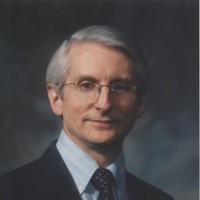 Peter J. Denning合作论文数Cebrowski Institute, Naval Postgraduate School;Computer Science Department, Naval Postgraduate School4Harsh Sharangpani合作论文数4david b andersen合作论文数2charles l brabenac合作论文数2George Cox合作论文数2Tsung-Yuan Charles Tai合作论文数2Justin R. Rattner合作论文数2Ajay V. Bhatt合作论文数2
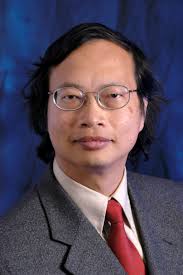 Konrad Lai合作论文数Intel2T. Don Dennis合作论文数2Jacques Leroudier合作论文数1
 Dominique Potier合作论文数1vladimir yudovich合作论文数1eran galil合作论文数1Guoyong Huang (黄国勇)合作论文数1Holzhammer, G.合作论文数1
 David Kuck合作论文数Kuck and Associates1Rajan Suri合作论文数1
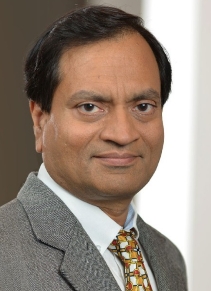 Pradeep Dubey合作论文数Parallel Computing Lab, Intel Corporation1
 Shekhar Borkar合作论文数Qualcomm Inc.1
 Dan Hammerstrom合作论文数ECE Department, Maseeh College of Engineering and Computer Science, Portland State University1Intel Fellow合作论文数1William M. Corwin合作论文数1Intel Senior Fellow合作论文数1Stephen S. Pawlowski合作论文数1




