The new mineral gordaite [14] from the SielTa Gorda, Chile, has chemical composition NaZn4(S04)(OH)6CI. 6 H20 and crystallizes trigonal with space group P3. The lattice parameters are a = 8.3556(3) A and c = 13.025(1) A. The structure was determined using direct methods and difference Fourier maps. Structure refinement yielded a final R(F)-value of 8.19%. The structure is characterized by bl11cite-like sheets of composition [Zn6(OH)1202]4which are formed by edgeshared Zn(OH)6 octahedra. One seventh of the octahedral sites in the sheet is vacant. Above and below these sites [Zn(OH)3CIFtetrahedra are located sharing their basal hydroxides with six octahedra. Sulfate groups are connected to the sheets on both sides by corner sharing. The composition for this modified layer is [Zn6ctOOC\OH)6Zn~t(OH)6CI2(S04)2P-. To compensate for the negative charge Na+ ions which are octahedrally coordinated by water molecules are incorporated between the layers. A complex hydrogen bonding system further links subsequent layers. The structure of gordaite is closely related to that of the synthetic material Zn4(OH)6S04' In H20 with In = 3,5 descIibed by Bear et al. in 1986 and presumably the same material as the one investigated by MacEwan, Cruz Cumplido and Cano Ruiz (1966) who state an average chemical composition of ZnnCOH)15(S04)3CI3 .5 H20. A comparison to these materials as well as to Zns(OH)sCb . H20 described by Nowacki and Silverman in [12J is drawn.
Introduction (Al,Ge)-mullite of the composition 3 Alz03 . 2GeOz is well known from the structural point of view (Durovic and Fejdi, 1976). There exists a clase relationship to the corresponding silicon-mullite 3Alz03 . 2 SiOz. In contrast to the (Al, Si)-mullites it was not possible so far to grow (Al, Ge)mullites with a more extended solid solution range. Recently the synthesis of an (Al, Ge)-mullite was successful in a flux containing Pband Nd-ions. Thismullite has a Al/Ge ratio of nearly 5: 1 (exactly 2.6 Alz03 . 1 GeOz), but it always contains a certain amount of Pband Nd-ions that are considered necessary for the stabilization of this mullite.
The new mineral tsumgallite is a gallium oxide hydroxide, has the ideal chemical formular GaO(OH), is orthorhombic, space group Pbnm, with a = 4.512(5) Angstrom, b = 9.772(8) Angstrom, c = 2.967(4) Angstrom, cell volume 130.8(2) Angstrom(3), Z = 4, from powder data. Cell parameter refined from powder data with the structure of (X-gallium oxide deuteriohydroxide give a = 4.517 Angstrom, b = 9.760 Angstrom, c = 2.964 Angstrom, volume 130.7 Angstrom(3). Tsumgallite is isostructural to goethite and diaspore. The strongest reflections in the X-ray powder diffraction data are as follows: (d(meas).(Angstrom),I,(hk1)): 4.089(100)(110), 2.404(100)(111), 2.632(33)(130), 1.690(26)(221) and 2.530(22) (021). Tsumgallite was found at the Tsumeb mine, Tsumeb, Namibia. It forms tiny mica-like aggregates less than 1 mm across. Individual thin, platy crystals do not exceed 40 mum in size. The colour is a pale greenish yellow to beige.Tsumgallite is associated with of sohngeite and zincian siderite in vugs of a termantite-germanite ore. Chemical analyses by electron microprobe gave Ga2O3 78.13, Fe2O3 3.99, GeO2 4.01, ZnO 0.78, SiO2 1.07, H2O(ideal) 8.77, sum 96,75 weight %, where the amount of water was taken from the ideal composition. The resulting empirical formular calculated on the basis of 2 anions is (Ga-0.86, Fe3+ 0.05, Ge-0.04, Si-0.02, Zn-0.01)(Sigma0.98) O(OH)(1.01).The mineral was named for the type locality and its chemical composition. Tsumgallite has been approved by the I.M.A. Commission on New Minerals and Mineral Names.
Belloite, a new copper hydroxide chloride, ideally Cu(OH)CI, is monoclinic, space group P2(1)/a, with a = 5.552(3) Angstrom, b = 6.668(2) Angstrom, c = 6.124(2), beta = 115.00 degrees(3) Angstrom, cell volume 205.47 Angstrom(3), Z = 4, from powder diffraction data. The strongest reflections in the X-ray powder diffraction data are (d(meas.),I,hkl) 5.553 (100) (001), 2.758 (52) (112) (121), 2.516 (18) (200), 2.241 (27) (122), 1.851 (21) (213) (003). The mineral occurs on material from an abandoned mine near Sierra Gorda, northeast of Antofagasta, Chile. It forms aggregates of yellowish green to olive green micro-crystals closely associated with nitratine and paratacamite. Electron microprobe and CHN analyses give CuO 68.84, Cl 26.35 and H2O 7.47 wt.%, leading to an empirical formular of Cu-1.05(OH)(1.00)O0.10Cl0.90. simplified Cu(OH)Cl. Belloite is identical with the synthetic Cu(OH)Cl of ICDD-PDF 23-1063, of which the structure has been determined by EFFENBERGER (1984).
The new mineral biehlite was found in the Tsumeb mine, Namibia and has the composition Sb1.79As0.21MoO6. It crystallizes monoclinic, space group C2/c with lattice paramters a=18.076(5)Å, b= 5.920(5)Å, c=5.083(5)Å, β= 96.97(1)°. Refinement led to a final R(F) value of 0.065 for 679 symmetrically independent reflections. [MoO6]6- octahedra share common edges and form zigzag chains which run parallel to the c direction. The octahedra are flanked by a [Sb2O2]2+ group on each side and infinite ribbons of composition [Sb4Mo2O12] are obtained. Neighbouring ribbons are only held together by weak Sb-O bonds in the directions of a and b. The [MoO6]6- octahedra are strongly distorted with Mo-O distances ranging from 1.700(5) to 2.248(6) Å and O-Mo-O angles between 72.1(2)° and 105,3(4)°. The common O-O edge (2.492(8)Å) is shortened with respect to the remaining edges of the octahedra (2.704(8)Å-2.899(8)Å). The Sb-cation forms three short bonds with oxygen at distances slightly smaller than 2Å. Six further oxygen atoms are located at distances ranging from 2.910(6) to 3.470(6)Å. Calculated distance for the lone-pair is 1.18 Å. Part of the Sb3+ is substituted by the smaller As3+ ion. The relationship of the new mineral to similar structures – especially to the mineral stibivanite and the synthetic compound Sb2MoO6 – are discussed.
The new mineral wilhelmkleinite has ideal chemical composition ZnFe32+(OH)(2)(AsO4)(2) and crystallizes monoclinic, space group P2(1)/n, Z = 2 with lattice parameters a = 6.631(1) A, b = 7.611(1) A, c = 7.377(1) A and beta = 91.80(1)degrees. The structure was solved using direct methods. Refinement led to a final R(F) value of 0.014 for 1092 symmetrically independant reflections greater than or equal to 3 sigma(I).The structure is characterized by chains of edge-lin;ed [Fe(OH)(2)O-4](7-) octahedra which are connected via common (OH)(-) groups. The chains have composition [Fe(OH)O-4](6-) and run parallel to [010]. Different chains are bridged by [AsO4](3-) tetrahedra in the directions of [100] and [001] and thus a three dimensional framework is formed. The Zn2+ ions are incorporated in cavities and are surrounded by six oxygen atoms in the form of a distorted octahedron.Alternatively, one [ZnO4(OH)(2)] octahedron shares opposite faces with two [FeO4(OH)(2)] octahedra, to form a face sharing trimer trans-M(3)phi(12) (phi = O2-, OH-) Of Composition [ZnFe2(OH)(4)O-8]. Different trimers are connected via the arsenate tetrahedra. The structure can be mapped onto a {3(6)} net.Distances and angles in wilhelmkleinite agreement with values observed in comparable compounds. The face sharing of the octahedra leads to a pronounced shortening of the common edges.Wilhelmkleinite is closely related to the orthorhombic modification of CuFe-(OH)(2)(AsO4)(2). The framework of [FeO6](9-) octahedra and [AsO4](3-) tetrahedra are nearly identical in the two compounds. However, the Zn2+ (or Cu2+ ions respectively) are incorporated into different vacancies and this leads to a doubling of two of the axes of CuFe2(OH)(2)(AsO4)(2) with respect to wilhelmkleinite.
Biehlite, a new diantimony molybdenum hexaoxide, ideally (Sb,As)(2)MoO6, is monoclinic, space group C2/c, with a = 18.076(5) Angstrom, b = 5.920(5) A, c = 5.083(5) Angstrom, beta = 96.97 beta degrees (1), Z = 4, cell volume 539.91 Angstrom(3), from single crystal studies. The strongest reflections in the X-ray powder diffraction data are (d(mea)s., I, hkl) 5.622 (65) (110), 3.376 (39) ((3) over bar 11), 3.104 (61) (311), 2.990 (100) (600), 2.960 (100) (020), 2.104 (42) (620). Biehlite was found in the Tsumeb mine, Tsumeb, Namibia. It forms long white flexible fibreous crystals which are only some microns in diameter. The fibres build up irregular aggregates and Felty mosses in association with anglesite and wulfenite. Electron microprobe analyses give Sb2O3 60.99, As2O3 4.95, MoO3 33.76, total 99.70 wt.%, leading to an empirical formula of (Sb-1.79(3+), As-0.21(3+))Mo6+ O-1.00(6).
The new mineral wilhelmkleinite has ideal chemical composition ZnFe 3+ 2(OH)2(AsO4)2 and crystallizes monoclinic, space group P21/n, Z = 2 with lattice parameters a = 6.631 ( 1) Å, b = 7.611 (1) Å, c = 7.377 ( 1) Å and β = 91.80( 1)°. The structure was solved using direct methods. Refinement led to a final R (F) value of 0.014 for 1092 symmetrically independant reflections ≥ 3σ( I). The structure is characterized by chains of edge-linked [Fe(OH)2O4]7- octahedra which are connected via common (OH)- groups. The chains have composition [Fe(OH)O4]6- and run parallel to [010]. Different chains are bridged by [AsO4]3- tetrahedra in the directions of [100] and [001] and thus a three dimensional framework is formed. The Zn2+ ions are incorporated in cavities and are surrounded by six oxygen atoms in the form of a distorted octahedron. Alternatively, one [ZnO4(OH)2] octahedron shares opposite faces with two [FeO4(OH)2] octahedra, to form a face sharing trimer trans-M3Φ12 (Φ =O 2-, OH-) of composition [ZnFe2(OH)4O8] . Different trimers are connected via the arsenate tetrahedra. The structure can be mapped onto a {36} net. Distances and angles in wilhelmkleinite are in good agreement with values observed in comparable compounds. The face sharing of the octahedra leads to a pronounced shortening of the common edges. Wilhelmkleinite is closely related to the orthorhombic modification of CuFe2(OH)2(AsO4)2. The framework of [FeO6]9- octahedra and [AsO4]3- tetrahedra are nearly identical in the two compounds. However, the Zn 2+ (or Cu 2+ ions respectively) are incorporated into different vacancies and this leads to a doubling of two of the axes of CuFe2(OH)2(AsO4)2 with respect to wilhelmkleinite.
Kastningite, a new hydrous manganese iron aluminium hydroxy-phosphate, ideally (Mn,Fe,Mg)Al-2(PO4)(2)(OH)(2). 8H(2)O, is triclinic, space group P (1) over bar, with a = 7.0102(3) Angstrom, b = 10.2050(7) Angstrom, c = 10.5040(7) Angstrom, alpha = 71.82(1)degrees, beta = 89.62(1)degrees, gamma = 69.90(1)degrees, Z = 2, from single crystal studies. Kastningite is a polymorph of mangangordonite and is isostructural to stewartite. The strongest reflections in the X-ray powder diffraction data are (d(meas), I, hkl) 9.917(001), 4.957(50)(002), 6.541(36) (100). The mineral occurs at the Silbergrube quarry, Waidhaus, Upper Palatinate (Oberpfalzer Wald), Bavaria, Germany. It forms splays of thin elongated tabular crystals of colourless to white and beige colour which reach sizes up to 2 mm. Their streak is white and they show no fluorescence. The refractive indexes are 1.5665 (n alpha), 1.5740 (n beta) and 1.5815 (n gamma). The measured density is 2.35 g/cm(3), calculated from single crystal data it is 2.379 g/cm(3).
The crystal structure of kastningite, a new mineral from Waidhaus, Bavaria, Germany has been determined. Ideal formula from X-ray structure analysis is Mn(H2O)(4)[Al-2(OH)(2)(H2O)(2)(PO4)(2)] . 2 H2O. Lattice parameters are a=10.205(1) Angstrom, b=10.504(1) Angstrom, c = 7.010(1) Angstrom, alpha = 90.38(1)degrees, beta = 110.10(1)degrees, gamma = 71.82(1)degrees (space group P (1) over bar, Z = 2).Kastningite is isostructural to stewartite Mn(H2O)(4) [Fe-2(3+) (OH)(2)(H2O)(2)(PO4)(2)] . 2 H2O. Chains of corner sharing octahedra run in the [102] direction. Within the chain, octahedra of composition [Al(OH)(2)(O-P)(2)(H2O)(2)](3-) alternate with others of composition [Al(OH)(2)(O-P)(4)](7-) (with O-P designating oxygen atoms which form part of a phosphate group). The resulting chain composition is [Al(O-P)(3)(OH)(H2O)](4-). Symmetry equivalent chains are bridged by [PO4](3-) tetrahedra and sheets parallel to {010} of composition [Al-2(OH)(2)(H2O)(2)(PO4)(2)](2-) are formed. [Mn(H2O)(4)(O-P)(2)](2-) octahedra link these sheets in the direction of [010] thus resulting in a three dimensional structure. The structure is further held together by a complex system of hydrogen bonds.Chains of corner-sharing octahedra which are further connected to [PO4](3-) tetrahedra are a common feature within other aquated orthophosphate hydrate minerals. Yet there are differences with respect to the number of symmetrically equivalent octahedra within the chain, their composition as well as to the way they are connected to; the tetrahedra. A brief comparison of kastningite to these other minerals is given.
Changoite, a new sodium zinc sulfate hydrate, ideally Na2Zn(SO4)(2) . 4H(2)O, is monoclinic, space group P2(1)/a, with a = 11.077(2) Angstrom, b = 8.249(2) Angstrom, c = 5.532(1)Angstrom, beta = 100.18(2)degrees, Z = 2, from powder data. The strongest reflections in the X-ray powder diffraction data are (d(meas), I, hkl) 3.289(100)(220, 021), 4.550(58) (210, 011), 3.262(35)(211). The mineral occurs near Sierra Gorda, Antofagasta, Chile. It forms seams of parallel grouped colourless anhedral crystals with vitreous lustre. Changoite is accompanied by zincian paratacamite, gypsum and thenardite. It shows no fluorescence, the streak is white and the hardness on Mohs' scale is between 2 and 3. Changoite is easily soluble in water. The refractive index is 1.507 to 1.516, the measured density is 2.50 g/cm(3).
Hydrothermal synthesis in the systems LaCl 3 (CeCl 3 )-Al(OH) 3 (Ga 2 O 3 )-GeO 2 yielded crystals of composition La 3 AlGe 5 O 16 , La 3 GaGe 5 O 16 and Ce 3 GaGe 5 O 16 , respectively. The syntheses were carried out at temperatures of 1023 K-1073 K under pressures of 1000 bar. The space group of the three substances was determined as P1 with the pseudosymmetry P2 1 /c. All compounds are isostructural. The lattice parameters are a = 4.794(4) A, b = 8.102(8) A, c = 15.722(8) A, α = 90.42(3)°, β = 94.46(2)°, γ = 89.91(2)° for La 3 AlGe 5 O 16 , a = 4.827(4) A, b = 8.090(4) A, c = 15.707(6) A, α = 90.76(5), β = 94.01(7)°, γ = 90.01(7)° for La 3 GaGe 5 O 16 and a = 4.768(7) A, b = 8.088(5) A, c = 15.600(2) A, α = 90.55(4)°, β = 94.46(4)°, γ = 89.63(4)° for Ce 3 AlGe 5 O 16 . There are two formula units in the unit cell.
Wilhelmkleinite, a new zinc iron hydroxy-arsenate, ideally ZnFe23+ (ASO(4))(2)(OH)(2), is monoclinic, space group P2(1)/n, with a = 6.631(1) Angstrom, b = 7.611(1) Angstrom, c = 7.377(1) Angstrom, beta = 91.80(1), Z = 2, from single crystal studies. The strongest reflec tions in the X-ray powder diffraction data are (d(meas.),l,hkl) 3.385(100)(021), 3.315(78)(200/012), 2.939(47)(112). The mineral occurs at the Tsumeb mine, Namibia. It forms twinned spearhead-shaped crystals up to 5 mm in length. The blackish green translucent crystals which show strong pleochroism from olive-green to emerald-green and reddish-brown are found on AI-rich scorodite. They show no fluorescence, their streak is green and the hardness on Mohs' scale is 4.5. The refractive index is about 1.94, the calculated density results in 4.364 g/cm(3). Electron microprobe analyses yielded ZnO 13.81, Fe2O3 33.60 and As2O5 46.69.
The new mineral gordaite [14] from the Sierra Gorda, Chile, has chemical composition NaZn4(SO4)(OH)(6)Cl . 6 H2O and crystallizes trigonal with space group P (3) over bar. The lattice parameters are a = 8.3556(3) Angstrom and c = 13.025(1) Angstrom. The structure was determined using direct methods and difference Fourier maps. Structure refinement yielded a final R(F)-value of 8.19%.The structure is characterized by brucite-like sheets of composition [Zn-6(OH)(12)O-2](4-) which are formed by edge-shared Zn(OH)(6) octahedra. One seventh of the octahedral sites in the sheet is vacant. Above and below these sites [Zn(OH)(3)Cl](2-) tetrahedra are located sharing their basal hydroxides with six octahedra. Sulfate groups are connected to the sheets on both sides by corner sharing. The composition for this modified layer is [Zn(6)(oct)square(oct)(OH)(6)Zn-2(tet)(OH)(6)Cl-2(SO4)(2)](2-). To compensate for the negative charge Na+ ions which are octahedrally coordinated by water molecules are incorporated between the layers. A complex hydrogen bonding system further links subsequent layers.The structure of gordaite is closely related to that of the synthetic material Zn-4(OH)(6)SO4 . m H2O with m = 3, 5 described by Bear et al. in 1986 and presumably the same material as the one investigated by MacEwan, Cruz Cumplido and Cane Ruiz (1966) who slate an average chemical composition of Zn-12(OH)(15)(SO4)(3)Cl-3 . 5 H2O. A comparison to these materials as well as to Zn-5(OH)(8)Cl-2 . H2O described by Nowacki and Silverman in [12] is drawn.
Gordaite, a new hydrous sodium zinc hydroxy-chlorosulfate, ideally NaZn4(SO4)(OH)(6)Cl . 6H(2)O, Z = 2, is trigonal, space group P (3) over bar, with a = 8.3556(3) Angstrom, c = 13.025(1) Angstrom, from single crystal studies. The strongest reflections in the X-ray powder diffraction data are (d(meas.),I,hkl) 12.950(100) (001), 6.501(23) (002) and 4.339(15) (003). The mineral occurs at the San Francisco Mine, Sierra Gorda, northeast of Antofagasta, Chile. It forms masses of white to colorless platy crystals. Electron microprobe and CHN analyses yielded Na2O 9.15, ZnO 52.85, SO3 15.33, Cl 6.46, H2O 12.33.Gordaite is probably identical with an unnamed mineral (ICDD-PDF 41-1421) which has been found on sulfide samples from the Juan de Fuca Ridge, NE Pacific.
The crystal structure of christelite Zn 3 Cu 2 · (SO 4 ) 2 (OH) 6 · 4 H 2 O (space group P [unk]; lattice parameters a = 5.4143(8) Å, b = 6.336(1) Å, c = 10.470(3) Å, α = 94.32(3)°, β = 90.06(2)°, γ = 90.27(2)°) was solved using direct methods and difference Fourier-syntheses. The structure was refined to a final R ( F )-value of 0.033. The structure contains distorted [(Zn, Cu)O 6 ] octahedra which are connected as to form sheets of composition ∞ 2 [(Cu,Zn) 2 (OH) 3 O] − . These sheets are similar to those observed in the mineral ktenasite. In both structures sulphate groups are attached to the sheets of octahedra through common vertices. In christelite the tetrahedral [SO 4 ] groups are linked to isolated [Zn(H 2 O) 4 O 2 ] octahedra thus forming a three-dimensional structure, whereas in the structure of ktenasite the [SO 4 ] tetrahedra are bonded to isolated [Zn(H 2 O) 6 ] by a system of hydrogen bonds. The relationship of christelite with other minerals is pointed out and discussed.
 O Jarchow合作论文数23Karen Friese合作论文数16
 J. Schluter合作论文数Mineralogisches Museum, Universität Hamburg16G Adiwidjaja合作论文数12Gunadi Adiwidjaja合作论文数10R. Klaska合作论文数8M Werk合作论文数7H SAALFELD合作论文数6G Gebhard合作论文数6E Kausch合作论文数5
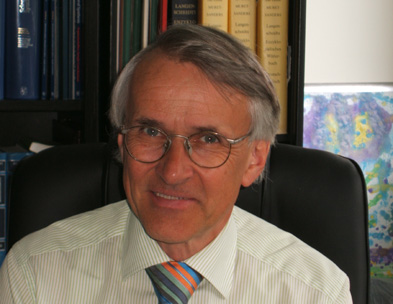 E. Schaumann合作论文数Institut für Organische Chemie, Technische Universitat Clausthal5Otto Jarchow合作论文数4Helmut W Schmalle合作论文数4Georg Gebhard合作论文数3jorg schluter合作论文数3
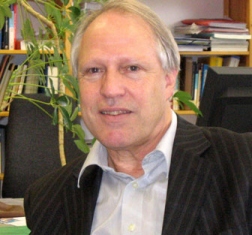 Joachim Thiem合作论文数Universität Hamburg3J. C. Eck合作论文数3W. Guse合作论文数3O. H. Jarchow合作论文数3M. Ruks合作论文数3H Schenkstrauss合作论文数2T. GREISER合作论文数2M. Kriens合作论文数2C. Lathe合作论文数2M. Czank合作论文数2H Schmalle合作论文数2BM HAUSEN合作论文数2
 Erwin Weiss合作论文数Universität Hamburg2Wulf Depmeier合作论文数Institut für Geowissenschaften, Universität Kiel2Helmut W. Schmalle合作论文数2G. Ulrich合作论文数2H. SCHMALSTIEG合作论文数1W. KOEBERNICK合作论文数1Reinhard Kemper合作论文数1P. B. Moore合作论文数1J. SchWter合作论文数1K. Friese合作论文数1G. Adiwidjaja合作论文数1Wa Konig合作论文数1H P Wessel合作论文数1H. Gerlach合作论文数1Bm Hausen合作论文数1Jarchow O合作论文数1H. Schenk合作论文数1
 Hans Paulsen合作论文数Fachbereich Chemie, Universität Hamburg1H. Preut合作论文数1K. H. Schulz合作论文数1




