This paper reports about the two rounds of the Java Unit Testing Tool Competition that ran in the context of the Search Based Software Testing (SBST) workshop at ICST 2013 and the first Future Internet Testing (FITTEST) workshop at ICTSS 2013. It describes the main objectives of the benchmark, the Java classes that were selected in both competitions, the data that was collected, the tools that were used for data collection, the protocol that was carried out to execute the benchmark and how the final benchmark scores for each participating tool were calculated. Eventually, we discuss the challenges encountered during the events, what we learned and how we plan to improve our framework for future competitions.
In this paper we present a Genetic Programming system to solve coding duels on the Pex4Fun website. Users create simple puzzle methods in a .NET supported programming language, and other users have to `guess' the puzzle implementation through trial and error. We have replaced the human user who solves a puzzle (i.e. implements a program that matches the implementation of the puzzle) with a Genetic Programming system that tries to win such coding duels. During a proof of concept experiment we found that our system can indeed automatically generate code that matches the behaviour of a secret puzzle method. It takes on average 76.57 fitness evaluations to succeed.
Many of the problems posed by the migration of computation to cloud platforms can be formulated and solved using techniques associated with Search Based Software Engineering (SBSE). Much of cloud software engineering involves problems of optimisation: performance, allocation, assignment and the dynamic balancing of resources to achieve pragmatic trade-offs between many competing technical and business objectives. SBSE is concerned with the application of computational search and optimisation to solve precisely these kinds of software engineering challenges. Interest in both cloud computing and SBSE has grown rapidly in the past five years, yet there has been little work on SBSE as a means of addressing cloud computing challenges. Like many computationally demanding activities, SBSE has the potential to benefit from the cloud; 'SBSE in the cloud'. However, this paper focuses, instead, of the ways in which SBSE can benefit cloud computing. It thus develops the theme of 'SBSE for the cloud', formulating cloud computing challenges in ways that can be addressed using SBSE.
Model based testing relies on the availability of models that can be defined manually or by means of model inference techniques. To generate models that include meaningful state abstractions, model inference requires a set of abstraction functions as input. However, their specification is difficult and involves substantial manual effort. In this paper, we investigate a technique to automatically infer both the abstraction functions necessary to perform state abstraction and the finite state models based on such abstractions. The proposed approach uses a combination of clustering, invariant inference and genetic algorithms to optimize the abstraction functions along three quality attributes that characterize the resulting models: size, determinism and infeasibility of the admitted behaviors. Preliminary results on a small e-commerce application are extremely encouraging because the automatically produced models include the set of manually defined gold standard models.
This paper describes the Java Unit Testing Tool Competition that ran in the context of the Search Based Software Testing (SBST) workshop at ICST 2013. It describes the main objective of the benchmark, the Java classes that were selected, the data that was collected, the tools that were used for data collection, the protocol that was carried out to execute the benchmark and how the final benchmark score for each participating tool can be calculated.
Context: Despite the large number of publications on Search-Based Software Testing (SBST), there remain few publicly available tools. This paper introduces AUSTIN, a publicly available open source SBST tool for the C language.(1) The paper is an extension of previous work [1]. It includes a new hill climb algorithm implemented in AUSTIN and an investigation into the effectiveness and efficiency of different pointer handling techniques implemented by AUSTIN's test data generation algorithms.Objective: To evaluate the different search algorithms implemented within AUSTIN on open source systems with respect to effectiveness and efficiency in achieving branch coverage. Further, to compare AUSTIN against a non-publicly available, state-of-the-art Evolutionary Testing Framework (ETF).Method: First, we use example functions from open source benchmarks as well as common data structure implementations to check if the decision procedure for pointer inputs, introduced in this paper, differs in terms of effectiveness and efficiency compared to a simpler alternative that generates random memory graphs. A second empirical study formulates two alternate hypotheses regarding the effectiveness and efficiency of AUSTIN compared to the ETF. These hypotheses are tested using a paired Wilcoxon test.Results and Conclusion: The first study highlights some practical problems with the decision procedure for pointer inputs described in this paper. In particular, if the code under test contains insufficient guard statements to enforce constraints over pointers, then using a constraint solver for pointer inputs may be suboptimal compared to a method that generates random memory graphs. The programs used in the second study do not require any constraint solving for pointer inputs and consist of eight non-trivial, real-world C functions drawn from three embedded automotive software modules. For these functions, AUSTIN is competitive compared to the ETF, achieving an equal or higher branch coverage for six of the functions. In addition, for functions where AUSTIN's branch coverage is equal or higher, AUSTIN is more efficient than the ETF. (C) 2012 Elsevier B.V. All rights reserved.
Many of the problems posed by the migration of computation to cloud platforms can be formulated and solved using techniques associated with Search Based Software Engineering (SBSE). Much of cloud software engineering involves problems of optimisation: performance, allocation, assignment and the dynamic balancing of resources to achieve pragmatic trade-os between many competing technical and business objectives. SBSE is concerned with the application of computational search and optimisation to solve precisely these kinds of software engineering challenges. Interest in both cloud computing and SBSE has grown rapidly in the past ve years, yet there has been little work on SBSE as a means of addressing cloud computing challenges. Like many computationally demanding activities, SBSE has the potential to benet from the cloud; ‘SBSE in the cloud’. However, this paper focuses, instead, of the ways in which SBSE can benet cloud computing. It thus develops the theme of ‘SBSE for the cloud’, formulating cloud computing challenges in ways that can be addressed using SBSE.
Search-Based Test Data Generation reformulates testing goals as fitness functions so that test input generation can be automated by some chosen search-based optimization algorithm. The optimization algorithm searches the space of potential inputs, seeking those that are “fit for purpose,” guided by the fitness function. The search space of potential inputs can be very large, even for very small systems under test. Its size is, of course, a key determining factor affecting the performance of any search-based approach. However, despite the large volume of work on Search-Based Software Testing, the literature contains little that concerns the performance impact of search space reduction. This paper proposes a static dependence analysis derived from program slicing that can be used to support search space reduction. The paper presents both a theoretical and empirical analysis of the application of this approach to open source and industrial production code. The results provide evidence to support the claim that input domain reduction has a significant effect on the performance of local, global, and hybrid search, while a purely random search is unaffected.
We present an algorithm for constructing fitness functions that improve the efficiency of search-based testing when trying to generate branch adequate test data. The algorithm combines symbolic information with dynamic analysis and has two key advantages: It does not require any change in the underlying test data generation technique and it avoids many problems traditionally associated with symbolic execution, in particular the presence of loops. We have evaluated the algorithm on industrial closed source and open source systems using both local and global search-based testing techniques, demonstrating that both are statistically significantly more efficient using our approach. The test for significance was done using a one-sided, paired Wilcoxon signed rank test. On average, the local search requires 23.41% and the global search 7.78% fewer fitness evaluations when using a symbolic execution based fitness function generated by the algorithm.
Search-Based Testing is a widely studied technique for automatically generating test inputs, with the aim of reducing the cost of software engineering activities that rely upon testing. However, search-based approaches degenerate to random testing in the presence of flag variables, because flags create spikes and plateaux in the fitness landscape. Both these features are known to denote hard optimization problems for all search-based optimization techniques. Several authors have studied flag removal transformations and fitness function refinements to address the issue of flags, but the problem of loop-assigned flags remains unsolved. This article introduces a testability transformation along with a tool that transforms programs with loop-assigned flags into flag-free equivalents, so that existing search-based test data generation approaches can successfully be applied. The article presents the results of an empirical study that demonstrates the effectiveness and efficiency of the testability transformation on programs including those made up of open source and industrial production code, as well as test data generation problems specifically created to denote hard optimization problems.
Search-Based Testing is a widely studied technique for automatically generating test inputs, with the aim of reducing the cost of software engineering activities that rely upon testing. However, search-based approaches degenerate to random testing in the presence of flag variables, because flags create spikes and plateaux in the fitness landscape. Both these features are known to denote hard optimization problems for all search-based optimization techniques. Several authors have studied flag removal transformations and fitness function refinements to address the issue of flags, but the problem of loop-assigned flags remains unsolved. This article introduces a testability transformation along with a tool that transforms programs with loop-assigned flags into flag-free equivalents, so that existing search-based test data generation approaches can successfully be applied. The article presents the results of an empirical study that demonstrates the effectiveness and efficiency of the testability transformation on programs including those made up of open source and industrial production code, as well as test data generation problems specifically created to denote hard optimization problems.
This thesis is concerned with the problem of automatic test data generation for structural testing criteria, in particular the branch coverage adequacy criterion, using search-based techniques. The primary objective of this thesis is to advance the current state-of-the-art in automated search-based structural testing. Despite the large body of work within the field of search-based testing, the accompanying literature remains without convincing solutions for several important problems, including: support for pointers, dynamic data structures, and loop-assigned flag variables. Furthermore, relatively little work has been done to extend search-based testing to multi-objective problem formulations.
Test case selection and prioritization are well studied and understood regression testing techniques. Equally, test case generation is an active research area. Yet the combination of these techniques remains largely unexplored. This paper proposes to use a multi objective approach to combine a test case generation technique, the Classification Tree Method, with a test case selection and prioritization method. Our work aims to generate optimized test suites, containing test cases ordered according to their importance with respect to test goals. We plan to incorporate the algorithms we develop during this work into the Classification Tree Editor, an industrial strength testing tool provided by Berner & Mattner, and will be empirically evaluating our approach on a set of benchmark systems.
The Future Internet will be a complex interconnection of services, applications, content and media, on which our society will become increasingly dependent. Time to market is crucial in Internet applications and hence release cycles grow ever shorter. This, coupled with the highly dynamic nature of the Future Internet will place new demands on software testing. Search-Based Testing is ideally placed to address these emerging challenges. Its techniques are highly flexible and robust to only partially observable systems. This paper presents an overview of Search-Based Testing and discusses some of the open challenges remaining to make search-based techniques applicable to the Future Internet.
Despite the large number of publications on Search--Based Software Testing (SBST), there remain few publicly available tools. This paper introduces AUSTIN, a publicly available SBST tool for the C language. The paper validates the tool with an empirical study of its effectiveness and efficiency in achieving branch coverage compared to random testing and the Evolutionary Testing Framework (ETF), which is used in-house by Daimler and others for Evolutionary Testing. The programs used in the study consist of eight non--trivial, real-world C functions drawn from three embedded automotive software modules. For the majority of the functions, AUSTIN is at least as effective (in terms of achieved branch coverage) as the ETF, and is considerably more efficient.
Recently there has been an upsurge of interest in both, Search-Based Software Testing (SBST), and Dynamic Symbolic Execution (DSE). Each of these two approaches has complementary strengths and weaknesses, making it a natural choice to explore the degree to which the strengths of one can be exploited to offset the weakness of the other. This paper introduces an augmented version of DSE that uses a SBST-based approach to handling floating point computations, which are known to be problematic for vanilla DSE. The approach has been implemented as a plug in for the Microsoft Pex DSE testing tool. The paper presents results from both, standard evaluation benchmarks, and two open source programs.
Previous approaches to search based test data generation tend to focus on coverage, rather than oracle cost. While there may be an aspiration that systems should have models, checkable specifications and/or contract driven development, this sadly remains an aspiration; in many real cases, system behaviour must be checked by a human. This painstaking checking process forms a significant cost, the oracle cost, which previous work on automated test data generation tends to overlook. One simple way to reduce oracle cost consists of reducing the number of tests generated. In this paper we introduce three algorithms which do this without compromising coverage achieved. We present the results of an empirical study of the effectiveness of the three algorithms on five benchmark programs containing non trivial search spaces for branch coverage. The results indicate that it is, indeed, possible to make reductions in the number of test cases produced by search based testing, without loss of coverage.
During testing, there are several reasons to exclude some of the components used by the unit under test, such as: (1) the component affects the state of the world in an irreversible way; (2) the component is not accessible for testing purposes (e.g., a web service); (3) the component introduces a major performance degradation to the testing phase (e.g., due to long computations); (4) it is hard (i.e., statistically unlikely) to obtain the output required by the test from the component. In such cases, we replace the component with a mock one. In this paper, we integrate the synthesis of mock components with the generation of test cases for the current testing goal (e.g., coverage). To avoid the generation of meaningless data, which may lead to assertion violation not related to bugs, we include a weak mock postcondition. We consider ways to automatically synthesize such postcondition. We empirically evaluate the quality of the mocks generated by our approach, as well as the benefits mocks introduce in terms of improved coverage and improved performance of the test case generator.
Automated test data generation has remained a topic of considerable interest for several decades because it lies at the heart of attempts to automate the process of Software Testing. This paper reports the results of an empirical study using the dynamic symbolic-execution tool, CUTE, and a search based tool, AUSTIN on five non-trivial open source applications. The aim is to provide practitioners with an assessment of what can be achieved by existing techniques with little or no specialist knowledge and to provide researchers with baseline data against which to measure subsequent work. To achieve this, each tool is applied ‘as is’, with neither additional tuning nor supporting harnesses and with no adjustments applied to the subject programs under test. The mere fact that these tools can be applied ‘out of the box’ in this manner reflects the growing maturity of Automated test data generation. However, as might be expected, the study reveals opportunities for improvement and suggests ways to hybridize these two approaches that have hitherto been developed entirely independently.
—Search Based testing has proved effective at generating test data to cover targeted branches and has consequently received a great deal of attention from the automated software testing community. However, previous approaches to search based test data generation do not take account of oracle cost. While there may be an aspiration that systems should have models, checkable specifications and/or contract driven development, this sadly remains an aspiration; in many real cases, system behaviour must be checked by a human. This painstaking checking process forms a significant cost, the oracle cost, which previous work on automated test data generation tends to overlook. In this paper we introduce three algorithms for reducing oracle cost during test data generation. Each algorithm seeks to reduce the number of test cases produced, without compromising coverage achieved. We present the results of an empirical study of the effectiveness of the three algorithms on five benchmark programs containing non trivial search spaces for branch coverage. The results indicate that it is, indeed, possible to make reductions in the number of test cases produced by search based testing, without loss of coverage.
 Mark Harman合作论文数Meta Platforms;Department of Computer Science, Faculty of Engineering, University College London18
 Phil Mcminn合作论文数Computer Science;University of Sheffield9
 Joachim Wegener合作论文数4
 Youssef Hassoun合作论文数Department of Mathematics, American University of Science and Technology4
 Tanja E. J. Vos合作论文数Universidad Politécnica de Valencia4
 Paolo Tonella合作论文数Software Institute, Faculty of Informatics, Università Della Svizzera Italiana3
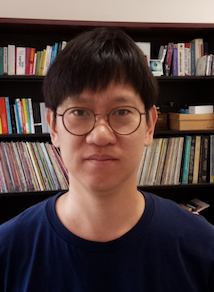 Shin Yoo合作论文数School of Computing, Korea Advanced Institute of Science and Technology3
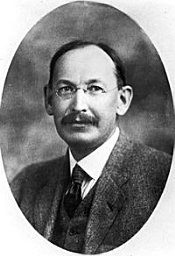 David White合作论文数Sheffield Clin Trials Res Unit, Univ Sheffield2
 Jeremy Singer合作论文数University of Manchester2Sebastian Bauersfeld合作论文数2Hamilton Gross合作论文数2Sung Gon Kim合作论文数2Arthur I. Baars合作论文数Research Center on Software Production Methods, Technical University of Valencia2
 Gordon Fraser合作论文数Faculty of Computer Science and Mathematics, University of Passau1Jonathan De Halleux合作论文数1
 Dave Binkley合作论文数Computer Science Department, Loyola University Maryland1David Binkley合作论文数Loyola University Maryland, Baltimore, MD1
 Alessandro Marchetto合作论文数Fondazione1
 Nikolai Tillmann合作论文数Facebook1
 Simon M. Poulding合作论文数Software Engineering Research Lab, Blekinge Institute of Technology1
 Peter M. Kruse合作论文数Berner & Mattner Systemtechnik GmbH1
 Nelly Condori Fernández合作论文数University of Twente1
 Nadia Alshahwan合作论文数University College London1
 Cu Duy Nguyen合作论文数Fondazione1
 Yue Jia合作论文数Centre of Research on Evolution, Search and Testing, Department of Computer Science, University College London;MajiCke;Facebook1




