ABSTRACTReservoir models for predicting subsurface fluid and rock behaviors can now include upwards of billions (and potentially trillions) of grid cells and are pushing the limits of computational resources. History matching, where models are updated to match existing historical data more closely, is conducted to reduce the number of simulation runs and is one of the primary time‐consuming tasks. As models get larger the number of parameters to match increases, and the number of objective functions increases, and traditional methods start to reach their limitations. To solve this, we propose the use of Bayesian optimization (BO) in a hybrid cloud framework. BO iteratively searches for an optimal solution in the simulations campaign through the refinement of a set of priors initialized with a set of simulation results. The current simulation platform implements grid management and a suite of linear solvers to perform the simulation on large scale distributed‐memory systems. Our early results using the hybrid cloud implementation shown here are encouraging on tasks requiring over 100 objective functions, and we propose integrating BO as a built‐in module to efficiently iterate to find an optimal history match of production data in a single package platform. This paper reports on the development of the hybrid cloud BO based history matching framework and the initial results of the application to reservoir history matching.
By drawing on similarities between energy landscapes and model response surfaces we gain new insight into model performance, even in the absence of data.
For micelles, "shape" is prominent in rheological computations of fluid flow, but this "shape" is often expressed too informally to be useful for rigorous analyses. We formalize topological "shape equivalence" of micelles, both globally and locally, to enable visualization of computational fluid dynamics. Although topological methods in visualization provide significant insights into fluid flows, this opportunity has been limited by the known difficulties in creating representative geometry. We present an agile geometric algorithm to represent the micellar shape for input into fluid flow visualizations. We show that worm-like and cylindrical micelles have formally equivalent shapes, but that visualization accentuates unexplored differences. This global-local paradigm is extensible beyond micelles.
Quantitative structure-property relationships (QSPRs) aid in understanding molecular properties as a function of molecular structure. When the correlation between structure and property weakens, a dataset is described as "rough," but this characteristic is partly a function of the chosen representation. Among possible molecular representations are those from recently-developed "foundation models" for chemistry which learn molecular representation from unlabeled samples via self-supervision. However, the performance of these pretrained representations on property prediction benchmarks is mixed when compared to baseline approaches. We sought to understand these trends in terms of the roughness of the underlying QSPR surfaces. We introduce a reformulation of the roughness index (ROGI), ROGI-XD, to enable comparison of ROGI values across representations and evaluate various pretrained representations and those constructed by simple fingerprints and descriptors. We show that pretrained representations do not produce smoother QSPR surfaces, in agreement with previous empirical results of model accuracy. Our findings suggest that imposing stronger assumptions of smoothness with respect to molecular structure during model pretraining could aid in the downstream generation of smoother QSPR surfaces. Pretrained molecular representations are often thought to provide smooth, navigable latent spaces; analysis by ROGI-XD suggests they are no smoother than fixed descriptor/fingerprint representations.
We present a framework that couples a high-fidelity compositional reservoir simulator with Bayesian optimization (BO) for injection well scheduling optimization in geological carbon sequestration. This work represents one of the first at tempts to apply BO and high-fidelity physics models to geological carbon storage. The implicit parallel accurate reservoir simulator (IPARS) is utilized to accurately capture the underlying physical processes during CO2 sequestration. IPARS provides a framework for several flow and mechanics models and thus supports both stand-alone and coupled simulations. In this work, we use the compositional flow module to simulate the geological carbon storage process. The compositional flow model, which includes a hysteretic three-phase relative permeability model, accounts for three major CO2 trapping mechanisms: structural trapping, residual gas trapping, and solubility trapping. Furthermore, IPARS is coupled to the International Business Machines (IBM) Corporation Bayesian Optimization Accelerator (BOA) for parallel optimizations of CO2 injection strategies during field-scale CO2 sequestration. BO builds a probabilistic surrogate for the objective function using a Bayesian machine learning algorithm—the Gaussian process regression, and then uses an acquisition function that leverages the uncertainty in the surrogate to decide where to sample. The IBM BOA addresses the three weaknesses of standard BO that limits its scalability in that IBM BOA supports parallel (batch) executions, scales better for high-dimensional problems, and is more robust to initializations. We demonstrate these merits by applying the algorithm in the optimization of the CO2 injection schedule in the Cranfield site in Mississippi, USA, using field data. The optimized injection schedule achieves 16% more gas storage volume and 56% less water/surfactant usage compared with the baseline. The performance of BO is compared with that of a genetic algorithm (GA) and a covariance matrix adaptation (CMA)-evolution strategy (ES). The results demonstrate the superior performance of BO, in that it achieves a competitive objective function value with over 60% fewer forward model evaluations.
High-throughput virtual screening is an indispensable technique utilized in the discovery of small molecules. In cases where the library of molecules is exceedingly large, the cost of an exhaustive virtual screen may be prohibitive. Model-guided optimization has been employed to lower these costs through dramatic increases in sample efficiency compared to random selection. However, these techniques introduce new costs to the workflow through the surrogate model training and inference steps. In this study, we propose an extension to the framework of model-guided optimization that mitigates inference costs using a technique we refer to as design space pruning (DSP), which irreversibly removes poor-performing candidates from consideration. We study the application of DSP to a variety of optimization tasks and observe significant reductions in overhead costs while exhibiting similar performance to the baseline optimization. DSP represents an attractive extension of model-guided optimization that can limit overhead costs in optimization settings where these costs are non-negligible relative to objective costs, such as docking.
In molecular discovery and drug design, structure-property relationships and activity landscapes are often qualitatively or quantitatively analyzed to guide the navigation of chemical space. The roughness (or smoothness) of these molecular property landscapes is one of their most studied geometric attributes, as it can characterize the presence of activity cliffs, with rougher landscapes generally expected to pose tougher optimization challenges. Here, we introduce a general, quantitative measure for describing the roughness of molecular property landscapes. The proposed roughness index (ROGI) is loosely inspired by the concept of fractal dimension and strongly correlates with the out-of-sample error achieved by machine learning models on numerous regression tasks.
Many-body electronic responses such as dispersion and polarization (at and beyond dipole order) present fundamental challenges in the simulation of materials at the molecular scale. To address these, an emerging strategy employing embedded quantum oscillators as a coarse-grained representation of such responses has been effective in predicting material properties with remarkable accuracy. However, applications have so far been limited to relatively small system sizes. Here we introduce strategies enabling efficient implementation of this framework on high-performance, heterogeneous CPU–GPU (with multiple Graphic Processing Units) computing platforms thereby increasing significantly the scale of accessible problems. Physical properties are reported for a benchmark system of 104 water molecules — to our knowledge, the largest system yet simulated using molecular dynamics with electronically-derived forces.
Many surfactant-based formulations are utilised in industry as they produce desirable visco-elastic properties at low-concentrations. These properties are due to the presence of worm-like micelles (WLM) and, as a result, understanding the processes that lead to WLM formation is of significant interest. Various experimental techniques have been applied with some success to this problem but can encounter issues probing key microscopic characteristics or the specific regimes of interest. The complementary use of computer simulations could provide an alternate route to accessing their structural and dynamic behaviour. However, few computational methods exist for measuring key characteristics of WLMs formed in particle simulations. Further, their mathematical formulation are challenged by WLMs with sharp curvature profiles or density fluctuations along the backbone. Here we present a new topological algorithm for identifying and characterising WLMs micelles in particle simulations which has desirable mathematical properties that address short-comings in previous techniques. We apply the algorithm to the case of Sodium dodecyl sulfate (SDS) micelles to demonstrate how it can be used to construct a comprehensive topological characterisation of the observed structures.
The numerical analyst, in order to design and implement an efficient algorithm on modern computers, needs more than a cursory understanding of the architecture of the machine. The mathematical formulation of the physical problem and the subsequent numerical model may be better suited for one architecture than another. Careful consideration must be given not only to CPU speed but to many other factors such as number of processors or memory hierarchy. The physical domain is further complicated by interior interfaces across which the elastic parameters are discontinuous. The motivation for obtaining a numerical scheme with high performance on high-speed computer systems lies in the fact that geophysicists and seismologists typically are interested in problems whose physical domain covers 10,000 feet in the horizontal direction and 20,000 feet in the vertical direction. Linearized elastodynamics theory governs the response of a seismic structure to a surface or buried source.
A knot theoretic algorithm is proposed to model `fragile topology' of quantum physics.
Knots are prevalent mathematical models in molecular algorithms, requiring isotopically equivalent piecewise linear (PL) approximations for visualization and analyses. Local topological properties of Bézier curves are shown to support efficient isotopic approximations, inclusive of illustrative computational experiments. For this memorial issue, author T.J. Peters notes that ‘computational topology’ was not discussed during his mentorship by W.W. Comfort, but existence of this contemporary subfield is testimony to the breadth of Comfort's mathematical legacy.
Exascale level of High Performance Computing (HPC) implies performance under stringent power constraints. Achieving power consumption targets for HPC systems requires hardware-software co-design to manage static and dynamic power consumption. We present extensions to the open source Global Extensible Open Power Manager (GEOPM) framework, which allows for rapid prototyping of various power and performance optimization strategies for exascale workloads. We have ported GEOPM to OpenPower ^® architecture and have used our modifications to investigate performance and power consumption optimization strategies for real-world scientific applications.
Uncertainty quantification (UQ), which enables non-destructive virtual testing, is the fast growing area of modern computational science. UQ methods are computationally intensive and require construction of complex work-flows, which rely on a number of different software components often coming from different projects. Therefore, there is a need for developing a portable and scalable UQ pipeline that will enable efficient stochastic modelling. Our paper introduces a strategy for UQ as a Service using high performance computing and hybrid cloud infrastructures and presents its application to a heat transfer study in nuclear reactors simulation and modelling of tsunami events.
Reverse Time Migration (RTM) and Full Waveform Inversion (FWI) are some of the most critical and intensive algorithms in the processing workflow. They involve temporal cross-correlation of forward and adjoint states at the same time and, therefore require saving the forward states in memory. Checkpointing is implemented to trade memory usage with data movement and computations. The increased data movement is specially detrimental to the performance of Graphical Processing Units (GPU) where data transfers are much slower compared to compute. Moreover, limited GPU memory necessitates more frequent transfers and effective GPU utilization is lowered because GPU waits to finish data copy before resuming computing. This lowers their effective performance when solving adjoint problem and delays the time-to-solution of RTM/FWI workflows. We propose a two-level checkpoint formulation for GPUs using asynchronous compute and Non Volatile Memory Express (NVMe) systems which hides all data movement overhead and enables continuous GPU usage without waiting for data transfer. The parameters of the checkpointing formulation are generalizable to multiple system and any RTM/FWI formulations using bandwidth and throughput values. Implementing optimized data transfer approaches leads to faster compute time with increased GPU utilization. We demonstrate our results using an acoustic RTM formulation. Presentation Date: Wednesday, October 17, 2018 Start Time: 1:50:00 PM Location: Poster Station 18 Presentation Type: Poster
The problem of data reversal in discretized adjoint problems is often solved using checkpointing, trading memory usage with computations and data movement. The authors present a useful model to design and implement an asynchronous two-level checkpointing method with parameterizable values for current and future system configurations. They also evaluate the benefits of new supercomputing hardware through the implementation of an asynchronous algorithm that takes advantage of the fast NVLINK interconnect and Non-Volatile Memory Express (NVMe) memory. They show that the new hardware combined with an asynchronous approach is able to run bigger simulations faster than current generation hardware.
Background: De novo transcriptome assembly is an important technique for understanding gene expression in non-model organisms. Many de novo assemblers using the de Bruijn graph of a set of the RNA sequences rely on in-memory representation of this graph. However, current methods analyse the complete set of read-derived k-mer sequence at once, resulting in the need for computer hardware with large shared memory. Results: We introduce a novel approach that clusters k-mers as the first step. The clusters correspond to small sets of gene products, which can be processed quickly to give candidate transcripts. We implement the clustering step using the MapReduce approach for parallelising the analysis of large datasets, which enables the use of compute clusters. The computational task is distributed across the compute system using the industry-standard MPI protocol, and no specialised hardware is required. Using this approach, we have re-implemented the Inchworm module from the widely used Trinity pipeline, and tested the method in the context of the full Trinity pipeline. Validation tests on a range of real datasets show large reductions in the runtime and per-node memory requirements, when making use of a compute cluster. Conclusions: Our study shows that MapReduce-based clustering has great potential for distributing challenging sequencing problems, without loss of accuracy. Although we have focussed on the Trinity package, we propose that such clustering is a useful initial step for other assembly pipelines.
The Fourteenth Copper Mountain Conference on Iterative Methods was held March 20--25, 2016, in Copper Mountain, Colorado. The meeting featured more than 170 presentations covering a broad spectrum of topics in scientific computing. Highlighted topics for the 2016 conference included iterative linear algebraic techniques in data mining, optimization, inverse problems, nonlinear solvers, methods for large-scale eigenvalue and singular value computations, implementation of iterative solvers on emerging architectures, uncertainty quantification, robust and scalable iterative solution of coupled multi-physics problems, model reduction, and methods based on low-rank approximations. Besides data mining, applications to energy, climate, imaging, fluids and electromagnetics were especially encouraged. Several speakers addressed discretization techniques for partial differential equations from the point of view of their impact on the design and performance of iterative solvers. As is customary for Copper Mountain, graduate students accounted for a significant portion of the attendees. A cherished aspect of the Copper Mountain Conference is the traditional Student Paper Award Competition. The Student Paper Award Committee had the challenging task to select the best among a high number of strong submissions. In the end, four papers were selected for the award. As usual, a plenary session was exclusively devoted to the presentations by the four student winners: Sarah Gaaf from the University of Eindhoven in the Netherlands, Kookjin Lee from the University of Maryland at College Park, Johann Rudi from the University of Texas at Austin, and Alessio Spantini from the Massachusetts Institute of Technology. All four speakers gave engaging and impressive presentations. This was the only plenary session of the conference, all other presentations being held in parallel sessions. This was done in order to give all conference participants the possibility to enjoy the winning student presentations. Michele Benzi (Emory University) and Ray Tuminaro (Sandia National Laboratories) served as conference co-chairs, while Sven Leyffer chaired the Student Paper Award Committee. Management services were provided by Annette Anthony of Front Range Scientific Computations, Inc. The Conference gratefully acknowledges financial support from the US Department of Energy, the US National Science Foundation, IBM, Argonne National Laboratory, Lawrence Livermore National Laboratory, Los Alamos National Laboratory, Sandia National Laboratories, and Emory University. The Copper Mountain Conference is organized in cooperation with the Society for Industrial and Applied Mathematics (SIAM). As is customary, submissions to this special section were open to the scientific community, as advertised in advance on the web sites of the SIAM Journal on Scientific Computing (SISC) and the Copper Mountain Conference. The 40 papers in this section cover a wide range of topics covering iterative methods for linear and nonlinear problems, eigensolvers, randomized algorithms, iterative techniques for optimization and inverse problems, multilevel solvers for graph Laplacian systems, and a variety of applications including fluid flow, electromagnetics, and power system modeling. High-performance computing and software aspects are also covered. Collectively, these papers provide an impressive testimony of the continually evolving and growing field of iterative methods. The guest editorial board worked very hard to ensure a rigorous peer-review process while meeting deadlines. We owe special thanks to Brittni Holland (SIAM Editorial Associate) and Mitch Chernoff (SIAM Publications Manager) for their efforts on this special section.
Lattice Quantum ChromoDynamics (QCD), and by extension its parent field, Lattice Gauge Theory (LGT), make up a significant fraction of supercomputing cycles worldwide. As such, it would be irresponsible not to evaluate machines' suitability for such applications. To this end, a benchmark has been developed to assess the performance of LGT applications on modern HPC platforms. Distinct from previous QCD-based benchmarks, this allows probing the behaviour of a variety of theories, which allows varying the ratio of demands between on-node computations and inter-node communications. The results of testing this benchmark on various recent HPC platforms are presented, and directions for future development are discussed.
 Thomas J. Peters合作论文数Department of Computer Science and Engineering, School of Engineering, University of Connecticut17
 Vipin Sachdeva合作论文数IBM Future Technology Solution Design Center, IBM Systems and Technology Group10
 William D. Gropp合作论文数Siebel School of Computing and Data Science, The Grainger College of Engineering, University of Illinois, Urbana-Champaign;National Center for Supercomputing Applications, University of Illinois, Urbana-Champaign8
 Irad Yavneh合作论文数6
 Martin Schulz合作论文数School of Computation, Information and Technology, Technische Universitat Munchen6
 Carol S. Woodward合作论文数Center for Applied Scientiflc Computing;Lawrence Livermore National Laboratory;Center for Applied Scientiflc Computing, Lawrence Livermore National Laboratory6Edward O. Pyzer-Knapp合作论文数5Homer Walker合作论文数5Tim Kelley合作论文数5Ray Tuminaro合作论文数5
 David Silvester合作论文数Department of Mathematics, School of Natural Sciences, Faculty of Science and Engineering, The University of Manchester5
 Xiao-Chuan Cai合作论文数Department of Computer Science;University of Colorado at Boulder;Department of Computer Science, University of Colorado at Boulder5
 Steve F McCormick合作论文数Univ. of Colorado5Hormozd Gahvari合作论文数5
 Howard C. Elman合作论文数Department of Computer Science, University of Maryland/Institute for Advanced Computer Studies, University of Maryland/Department of Mathematics, University of Maryland5K. Marinelli合作论文数4Sven Leyffer合作论文数4Misha Kilmer合作论文数4Iain Duff合作论文数4
 David E Graff合作论文数Dept Chem Engn, MIT4
 David E. Keyes合作论文数Division of Computer, Electrical and Mathematical Science and Engineering, King Abdullah University of Science and Technology;Extreme Computing Research Center, King Abdullah University of Science and Technology4
 Connor Wilson Coley合作论文数Department of Electrical Engineering and Computer Science, Massachusetts Institute of Technology4
 Michele Benzi合作论文数Faculty of Sciences, Scuola Normale Superiore4
 Alexander Russell合作论文数Department of Computer Science & Engineering;University of Connecticut4
 John N. Shadid合作论文数Center for Computing Research, Sandia National Laboratories;Department of Mathematics and Statistics, University of New Mexico4Lance A. Miller合作论文数IBM Thomas J. Watson Research Center4
 Luke N. Olson合作论文数Department of Computer Science University of Illinois at Urbana-Champaign4
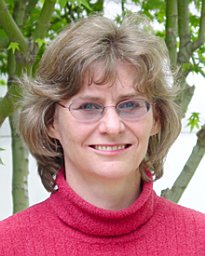 Ulrike Meier Yang合作论文数Ctr Appl Sci Comp, Lawrence Livermore Natl Lab4
 Constantinos Evangelinos合作论文数4James Sexton合作论文数Trinity College, Dublin4Richard L Anderson合作论文数3Chang Sik Kim合作论文数3Antonio Rago合作论文数University of Plymouth3
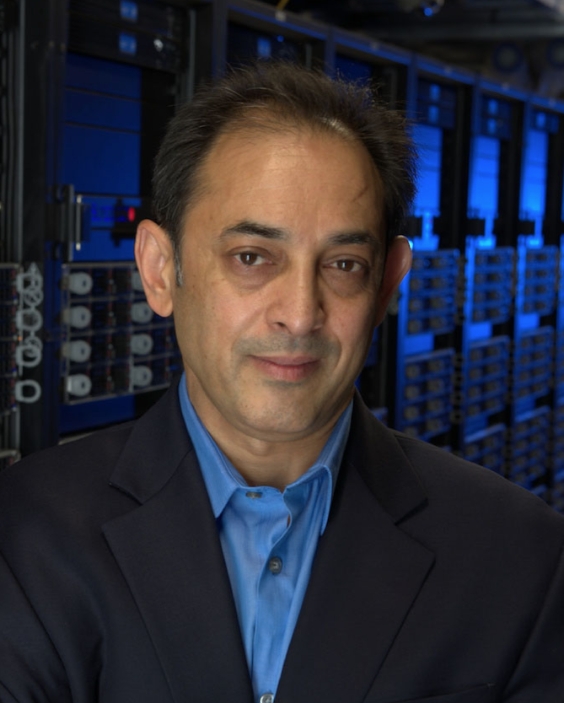 Manish Parashar合作论文数Scientific Computing and Imaging Institute, University of Utah;Kahlert School of Computing, University of Utah;Department of Computer Science, Rutgers University3
 Zhangxin Chen (陈章鑫)合作论文数School of Information and Communication Engineering, University of Electronic Science and Technology of China3
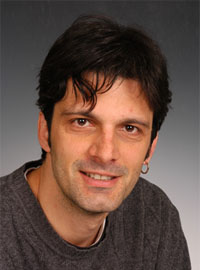 Luigi Del Debbio合作论文数Institute for Particle and Nuclear Physics, School of Physics and Astronomy, University of Edinburgh3
 Hani Jamjoom合作论文数IBM T. J. Watson Research Center3H. Gahvari合作论文数3
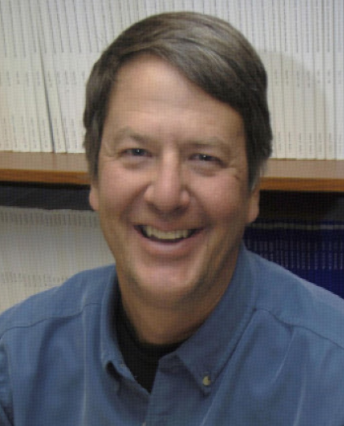 Tom Manteuffel合作论文数Department of Applied Mathematics, College of Arts and Sciences, University of Colorado Boulder3
 Michael Peter Perrone合作论文数IBM T. J. Watson Research Center3
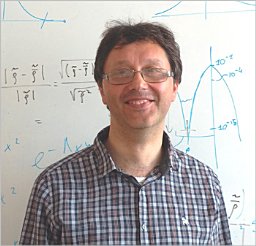 Biagio Lucini合作论文数Physics Department;Swansea University;Physics Department, Swansea University3
 Agostino Patella合作论文数Department of Physics;Swansea University;Department of Physics, Swansea University3
 Mary F. Wheeler合作论文数Department of Petroleum and Geosystems Engineering, The University of Texas at Austin;Institute for Computational Engineering & Sciences, The University of Texas at Austin;Department of Aerospace Engineering & Engineering Mechanics, The University of Texas at Austin3Ed Bennett合作论文数3
 Claudio Pica合作论文数CP3-Origins3
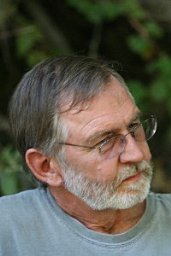 William C. Swope合作论文数Thomas J. Watson Research Center, IBM3
 Martyn D. Winn合作论文数Daresbury Laboratory, Science and Technology Facilities Council3
 Moustafa Abdelbaky合作论文数Rutgers University3




