X‐Band and K‐Band gyroklystrons are being evaluated for possible application to future linear colliders. So far we have examined then different two‐ and three‐cavity configurations. We have achieved a maximum peak power of 27 MW in ∼1 μs pulses at a gain of 36 dB and an efficiency exceeding 32%. The nominal parameters include a 430 kV, 150–200 Å beam with an average perpendicular to parallel velocity ratio near one. In this paper, we detail our progress to data and describe our plans for future experiments that should culminate in amplifier outputs in excess of 100 MW in 1 μs pulses.
X-Band and K-Band gyroklystrons are being evaluated for possible application to future linear colliders. So far we have examined ten different two-and three-cavity configurations. We have achieved a maximum peak power of 27 MW in ~ 1 μs pulses at a gain of 37 dB and an efficiency exceeding 32%. The nominal parameters include a 430 kV, 150-200 A beam with an average perpendicular to parallel velocity ratio near one. In this paper, we detail our progress to date and describe our plans for future experiments that should culminate in amplifier outputs in excess of 100 MW.
The University of Maryland's three cavity gyroklystron amplifier operating at a frequency of 10 GHz, voltage of 425 kV, current of 160 A, and pitch angle (ν⊥/νz) near. 82, has demonstrated an efficiency of 35%. Our simulations using fixed field profiles predict a significantly lower efficiency, primarily because of the small pitch angle in the experiment. We will be investigating two methods of improving the efficiency in our simulations: beam-wave interaction after the output cavity, and modification of the first two cavity Qs due to beam loading. Results of our nonlinear code will be given for both cases.
 William Thompson Main合作论文数4
 Peter Latham合作论文数Sainsbury Wellcome Centre for Neural Circuits and Behaviour, University College London4
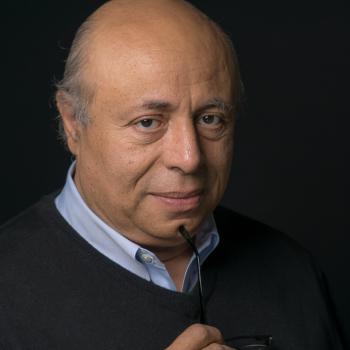 Sami Gamal-Eldin Tantawi合作论文数Division of Accelerator Technology Research, Department of SLAC National Accelerator Laboratory, Stanford University;Department of Electrical Engineering, Michigan State University;Department of Particle Physics and Astrophysics, Stanford University4
 Hogan, B.合作论文数3
 V. L. Granatstein合作论文数3
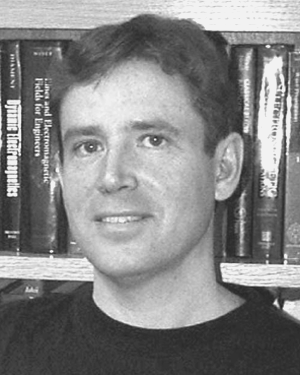 W. Lawson合作论文数Institute for Plasma Research, University of Maryland3
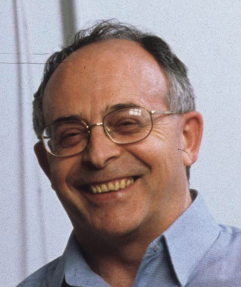 Gregory Nusinovich合作论文数Maryland Energy Innovation Institute, University of Maryland;Institute for Research in Electronics & Applied Physics, University of Maryland2
 Matthews, H.W.合作论文数2C. D. Striffler合作论文数2M. Reiser合作论文数1




