Industrial Control Systems (ICS) are evolving with advances in new technology. The addition of wireless sensors and actuators and new control techniques means that engineering practices from communication systems are being integrated into those used for control systems. The two are engineered in very different ways. Neither engineering approach is capable of accounting for the subtle interactions and interdependence that occur when the two are combined. This paper describes our first steps to bridge this gap, and push the boundaries of both computer communication system and control system design. We present The Separator testbed, a Cyber-Physical testbed enabling our search for a suitable way to engineer systems that combine both computer networks and control systems.
Despite recent rapid advances and successful large-scale application of deep Convolutional Neural Networks (CNNs) using image, video, sound, text and time-series data, its adoption within the oil and gas industry in particular have been sparse. In this paper, we initially present an overview of opportunities for deep CNN methods within oil and gas industry, followed by details on a novel development where deep CNN have been used for state classification of autonomous gas sample taking procedure utilizing an industrial robot. The experimental results — using a deep CNN containing six layers — show accuracy levels exceeding 99 %. In addition, the advantages of using parallel computing with GPU is re-confirmed by showing a reduction factor of 43,8 for the training time required as compared with a CPU implementation. Finally, by analyzing the variations in the output probability distribution, it is shown that the deep CNN can also detect a number of undefined and therefore untrained anomalies. This is an extremely appealing property and serves as an illustrative example of how deep CNN algorithms can contribute towards safer and more robust operation in the industry.
Robotics technology has transformed industrial manufacturing to the extent that it is difficult nowadays to imagine a modern production line without robots. With robots being very well suited to perform repetitive routine tasks which are unpleasant or dangerous for a human to do, manufacturing a product, for example a car, just by manual labour is neither efficient nor cost effective. Furthermore, some of the tasks may require high repeatability precision which industrial robots are designed for. Despite the long list of benefits, robotic technology has not been widely spread in all industries such as in the oil and gas industry. However, this trend may now change as the world's demand for fossil fuels soars, and most of the key players of the industry are looking into methods to improve and expand the production efficiency as well as take care of arising health, safety and environmental (HSE) issues. The robotic technology has the potential to offer solutions to increase the automation of physical tasks in the field while the human operators can operate the overall integrated robotics system from a safe control room away from hazardous and unpleasant areas. This paper presents a novel approach to user interface based error recovery. The approach has been implemented and tested as part of an on-site robotics demonstrator at an onshore gas processing plant.
This paper discusses some key facts about the industrial asset management and the technology behind it as well as asset management strategies that ABB has deployed to some of the biggest projects in the oil and gas industry: offshore and onshore. These, amongst others, include the Ormen Lange natural gas plant which supplies to the UK from Norway over the 1,155km pipeline the longest subsea pipeline in the world and the Goliat FPSO which is partly electrified by a 106km subsea power cable, the longest most powerful cable ever delivered for an offshore application.
 Anqi Fu (傅安琪)合作论文数Faculty of Information Technology, Beijing University of Technology1
 Laksh Bhatia合作论文数Department of Computing, Faculty of Engineering, Imperial College London1
 Ivana Tomic合作论文数University of Novi Sad1
 Ikram, W.合作论文数1
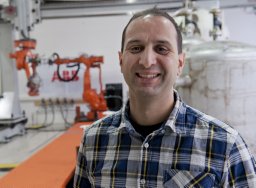 David A. Anisi合作论文数Royal Institute of Technology (KTH) Optimization and Systems Theory SE-100 44 Stockholm Sweden1
 Michael Breza合作论文数1
 Julie A. McCann合作论文数Department of Computing, Imperial College London;Data Centric Engineering Theme, Alan Turing Institute1
 Tommy Lillehagen合作论文数Department of Strategic R&D for Oil, Gas and Petrochemicals, ABB1




