Intelligent robots cannot be programmed in advance for all possible situations, but they should be able to generalize based on the acquired knowledge. In robot learning based on imitation of human activity we often use statistical methods that generalize observed (learned) movements. The acquired data is used to generate useful robots responses in situations for which the robot has not been specifically instructed how to respond. The paper describes the robot learning with Gaussian process regression that creates the model and estimates the parameters for generalization of the acquired motor knowledge, which is accumulated as a database of example movements. New actions are synthesized by applying Gaussian process regression, where the goal and other characteristics of an action are utilized as queries to create an optimal control policy with respect to the previously acquired knowledge. The paper demonstrates that the proposed methodology can be integrated with an active vision system of a humanoid robot. 3D vision data is used to provide query points for statistical generalization.
The goal of this paper is to investigate how to acquire useful action knowledge by observing the results of exploratory actions on objects. We focus on poking as a representative type of nonprehensile manipulation. Poking can be defined as a short term pushing action. Here we propose an explorative process that allows the robot to learn the relationship between the point of contact on the object boundary and the angle of poke and the actual response of an object. The robot acquires this knowledge without having any prior knowledge about the action. Initially, the robot was only able to move in random directions. Such self emergent processes are essential for the early cognition.The proposed process has been implemented and tested on the humanoid robot Hoap-3.
We present a new learning framework for synthesizing goal-directed actions from example movements. The approach is based on the memorization of training data and locally weighted regression to compute suitable movements for a large range of situations. The proposed method avoids making specific assumptions about an adequate representation of the task. Instead, we use a general representation based on fifth order splines. The data used for learning comes either from the observation of events in the Cartesian space or from the actual movement execution on the robot. Thus it informs us about the appropriate motion in the example situations. We show that by applying locally weighted regression to such data, we can generate actions having proper dynamics to solve the given task. To test the validity of the approach, we present simulation results under various conditions as well as experiments on a real robot.
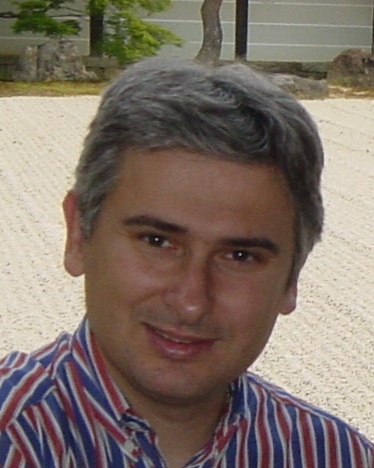 Aleš Ude合作论文数Humanoid and Cognitive Robotics Laboratory, Department of Automatics, Biocybernetics and Robotics, Jozef Stefan Institute4
 Gordon Cheng合作论文数Institute for Cognitive Systems, TUM School of Computation, Information and Technology, Technical University of Munich;Centre of Competence NeuroEngineering, Department of Electrical and Computer Engineering, TUM School of Computation, Information and Technology, Technical University of Munich;Intouch-Robotics GmbH;Georgetown University2
 Bojan Nemec合作论文数Institut “Jozef Stefan”,2
 Tamim Asfour合作论文数High Performance Humanoid Technologies Lab, Institut for Anthropomatics and Robotics, Karlsruhe Institute of Technology2Marcia Riley合作论文数2
 Damir Omrcen合作论文数2Nori, F.合作论文数1Yui Ishizaka合作论文数1Taichi Yamamoto合作论文数1Junya ONO合作论文数1
 SungJu Cho合作论文数1Koichi Nishiwaki合作论文数Natl Inst Adv Ind Sci & Technol, Digital Human Res Ctr, Tokyo 1350064, Japan1
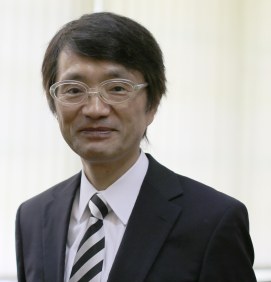 Yoshihiko Nakamura (中村仁彦)合作论文数Technische Universitat Munchen;Department of Mechno-Informatics, School of Information Science and Technology, University of Tokyo1
 p beyl合作论文数1
 Sang-Ho Hyon (玄相昊)合作论文数Department of Robotics, College of Science and Technology, Ritsumeikan University;Humanoid Systems Laboratory, Ritsumeikan University;Advanced Telecomunication Research Institute-Computational Neuroscience Laboratories;NICT-KARC1Yoshikai, T.合作论文数1Hiroyuki Yamamoto合作论文数1
 Heinz Ulbrich合作论文数1
 Bram Vanderborght合作论文数Department of Mechanical Engineering, Faculty of Applied Sciences, Vrije Universiteit Brussel;Interuniversity Microelectronics Institute, Vrije Universiteit Brussel1
 Dirk Lefeber合作论文数Department of Mechanical Engineering, Faculty of Engineering, Vrije Universiteit Brussel1Kazuhiko Kobayashi合作论文数1
 Masayuki Inaba (稲葉雅幸)合作论文数Johou Systems Kougaku Laboratory, Department of Mechano-Informatics, Graduate School of Information Science and Technology, The University of Tokyo1
 James J. Kuffner合作论文数The Robotics Institute, School of Computer Science, Carnegie Mellon University;Planning and Autonomy Lab, Carnegie Mellon University;Digital Human Lab, National Institute of Advanced Industrial Science & Technology1
 Giulio Sandini合作论文数Istituto Italiano di Tecnologia1
 Rüdiger Dillmann合作论文数Humanoids and Intelligence Systems Lab, Institute for Anthropomatics and Robotics, Karlsruhe Institute of Technology;Department of Computer Science, Karlsruhe Institute of Technology;FZI Forschungszentrum Informatik1
 Friedrich Pfeiffer合作论文数Department of Mechanical Engineering, Technical University of Munich1
 Jerry Pratt合作论文数Institute for Human and Machine Cognition1Kai Welke合作论文数1Mathias Bachmayer合作论文数1Marika Hayashi合作论文数1Kazuo Hongo合作论文数1
 Kris K Hauser合作论文数Thomas M. Siebel Center for Computer Science, The Grainger College of Engineering, University of Illinois at Urbana-Champaign;Department of Electrical and Computer Engineering, University of Illinois at Urbana-Champaign;Department of Mechanical Science & Engineering, University of Illinois at Urbana-Champaign1Joel Wormer合作论文数1
 Darrin C. Bentivegna合作论文数Cruise1
 Ikuo Mizuuchi合作论文数Mizuuchi Laboratory, Department of Mechanical Systems Engineering, Tokyo University of Agriculture and Technology1Junichi Urata合作论文数1
 Ambarish Goswami合作论文数Intuitive Surgical1
 Thomas Buschmann合作论文数Institute of Applied Mechanics, Technische Universität München1
 Christopher G. Atkeson合作论文数Human-Computer Interaction Institute, Carnegie Mellon University;The Robotics Institute, Carnegie Mellon University1John Rebula合作论文数University of Michigan1
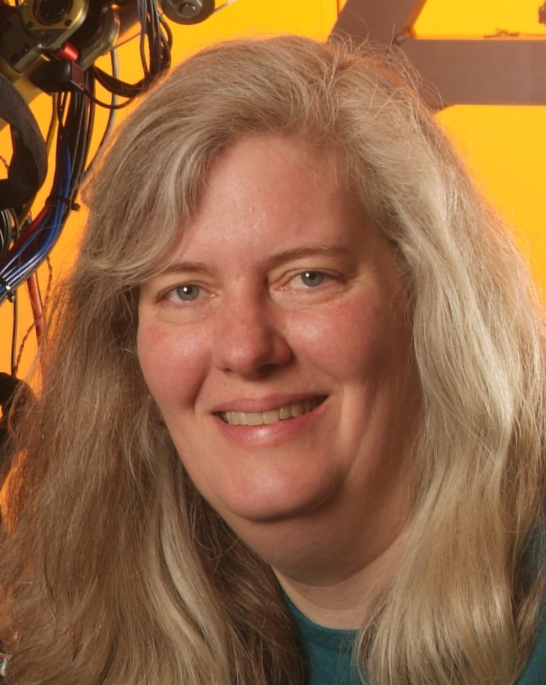 Jessica K. Hodgins合作论文数Robotics Institute, School of Computer Science, Carnegie Mellon University1Yuta Namiki合作论文数1Sebastian Lohmeier合作论文数1
 Evan Drumwright合作论文数Limber Robotics1
 Benjamin Stephens合作论文数Department of Pre-Clinical Veterinary Sciences, University of Edinburgh1
 Ryo Saegusa合作论文数1
 Giorgio Metta合作论文数Istituto Italiano di Tecnologia1
 Ronald Ham合作论文数Vrije Universiteit Brussel1Takashi Sagisaka合作论文数1




