Continual learning in large language models (LLMs) is prone to catastrophic forgetting, where adapting to new tasks significantly degrades performance on previously learned ones. Existing parameter-efficient methods often limit model expressivity or introduce new parameters per task, creating scalability issues. To address these limitations, we introduce **Orthogonal Subspace Fine-Tuning (OSFT)**, a novel parameter-efficient approach for continual learning. OSFT leverages adaptive singular value decomposition (SVD) to dynamically identify and preserve critical, high-rank parameter subspaces that encode prior knowledge. All updates for new tasks are constrained to be strictly orthogonal to these preserved subspaces, which minimizes interference while maintaining a fixed parameter count and avoiding the need to store task-specific gradients. We extensively evaluate OSFT on standard continual learning benchmarks using both encoder-decoder (T5-Large) and decoder-only (LLaMA-2 7B, Mistral-7B) models across diverse tasks. Empirically, our method achieves a state-of-the-art trade-off between learnability and knowledge retention, dominating the Pareto frontier, with **up to 7\% higher** average accuracy than recent baselines like O-LoRA, and **reduces forgetting to near-negligible levels**. It notably maintains the model's general linguistic capabilities, instruction-following, and safety throughout the learning process. OSFT provides a practical, theoretically grounded, and scalable solution that effectively balances model plasticity and knowledge retention for continual learning in LLMs.
In the developer community for large language models (LLMs), there is not yet a clean pattern analogous to a software library, to support very large scale collaboration. Even for the commonplace use case of Retrieval-Augmented Generation (RAG), it is not currently possible to write a RAG application against a well-defined set of APIs that are agreed upon by different LLM providers. Inspired by the idea of compiler intrinsics, we propose some elements of such a concept through introducing a library of LLM Intrinsics for RAG. An LLM intrinsic is defined as a capability that can be invoked through a well-defined API that is reasonably stable and independent of how the LLM intrinsic itself is implemented. The intrinsics in our library are released as LoRA adapters on HuggingFace, and through a software interface with clear structured input/output characteristics on top of vLLM as an inference platform, accompanied in both places with documentation and code. This article describes the intended usage, training details, and evaluations for each intrinsic, as well as compositions of multiple intrinsics.
The rise of large language models (LLMs) has created a significant disparity: industrial research labs with their computational resources, expert teams, and advanced infrastructures, can effectively fine-tune LLMs, while individual developers and small organizations face barriers due to limited resources. In this paper, we aim to bridge this gap by presenting a comprehensive study on supervised fine-tuning of LLMs using instruction-tuning datasets spanning diverse knowledge domains and skills. We focus on small-sized LLMs (3B to 7B parameters) for their cost-efficiency and accessibility. We explore various training configurations and strategies across four open-source pre-trained models. We provide detailed documentation of these configurations, revealing findings that challenge several common training practices, including hyperparameter recommendations from TULU and phased training recommended by Orca. Key insights from our work include: (i) larger batch sizes paired with lower learning rates lead to improved model performance on benchmarks such as MMLU, MTBench, and Open LLM Leaderboard; (ii) early-stage training dynamics, such as lower gradient norms and higher loss values, are strong indicators of better final model performance, enabling early termination of sub-optimal runs and significant computational savings; (iii) through a thorough exploration of hyperparameters like warmup steps and learning rate schedules, we provide guidance for practitioners and find that certain simplifications do not compromise performance; and (iv) we observed no significant difference in performance between phased and stacked training strategies, but stacked training is simpler and more sample efficient. With these findings holding robustly across datasets and models, we hope this study serves as a guide for practitioners fine-tuning small LLMs and promotes a more inclusive environment for LLM research.
Supervised fine-tuning performance for large language models depends strongly on how training budget is distributed across a heterogeneous set of tasks. In practice, mixtures are often fixed using simple heuristics (e.g., uniform or size-proportional sampling) that ignore task interactions, which can hurt transfer and waste budget on redundant sources. We introduce TaskPGM, a framework for learning continuous task mixtures via an energy-based model over tasks. Tasks form the nodes of a Markov random field: unary potentials capture per-task utility, and pairwise potentials encode inter-task relationships using behavioral divergences computed from predictive distributions of single-task fine-tuned models (e.g., Jensen–Shannon divergence and pointwise mutual information). Optimizing this objective yields mixtures that balance coverage against redundancy. We show that the resulting set function is weakly submodular under budget constraints, enabling approximation guarantees for discrete selection variants. Across multiple model families (LLaMA-7B, Qwen2-7B) and evaluation suites (BIG-Bench Hard), TaskPGM improves over standard mixing strategies and provides interpretable structure over task interactions.
Fine-tuning large language models (LLMs) is essential for enhancing their performance on specific tasks but is often resource-intensive due to redundant or uninformative data. To address this inefficiency, we introduce DELIFT (Data Efficient Language model Instruction Fine-Tuning), a novel algorithm that systematically optimizes data selection across the three key stages of fine-tuning: (1) instruction tuning, (2) task-specific fine-tuning (e.g., reasoning, question-answering), and (3) continual learning (e.g., incorporating new data versions). Unlike existing methods that focus on single-stage optimization or rely on computationally intensive gradient calculations, DELIFT operates efficiently across all stages. Central to our approach is a pairwise utility metric that quantifies how beneficial a data sample is for improving the model's responses to other samples, effectively measuring the informational value relative to the model's current capabilities. By leveraging different submodular functions applied to this metric, DELIFT selects diverse and optimal subsets that are useful across all stages of fine-tuning. Experiments across various tasks and model scales demonstrate that DELIFT can reduce the fine-tuning data size by up to 70% without compromising performance, offering significant computational savings and outperforming existing methods in both efficiency and efficacy.
In this paper we introduce theSCoRe(SubmodularCombinatorialRepresentation Learning) framework, a novel approach in representation learning that addresses inter-class bias and intra-class variance. SCoRe provides a new combinatorial viewpoint to representation learning, by introducing a family of loss functions based on set-based submodular information measures. We develop two novel combinatorial formulations for loss functions, using theTotal InformationandTotal Correlation, that naturally minimize intra-class variance and inter-class bias. Several commonly used metric/contrastive learning loss functions like supervised contrastive loss, orthogonal projection loss, and N-pairs loss, are all instances of SCoRe, thereby underlining the versatility and applicability of SCoRe in a broad spectrum of learning scenarios. Novel objectives in SCoRe naturally model class-imbalance with up to 7.6% improvement in classification on CIFAR-10-LT, CIFAR-100-LT, MedMNIST, 2.1% on ImageNet-LT, and 19.4% in object detection on IDD and LVIS (v1.0), demonstrating its effectiveness over existing approaches.
Active Learning (AL) is a human-in-the-loop framework to interactively and adaptively label data instances, thereby enabling significant gains in model performance compared to random sampling. AL approaches function by selecting the hardest instances to label, often relying on notions of diversity and uncertainty. However, we believe that these current paradigms of AL do not leverage the full potential of human interaction granted by automated label suggestions. Indeed, we show that for many classification tasks and datasets, most people verifying if an automatically suggested label is correct take $3\times$ to $4\times$ less time than they do changing an incorrect suggestion to the correct label (or labeling from scratch without any suggestion). Utilizing this result, we propose CLARIFIER (aCtive LeARnIng From tIEred haRdness), an Interactive Learning framework that admits more effective use of human interaction by leveraging the reduced cost of verification. By targeting the hard (uncertain) instances with existing AL methods, the intermediate instances with a novel label suggestion scheme using submodular mutual information functions on a per-class basis, and the easy (confident) instances with highest-confidence auto-labeling, CLARIFIER can improve over the performance of existing AL approaches on multiple datasets -- particularly on those that have a large number of classes -- by almost 1.5$\times$ to 2$\times$ in terms of relative labeling cost.
Representation Learning in real-world class-imbalanced settings has emerged as a challenging task in the evolution of deep learning. Lack of diversity in visual and structural features for rare classes restricts modern neural networks to learn discriminative feature clusters. This manifests in the form of large inter-class bias between rare object classes and elevated intra-class variance among abundant classes in the dataset. Although deep metric learning approaches have shown promise in this domain, significant improvements need to be made to overcome the challenges associated with class-imbalance in mission critical tasks like autonomous navigation and medical diagnostics. Set-based combinatorial functions like Submodular Information Measures exhibit properties that allow them to simultaneously model diversity and cooperation among feature clusters. In this paper, we introduce the SCoRe (Submodular Combinatorial Representation Learning) framework and propose a family of Submodular Combinatorial Loss functions to overcome these pitfalls in contrastive learning. We also show that existing contrastive learning approaches are either submodular or can be re-formulated to create their submodular counterparts. We conduct experiments on the newly introduced family of combinatorial objectives on two image classification benchmarks - pathologically imbalanced CIFAR-10, subsets of MedMNIST and a real-world road object detection benchmark - India Driving Dataset (IDD). Our experiments clearly show that the newly introduced objectives like Facility Location, Graph-Cut and Log Determinant outperform state-of-the-art metric learners by up to 7.6% for the imbalanced classification tasks and up to 19.4% for object detection tasks.
random subset selection baselines, existing intelligent subset selection approaches
Training deep networks and tuning hyperparameters on large datasets is computationally intensive. One of the primary research directions for efficient training is to reduce training costs by selecting well-generalizable subsets of training data. Compared to simple adaptive random subset selection baselines, existing intelligent subset selection approaches are not competitive due to the time-consuming subset selection step, which involves computing model-dependent gradients and feature embeddings and applies greedy maximization of submodular objectives. Our key insight is that removing the reliance on downstream model parameters enables subset selection as a pre-processing step and enables one to train multiple models at no additional cost. In this work, we propose MILO, a model-agnostic subset selection framework that decouples the subset selection from model training while enabling superior model convergence and performance by using an easy-to-hard curriculum. Our empirical results indicate that MILO can train models $3\times - 10 \times$ faster and tune hyperparameters $20\times - 75 \times$ faster than full-dataset training or tuning without compromising performance.
A salient characteristic of pre-trained language models (PTLMs) is a remarkable improvement in their generalization capability and emergence of new capabilities with increasing model capacity and pre-training dataset size. Consequently, we are witnessing the development of enormous models pushing the state-of-the-art. It is, however, imperative to realize that this inevitably leads to prohibitively long training times, extortionate computing costs, and a detrimental environmental impact. Significant efforts are underway to make PTLM training more efficient through innovations in model architectures, training pipelines, and loss function design, with scant attention being paid to optimizing the utility of training data. The key question that we ask is whether it is possible to train PTLMs by employing only highly informative subsets of the training data while maintaining downstream performance? Building upon the recent progress in informative data subset selection, we show how we can employ submodular optimization to select highly representative subsets of the training corpora and demonstrate that the proposed framework can be applied to efficiently train multiple PTLMs (BERT, BioBERT, GPT-2) using only a fraction of data. Further, we perform a rigorous empirical evaluation to show that the resulting models achieve up to $\sim99\%$ of the performance of the fully-trained models. We made our framework publicly available at https://github.com/Efficient-AI/ingenious.
A critical bottleneck in supervised machine learning is the need for large amounts of labeled data which is expensive and time-consuming to obtain. Although a small amount of labeled data cannot be used to train a model, it can be used effectively for the generation of humaninterpretable labeling functions (LFs). These LFs, in turn, have been used to generate a large amount of additional noisy labeled data in a paradigm that is now commonly referred to as data programming. Previous methods of generating LFs do not attempt to use the given labeled data further to train a model, thus missing opportunities for improving performance. Additionally, since the LFs are generated automatically, they are likely to be noisy, and naively aggregating these LFs can lead to suboptimal results. In this work, we propose an LF-based bi-level optimization framework WISDOM to solve these two critical limitations. WISDOM learns a joint model on the (same) labeled dataset used for LF induction along with any unlabeled data in a semi-supervised manner, and more critically, reweighs each LF according to its goodness, influencing its contribution to the semi-supervised loss using a robust bi-level optimization algorithm. We show that WISDOM significantly outperforms prior approaches on several text classification datasets.
Continual learning (CL) aims to develop techniques by which a single model adapts to an increasing number of tasks encountered sequentially, thereby potentially leveraging learnings across tasks in a resource-efficient manner. A major challenge for CL systems is catastrophic forgetting, where earlier tasks are forgotten while learning a new task. To address this, replay-based CL approaches maintain and repeatedly retrain on a small buffer of data selected across encountered tasks. We propose Gradient Coreset Replay (GCR), a novel strategy for replay buffer selection and update using a carefully designed optimization criterion. Specifically, we select and maintain a "coreset" that closely approximates the gradient of all the data seen so far with respect to current model parameters, and discuss key strategies needed for its effective application to the continual learning setting. We show significant gains (2%-4% absolute) over the state-of-the-art in the well-studied offline continual learning setting. Our findings also effectively transfer to online / streaming CL settings, showing upto 5% gains over existing approaches. Finally, we demonstrate the value of supervised contrastive loss for continual learning, which yields a cumulative gain of up to 5% accuracy when combined with our subset selection strategy.
Real-world machine-learning applications require robust models that generalize well to distribution shift settings, which is typical in real-world situations. Domain adaptation techniques aim to address this issue of distribution shift by minimizing the disparities between domains to ensure that the model trained on the source domain performs well on the target domain. Nevertheless, the existing domain adaptation methods are computationally very expensive. In this work, we aim to improve the efficiency of existing supervised domain adaptation (SDA) methods by using a subset of source data that is similar to target data for faster model training. Specifically, we propose ORIENT, a subset selection framework that uses the submodular mutual information (SMI) functions to select a source data subset similar to the target data for faster training. Additionally, we demonstrate how existing robust subset selection strategies, such as GLISTER, GRADMATCH, and CRAIG, when used with a held-out query set, fit within our proposed framework and demonstrate the connections with them. Finally, we empirically demonstrate that SDA approaches like d-SNE, CCSA, and standard Cross-entropy training, when employed together with ORIENT, achieve a) faster training and b) better performance on the target data.
Recent semi-supervised learning algorithms have demonstrated greater success with higher overall performance due to the use of better-unlabeled data representations. Nonetheless, recent research suggests that the performance of the SSL algorithm can be degraded when the unlabeled set contains out-of-distribution examples (OODs). This work addresses the following research question: How do out-of-distribution (OOD) data adversely affect semi-supervised learning algorithms? To answer this question, we investigate the critical causes of OOD’s negative effect on SSL algorithms. In particular, we found that 1) certain kinds of OOD data instances that are close to the decision boundary have a more significant impact on performance than those that are further away, and 2) Batch Normalization (BN), a popular module, may degrade rather than improve performance when the unlabeled set contains OODs. To address these challenges, we developed a unified weighted robust SSL framework that can be easily extended to many existing SSL algorithms and improve their robustness against OODs. Having identified the limitations of low-order approximations in bi-level optimization, we developed an efficient bi-level optimization algorithm that could accommodate high-order approximations of the objective and could scale to a large number of inner optimization steps to learn a massive number of weight parameters. Furthermore, we conduct a theoretical analysis of the impact of faraway OODs in the BN step and propose a weighted batch normalization (WBN) procedure that uses the weights estimated by the bi-level optimization problem in the BN step. Additionally, we discuss the connection between our approach and low-order approximation techniques. Our extensive experiments on synthetic and real-world datasets demonstrate that our proposed approach significantly enhances the robustness of four representative SSL algorithms against OODs compared to four state-of-the-art robust SSL strategies.
Model-Agnostic Meta-Learning (MAML), a popular gradient-based meta-learning framework, assumes that the contribution of each task or instance to the meta-learner is equal. Hence, it fails to address the domain shift between base and novel classes in few-shot learning. In this work, we propose a novel robust meta-learning algorithm, NestedMAML, which learns to assign weights to training tasks or instances. We consider weights as hyper-parameters and iteratively optimize them using a small set of validation tasks set in a nested bi-level optimization approach (in contrast to the standard bi-level optimization in MAML). We then apply NestedMAML in the meta-training stage, which involves (1) several tasks sampled from a distribution different from the meta-test task distribution, or (2) some data samples with noisy labels. Extensive experiments on synthetic and real-world datasets demonstrate that NestedMAML efficiently mitigates the effects of "unwanted" tasks or instances, leading to significant improvement over the state-of-the-art robust meta-learning methods.
Deep neural networks have seen great success in recent years; however, training a deep model is often challenging as its performance heavily depends on the hyper-parameters used. In addition, finding the optimal hyper-parameter configuration, even with state-of-the-art (SOTA) hyper-parameter optimization (HPO) algorithms, can be time-consuming, requiring multiple training runs over the entire dataset for different possible sets of hyper-parameters. Our central insight is that using an informative subset of the dataset for model training runs involved in hyper-parameter optimization, allows us to find the optimal hyper-parameter configuration significantly faster. In this work, we propose AUTOMATA, a gradient-based subset selection framework for hyper-parameter tuning. We empirically evaluate the effectiveness of AUTOMATA in hyper-parameter tuning through several experiments on real-world datasets in the text, vision, and tabular domains. Our experiments show that using gradient-based data subsets for hyper-parameter tuning achieves significantly faster turnaround times and speedups of 3$\times$-30$\times$ while achieving comparable performance to the hyper-parameters found using the entire dataset.
The great success of modern machine learning models on large datasets is contingent on extensive computational resources with high financial and environmental costs. One way to address this is by extracting subsets that generalize on par with the full data. In this work, we propose a general framework, GRAD-MATCH, which finds subsets that closely match the gradient of the training or validation set. We find such subsets effectively using an orthogonal matching pursuit algorithm. We show rigorous theoretical and convergence guarantees of the proposed algorithm and, through our extensive experiments on real-world datasets, show the effectiveness of our proposed framework. We show that GRAD-MATCH significantly and consistently outperforms several recent data-selection algorithms and achieves the best accuracy-efficiency trade-off. GRAD-MATCH is available as a part of the CORDS toolkit: \url{https://github.com/decile-team/cords}.
Large scale machine learning and deep models are extremely data-hungry. Unfortunately, obtaining large amounts of labeled data is expensive, and training state-of-the-art models (with hyperparameter tuning) requires significant computing resources and time. Secondly, real-world data is noisy and imbalanced. As a result, several recent papers try to make the training process more efficient and robust. However, most existing work either focuses on robustness or efficiency, but not both. In this work, we introduce GLISTER, a GeneraLIzation based data Subset selecTion for Efficient and Robust learning framework. We formulate GLISTER as a mixed discrete-continuous bi-level optimization problem to select a subset of the training data, which maximizes the log-likelihood on a held-out validation set. We then analyze GLISTER for simple classifiers such as gaussian and multinomial naive-bayes, k-nearest neighbor classifier, and linear regression and show connections to submodularity. Next, we propose an iterative online algorithm GLISTER-ONLINE, which performs data selection iteratively along with the parameter updates, and can be applied to any loss-based learning algorithm. We then show that for a rich class of loss functions including cross-entropy, hinge-loss, squared-loss, and logistic-loss, the inner discrete data selection is an instance of (weakly) submodular optimization, and we analyze conditions for which GLISTER-ONLINE reduces the validation loss and converges. Finally, we propose GLISTER-ACTIVE, an extension to batch active learning, and we empirically demonstrate the performance of GLISTER on a wide range of tasks including, (a) data selection to reduce training time, (b) robust learning under label noise and imbalance settings, and (c) batch-active learning with a number of deep and shallow models. We show that our framework improves upon the state of the art both in efficiency and accuracy (in cases (a) and (c)) and is more efficient compared to other state-of-the-art robust learning algorithms in case (b). The code for GLISTER is at: https://github.com/dssresearch/GLISTER.
Active learning has proven to be useful for minimizing labeling costs by selecting the most informative samples. However, existing active learning methods do not work well in realistic scenarios such as imbalance or rare classes,out-of-distribution data in the unlabeled set, and redundancy. In this work, we propose SIMILAR (Submodular Information Measures based actIve LeARning), a unified active learning framework using recently proposed submodular information measures (SIM) as acquisition functions. We argue that SIMILAR not only works in standard active learning but also easily extends to the realistic settings considered above and acts as a one-stop solution for active learning that is scalable to large real-world datasets. Empirically, we show that SIMILAR significantly outperforms existing active learning algorithms by as much as ~5%−18%in the case of rare classes and ~5%−10%in the case of out-of-distribution data on several image classification tasks like CIFAR-10, MNIST, and ImageNet.
 Rishabh Iyer合作论文数Erik Jonsson School of Engineering and Computer Science, The University of Texas at Dallas20
 Ganesh Ramakrishnan合作论文数Department of Computer Science and Engineering, Indian Institute of Technology Bombay;Centre for Machine Intelligence & Data Science, Indian Institute of Technology Bombay;Bank of Baroda8
 Lucian Popa合作论文数IBM Almaden Research Center6
 Feng Chen合作论文数University of Texas at Dallas5
 Suraj Kothawade合作论文数Department of Computer Engineering, University of Texas at Dallas4
 Xujiang Zhao合作论文数NEC Laboratories America, Inc3
 Marina Danilevsky合作论文数IBM Almaden Research Center3
 Ayush Maheshwari合作论文数NVIDIA;Temples of India3
 Aldo Pareja合作论文数MIT-IBM Watson AI Lab2
 Anay Majee合作论文数CARAML Lab, Department of Computer Science, The University of Texas at Dallas2
 Akash Srivastava合作论文数IBM;Massachusetts Institute of Technology2
 Hao Wang合作论文数2
 Kai (徐锴)合作论文数MIT-IBM Watson AI Lab2Nathan Beck合作论文数2Tejaswini Pedapati合作论文数IBM Res, Yorktown Hts, NY USA2
 Oishik Chatterjee合作论文数Indian Inst Technol, Dept CSE, Bombay, Maharashtra, India2
 Ligong Han (韩立功)合作论文数Department of Computer Science, Rutgers University2
 Durga. S.合作论文数Microsoft India2
 Abhishek Bhandwaldar合作论文数MIT-IBM Watson AI Lab2
 Changbin Li合作论文数The University of Texas at Dallas2Alexandre V. Evfimievski合作论文数IBM Research - Almaden;Intelligent Information Systems, Healthcare Informatics;Dept. of Computer Science2Luke Inglis合作论文数1Nikhil Nayak合作论文数1Aakriti Lnu合作论文数1
 Nikhil Shivakumar Nayak合作论文数Fastino Labs1
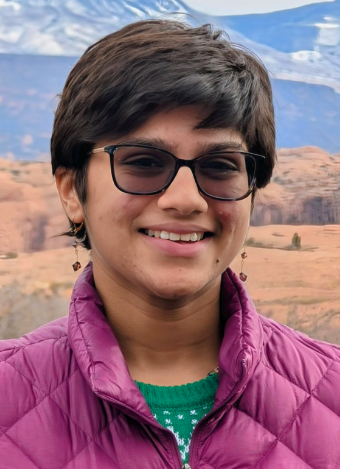 Ishika Agarwal合作论文数Department of Computer Science, University of Illinois Urbana-Champaign1H S V N S Kowndinya Renduchintala合作论文数1
 Rishabh Tiwari合作论文数The Berkeley Artificial Intelligence Research Lab, Department of Electrical Engineering and Computer Sciences, University of California, Berkeley1
 Shivchander Sudalairaj合作论文数1G S Abhishek合作论文数Dept Mech Engn, Indian Inst Technol1Dinesh Raghu合作论文数1
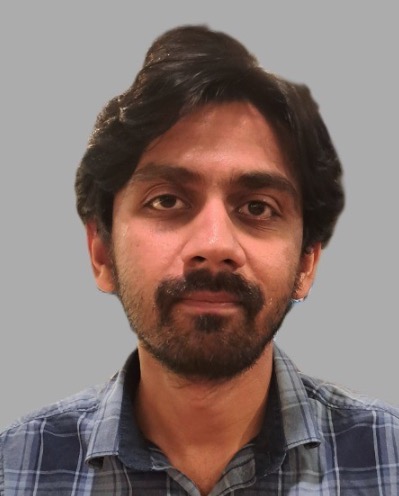 Athresh Karanam合作论文数The University of Texas at Dallas1Wenlong Zhao合作论文数1Kiran Kate合作论文数IBM Research, USA1Seungwook Han合作论文数Child & Adolescent Psychiat, Columbia Univ1
 Prateek Chanda合作论文数Computer Science and Engineering Department, Indian Institute of Technology Bombay;Indian Statistical Institute1
 Sumit Bhatia合作论文数IIIT Delhi1Milan Aggarwal合作论文数Adobe Systems1
 Guangxuan Xu合作论文数1
 Chulaka Gunasekara合作论文数IBM Research1
 Yannis Katsis合作论文数IBM Research1
 Yatin Nandwani合作论文数Computer Science and Engineering Department, Indian Institute of Technology Delhi;IBM India Research1
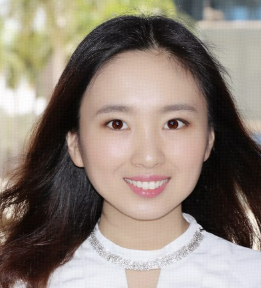 Chen Zhao (赵琛)合作论文数School of Computer Science and Technology, Harbin Institute of Technology (Shenzhen)1
 Huaiyu Zhu合作论文数IBM Research1
 Pradeep Shenoy合作论文数Google Research1
 Frederick Reiss合作论文数IBM1
 Abir De合作论文数Department of Computer Science and Engineering, Indian Institute of Technology Bombay1
 Harsha Kokel合作论文数IBM Research1




