Deep neural networks are often overconfident, assigning high confidence even to incorrect predictions. Consequently, users lack a reliable signal for deciding when a prediction can be trusted. Post-hoc confidence estimation addresses this by training a lightweight auxiliary head over a frozen classifier. Existing targets, however, suffer from inherent ambiguity: they assign overlapping confidence values to correct and incorrect predictions, while errors near the decision boundary receive confidence scores indistinguishable from correct predictions. In this work, we propose TCP_α, a novel confidence target that resolves these limitations by introducing a margin-controlled penalty for misclassified samples. We prove that TCP_α guarantees complete separation between the target values of correct and incorrect predictions, with a separation margin that is independent of the number of classes and increases monotonically with the penalty parameter. Since accurate classifiers naturally produce very few errors, learning these targets results in a severely imbalanced regression problem. We therefore present a systematic study of training strategies for learning under this imbalance and identify an effective training configuration through extensive ablation studies. We evaluate the proposed approach on rāga identification, investigate its robustness under domain shift, and further validate it on frame-wise ornamentation detection without modifying the selected configuration. Across all settings, TCP_α consistently outperforms existing confidence targets for failure prediction. Rejecting only the least-confident 8% of predictions improves the base model's macro-F1 from 0.89 to 0.98, while fine-tuning the confidence head with only 5% labeled samples from a new corpus effectively restores performance under domain shift.
To evaluate the diagnostic accuracy of artificial intelligence-based algorithms in identifying neck of femur fracture on a plain radiograph. Systematic review and meta-analysis. PubMed, Web of science, Scopus, IEEE, and the Science direct databases were searched from inception to 30 July 2023. Eligible article types were descriptive, analytical, or trial studies published in the English language providing data on the utility of artificial intelligence (AI) based algorithms in the detection of the neck of the femur (NOF) fracture on plain X-ray. The prespecified primary outcome was to calculate the sensitivity, specificity, accuracy, Youden index, and positive and negative likelihood ratios. Two teams of reviewers (each consisting of two members) extracted the data from available information in each study. The risk of bias was assessed using a mix of the CLAIM (the Checklist for AI in Medical Imaging) and QUADAS-2 (A Revised Tool for the Quality Assessment of Diagnostic Accuracy Studies) criteria. Of the 437 articles retrieved, five were eligible for inclusion, and the pooled sensitivity of AIs in diagnosing the fracture NOF was 85
The freshwater ecosystem's health and fish diversity depend on natural and human interventions. The present investigation was carried out for one year to observe the present physicochemical parameters, fish composition, and abundance with diversity at three selected locations, i.e., A1, A2, and A3. Physico-chemical parameters were exceptionally suitable, and the limnological conditions were favorable for the growth and survival of biodiversity. 39 fish species belonging to 8 orders and 16 families were recorded, and cypriniformes was the most predominant order, followed by siluriformes. Simpson's Diversity Index (D) at site A1 was D=0.73, site A2 D=0.82, and site A3 D=0.87. The highest diversity was found at site A3 and the lowest at site A1. The second most dominant catch of exotics in the landing has adversely impacted the Indian major carps. There should be proper regulations and guidelines for the production and disposal of effluents as well as excessive fishing of indigenous aquatic fisheries.
Sarcasm detection in written text has emerged as a significant research area within natural language processing (NLP). Sarcasm, characterized by conveying the opposite of the intended meaning often for humor, irony, or ridicule, poses a challenge due to its contextual and tonal nuances. This study investigates the application of machine learning methods to detect sarcasm in text due to its potential to reverse the overall sentiment expressed in a sentence. A total of 13 linguistic manually crafted features related to text meaning, word usage, lexical diversity, and readability are extracted. These features are then employed to train a variety of machine learning models including Gradient Boosting, Decision Tree, Random Forest, Support Vector Machine, Gaussian Nave Bayes, K-Nearest Neighbor, and Logistic Regression classifiers. Additionally, an Ensemble Model and a Dense Neural Network is developed, both trained on the extracted handcrafted features to showcase performance. The results reveal that the suggested ensemble model achieves a peak accuracy of 93% in sarcasm detection. The amalgamation of these 13 linguistic features enhances model performance when compared to other contemporary models, exhibiting an improvement of up to 5% in terms of F1-score using the publicly available gold standard News Headline Dataset.
Plankton are important components of aquatic ecosystems because they contribute to primary production, which sustains fisheries and other ecosystem functions. The study was carried out over a one-year period at three Ganga River sites: Haridwar (Bhadrabad) site A1, Bijnor (Balawali) site A2, and Muzaffarnagar (Bairaj Ganga bridge) site. Bacillariphyceae made almost 65% of the phytoplankton at location A1 14% Chlorophyceae and 14% Cynophyceae. The zooplankton consisted of Protozoa (80%) and Cladocera (20%), with Ulvophyceae accounting for 7%. At location A2, the phytoplankton composition was Bacillariphyceae (79%) and Chlorophyceae (7%). ˃ Cynophyceae (7%). Ulvophyceae (7%), and zooplankton were Protozoa (80%), Rotifera (20%). At location A3, the phytoplankton mix shifted to Bacillariphyceae (70%). ˃ Chlorophyceae (18%) ˃ Cynophyceae (12%) and Protozoa (60%) Rotifera accounts for 40%. The Simpson diversity index (D) value for phytoplankton is 0.58, whereas for zooplankton, the value is 0.53. The mean plankton density at locations A1, A2, and A3 was 2059, 2959, and 3304 individuals per liter, respectively. Only dissolved oxygen in physicochemical characteristics correlated positively with plankton density; all other metrics correlated negatively.
In this digital world, where availability of the image-generating tools is quite common and owing to the rapid growth of Internet knowledge, people use to exchange massive volume of images every day which results in creating large image repositories. So, retrieving appropriate image available on these repositories is one of the vital tasks. This problem leads to evolving content-based image retrieval (CBIR). As the generation of image increases, people start transferring these images to a remote third-party server, but these images may have personal information. This leads to adding privacy concerns toward the system as transferring personal data to some other place might be a cause of leakage of information or transfer to an unauthorized person. So, to keep this in mind, sensitive images like medical and personal images require encryption before being a contracted out for the privacy-preserving resolutions. In this work, we have deployed ACM for image encryption as well as asymmetric scalar product preserving encryption (ASPE) for feature vector encryption and similarity matching. We have demonstrated our results based on various benchmark databases.
The performance of any content-based image retrieval (CBIR) system depends on the quality and importance of the extracted features. Those extracted features like texture, shape, and color carry the most vital image information, reflecting the image’s visual perception. Since a natural image possesses these features, in this paper, we have proposed a novel CBIR system that uses all these primitive image features to realize an efficient CBIR system. It has been observed that a natural image contains entirely overlapping information, so in this approach, we have evaluated concerned image features from their respective component. Hence, we have used YCbCr color space for the feature extraction process because Y, Cb, and Cr color planes are minimally overlapped. Since a natural image carries a significant amount of redundant and dispensable pixel values. Hence, as a pre-processing step, we have employed a mid-rise quantization scheme on an individual component. This step reduces the non- essential information and fastens the image feature extraction process by a significant margin. To extract texture and shape information from the intensity, i.e., Y-plane, we have deployed the difference of inverse probability (BDIP) and block variance of the local correlation coefficient (BVLC). We have subsequently used adaptive tetrolet transform in the output of BDIP and BVLC to extract local textural and geometrical features. Parallelly, we have selected the Cb and Cr component and used adaptive tetrolet transform to analyze the regional local color variations of the image. The use of tetrolet transform will enhance not only the local geometrical and textural features but also emphasis the color distribution on the entire image. Finally, we have combined the non-overlapping extracted shape, texture, and color features to form the final feature vector for the retrieval process. The proposed method has been tested on three color dominated, two shape dominated, and textural image dataset and subsequently, results are drawn from each of them in terms of precision, recall, and f-score. Further, the proposed scheme has also been compared with different state-of-art CBIR methods, and the results are showing satisfactory improvement over other methods for most instances.
Medical image analysis plays a very indispensable role in providing the best possible medical support to a patient. With the rapid advancements in modern medical systems, these digital images are growing exponentially and reside in discrete places. These images help a medical practitioner in understanding the problem and then the best suitable treatment. Radiological images are very often found to be the critical constituent of medical images. So, in health care, manual retrieval of visually similar images becomes a very tedious task. To address this issue, we have suggested a content-based medical image retrieval (CBMIR) system that effectively analyzes a Radiological image’s primitive visual features. Since radiological images are in gray-scale form, these images contain rich texture and shape features only. So, we have suggested a novel multi-resolution radiological image retrieval system that uses texture and shape features for content analysis. Here, we have employed a multi-resolution modified block difference of inverse probability (BDIP) and block-level variance of local variance (BVLC) for shape and texture features, respectively. Our proposed scheme uses a multi-resolution and variable window size feature extraction strategy to maintain the block-level co-relation and extract more salient visual features. Further, we have used the MURA x-ray image dataset, which has 40561 images captured from 12173 different patients to demonstrate the proposed scheme’s retrieval performance. We have also performed and compared image retrieval experiments on Brodatz and STex texture, Corel-1K, and GHIM-10K natural image datasets to demonstrate the robustness and improvement over other contemporaries.
Advances in computer vision technologies lead to a renewed focus on content-based image retrieval (CBIR) in computer multimedia content analysis applications. CBIR is a technique for image retrieval using automatically derived features. As the size of image repositories grew, supported by increased cloud storage adoption, security concern around trust in cloud service provider (CSP) witnessed a resurgence of interest in user privacy. Hence, unlike in traditional CBIR, cloud-based image retrieval is based on the encrypted feature vector. This may reduce the overall retrieval performance of the system. Consequently, mechanisms are needed to protect the feature vector and the actual images during transmission. Second, to provide image content security, images are often encrypted by users before uploading to the cloud. This article addresses the challenges of retrieving images securely from an untrusted cloud environment. Images are represented in terms of their local invariant features to form an image feature vector. Later, an asymmetric scalar-product-preserving encryption (ASPE) is applied to secure the feature vector. Then, images are encrypted before they are uploaded to a cloud server. The proposed method has been tested on various Corel image datasets and the medical image repository. Performance evaluation shows that the proposed method outperforms its best secure CBIR systems in the literature.
Content-based image retrieval (CBIR) uses primitive image features for retrieval of similarimages from a dataset. Generally, researchers extract these visual features fromthe whole image. Therefore, the extracted features contain overlappedinformation of texture, colour, and shape features, and it is a criticalchallenge in the field of CBIR. This problem can be overcome by extracting thecolour features from the colour as well as shape and texture features from theintensity dominant part only. In this study, the authors have proposed aniterative algorithm to separate colour and texture dominant part of the imageinto two different images. Here, a combination of edge maps and gradients hasbeen used to achieve separate colour and texture images. Further,scale-invariant feature transform and 2D dual-tree complex wavelet transform hasbeen realised to extract unique shape and texture features from the textureimage. Simultaneously, a probability-based semantic centred annular histogramhas been suggested to extract unique colour features from the colour image.Finally, a novel weighted distance-based feature comparison scheme has beenproposed for similarity matching and retrieval. All the image retrievalexperiments have been carried out on seven standard datasets and demonstratedsignificant improvements over other state-of-arts CBIR systems
•Ct values of E gene were significantly lower than RdRp gene target.•COVID-19 case definition not specific, other respiratory viruses in 42 % of samples.•AusDiagnostics assay sensitive but not specific for the detection of SARS-CoV-2.
ABSTRACTBackgroundThe detection of SARS-CoV-2 by real-time polymerase chain reaction (PCR) in respiratory samples collected from persons recovered from COVID-19 does not necessarily indicate shedding of infective virions. By contrast, the isolation of SARS-CoV-2 using cell-based culture likely indicates infectivity, but there are limited data on the correlation between SARS-CoV-2 culture and PCR. Here we review our experience using SARS-CoV-2 culture to determine infectivity and safe de-isolation of COVID-19 patients.Methods195 patients with diverse severity of COVID-19 were tested (outpatients [n=178]), inpatients [n=12] and ICU [n=5]). SARS-CoV-2 PCR positive samples were cultured in Vero C1008 cells and inspected daily for cytopathic effect (CPE). SARS-CoV-2-induced CPE was confirmed by PCR of culture supernatant. Where no CPE was documented, PCR was performed on day four to confirm absence of virus replication. Cycle threshold (Ct) values of the day four PCR (Ctculture) and the PCR of the original clinical sample (Ctsample) were compared, and positive cultures were defined as a Ctsample - Ctculture value of ≥3.FindingsOf 234 samples collected, 228 (97%) were from the upper respiratory tract. SARS-CoV-2 was only successfully isolated from samples with Ctsample values <32, including in 28/181 (15%), 19/42 (45%) and 9/11 samples (82%) collected from outpatients, inpatients and ICU patients, respectively. The mean duration from symptom onset to culture positivity was 4.5 days (range 0-18 days). SARS-CoV-2 was significantly more likely to be isolated from samples collected from inpatients (p<0.001) and ICU patients (p<0.0001) compared with outpatients, and in samples with lower Ctsample values.ConclusionSARS-CoV-2 culture may be used as a surrogate marker for infectivity and inform de-isolation protocols.
Land use cropping pattern are altering the hydrologic system and have potentially large impacts on water resources.The present study aims at analyzing the impact of various cropping patterns on water quality parameters of rivers located at Pantnagar, for a duration of three months from August, 2017 to October, 2017.Three sites Barour (S 1 ), Beni (S 2 ) and Chakpheri (S 3 ) were selected which exhibits different cropping pattern in their catchment area i. e. Paddy (Oryza sativa), Dhaincha (Sesbania bispinosa) and Maize (Zea mays) respectively.Study concludes that variation in cropping pattern exhibits changes in the water quality parameters of their respective riverine ecosystem.So, to manage our water quality parameters we should perform integrated management along with agriculture sector.
In CBIR techniques, image retrieval based on object-based features are more precise to retrieve appropriate relevant images. So, in this paper, a CBIR technique is proposed using extracted combined shape and color features from image object region. In this particular work, some significant statistical parameters are calculated from image object or shape region by gray-level co-occurrence matrix and simultaneously, color features are extracted from the color object using color autocorrelogram. Initially, RGB color images are transformed into YCbCr color space, and subsequently, the active contour is employed on Y-component to obtain the foreground and the background regions. Shape or object feature is located in the foreground region of Y-component and gray-level co-occurrence matrix provides some statistical parameters. We have also computed some statistical parameters from the background region to improve the image retrieval performance. Afterward, an intermediate color object image is reconstructed by combining foreground image region along with chrominance components for deriving the prominent color information. We have employed color autocorrelogram over this newly constructed intermediate image. Finally, all the computed features are combined together to form the ultimate feature vector. The proposed technique is tested over two benchmark databases, i.e., Corel-1K and GHIM-10K and we have achieved satisfactory results in object-based images.
A major challenge in bone tissue engineering is to develop patient-specific, defect-site specific grafts capable of triggering specific cell signaling pathways. We could programmably fabricate the 3D printed bone constructs via direct ink writing of silk-gelatin-bioactive glass (SF-G-BG) hybrids using two different compositions of melt-derived bioactive glasses (with and without strontium) and compared against commercial 45S5 Bioglass®. Physico–chemical characterization revealed that released ions from bioactive glasses inhibited the conformational change of Bombyx mori silk fibroin protein (from random coil to β-sheet conformation), affecting printability of the SF-G-BG ink. In-depth molecular investigations showed that strontium containing SF-G-BG constructs demonstrated superior osteogenic differentiation of mesenchymal stem cells (TVA-BMSCs) over 21 days towards osteoblastic (marked by upregulated expression of runt related transcription factor, alkaline phosphatase, osteopontin, osteonectin, integrin bone sialoprotein, osteocalcin) and osteocytic (marked by podoplanin, dentin matrix acidic phosphoprotein, sclerostin) phenotype compared to other BG compositions and silk-gelatin alone. Moreover, ionic release from bioactive glasses in the silk-gelatin ink triggered the activation of signaling pathways (BMP-2, BMP-4 and IHH), which are critical in regulating bone formation in vivo. Overall, the presence of strontium containing bioactive glass in silk-gelatin matrices provided appropriate cues in regulating the development of custom-made 3D in vitro human bone constructs.
Content-Based Image Retrieval (CBIR) systems retrieve the most analogous images from the image database with respect to a given query image based on the texture, shape, and/or color image features. These three image features can be used alone for the image retrieval or also can be used together for the retrieval purpose. In hierarchical CBIR system, three image features are extracted in proper order to discard the irrelevant images in each hierarchy level for reducing the image search space. In this paper, the authors have proposed a three-level hierarchical CBIR system/framework where, each level of the hierarchy uses either texture, shape or color image features to reduce the size of the image database by discarding the irrelevant images and at final level of the hierarchy, it will extract the most analogous images from the reduced image database. We have used adaptive tetrolet transform to extract the texture features from the regions of interest of the images. To extract the shape features of the image, a novel edge joint histogram has been proposed which uses the orientation of the edge pixels and their distance from the origin together to create a novel joint histogram. For color feature extraction, another color channel correlation histogram has been introduced. The order of the three different feature extraction processes on each level of the hierarchy is not rigid because it is difficult to predict the proper order for the highest retrieval. In the experiment, we have considered all possible order of the texture, shape and color features for image retrieval process. The retrieval experiments have been carried out in six different types of standard image databases and results show that the performance of proposed CBIR system has been increased significantly as compared to the other state-of-arts CBIR systems.
In content based image retrieval (CBIR) process, every image has been represented in a compact set of local visual features i.e. color, texture, and/or shape of images. This set of local visual features is known as feature vector. In the CBIR process, feature vectors of images have been used to represent or to identify similar images in adequate way. As a result, feature vector construction has always been considered as an important issue since it must reflect proper image semantics using minimal amount of data. The proposed CBIR scheme is based on the combination of color and texture features. In this work initially, we have converted the given RGB image into HSV color image. Subsequently, we have considered H (hue), S (saturation), and V (intensity) components for extraction of visual image features. The texture features have been extracted from the V component of the image using 2D dual-tree complex wavelet transform (2D DT-CWT) where it analyzes the textural patterns in six different directions i.e. ±15 ^∘ , ±45 ^∘ , and ±75 ^∘ . At the same time, we have computed the probability histograms of H and S components of the image respectively and subsequently those are divided into non-uniform bins based on cumulative probability for extraction of color based features. So, in this work both the color and texture features have been extracted simultaneously. Finally, the obtained features have been concatenated to attain the final feature vector and same is considered in image retrieval process. We have tested the novelty and performance of the proposed work in two Corel, two objects, and, a texture image datasets. The experimental results reveal the acceptable retrieval performances for different types of datasets.
The following topics are dealt with: learning (artificial intelligence); pattern classification; feature extraction; support vector machines; data mining; Internet; neural nets; diseases; security of data; image segmentation.
 Jitesh Pradhan合作论文数Department of Computer Science and Engineering, Indian School of Mines Dhanbad, Dhanbad, India 82600410
 Arup Kumar Pal合作论文数Department of Computer Science and Engineering, Indian School of Mines10
 T. Sivaruban合作论文数4T Tran合作论文数4Susan Maddocks合作论文数4
 Hossinur Rahman合作论文数4Kerri Basile合作论文数4
 Vitali Sintchenko合作论文数School of Health Sciences, Faculty of Medicine and Health, The University of Sydney4Matthew Vincent Neil O'Sullivan合作论文数University of Sydney/Westmead Hospital4Ian Carter合作论文数4Dennis Ko合作论文数Department of Medicine, Temerty Faculty of Medicine, University of Toronto;Sunnybrook Health Science Centre4
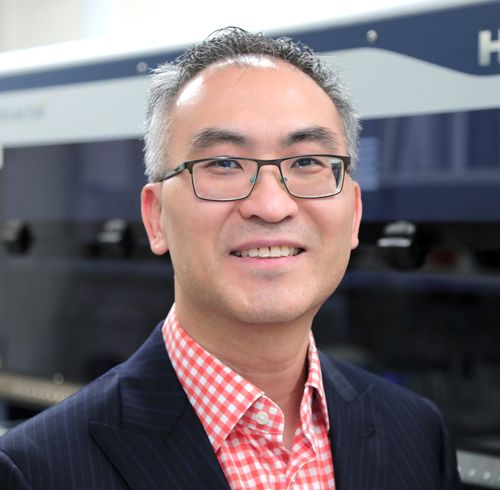 Jen Kok合作论文数Virology Laboratory, Nsw Health Pathology-Institute of Clinical Pathology;Westmead Hospital4
 Sharon Chen合作论文数Centre for Infectious Diseases, Westmead Hospital;Microbiology Laboratory Services, Westmead Hospital4
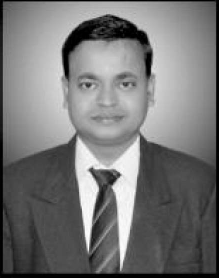 Haider Banka合作论文数Centre for Soft Computing Research, Indian Statistical Institute3Rebecca J. Rockett合作论文数Queensland Children’s Medical Research Institute, The University of Queensland3Amita Saxena合作论文数2Linda Donovan合作论文数2
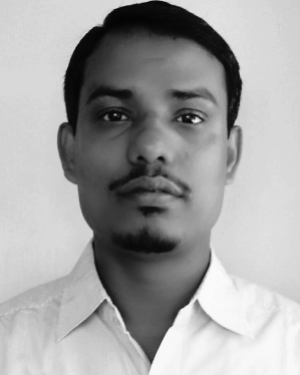 SK Hafizul Islam合作论文数2
 Naushad Varish合作论文数Indian Sch Mines, Dept Comp Sci & Engn, Dhanbad 826004, Bihar, India2Dominic Dwyer合作论文数School of Medicine, Faculty of Medicine and Health, The University of Sydney2K McPhie合作论文数1Susan Alderson合作论文数1Christine Ngo合作论文数1Ram Sharan Singh合作论文数1RN Ram合作论文数1
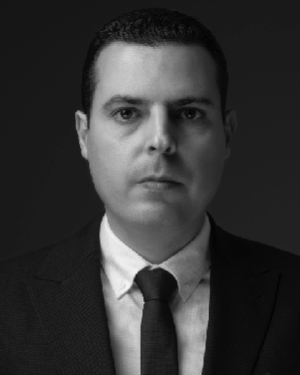 Mohammad Hammoudeh合作论文数1Mahima Tamta合作论文数1
 Manish Raj合作论文数1
 Vibha Yadav合作论文数1
 Aarushi Sharma合作论文数Regenerat Engn Lab, Indian Inst Technol1
 Sachin Geed合作论文数CSIR-North East Institute of Science and Technology1
 Kusumlata Goswami合作论文数1
 Arshad Ayub合作论文数Community & Family Med Dept, All India Inst Med Sci1Kulwinder Kaur合作论文数1
 Parichart Naruphontjirakul合作论文数King Mongkut’s University of Technology Thonburi1
 Eden John-Sebastian合作论文数Sch Life & Environm Sci, Univ Sydney1Cheryl S Toi合作论文数NSW Health Pathology1Piyush Jain合作论文数1
 Swati Midha合作论文数1Xiaomeng Shi合作论文数GE Healthcare China1
 Reddy Varikasuvu Seshadri合作论文数Department of Biochemistry, B.P.S. Govt. Medical College for Women1
 Muhammad Khurram Khan合作论文数Center of Excellence In Information Assurance, College of Computer & Information Sciences, King Saud University1
 Julian Jones合作论文数Department of Materials, Faculty of Engineering, Imperial College London1
 BN Rai合作论文数Department of Physics, S.B. College Arrah1
 Balendu Shekher Giri合作论文数Environmental Biotechnology Division, National Environmental Engineering Research Institute (NEERI),1
 Sandeep Singh Sengar合作论文数Department of Computer Science and Engineering, MNNIT1
 Sourabh Ghosh合作论文数Indian Institute of Technology1Raj Narayan Ram合作论文数Department of Zoology, Banaras Hindu University1




