In many cases, ER valves are required to be used at lower operating voltages. For example, to develop a two-dimensional Braille matrix display, it is necessary to lay out many ER valves and control each Braille dot independently. If the commonly used parallel plate electrodes are applied, a low voltage can only be used when the electrode gap is very small, which will make the ER valve flow resistance very large, thus making it difficult to achieve effective control. A new type of ER valve composed of multilayer mesh electrodes was designed, which are arranged vertically in the direction of ER fluid flow. The flow rate of the ER valve is determined by the opening ratio of the mesh electrodes. This type of mesh electrode results in a more complex electric field distribution, which has a different action pattern on ER fluid yield stress compared to parallel electrodes. The non-uniform electric field generated by mesh electrodes under different operating voltages was simulated using COMSOL software, and the pressure drops of ER valves with various sizes of mesh electrodes under different voltages were experimentally investigated. The results indicate that the longitudinal electric field component plays a dominant role, and the stress of the ER fluid exhibits a periodic and gradient distribution. This valve exhibits good ER performance when the applied voltage is much lower than that of parallel electrodes. At the same time, the flow rate of the ER valve can be increased by enlarging the opening ratio of the mesh electrodes. Even if the applied voltage is 180 V, the pressure drop of the ER valve is large enough and the operation stability is good. This new type of ER valve makes the device small in size, easy to control intelligently and low cost. Multilayer mesh electrodes also have universal application value in ER technology.
目的 解决现有电流变抛光液在电场下强度低和使用寿命短等问题.方法 分析现有电流变抛光液的缺点及其原因,提出将新型巨电流变液——导体镶嵌型电流变液应用于抛光领域,并研制出以二氧化硅为磨料,以镶嵌了纳米碳的二氧化钛为电介质颗粒的硅油基电流变抛光液.测定添加了不同粒径磨料抛光液的剪切强度与电场强度、温度、使用时间的关系.搭建简易的旋转式电流变抛光装置,对不同粒径磨料的电流变抛光液在硅片表面的抛光效果进行试验.结果 碳镶嵌二氧化钛基电流变抛光液具有高剪切强度(>30 kPa)、低漏电流(<1μA)、高温度稳定性(25~125℃)、长使用寿命和对少量磨料不敏感等优点.抛光实验结果表明,在电压2.5 kV下,硅片经过添加了2μm磨料的电流变抛光液持续抛光3 h后,其表面粗糙度从206 nm降至6.4 nm.之后再采用添加200 nm磨料和20 nm磨料的抛光液先后继续精抛后,其粗糙度降至0.46 nm和0.36 nm.结论 碳镶嵌二氧化钛基巨电流变抛光液能有效降低表面粗糙度,改善表面质量,很好地应用于精密抛光领域,展示出良好的应用前景.
Traditional dielectric electrorheological fluid(ER)is based on the interaction of dielectric particle polarization,and the yield stress is low,which cannot meet the application requirements.The giant ER(GER)effect is caused by orientations and interactions of polar molecules adsorbed on the particle surfaces.Despite the high yield stress,these polar molecules are prone to wear and fall off,resulting in a continuous reduction in shear stress of GER liquid,which is also not suitable for application.Here we introduce a new type of ER fluid called induced dipole dominant ER fluid(ID-ER),of which the particles contain oxygen vacancies or conductor microclusters both prepared by high energy ball milling(HEBM)technique.In the electric field E,oxygen vacancies or conductor microclusters form induced dipoles.Because the local electric field Eloc in the gaps between particles can be two to three orders of magnitude larger than E,the induced dipole moments must be large.The strong interactions of these induced dipoles make the yield stress of the ID-ER fluid reaching more than 100 kPa.Since there are oxygen vacancies or conductor microclusters everywhere in the particles,the particles will not lose the function due to surface wear during use.The experimental results show that the ID-ER fluid possesses the advantages of high shear stress,low current density,short response time,good temperature stability,long service life,and anti-settlement,etc.The comprehensive performance is much better than the existing ER materials,and also the preparation method is simple and easy to repeat,thus it should be a new generation of ER fluid suitable for practical applications.
中国是世界上盲人人数最多的国家,长期以来缺少一款可以供盲人自主学习的面阵电子阅读器.电流变液微阀门控制的盲文凸点显示矩阵具有能耗少、易于控制等优势,为盲文面阵电子阅读器提供了可能.电流变液微阀门作为盲文显示器的重要组成部分,正确显示盲文取决于ER阀门工作的稳定性,不同的阀门参数对应着不同的工作点,影响阀门的稳定性;盲文凸点的刷新速率,取决于同一给定压力下各个阀门的输出流量,不同的阀门间隙对应着不同的阀门阻力,影响着盲文凸点的刷新速率.文中在建立ER阀门数学模型的基础上分析了电流变微阀门结构参数对阀门稳定性及传输流量的影响规律,为此类应用的微阀门设计提供技术支撑.
Earthquake is a natural disaster that causes enormous losses to human society and its prediction is a major scientific challenge widely concerned by the society. However, the mechanism of earthquake is far from clear, and the mainstream view in the international seismology community is that earthquakes are unpredictable. Based on some new concepts and new knowledge developed in physics, this study scrutinizes the incubation and occurrence of earthquake from a novel perspective, and introduces a new understanding of earthquake principle. It is found that the view of earthquake unpredictability originates from the incorrect understanding of both earthquake principle and the self-organized criticality (SOC). That is to say, earthquake is consistent with the laws of SOC, which means it would be impossible to make a medium- or long-term prediction, yet the short-term prediction should still be possible. The preconditions for successful prediction include understanding correctly of earthquake principle, obtaining sufficient characteristic precursory information, and gathering relevant geological data. Traditional seismology is based on the solid continuum mechanics which holds the view that earthquakes are caused by brittle fracture of crustal rocks through the so-called “elastic rebound” mechanism. This point of view is seriously inconsistent with many field observations, cannot account for many seismic phenomena. It therefore cannot obtain and understand the earthquake precursory information correctly, and naturally reach the false conclusion that earthquake is unpredictable. Based on the simple fact that the crust is composed of rock blocks with fault gouges filling in between them, we treat the crust as a discrete system and understand the earthquake incubation process by means of granular physics. The new understanding gained is that the tectonic force propagates through force chains formed by the rock blocks, and the rock blocks move in the manner of stick-slip. Furthermore, by carefully analyzing how the strength of crustal rocks and the distributions of tectonic force vary with depth, we propose that the physical mechanism of earthquake is plastic sliding of rock and a jamming — unjamming transition of rock motion. Our novel theory on the earthquake principle and the earthquake processes can explain many seismological phenomena that could not be understood in terms of traditional seismology, such as the heat-flow paradox and the cause of deep-focus earthquake, etc. Based on this new understanding of earthquake principle, we put forward suggestions on how to obtain the earthquake precursory information correctly, so as to realize the goal of short-term prediction of earthquake.
The bottleneck in the application of electrorheological (ER) fluids is the difficulty of simultaneously meeting both the performance and lifetime demands.
摘复杂流体在新型材料合成、机械、智能控制、催化、医药、生物、环境等诸多领域有着非常重要的应用前景.目前,复杂流体中微观结构随外场的演化及复杂流体中个体间的复杂耦合作用尚不清楚,这严重制约着复杂流体的开发和应用.复杂流体中组元间的耦合作用、微观结构随外场的演化规律以及结构与性能的内在联系是复杂流体科学面临的关键科学问题,其研究亟需原位实验技术予以支撑.该研究拟建立基于同步辐射光源的X射线吸收(XAFS)/X射线衍射(XRD)联用技术、小角X射线散射(SAXS)/广角X射线散射(WAXS)/XAFS联用技术、SAXS/WAXS/拉曼光谱(Raman)联用技术、SAXS/WAXS/红外光谱(IR)联用技术、掠入射小角X射线散射(GISAXS)/紫外可见吸收光谱(UV-Vis)联用技术,开发适用以上联用技术的复杂流体原位研究样品环境(包括温度、压力、电场、剪切力场、混流、浓度等),用于跟踪复杂流体中原子、分子、纳米尺度结构基团等随外场的变化,揭示复杂流体中结构演化机制,并最终通过控制结构,达到改善和调控复杂流体性质的目的.
The high price and less content of current Braille displays keep most of visually impaired persons from using them. The compact arrangement of Braille dots regulated by Braille standard presents a rigid limitation to develop a full-page Braille display. Electrorheological valve gives a possibility to meet these severe demands, and its pressure drop is a key parameter to design a full-page Braille display. A giant electrorheological valve in DC field and square waveform AC field with different frequencies was investigated. It was shown that the pressure drop of valve increases with the electric field strength, and decreases with increasing frequency of square waveform AC field. The pressure drop of the giant electrorheological valve is high enough for the purpose in application of a full-page Braille display. The results also show that only square waveform AC field with low frequency can provide higher pressure drops. A forcing flow of giant electrorheological fluids in channel of valve may be a solution of solving the aggregations of nanoparticles on the electrodes.
TiO2 particles prepared by the hydrolysis of titanium butoxide adsorb water molecules with different adsorption energies. The electrorheological (ER) fluid composed of TiO2 particles behaves as the polar-molecule giant electrorheological (GER) fluid at 25°C even after thermal treatment at 75°C. After thermal treatment at 125°C and 175°C, the water molecules with low adsorption energy are removed and the ER fluid behaves as traditional ER fluid at 25°C. However, at 175°C, the ER fluid treated at 175°C behaves as a polar-molecule GER fluid when the external electric field is larger than 2 kV/mm. These results show that the water molecules with low adsorption energy act as polar molecules responsible for the GER effect and, with the help of thermal energy, water molecules with high adsorption energy can work as those with low adsorption energy, resulting in the GER effect.
The merits of using electrorheological (ER) fluids micro valves to manipulate Braille dots matrix are easy to control with lower costs and power consumptions.The architecture of ER micro valves in Parallel ducts is due to the application demand that each of dots needs to be manipulated independently.Then, the performance consistency of parallel ducts becomes the vital factor of displaying a Braille dot in a right way.As far as the dimensions of ER micro valves were concerned, the performance consistency of ER micro valves is decided by the selections of their machining tolerances.The heights of Braille dots lie on each flux of parallel ducts under a same given pressure.And different machining tolerances make different drops of pressures of ER micro valves and bring the different fluxes of parallel ducts.A mis-displaying of braille dots will occur when different fluxes among the parallel ducts beyond a limited value.The effects of fluctuations of dimensions of ER micro valves on the drops of pressures and fluxes of parallel ducts were investigated systematically, a mathematic model for selecting the machining tolerates of dimensions of parallel ducts of ER micro valves was given in the paper.ER micro valves matrixes with parallel ducts were manufactured by injection molding in selected tolerances using the mathematic model.The testing results showed that the heights of Braille dots meet the demands of Braille standard and applications.
地震是给人类造成巨大损失的自然灾害,地震预测是社会广泛关注的重大的科学问题.然而,地震机理还远未认识清楚,当前国际地震界的主流观点认为地震是不可预测的.本文以物理学的新观念为基础,从新的视角研究地震孕育和发生过程,提出了对地震原理的新认识,剖析了地震不可预测论的错误.地震不可预测论产生的根源在于对地震原理的不正确认识以及对自组织临界性的误解.地震具有自组织临界性的特征,表明不可能对地震作中长期预测,但短期预测应是可能的.成功预测的前提包括:对地震原理的正确认识,获得足够的特征前兆信息,并且掌握相关的地质资料.传统地震学基于固体连续介质理论,认为地震是地壳岩石的脆性破裂造成,用所谓"弹性回跳"来表述地震发生机制.此观点与实际观测严重不符,无法解释诸多地震现象,自然也不能正确地获取和理解地震前兆信息,因而得出地震不可预测的结论.作者根据地壳由岩石层块和其间断层泥组成这一基本事实,将地壳作为离散态体系处理,用颗粒物理原理认识地震孕育过程.获得的认识是:构造力以力链的方式传播,岩块以滞滑移动的方式运动.另一方面,在认真分析地壳岩石强度和构造作用力随深度分布规律基础上,提出地震发生的物理机制是岩石的塑性滑移和岩块运动的堵塞—解堵塞转变.对地震原理这些新认识,可解释传统地震学无法理解的很多地震学现象,例如,消解了传统的"弹性回跳"原理所遭遇的"热流佯谬",解释了深源地震的成因等.基于对地震原理的新认识,提出了如何正确获取地震前兆信息,实现地震短期预测的途径.
The physical mechanism of earthquake remains a challenging issue to be clarified. Seismologists used to attribute shallow earthquake to the elastic rebound of crustal rocks. The seismic energy calculated following the elastic rebound theory and on the basis of experimental results of rocks, however, shows a large discrepancy with measurement-a fact that has been dubbed "the heat flow paradox". For the intermediate-focus and deep-focus earthquakes, both occurring in the region of the mantle, there is not any reasonable explanation yet. The current article will discuss the physical mechanism of earthquake from a new perspective, starting from the fact that both the crust and the mantle are discrete collective systems of matters with slow dynamics, as well as from the basic principles of physics, especially some new concepts of condensed matter physics emerging in recent years. 1. Stress distribution in earth's crust: Without taking the tectonic force into account, according to the rheological principle that "everything flows", the vertical and the horizontal stresses must be in balance due to the effect of gravitational pressure over a long period of time, thus no differential stress in the original crustal rocks is to be expected. The tectonic force is successively transferred and accumulated via stick-slip motions of rocky blocks to squeeze the fault gouges, and then applied to other rocky blocks. The superposition of such additional horizontal tectonic force and the original stress gives rise to the real-time stress in crustal rocks. The mechanical characteristics of fault gouge are different from rocks as it consists of granular matters. Thus the elastic modulus of the fault gouge is much lower than that of rocks, and will become larger with increasing pressure. This character of the fault gouge leads to a tectonic force that increases with depth in a nonlinear fashion. The distribution and variation of tectonic stress in the crust are then specified. 2. Strength of crust rocks: The gravitational pressure can initiate the transition from elasticity to plasticity in crust rocks. A method for calculating the depth dependence of elasticity-plasticity transition is formulated, and demonstrated by exemplar systems. According to the actual situation analysis the behaviors of crust rocks fall into three typical zones: elastic, partially plastic and fully plastic. As the proportion of plastic parts in the partially plastic zone reaches about 10%, plastic interconnection may occur and the variation of shear strength of rocks is mainly characterized by plastic behavior. The equivalent coefficient of friction for the plastic slip is smaller by an order of magnitude, or even less, than that for brittle fracture, thus the shear strength of the rocks for plastic sliding is much less than that for brittle breaking. Moreover, with increasing depth a number of other factors can further reduce the shear yield strength of rocks. On the other hand, since earthquake is a large-scale damage, the rock breaking must occur along a weakest path. Therefore, the actual fracture strength of rocks in a shallow earthquake is assuredly lower than the normally observed average shear strength of rocks. The typical distributions of averaged strength and actual fracture strength in crustal rocks varying with depth are schematically illustrated in the paper. 3. Conditions and mechanisms of earthquake: An earthquake will lead to large volume expansion, and the expansion must break through the obstacles.The condition for an earthquake to occur may be as follows: the tectonic force should exceed the sum of (a) the fracture strength of rocks, (b) the friction force of fault boundary, and (c) the resistance from obstacles. Therefore, the shallow earthquake is characterized by plastic sliding of rocks that break through the obstacles. Accordingly, four possible patterns for shallow earthquakes are put forward. Deep-focus earthquakes are believed to result from a wide-range rock flow that breaks the jam. Both shallow earthquakes and deep-focus earthquakes are the slip or flow of rocks following a jamming-unjamming transition. 4. Energetics and precursors of earthquake: The energy of earthquake is the kinetic energy released from the jamming-unjamming transition. Calculation shows that the kinetic energy of seismic rock sliding is comparable to the total work for rocks'shear failure and for overcoming the frictional resistance. There will be no heat flow paradox. More importantly, some valuable seismic precursors are likely to be identified by observing the accumulation of additional tectonic forces, local geological changes, as well as the effect of rock state changes, etc.
To recognize the seismogenic process, mechanism and behavior of seismic precursors, as well as look for the ways of earthquake prediction the granular physics principle is applied based on the basic structure of the crust and mantle and existing experimental observations, where we treat the earth crust and mantle as large scale discrete matters. Main outcomes are: A granular model of the structure and movement of the earth crust and mantle is established. A formation mechanism of the tectonic forces, which causes the earthquakes, and a model of propagation for precursive signals are proposed. Properties of the seismic precursive signal and its relevance with the earthquake occurrence are illustrated, and principle of ways to detect the effective seismic precursor is elaborated. In the paper the mechanism of palintectic earthquake is also explained by the jamming-unjamming transition of the granular flow. Some earthquake phenomena which were previously difficult to understand are explained, and the predictability of the earthquake is discussed. Due to the discrete nature of the earth crust and mantle, the continuum theory no longer applies during the quasi-static seismogenic process. In all in this paper, based on granular physics, we study the causes of earthquakes, earthquake precursors and earthquake prediction, and a new understanding, different from the traditional seismological point of view, is obtained.
The restrictions of Braille standard make the microER valves for Braille display have the characteristics of micro channel and micro flux, which lead to the poor durability of micro electro-rheological (also called ER) valves. To solve the problem, several comparison experiments were designed and the effects of the actions of an elongational flow field on the durability of micro ER valves were studied in this paper. In the experiment without elongational flow field, when removing the external electric field, the nano-particles aggregated under the external electric field for a long period in polarmolecule ER fluids had no ability to restore to the original dispersing state just by their Brownian movements, which lead to the blockage of micro ER valves, and independent recovery time of the valves became longer. Moreover, the pressure drops of valves reduced greatly after several cycles of experiments, which indicated the operational instability of the micro ER valves. In the experiment with elongational flow field, the micro ER valve runs normally. It was proved that the micro ER valves with the actions of the elongational flow field have the ability to keep the micro ER valves stable operation and meet the demand of durability for Braille displays.
Electrorheological (ER) fluid is usually prepared by suspending the particles into dielectric oil. Recently developed polar molecule dominated ER (PM-ER) fluid is consisted of solid particles with polar molecules coating or adsorbing on their surfaces, which is denoted as PM(S)-ER fluid. We have reviewed the main characteristics of PM(S)-ER fluid and explained some observed phenomena. However the lifetime of PM(S)-ER fluid in practical applications is too short because of the friction loss of the polar molecules on the particles. In order to improve the lifetime of ER fluid a new type PM-ER fluid denoted as PM(L)-ER fluid has been developed by dissolving polar molecules into oil instead of adsorbing on the particles. The lifetime of PM(L)ER fluid is 5 times longer than that of PM(S)-ER fluid, while the shear stress keeps high enough. The manufacture procedure of PM (L)-ER fluid is simple, in addition, the performance and repeatability of the material are easily controlled.
The compact configuration of giant ER (electrorheological) valves provides the. possibility of realizing. a full-page Braille display. The operational durability of ER valves is a key issue in. fulfilling a. Braille display. A giant ER valve was used to investigate the variations in. pressure drops and critical pressure drops of the. valves over a long period under some typical operational parameters. The results indicate. that neither the. pressure drops nor critical pressure drops of giant ER valves show. apparent deterioration over. a long period. Without ER fluid. exchange, a blockage appears in the channel of the. valve because the ER structures induced by an. external electric field cannot be broken by the Brownian motion. of hydraulic oil molecules when the external electric field is removed. Forcing ER fluid. flow is an effective and necessary method to keep the channel of the. valve unblocked. Thus the operational durability of the. valve using giant ER fluids is able to meet the demands of Braille display.
Electrorheological (ER) fluids are suspensions which consist of dielectric particles and insulation fluid. The ER fluids can change from liquid-like to solid-like state under the applied electric field. For traditional ER fluids, the maximum yield/shear stress is only several kPa and the size of dielectric particles is generally of micron. Since 2003, a series of new type ER fluids have been discovered, of which the yield/shear stress is as high as several hundred kPa. Such a type of ER fluid is called giant ER fluid or polar molecule-dominated ER fluid (PM-ER fluid), in which the size of dispersed particles is of nanoscale. Dimethyl silicone oil is the most commonly used dispersing agent in ER fluids, because of its stable physical and chemical behaviors. There is no obvious evaporation in traditional ER fluids when it is mixed with micron grade particles. However, when it is mixed with nanoparticles to prepare giant ER fluids, the silicone oil volatilizes easily in atmosphere. If time is long enough, the silicone oil in ER suspension can even be evaporated completely. In this paper, the existence of TiO2 nanoparticles in ER suspensions enhances the volatilization phenomenon has been studied through experiment. Analysis shows that the nanoparticles caused convex nanoscale curved surfaces on the gas-solid interface makes the vapor pressure increase greatly at the silicone oil surface, and leads to the enhancement of its volatilization. Influence of particle concentration, environmental temperature and viscosity of silicone oil on the evaporation enhancement effect is also studied and analysed systematically. Results show that the increase of the fraction of nanoparticles, viscosity of silicone oil as well as the temperature would promote the effect of evaporation enhancement of silicone oil in the suspensions.
We report the first global study of dynamic correlation energies (DCEs) associated with rotational motion and quadrupole shape vibrational motion in a covariant energy density functional (CEDF) for 575 even-even nuclei with proton numbers ranging from Z = 8 to Z = 108 by solving a five-dimensional collective Hamiltonian, the collective parameters of which are determined from triaxial relativistic mean field plus BCS calculation using the PC-PK1 force. After taking into account these beyond mean-field DCEs, the root-mean-square (rms) deviation with respect to nuclear masses is reduced significantly down to 1.14 MeV, which is smaller than those of other successful CEDFs: NL3* (2.96 MeV), DD-ME2 (2.39 MeV), DD-MEd (2.29 MeV), and DD-PC1 (2.01 MeV). Moreover, the rms deviation for two-nucleon separation energies is reduced by similar to 34% in comparison with the cranking prescription.
It is known that in traditional dielectric electrorheological (ER) fluid the shear stress decreases or increases with the frequency of the AC electric field. However, for giant ER fluid, which is based on the principle of the polar molecule dominated electrorheological (PM-ER) effect, how shear stress varies with the frequency of the AC electric field is still not clear. In the present paper, we systematically studied the frequency dependence of PM-ER fluid by measuring the shear stresses of PM-ER fluids consisting of CTO nanoparticles under a sinusoidal electric field in a wide frequency range. It is found that the shear stress decreases with the increase of frequency when an AC electric field is applied. In PM-ER fluids there are nonuniform phase shifts appearing in shear stresses with respect to the sinusoidal electric field. These phase shifts become more pronounced as the frequency increases, which leads to the decrease of the amplitudes of the shear stresses. When the frequency is high enough, the oscillations of shear stresses smear out and the amplitudes of shear stresses reduce to a single low value. This behavior in PM-ER fluids is different from that in conventional ER fluids. For a comparison with PM-ER fluid, the response of a traditional ER fluid to frequency in an AC field is also studied, in which the particles possess high dielectric constant. The origin of different frequency responses in two types of ER fluids has been discussed and explained.
We theoretically study the formation of the steady state multiple dark photovoltaic solitons in the closed-circuit photovoltaic photorefractive crystal. The results indicate that the formation of the multiple dark photovoltaic solitons in the closed-circuit photovoltaic crystal is dependent on the initial width of the dark notch at the entrance face of the crystal. The number of the solitons generated increases with the initial width of the dark notch. If the initial width of the dark notch is small, only a fundamental soliton or Y-junction soliton pair is generated. As the initial width of the dark notch is increased, the dark notch tends to split into an odd (or even) number of multiple dark photovoltaic solitons sequence, which realizes a progressive transition from a lower-order soliton to a higher-order solitons sequence. When the multiple solitons are generated, the separations between adjacent dark solitons become slightly smaller. The soliton pairs far away from the center have bigger width and less visibility and they move away from each other as they propagate in the photorefractive nonlinear crystal. (C) 2013 Optical Society of America.
 Rong Shen (沈容)合作论文数39Gang Sun (孙刚)合作论文数中国科学院大学物理研究所26
 Weijia Wen (温维佳)合作论文数Hong Kong University of Science and Technology (Guangzhou)25Meiying Hou (厚美瑛)合作论文数Institute of Physics, Chinese Academy of Sciences19
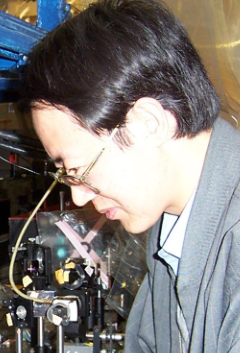 Yanpeng Zhang (张彦鹏)合作论文数Faculty of Electronic and Information Engineering, Xi'an Jiaotong University16Shouqiang Men合作论文数15Xiaojuan Niu合作论文数15JiXing Liu (刘寄星)合作论文数13
 Yucheng Lan合作论文数Dept Phys, Boston Coll13longcun chang (常龙存)合作论文数10
 Zehui Jiang (姜泽辉)合作论文数School of Physics, Harbin Institute of Technology10Xuezhao Wang合作论文数10ZhengZhi Fang合作论文数9Chenxi Li合作论文数9
 Shuangming Chen (陈双明)合作论文数University of Science and Technology of China9
 Zheng Peng (彭政)合作论文数School of Physics, Central South University9JianPing Song (宋建平)合作论文数8
 Yaqin Zhao (赵雅琴)合作论文数School of Environment and Spatial Informatics, China University of Mining and Technology8
 Zhonghua Wu (吴忠华)合作论文数中国科学院高能物理研究所8
 Wei Zhao (赵卫)合作论文数Xi'an Institute of Optics and Precision Mechanics, Chinese Academy of Sciences8
 Qingfan Shi (史庆藩)合作论文数School of Physics, Beijing Institute of Technology7
 Xiaojun Yu (余孝军)合作论文数Department of Detection Technology and Automation System, School of Automation, Northwestern Polytechnical University7
 Sujuan Xu (许素娟)合作论文数State Key Laboratory of Microbial Technology, Shandong University7
 Xiaolong Chen (陈小龙)合作论文数Institute of Physics, Chinese Academy of Sciences;University of Chinese Academy of Sciences7Chuangshe Li (李创社)合作论文数Faculty of Electronic and Information Engineering, Xi'an Jiaotong University7
 Luning Xu (徐鲁宁)合作论文数中国科学院大学中国科学院电工研究所.工程科学学院6
 Wei Chen (陈唯)合作论文数Department of Physics, Fudan University6Li Han (韩立)合作论文数6
 Qiang Wang (王强)合作论文数Guangzhou Institute of Geochemistry, Chinese Academy of Sciences;College of Earth and Planetary Sciences, University of Chinese Academy of Sciences;University of Chinese Academy of Sciences6Hao Ge合作论文数6
 Zexian Cao (曹则贤)合作论文数State Key Lab for Surface Physics, Institute of Physics, Chinese Academy of Sciences;University of Chinese Academy of Sciences6Ruiqiong Ma (马瑞琼)合作论文数6
 Xinguo Hong合作论文数6R. S. Tian合作论文数5wang yuren合作论文数5HAN FU-SEN (福森 韩)合作论文数5Zhao Yaqin合作论文数5
 Xiaoyu Xu (徐小宇)合作论文数中国科学院大学中国科学院电工研究所.电子电气与通信工程学院5
 Herbert Gleiter合作论文数Institute of Nanotechnology, Karlsruhe Institute of Technology;Herbert Gleiter Institute of Nanoscience, Nanjing University of Science and Technology;Institute of Advanced Studies, City University of Hong Kong;Herbert Gleiter International Laboratory, Chinese Academy of Sciences5
 Xing Zhu (朱星)合作论文数Department of History of Science Technology and Medicine, Peking University5Zhongcan Ouyang (欧阳钟灿)合作论文数5
 Liyan Zhang (张丽艳)合作论文数Shanghai Institute of Optics and Fine Mechanics, Chinese Academy of Sciences5Rui Liu合作论文数Institute of Information Engineering, Chinese Academy of Sciences;School of Cyber Security, University of Chinese Academy of Sciences5Baohua Zhuang合作论文数5
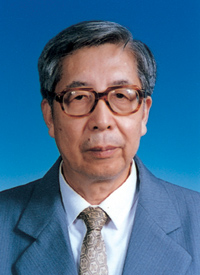 Jingkui Liang (梁敬魁)合作论文数Institute of Physics, Chinese Academy of Sciences5Yoshitake Yamazaki合作论文数5
 Lianwen Wang (王连文)合作论文数School of Materials Energy, Lanzhou University5




