Efforts toward decarbonizing construction materials and industrial processes related to cement and concrete can be aided via multifaceted approaches that target alternative admixtures as well as precision control of fabrication. Chemical admixtures for water reduction have played a crucial role in the development of advanced concrete mixtures. Newer biomass processing techniques developed for aviation fuel production from corn stover biomass produce a more reactive lignin byproduct that is suitable for chemical modifications to mimic the properties of polycarboxylate ether admixtures with a smaller carbon footprint. The present study examines the use of lignin-based water-reducing admixture in cement pastes and mortar mixtures for 3D printing. The experimental program explores the use of different dosages of lignin-based admixture to produce 3D-printed samples with appropriate extrudability and buildability. The rheological characterization was performed to determine the flow curve of various mixtures. Finally, the heat of hydration of cement pastes was monitored via isothermal calorimetry to assess the impact of lignin-based admixtures on the hydration process of cement. The results of this study indicate that the use of biomass by-products, such as lignin-based admixtures have great potential to effectively control the fresh-state properties of cement-based materials.
Phase change materials (PCMs) can enhance the performance of energy systems by time shifting or reducing peak thermal loads. The effectiveness of a PCM is defined by its energy and power density—the total available storage capacity (kWh m −3 ) and how fast it can be accessed (kW m −3 ). These are influenced by both material properties as well as geometry of the energy systems; however, prior efforts have primarily focused on improving material properties, namely, maximizing latent heat of fusion and increasing thermal conductivity. The latter is often at the expense of the former. Advanced manufacturing techniques hold tremendous potential to enable co‐optimization of material properties and device geometry, while potentially reducing material waste and manufacturing time. There is an emerging body of research focused on additive manufacturing of PCM composites and devices for thermal energy storage (TES) and thermal management. In this article, the fundamentals and applications of PCMs are reviewed and recent additive manufacturing advances in latent heat TES for both the PCM composite and associated heat exchanger are discussed. A forward‐looking perspective on the future and potential of PCM additive manufacturing for TES and thermal management is provided.
Effects of chemical modification on mechanical, optical, and water transport behavior of transparent wood composites (TWCs1) were investigated. TWCs were produced from a methacrylate resin and balsa wood templates using two delignifying pretreatments, namely lignin-oxidation and lignin-modification, and three interfacial modifications, namely acetylation, methacrylation, and treatment with 2-hydroxyethyl methacrylate. Water transport behavior was investigated via immersion at three temperatures, where diffusion coefficients, kinetic rate constants, and activation energies of water diffusion were obtained. Lignin-modified TWCs were generally more water resistant than lignin-oxidized TWCs. Interfacial modification of the wood template via acetylation and methacrylation were observed to further decrease diffusion coefficients and increase activation energies of diffusion compared to unmodified TWCs, indicating superior fiber-matrix compatibility and improved moisture resistance relative to other tested TWCs. Flexural properties of post-dried TWCs were not adversely affected by moisture compared to samples unconditioned by water. TWC optical properties were measured in pre-immersion, water-saturated, and post-dried states to characterize deterioration of transmittance and haze. While moisture saturation degraded optical properties, optical performance of select TWC classes were observed to rebound upon drying.
Engineering design has drawn inspiration from naturally occurring structures to advance manufacturing processes and products, termed biomimetics. For example, the mantis shrimp, orderStomatopoda, is capable of producing one of the fastest appendage strikes in the world with marginal musculoskeletal displacement. The extreme speed of the mantis shrimp's raptorial appendage is due to the non-Euclidean hyperbolic paraboloid (i.e. saddle) shape within the dorsal region of the merus, which allows substantial energy storage through compression in the sagittal plane. Here, investigation of 3D printed synthetic geometries inspired by the mantis shrimp saddle geometry has revealed insights for elastic energy storage (i.e. spring-like) applications. Saddles composed of either astiffor aflexibleresin were investigated for spring response to explore the geometric effects. By modulating the saddle geometry and testing the spring response, it was found that, for thestiffresin, the spring constant was improved as the curvature of the contact and orthogonal faces were maximized and minimized, respectively. For theflexibleresin, it was found that the spring constant increased by less than 250 N mm-1as the saddle geometry changed, substantiating that the flexible component of mantis saddles does not contribute to energy storage capabilities. The geometries of two saddles from the mantis shrimp speciesO. scyllaruswere estimated and exhibited similar trends to manufactured saddles, suggesting that modulating saddle geometry can be used for tailored energy storage moduli in spatially constrained engineering applications.
Transparent wood composites (TWCs) are a new class of light-transmitting wood-based materials composed of a delignified wood template that is infiltrated with a refractive- index-matched polymer resin. Recent research has focused primarily on the fabrication and characterization of single-ply TWCs. However, multi-ply composite laminates are of interest due to the mechanical advantages they impart compared to the single ply. In this work, 1- and 2-ply [0°/90°] TWC laminates were fabricated using a delignified wood template (C) and an acetylated delignified wood template (AC). The optical and mechanical properties of resultant C and AC TWC laminates were determined using ultraviolet-visible spectroscopy (UV-Vis) and tensile testing (5× replicates), respectively. In addition, the ability of classical lamination plate theory and simple rule of mixtures to predict multi-ply tensile modulus and strength, respectively, from ply-level mechanical properties were investigated and are reported herein. Experimental results highlight tradeoffs that exist between the mechanical and optical responses of both unmodified and chemically modified TWCs. Template acetylation reduced the stiffness and strength in the 0° fiber direction by 2.4 GPa and 58.9 MPa, respectively, compared to the unmodified samples. At high wavelengths of light (>515 nm), AC samples exhibited higher transmittance than the C samples. Above 687 nm, the 2-ply AC sample exhibited a higher transmittance than the 1-ply C sample, indicating that thickness-dependent optical constraints can be overcome with improved interfacial interactions. Finally, both predictive models were successful in predicting the elastic modulus and tensile strength response for the 2-ply C and AC samples.
Microbial production of exogenous organic compounds is challenging as biosynthetic pathways are often complex and produce metabolites that are toxic to the hosts. Biogenic styrene is an example of this problem, which if addressed could result in a more sustainable supply of this important component of the plastics industry. In this study, we engineered Escherichia coli for the production of styrene. We systematically optimized the production capability by first screening different pathway expression levels in E. coli strains. We then further designed and constructed a transcription regulator library targeting 54 genes with 85,420 mutations, and tested this library for increased styrene resistance and production. A series of tolerant mutants not only exhibited improved styrene tolerance but also produced higher styrene concentrations compared to the parent strain. The best producing mutant, ST05 LexA_E45I, produced a 3.45-fold increase in styrene compared to the parent strain. The produced styrene was extracted via gas stripping into dodecane and used in a direct free radical synthesis of polystyrene.
We report the synthesis and characterization of biobased superabsorbent copolymers from κ-carrageenan and poly(acrylic acid) that mitigate autogenous shrinkage in ordinary portland cement paste. Synthesized via free radical graft polymerization, the biobased superabsorbent polymers (SAPs) were characterized with regard to their thermochemical properties and swelling behavior in both aqueous and ionic solutions. The biobased SAPs were incorporated into cement paste to investigate their ability to mitigate autogenous shrinkage cracking in high-performance concrete. Results demonstrate that the biobased SAPs absorb up to 438 and 94 [g/g] (by mass) in aqueous and ionic solutions, respectively, after 24 h. Furthermore, the biobased SAPs were successful in mitigating shrinkage in low water-to-cement ratio pastes. While the control paste exhibited negative strain and ultimate shrinkage cracking, the samples containing biobased SAP experienced net-positive expansion during cement hydration.
Whole-building lifecycle assessment (WBLCA) has recently emerged as a methodological tool to help architects and engineers quantify and reduce potential environmental impacts of buildings during the design phase. Often, when implementing the WBLCA methodology, the carbon sequestration potential of reinforced concrete is neglected in the environmental accounting. This omission is due, in part, to the complexity of predicting sequestration potential, the belief that cement-sequesterable carbon is trivial, and the lack of simple models that designers and decision-makers can incorporate into the WBLCA framework. Using a model that was previously developed and validated by the authors, this paper highlights how to account for sequestered carbon in WBLCA through simple case-study examples.
A simple mathematical model that calculates the theoretical carbon sequestration potential of exposed ordinary portland cement (OPC) concrete is presented, validated, and implemented herein. OPC concrete sequesters non-trivial amounts of carbon dioxide (CO2) via carbonation a chemical reaction between cement paste and atmospheric CO2. Formulated by the reaction chemistries of cement hydration and carbonation, the model accounts for cement type and content, exposure, time, and type and quantity of supplementary cementitious materials (SCMs). Once validated with data from literature, the model is implemented to investigate the effect of these factors and the influence of compressive strength and geometry, namely surface-area-to-volume (SA/V) ratio, on total carbon sequestration (kg CO2) of exposed concrete elements. Results demonstrate that (a) low tetracalcium aluminoferrite (C(4)AF) cements, (b) compressive strength, (c) high CO2 exposure, (d) no SCMs, (e) time, (f) high SA/V ratios, and (g) indoor environments enhance the in situ carbon sequestration of exposed OPC concrete. (C) 2017 Elsevier Ltd. All rights reserved.
 Wil V. Srubar III合作论文数Department of Civil and Environmental Engineering, Stanford University7
 Elizabeth Delesky合作论文数3
 Anastasia N. Aday合作论文数National Renewable Energy Laboratory3
 Garret M. Miyake合作论文数Department of Chemistry, Colorado State University;New Iridium;Cypris Materials3
 Adriana Souto-Martinez合作论文数2Thomas Freeman合作论文数2
 Adewale Odukomaiya合作论文数National Renewable Energy Laboratory2
 Sandra K. S. Boetcher合作论文数Embry-Riddle Aeronautical University, Florida, USA2Isabel Melendez合作论文数1Rollin J. Jones合作论文数1Sai Kaushik Yeturu合作论文数1Robert W Learsch合作论文数1
 Fabian B. Rodriguez合作论文数1
 Casey J. Troxler合作论文数1Tara Mensch合作论文数1Kristen M. Hess合作论文数1Allison Mahvi合作论文数1
 Jorge Osio-Norgaard合作论文数Dept Civil Environm & Architectural Engn, Univ Colorado1
 Cameron Jeffrey C合作论文数Department of Plant and Microbial Biology, University of California1
 Cook Sherri M合作论文数Department of Civil and Environmental Engineering, University of Michigan1
 Liya Liang (梁丽亚)合作论文数School of Bioengineering, Dalian University of Technology1Ryan T. Gill合作论文数University of Colorado Boulder, Boulder, Colorado, United States of America1
 Michael Himmel合作论文数National Renewable Energy Laboratory1
 Matthew Kirby Smith合作论文数Department of Chemistry, James Cook University1
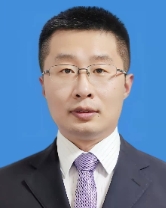 Rongming Liu (刘嵘明)合作论文数School of Bioengineering, Dalian University of Technology;School of Artificial intelligence, Dalian University of Technology1




