Soils comprise the largest terrestrial carbon pool. Therefore, understanding processes that control soil carbon stabilization and release is vital to improving our understanding of the global carbon cycle. Heterotrophic respiration is the main pathway by which soil organic carbon is returned to the atmosphere; however, not all carbon utilized by heterotrophs shares this fate, as some portion is retained in the soil as biomass and biosynthesized extracellular compounds. The fraction of carbon consumed by microbes that is used for biomass growth (the carbon use efficiency or CUE) is an important variable controlling soil carbon stocks but is difficult to measure. Here we show that CUE can be continuously monitored in laboratory glucose-amended soil incubations by measuring CO2 and O2 gas concentrations, allowing instantaneous estimates of microbial biomass growth. We derive a theoretical relationship between the respiratory quotient (RQ), the ratio of carbon dioxide produced to oxygen consumed during respiration, and CUE that recognizes the influence of both substrate and biosynthesized product oxidation states on RQ. Assuming the biosynthesized product has the stoichiometry of an average microbe and that the substrate is primarily the glucose used for amendment, we measure RQ and use our theoretical relationship to calculate CUE and from that biomass production. Extractions of microbial biomass carbon at the end of the experiments reveal minimal net increases in standing biomass across all amended treatments, suggesting that much of this newly produced biomass is likely converted to necromass as substrate availability declines, and this results in a net storage of new soil organic matter. Carbon budgets compiled from measurements of relevant pools account for the amended carbon and suggest that with larger carbon amendments, increases in C:N ratios lead to increases in the relative portion of the amendment acutely lost from the soil. These findings demonstrate that soil RQ values may be used to monitor changes in CUE and that studies that monitor soil RQ values should consider CUE as a key factor when changes in RQ are observed, for instance, with changing environmental conditions or changes in production of plant-derived compounds. This new approach may be leveraged to provide information on the storage of soil organic matter. These findings demonstrate how measurements of soil RQ may be leveraged to understand soil carbon transformations, specifically the fate of fresh carbon inputs.
Biological invasions are usually examined in the context of their impacts on native species. However, few studies have examined the dynamics between invaders when multiple exotic species successfully coexist in a novel environment. Yet, long-term coexistence of now established exotic species has been observed in North American lady beetle communities. Exotic lady beetles Harmonia axyridis and Coccinella septempunctata were introduced for biological control in agricultural systems and have since become dominant species within these communities. In this study, we investigated coexistence via spatial and temporal niche partitioning among H. axyridis and C. septempunctata using a 31-year data set from southwestern Michigan, USA. We found evidence of long-term coexistence through a combination of small-scale environmental, habitat, and seasonal mechanisms. Across years, H. axyridis and C. septempunctata experienced patterns of cyclical dominance likely related to yearly variation in temperature and precipitation. Within years, populations of C. septempunctata peaked early in the growing season at 550 degree days, while H. axyridis populations grew in the season until 1250 degree days and continued to have high activity after this point. C. septempunctata was generally most abundant in herbaceous crops, whereas H. axyridis did not display strong habitat preferences. These findings suggest that within this region H. axyridis has broader habitat and abiotic environmental preferences, whereas C. septempunctata thrives under more specific ecological conditions. These ecological differences have contributed to the continued coexistence of these two invaders. Understanding the mechanisms that allow for the coexistence of dominant exotic species contributes to native biodiversity conservation management of invaded ecosystems.
Anthropogenic changes to soil properties and development can dominate soil systems, particularly in coal mining-impacted landscapes of the Appalachian region of the United States. Historical mining operations deposited spoils which are developing into mine soils in chronosequences, allowing for a correlation between emplacement age and rates of change in soil properties. The study site was in the Huff Run Watershed (Mineral City, OH, USA) with a series of eleven spoil piles that were deposited over a 30-year time period. Surface soils were analyzed for bulk density, loss on ignition (LOI) as a proxy for organic matter, particle size, and bulk mineralogical (by X-ray diffraction) and elemental (by X-ray fluorescence) compositions. The following linear trends were observed across the transect from older to younger mine soils: bulk density increased from 1.0 cm−3 to 1.5 g cm−3; LOI decreased from ~20% to 5%; the content of sand-sized particles and quartz decreased from ~50% to 30% and 50% to 25%, respectively, with a corresponding increase in the contribution of clay mineral from ~25% to 60%; and Fe and other trace metals (Cu, Ni, Pb, Sb, Sn, and Te) decreased in concentration, while Al, Mg, and K increased in concentration. These trends are likely the result of: (1) organic matter accumulation as vegetation becomes more abundant over time; (2) transport of clays out of more recently emplaced waste; and (3) oxidative dissolution of primary sulfides releasing Fe and other trace metals followed by re-precipitation of secondary Fe-phases and trace metal sequestration. The findings presented here provide insight into the future behavior of these materials and can potentially be used to assess the inferred age of previously unexamined mine soils across a wider geographic area. These results can also inform decisions related to reclamation activities and ecosystem restoration.
Biogeochemical interfaces such as bacteria-mineral, fungi-mineral, and water-mineral are hot spots for important processes and reactions in all environments. Study of these interfaces is useful over a range of spatial and temporal scales in order to understand elemental cycles, soil formation, restoration, and bioremediation. Advancement of micro- and nanoscale techniques lead to new discoveries about reactions and interactions at the heterogeneous interface of bacteria, fungi, and minerals. The current state-of-the-art analytical techniques allow for studying solid, liquid, and gas phases and their relations with biological components and often permit simultaneous study of chemical and physical properties in a site-specific manner. Improved techniques not only increase spatial and temporal resolution with site specificity but also decrease sample preparation, artifact generation, and sample size requirements and analytical time. There are limitations and challenges that still need to be overcome while studying the very heterogeneous microbe-mineral interface, but improved accessibility to beam time at the synchrotron facilities and instrument time at the user laboratories offers some solutions. This review chapter focuses on a subset of the available and most promising micro- and nanoscale techniques: electron, helium ion, and atomic force microscopy, and X-ray-based spectroscopy with traditional and synchrotron-based applications.
 Timothy M. Gallagher合作论文数Dept Geol, Kent State Univ5
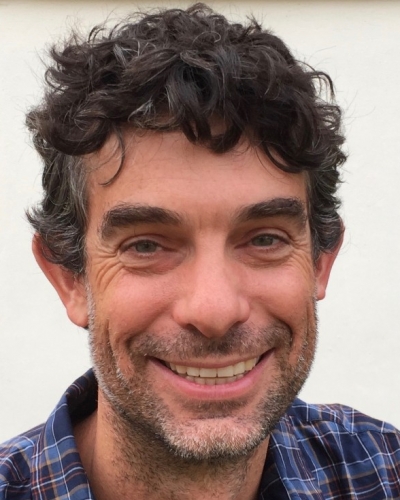 Daniel O Breecker合作论文数Department of Geological Sciences, Jackson School of Geosciences, University of Texas at Austin4
 Zsuzsanna Balogh-Brunstad合作论文数School of Earth and Environmental Sciences, Washington State University4
 Mark Smits合作论文数Department of Soil Quality, Wageningen University2Michael Back合作论文数1
 Kayla I. Perry合作论文数1
 Omon Obarein合作论文数Dept Geog, Kent State Univ1
 Nageen Farooq合作论文数Department of Earth Sciences, Kent State University1
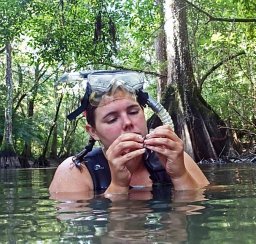 C.R. Smith合作论文数Jones Center at Ichauway Newton1
 Ghimire Prashant合作论文数Institute of Forestry, Tribhuvan University1
 Allyson Tessin合作论文数Department of Earth and Environmental Sciences, University of Michigan, Ann Arbor, Michigan 48109, USA1
 Christie Bahlai合作论文数School of Environmental Sciences, University of Guelph1
 David Singer合作论文数1
 Kram Pavel合作论文数1
 Douglas Landis合作论文数Department of Entomology, Michigan State University;College of Social Science, Michigan State University1
 Håkan Wallander合作论文数Department of Biology, Lund University1
 Alice Dohnalkova合作论文数Environmental Molecular Sciences Division, Pacific Northwest National Laboratory;Environmental Molecular Sciences Laboratory, Pacific Northwest National Laboratory1Loredana Saccone合作论文数Department of Marine Ecology;National Environmental Research Institute;University of Aarhus;Leibniz-Center for Agricultural Landscape Research;Institute of Soil Landscape Research;Institute of Soil Landscape Research, University of Aarhus1




