Creating and executing missions for autonomous vehicles during search-and-rescue (SAR) operations is challenging for inexperienced operators and can become impossible under degraded communication conditions. Traditional ground control stations (GCS) require extensive workflows, mission changes can be slow to plan, and reliable internet connectivity cannot be assumed in certain field environments. The Lightweight Intent-Focused Engine for Guidance in Unmanned Autonomous Rescue Deployments (LIFEGUARD) is a self-contained, offline-capable GCS that converts spoken natural language intent into executable MAVLink missions for one or more autonomous agents. The system couples an offline speech-to-text (STT) engine (Vosk), a compact spaCy-based natural language understanding (NLU) stack with number normalization and GPS coordinate parsing, and a robust mission execution module built on PyMAVLink. Operators can issue voice commands, and LIFEGUARD extracts entities, generates and executes flight paths, and coordinates agents, all while including confirmation dialogs. We demonstrate software-in-the-loop (SITL) validation, showing multi-agent coordination in a multi-vehicle experiment executed without internet connectivity. The system achieves an end-to-end latency of $<2$ seconds from the push-to-talk (PTT) release to the initiation of mission upload, enabling responsive voice control of unmanned systems in time-critical SAR scenarios.
Aerial refueling is considered a key force multiplier for military aviation, as it can be used to extend the range and endurance of aircraft. With the rise of large uncrewed aerial systems (UASs), the need to develop a method by which they can act as the receiver for aerial refueling has become a priority. The Office of Naval Research has funded multiple studies to determine the feasibility of using deep neural networks (DNNs) to enable autonomous aerial refueling for probe and drogue aerial refueling with a UAS as the receiver. In this study, we expand on previous research to present a monocular camera system integrated with a DNN to accurately estimate coordinates and range to a refueling drogue within the final 25 feet of approach. Our method employs a similar-triangle algorithm that computes range and positional estimates from DNN-generated bounding boxes, with ground truth positional data provided by a calibrated motion capture system. Experiments using UR10, YASKAWA, and linear track manipulators, coupled with a motion capture system to provide truth data, demonstrate that the DNN achieves excellent precision and recall. Our experiment resulted in a mAP50 of 0.995 for all classes, and mAP50-95 values of 0.945, 0.851, and 0.898 for the drogue, coupler, and overall, respectively. Our algorithm returned an estimated range to the center of the refueling coupler that was within the 4-inch tolerance provided by our subject matter experts when the camera was within 10 feet of the target. Additionally, the majority of data points were also within the 4-inch threshold when evaluated at ranges within 22 feet. We determined that if the heading offset between the camera and the drogue was known, the algorithm could account for the misalignment and produce satisfactory results. This paper demonstrates that a DNN-based monocular vision camera system can provide range estimations within the margins needed for the aerial refueling mission in a laboratory setting.
Global navigation satellite system (GNSS) receivers have become ubiquitous geopositioning sensors in unmanned aerial, ground, and surface systems (UxS). GNSS require line of sight communication with orbiting satellites and the resulting measurement's precision and accuracy can be greatly affected by satellite geometry, atmospheric conditions, and obstructions from buildings or foliage, among other effects. These uncertainties can be difficult to manipulate for test and evaluation of a small-scale UAS control system's robustness to GNSS uncertainty. This work presents the implementation of a GNSS emulator with the same interface design as a GNSS receiver. Using a Raspberry Pi connected wirelessly to a local positioning source, we provide a plug-and-play alternative to a standard commercial-off-the-shelf (COTS) GNSS unit that communicates using the DroneCAN protocol. This system allows the user to simulate GNSS measurements and GNSS performance changes by generating synthetic measurements in a controlled laboratory setting. Data collected from outdoor flights in four different environments is used to characterize baseline GNSS message parameter values, which quantify the fix quality in different geographic locations. This information is used to generate synthetic GNSS measurements fed to a Cube autopilot running ArduCopter flight control software in a hardware in the loop simulation. Results show the GNSS emulator can send DroneCAN GNSS messages providing position and fix quality information to the flight controller. These results illustrate how the plug-and-play GNSS emulator can enable test and evaluation of flight controller robustness to uncertainties, signal dropout, and other conditions affecting GNSS measurements in a controlled laboratory environment.
The Office of Naval Research's Advanced Au-tonomous Air-to-Air Refueling System project explores the application of deep neural networks (DNN) for automated uncrewed aerial vehicle refueling. In this study, we present a monocular camera system integrated with a DNN to accurately estimate coordinates and range to a refueling drogue within the final 25 feet of approach. Our method employs a similar triangle algorithm that computes the range from DNN-generated bounding boxes, with ground truth provided by a calibrated motion capture system. Experiments using UR10, YASKAWA, and Linear Track manipulators demonstrate that the DNN achieves perfect precision and recall, with a mAP50 of 0.995 and mAP50-95 scores of 0.945 for the drogue, 0.851 for the coupler, and 0.898 overall. Combined with the monocular vision system, the estimated coupler range is within 4 inches of the motion capture measurements for distances between 7 and 25 feet, aside from minor deviations at 20 and 23 feet. This work advances the prospects of automated air-to-air refueling by providing a robust, vision-based solution for accurate target detection and range estimation.
A submerged, neutrally buoyant cylinder may be an attractive option for a wave energy converter design due to its potential for highly efficient energy capture, advantageous power scaling relative to its length, and potential to weather storms by submerging to safer depths. Additionally, it serves as an ideal testbed to better understand heave and surge forcing interactions on wave energy systems. Understanding the hydrodynamic interactions between the cylinder and incoming waves can lead to better modeling and control design and in turn more efficient energy absorption. This paper presents the design, implementation, and experimental results of a submerged cylinder wave energy experimental testbed made using a two degree of freedom gantry (T-bot) in surge and heave controlled by coupled motors that are programmed to apply desired forces on the cylinder. We demonstrate the efficacy of the approach by applying forces to emulate mechanical springs and dampers with user specified spring and damping coefficients. System identification of the gantry is used to produce a feedback controller that counteracts the gantry friction in addition to applying the virtual spring and damping forces. Experiments in a 116 m wave tank with waves of amplitude up to 31.75 mm and periods between 1 s and 2.5 s show agreement with linear model predictions, experiments with a passive spring oscillator system, and WEC-Sim simulations. The results provide the groundwork for future rapid prototyping of advanced control designs and further study of the near-cylinder hydrodynamic interactions that drive energy absorption of wave energy converters.
In recent years, additive manufacturing (AM) has revolutionized traditional manufacturing processes by enabling complex geometries to be printed with enhanced design flexibility and reduced lead times. Current additive manufacturing processes utilize a planar, layer-by-layer deposition of materials ranging from plastics and ceramics to various composites and metals. While these traditional AM methods enable manufacturers to create made-to-order, functional parts, complex geometrical designs with large overhanging features often require sacrificial support structures to maintain material strength and integrity. This research aims to develop a method of AM that adheres to zero-overhang constraints and eliminates the support structure requirements for complex geometries. The proposed method leverages existing research on spherical layering and introduces a novel approach to AM involving a "wandering" remote center of motion (RCM). Using a wandering (i.e. dynamic) RCM, spherical layering techniques can be applied to more complex geometries, specifically geometries that are not within the set of 'star-convex' shapes. This paper introduces the wandering RCM method in 2D by developing an algorithm to define unique RCM positions for a given polygon. The goal is to decompose non-star convex polygons into multiple partitions of star-convex shapes, enabling the complete fill of a polygon using a 2D realization of spherical layering. This work leverages an extension to Chvatal's Art Gallery Problem, using "guard" positions to define RCM positions within the part's polygonal geometry. Results from 2D analysis demonstrate the feasibility of filling non-convex polygonal regions under a zero-overhang approach.
The use of additive manufacturing (AM) has become commonplace across a growing number of disciplines. Despite a wide variety of AM methods ranging from polymer extrusion to laser sintering of metals, the use of flat layers or “slices” is common for deposition planning and execution. While effective, the capabilities of AM can be expanded to improve the surface finish, inertial symmetry, and physical properties of fabricated parts with the introduction of conformal or “wrapped” layering. This paper presents the design of a robotic testbed to demonstrate conformal AM using spherical layers. Using this spherical layer constraint, we detail methods for 1) specifying hardware parameters to maximize print volume given an articulated industrial manipulator; and 2) mapping deposition trajectories into joint coordinates using an inverse kinematic solution. Results demonstrate the application of methods to a UR5 industrial robotic manipulator and documentation for the design of a physical testbed.
This paper presents an open-source MATLAB tool developed as a partial “digital twin” for a hands-on, project-based learning (PBL) course. The aforementioned course is a semester-long, mechatronic design exercise that guides students through the interface, modeling, and control of a one-dimensional turret system integrated with an electronic NERF RIVAL-series blaster. The digital twin presented is a MATLAB-based simulation that replicates key elements of the existing in-person course for use in a remote setting. Results show a highly visual, open-source tool that accomplishes 55% of the key tasks associated with the in-person PBL course; allowing students to explore experimental modeling, control tuning, and camera-based feedback techniques in a remote setting. Source code, documentation, and installation functions for the Turret Simulation Toolbox are available at https://github.com/USNA-WRCE/TurretSimToolbox.
Uncrewed aircraft deployed on aircraft carriers will be expected to have ever-increasing levels of autonomous functionality in the near future. This work presents early progress toward the certification of an uncrewed system to exhibit autonomous behavior while acting as the receiver during probe and drogue aerial refueling. The paper focuses on using a computer vision-based approach for identifying a drogue deployed by a tanker aircraft and determining its relative position to the refueling probe tip of the receiver. This will be critical if a vision-based solution will eventually feed into the control loop for the uncrewed system. This research used a fleet representative refueling drogue and probe. A computer vision system installed at the base of the refueling probe was used to feed imagery to a deep neural network trained to identify the refueling drogue and determine the drogue’s position relative to the probe tip. Ground truth experiments validated via a motion capture system demonstrated that the error in relative position measurements was within tolerances to allow the deep neural network to be used in feedback control for a notional uncrewed system. Finally, the laboratory-trained deep neural network demonstrated its ability to identify the drogue outside of the laboratory with mission-representative backgrounds.
Fabrication using additive manufacturing (AM) or 3D printing technology is ubiquitous across a growing number of disciplines. Despite a wide variety of AM methods ranging from extrusion of polymers to laser sintering of metals, the use of flat layers or “slices “ is common practice for deposition planning and execution. While effective, observations of other well-understood fabrication methods and testing conducted on AM prints reveal the importance of print fiber arrangement; otherwise known as grain orientation. By expanding AM capabilities to allow for fabrication using alternate grain orientations, AM workpieces see an improvement in anisotropy, surface finish, and physical properties. This paper presents a new approach to AM based on conformal layering that produces spherically wrapped grain.
Fish have developed unique anatomies and capabilities to thrive in a dynamic undersea environment. One such biological feature is a lateral line organ, which allows a fish to detect skin-surface pressure differences caused by the wakes of upstream objects. By understanding its incident and surrounding fluid flow-field, a fish can swim more efficiently. This paper presents the design and development of an engineered sensory system with similar capabilities to a natural lateral line. The artificial lateral line was constructed using an array of commercial off-the-shelf pressure sensors and an additively-manufactured housing. A series of experiments were performed in a recirculating water tunnel at the United States Naval Academy using a pair of upstream articulating hydrofoils, demonstrating the ability of the sensors to detect both flapping frequency and a distinct relationship between frequency and phase offset. These in-water trials broadly revealed the system’s potential to characterize vortex wakes in a manner similar to fish. Ultimately, the results demonstrate the functionality of a low-cost sensory system architecture capable of being integrated into an uncrewed underwater vehicle, significantly benefiting applied biomimetic research in the undersea domain.
Autonomous underwater vehicles (AUVs) have shown great promise in fulfilling surveillance, scavenging, and monitoring tasks. Traditional gliders and streamlined AUVs are designed for long-term operational efficiency in expansive environments but are limited in cluttered spaces due to their shape and control authority; agile AUVs can penetrate cluttered or sensitive environments but are limited in operational endurance at large spatial scales. This paper presents the dynamic modeling and control design of an underwater hull capable of actuating its shape morphology. The prototype hull incorporates flexible, buckled fiberglass ribs to ensure a rigid shape that is actuated by modulating the length of the body's semi-major axis. We represent the vehicle shape using a single control input actuating the vehicle's length-to-diameter ratio. Hydrodynamic modeling of the flexible hull suggests that dynamic shape actuation can modulate the mass and drag properties of the hull to improve control of the vehicle's forward speed. Using tools from nonlinear control theory, this paper presents the derivation of a shape-actuating autonomous control algorithm regulating the vehicle speed to a time-varying reference speed, subject to the actuator limits. The theoretical control results are illustrated using numerical simulations of the vehicle model.
The use of robotics in space has become common in the last half century of space exploration. However, robotic arms are rarely entrusted to perform large assembly tasks without a human in the loop because of the high cost of the hardware involved. As our presence in space grows, developing advanced autonomous robotic systems may be the way forward as time lags associated with teleoperation can easily cripple future space missions operating beyond earth orbit. This research focuses on the derivation of an autonomous control system for spacecraft assembly applications that blends Jacobian path following and visual servoing. Jacobian path following assumes the environment is well known and plans end effector trajectories whose performance for assembly may suffer in dynamic or uncertain environments. Visual servoing approaches use feedback from an effector attached camera and can avoid dynamic obstacles, but provides no guarantee of success if the sensor cannot keep the goal location in its field of view and often traverses inefficient manipulator trajectories. This work proposes a hybrid approach that combines both approaches to improve the performance of a robotic manipulator in both known and unknown environments. The robotic systems are simulated using the proposed hybrid controller. The hybrid controller is developed in MATLAB using a kinematic simulation of a two degree of freedom robotic arm operating in a single plane with a simplified camera model. Following successful implementation of the simulation, a more complex robotic arm is simulated in 3D space. The controller is integrated into an existing robotic arm platform (UR5 Industrial Manipulator) for a proof of concept. The results of the testing highlights the path and final position of each controller to demonstrate the advantages of each controller individually and the advantages of the hybrid approach. The paper describes the algorithm development and results of analysis and testing.
This paper presents the modeling, control design, and efficiency analysis of a micro-quadrotor aerial vehicle with airfoils. We derive the equations of motion for a micro-quadrotor (length 0.15 m and mass 0.03 kg) outfitted with two symmetric airfoils that generate lift during forward transit. A trim analysis is presented to determine nominal flight conditions. Analysis of the model facilitates design of a controller that stabilizes the modified quadrotor through transitions from hover to forward fixed-wing flight. The performance of the design and control approach is analyzed through a series of typical flight profile simulations. The controller is able to track a velocity trajectory in the presence of aerodynamic uncertainties. The simulations are also used to determine the efficiency of the aircraft compared to a standard quadrotor. Results suggest that, during forward flight, the airfoils result in up to a 35% energy savings depending on the aspect ratio and forward speed of the vehicle. Added airfoil weight, however, causes a 45% energy loss during hover. These results indicate that the neutral benefit speed is in the range 3–5 m/s depending on the aspect ratio of the airfoil, which is suggestive of mission flight profiles that best utilize the added benefit of airfoils on a micro-quadrotor.
Autonomous underwater vehicles (AUVs) have shown great promise in fulfilling surveillance, scavenging, and monitoring tasks, but can be hindered in expansive, cluttered or obstacle ridden environments. Traditional gliders and streamlined AUVs are designed for long term operational efficiency in expansive environments, but are hindered in cluttered spaces due to their shape and control authority; agile AUVs can penetrate cluttered or sensitive environments but are limited in operational endurance at large spatial scales. This paper presents the prototype testbed design, modeling, and experimental hydrodynamic drag characterization of a novel self-propelled underwater vehicle capable of actuating its shape morphology. The vehicle prototype incorporates flexible, buckled fiberglass ribs to ensure a rigid shape that can be actuated by modulating the length of the semi-major axis. Tools from generative modeling are used to represent the vehicle shape by using a single control input actuating the vehicles length-to-diameter ratio. By actuating the length and width characteristics of the vehicle's shape to produce a desired drag profile, we derive the feasible speeds achievable by shape actuation control. Tow-tank experiments with an experimental prototype suggest shape actuation can be used to manipulate the drag by a factor between 2.15 and 5.8 depending on the vehicle's operating speed.
This paper presents an autonomous multivehicle control algorithm capable of persistently searching and tracking targets in a defined search area subject to operational endurance constraints of individual agents. The algorithm development is modular to allow scalability and a control architecture that can be modified to any type of autonomous vehicle, search area, or target. In practical application, a target can be anything from heat signatures to radioactive material; therefore, this work employs a generic emitter-detector pair as a placeholder relationship for real world applications. The control strategy accounts for the appearance, motion, and disappearance of multiple targets in the search space constituting the utility of creating a team of multiple search agents. When agent battery level drops below a predetermined threshold, the agent returns to a base station to recharge and be relaunched into the mission. Remaining agents must account for this loss and gain of other team members as they exit the search environment. The contributions of this work are 1) the design of search trajectories for autonomous vehicles with limited endurance, 2) incorporation of return-to-base and recharge time requirements, and 3) coordination of multiple vehicles by developing a decision-making model to and assign agents to operational modes. We have run an extensive number of experimental trials to collect and analyze performance data for further development and testing.
A large group of small, limited endurance autonomous vehicles working cooperatively may be more effective in target search and track operations when compared with a long endurance vehicle. For a persistent search and track task, a need exists for coordination algorithms that account for limited agent endurance. This paper presents a multi-agent persistent search and track algorithm incorporating endurance constraints in a high-level algorithm that deploys and recovers vehicles from a stationary base station. Agents are assigned to search, track, return, and deploy modes using on-board sensor and battery measurements. Simulations and experiments show the relationship between the number of agents, battery capacity, search performance, and target tracking performance. The measures used to quantify these relationships include spatiotemporal coverage, target tracking effectiveness, and the usage of available aircraft. Hardware experiments demonstrate the effectiveness of the approach.
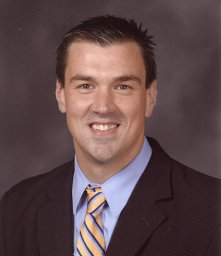 Michael Dennis Mays Kutzer合作论文数Appl Phys Lab, Johns Hopkins Univ18
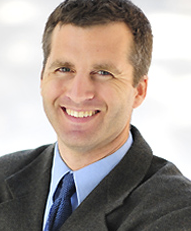 Derek A. Paley合作论文数A. James Clark School of Engineering, University of Maryland5
 Derek A. Paley合作论文数Maryland Robotics Center5
 Francis D. Lagor合作论文数NovaTherm Laboratory, Villanova University4
 Kathryn M. Waychoff合作论文数3Dawkins, J.J.合作论文数3
 Kevin Galloway合作论文数NERD Laboratory;Vanderbilt University2
 Sharanya J. Majumdar合作论文数Rosenstiel School of Marine and Atmospheric Science, University of Miami 2Cameron P. Smith合作论文数1Caleb A. Mauldin合作论文数1Benjamin L. Ross合作论文数1
 Dakota L. Wenberg合作论文数1
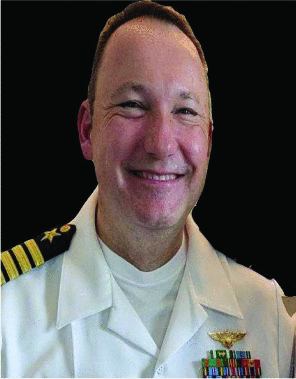 Michael Sanders合作论文数1
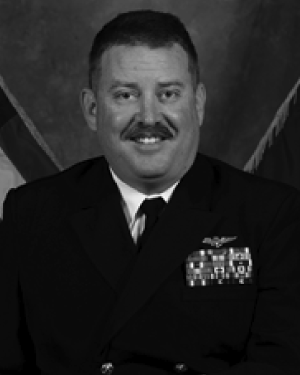 Donald Costello合作论文数1
 Alexander Laun合作论文数USNA1
 Jin S Kang合作论文数1
 Severson, T.A.合作论文数Weapons & Syst. Eng. Dept., United States Naval Acad. Annapolis;c;Weapons & Syst. Eng. Dept., United States Naval Acad. Annapolis1
 Hong Lei (雷虹)合作论文数School of Cyberspace Security, Hainan University1
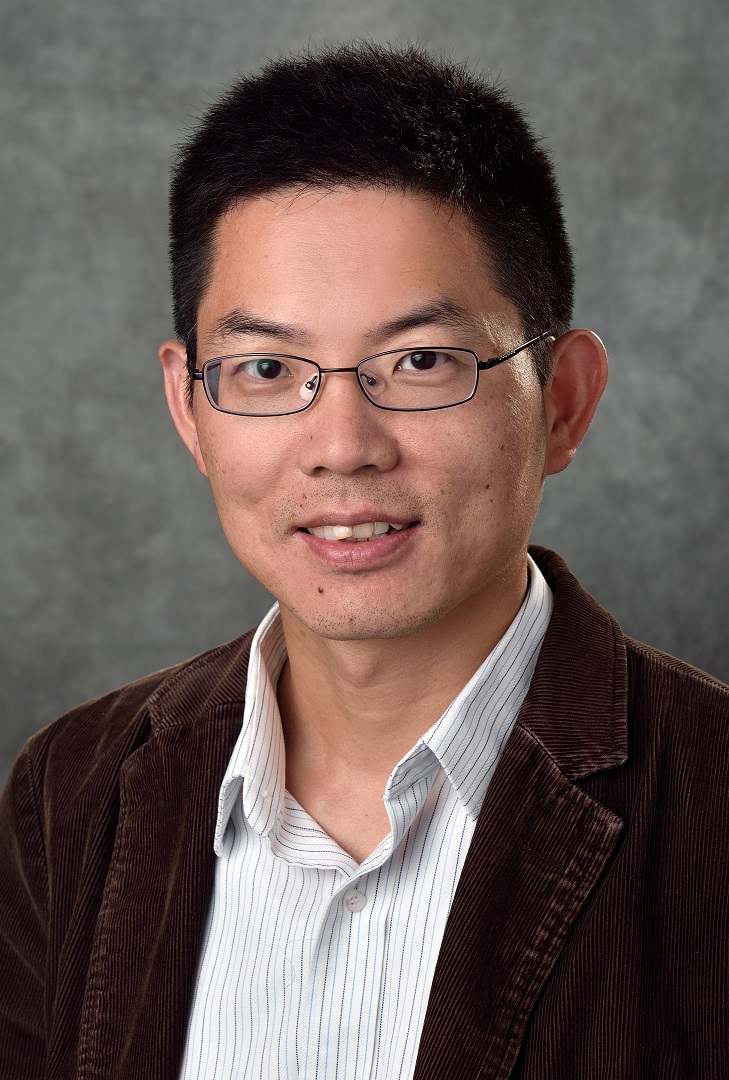 Xiaobo Tan合作论文数Department of Electrical & Computer Engineering, College of Engineering, Michigan State University;Department of Mechanical Engineering, College of Engineering, Michigan State University1Mark M. Murray合作论文数Mechanical Engineering Department, United States Naval Academy1
 David Fredriksson合作论文数Center for Sustainable Seafood Systems, School of Marine Science and Ocean Engineering, University of New Hampshire1Luksa Luznik合作论文数1
 Kiriakos Kiriakidis合作论文数Systems Engineering Department;United States Naval Academy;Systems Engineering Department, United States Naval Academy1




