a Parmenides Center for the Conceptual Foundations of Science, Munich/Pullach, Germany b MTA-ELTE-MTMT Ecology Research Group, Department of Plant Systematics, Ecology and Theoretical Biology, Budapest, Hungary c Department of Plant Systematics, Ecology and Theoretical Biology, Institute of Biology, Eötvös University, Budapest, Hungary d MTA-ELTE Theoretical Biology and Evolutionary Ecology Research Group, Department of Plant Systematics, Ecology and Theoretical Biology, Budapest, Hungary * corresponding author The problem of the origin of life is not only one of structure but also that of dynamics. Ever since the seminal result of Manfred Eigen in 1971 showing that early template replication suffers from an error threshold, research has tackled the issue of how early genomes could have been dynamically stable without highly evolved mechanisms such as accurate replication and chromosomes. We review the theory of the origin, maintenance and enhancement of the RNA world as an evolving population of dynamical systems. Investigation of sequence space has revealed how structures are allocated in sequence space and how this affects the nature of the error threshold that sets the selectively maintainable genome length. New applications of old dynamical theory are still possible: the application of Gause’s principle of competitive exclusion, based on resource utilisation, to RNA replication predicts that at most four pairs (plus and minus strands) can stably be maintained on four nucleotides. Other mechanisms of early template coexistence should be regarded as additional means to raise the number of coexisting species above the number set by the competitive exclusion principle. One such example is the hypercycle in which templates were postulated to help replication of the next member in a cycle superimposed on individual replication cycles. Although the hypercycle is ecologically unstable it is evolutionarily unstable because it cannot efficiently compete against emerging parasites. Population structure can modify this conclusion but not without further qualification. The simplest form of population structure is limited diffusion on a surface. This simple mechanism can ensure the coexistence of competing ribozymes contributing to surface metabolism as well as the spread of efficient replicases despite the parasite problem. Hypercycles can only be saved by active compartmentalization when replicators are enclosed in reproducing protocells. Once there are protocells there is no need for internal hypercyclic organization, however. Finally we review two crucial adaptations that enhanced the RNA world: chromosomes and enzymatic metabolism. Interestingly, it was shown that these two have been presumably coevolutionarily linked because protocells harbouring unlinked, competing ribozymes are better off if the ribozymes remain inefficient but generalists. The appearance of chromosomes alleviates intragenomic conflict and is enabling constraint for the emergence of specific and efficient enzymes.
Several classes of nucleic acid analogs have been reported, but no synthetic informational polymer has yet proven responsive to selection pressures under enzyme-free conditions. Here, we introduce an oligomer family that efficiently self-assembles by means of reversible covalent anchoring of nucleobase recognition units onto simple oligo-dipeptide backbones [thioester peptide nucleic acids (tPNAs)] and undergoes dynamic sequence modification in response to changing templates in solution. The oligomers specifically self-pair with complementary tPNA strands and cross-pair with RNA and DNA in Watson-Crick fashion. Thus, tPNA combines base-pairing interactions with the side-chain functionalities of typical peptides and proteins. These characteristics might prove advantageous for the design or selection of catalytic constructs or biomaterials that are capable of dynamic sequence repair and adaptation.
www.sciencemag.org (this information is current as of July 3, 2009 ): The following resources related to this article are available online at http://www.sciencemag.org/cgi/content/full/325/5936/73 version of this article at: including high-resolution figures, can be found in the online Updated information and services, http://www.sciencemag.org/cgi/content/full/1174577/DC1 can be found at: Supporting Online Material http://www.sciencemag.org/cgi/content/full/325/5936/73#otherarticles , 1 of which can be accessed for free: cites 30 articles This article http://www.sciencemag.org/cgi/collection/chemistry Chemistry : subject collections This article appears in the following http://www.sciencemag.org/about/permissions.dtl in whole or in part can be found at: this article permission to reproduce of this article or about obtaining reprints Information about obtaining
Cycles occur widely in all branches of chemistry. The definition of a catalyst as an agent that facilitates the conversion of reactants to products without itself being changed almost guarantees that a catalyst can initiate successive “cycles” of the same reaction. Metabolic cycles are different. Strictly, they are by definition restricted to biochemistry. Like catalytic cycles, they too result in repeated conversions of substrates into products, but they involve much more complex sequences of chemical reactions. As far as I am aware, the formose reaction, which converts formaldehyde to a complicated mixture of products, including various sugars [1], is the only known nonenzymatic reaction sequence that is at all similar to a metabolic cycle, although the existence of one or two much simpler cycles has been established or made probable in the literature of prebiotic chemistry [2,3]. The possibility that reactions of hydrogen cyanide (HCN) might form the basis for a complex cyclic organization has been proposed [4], but there is as yet no experimental evidence to support this proposal.
Protein disulfide oxidoreductases (PDOs) are redox enzymes that catalyze dithiol–disulfide exchange reactions. Their sequences and structure reveal the presence of two thioredoxin fold units, each of which is endowed with a catalytic site CXXC motif. PDOs are the outcome of an ancient gene duplication event. They have been described in a number of thermophilic and hyperthermophilic species, where they play a critical role in the structural stabilization of intracellular proteins. PDOs are homologous to both the N-terminal domain of the bacterial alkyl hydroperoxide reductase (AhpF) and to the eukaryotic protein disulfide isomerase (PDI). Phylogenetic analysis of PDOs suggests that they first evolved in the crenarchaeota, spreading from them into the Bacteria via the euryarchaeota. These results imply that the last common ancestor (LCA) of all extant living beings lacked a PDO and argue, albeit weakly, against a thermophilic LCA.
If protein synthesis evolved in an RNA world it was probably preceded by simpler processes by means of which interaction with amino acids conferred selective advantage on replicating RNA molecules. It is suggested that, at first, the simple attachment of amino acids to the 2′(3′)-termini of RNA templates favored initiation of replication at the end of the template rather than at internal positions. The second stage in the evolution of protein synthesis would probably have been the association of pairs of charged RNA adaptors in such a way as to favor noncoded formation of peptides. Only after this process had become efficient could coded synthesis have begun.
In Genesis: The Scientific Quest for Life's Origins, Robert M. Hazen has produced "the best overview of the origin-of-life field for the nonspecialist reader" that our reviewer has encountered. As that reviewer is Leslie Orgel, prominent in the field for 40 years, that's a pretty good recommendation. In particular, Hazen successfully holds the ring between the incompatible genes-first 'prebiotic soup' and metabolism-first ideas involving the surface chemistry of geothermal environments.
Francis Crick . Discoverer of the Genetic Code. By Matt Ridley . Atlas Books (HarperCollins), New York, 2006. 223 pp. $19.95, C$25.95. ISBN 0-06-082333-X. Eminent Lives. In this latest addition to the "Eminent Lives" series, the author offers nonspecialists a concise account of Crick's life and multi-disciplinary science.
Life Choices In Genesis: The Scientific Quest for Life's Origins, Robert M. Hazen has produced “the best overview of the origin-of-life field for the nonspecialist reader” that our reviewer has encountered. As that reviewer is Leslie Orgel, prominent in the field for 40 years, that's a pretty good recommendation. In particular, Hazen successfully holds the ring between the incompatible genes-first ‘prebiotic soup’ and metabolism-first ideas involving the surface chemistry of geothermal environments.
Carbonyl sulfide (COS), a component of volcanic gas emissions and interstellar gas clouds, is shown to be an efficient condensing agent in the context of phosphate chemistry in aqueous solutions. We report that high-energy aminoacyl-phosphate anhydrides and aminoacyl adenylates are generated in solutions containing amino acids, COS, and the corresponding phosphate molecule. We further show that the mixed anhydrides of amino acids and inorganic phosphate are phosphorylating agents, producing pyrophosphate in better than 30% yield in the presence of Ca2+ precipitates. The amino acid dependent activations of phosphate reported here, which occur in parallel with the production of peptides, suggest that these two reactions may have shared a common intermediate on the prebiotic Earth.
Methionine sulfoxide reductases, enzymes that reverse the oxidation of methionine residues, have been described in a wide range of species. The reduction of the diastereoisomers of oxidized methionine is catalyzed by two different monomeric methionine sulfoxide reductases (MsrA and MsrB) and is best understood as an evolutionary response to high levels of oxygen either in the Earth's atmosphere or possibly in more localized environments. Phylogenetic analyses of these proteins suggest that their distribution is the outcome of a complex history including many paralogy and lateral gene transfer events.
It now seems almost certain that there once was an RNA World, that is a world in which RNA functioned as a genetic polymer and supported enzyme-like catalytic activity. Peptides may or may not have been important in this world but, if they were, they could not have been made by a process similar to modern day protein synthesis. The origin of the RNA World, therefore, has become a major focus of work on the origin of life. It is possible that RNA was the first replicating molecule that supported a complex “biological” organization. We will first discuss attempts to understand the origin of non-enzymatic nucleotide synthesis, nucleotide polymerization and polynucleotide replication. We will conclude that despite substantial successes, the obstacles to the prebiotic synthesis and replication of RNA are formidable. In response to the difficulties faced by an “RNA first” scenario, many researchers have begun to investigate simpler systems that might have evolved first, and then “invented” RNA. These efforts have revealed a substantial number of novel polymers that have simpler backbones than that of RNA but still form pairing structures more or less related to RNA. This rapidly advancing field will be reviewed.
Life ChoicesIn Genesis: The Scientific Quest for Life's Origins, Robert M. Hazen has produced “the best overview of the origin-of-life field for the nonspecialist reader” that our reviewer has encountered. As that reviewer is Leslie Orgel, prominent in the field for 40 years, that's a pretty good recommendation. In particular, Hazen successfully holds the ring between the incompatible genes-first ‘prebiotic soup’ and metabolism-first ideas involving the surface chemistry of geothermal environments.
AstrobiologyVol. 6, No. 2 News & ViewsGeothermal Synthesis and MetabolismDr. Leslie E. OrgelDr. Leslie E. OrgelSearch for more papers by this authorPublished Online:11 May 2006https://doi.org/10.1089/ast.2006.6.297AboutSectionsPDF/EPUB ToolsPermissionsDownload CitationsTrack CitationsAdd to favorites Back To Publication ShareShare onFacebookTwitterLinked InRedditEmail "Geothermal Synthesis and Metabolism." , 6(2), pp. 297–298FiguresReferencesRelatedDetailsCited ByComparative investigation of hydroxyapatite/collagen composites prepared by CaCl2 addition at different time points in collagen self-assembly process17 January 2018 | Journal of Materials Science, Vol. 53, No. 9The origin of life at the origin of ageing?Ageing Research Reviews, Vol. 35Effects of various salts on structural polymorphism of reconstituted type I collagen fibrilsColloids and Surfaces B: Biointerfaces, Vol. 112The Role of Natural Selection in the Origin of Life21 April 2010 | Origins of Life and Evolution of Biospheres, Vol. 41, No. 1The search for the chemistry of life's originTetrahedron, Vol. 63, No. 52Intractable Mixtures and the Origin of LifeChemistry & Biodiversity, Vol. 4, No. 4 Volume 6Issue 2Apr 2006 InformationCopyright 2006, Mary Ann Liebert, Inc.To cite this article:Dr. Leslie E. Orgel.Geothermal Synthesis and Metabolism.Astrobiology.Apr 2006.297-298.http://doi.org/10.1089/ast.2006.6.297Published in Volume: 6 Issue 2: May 11, 2006PDF download
The general idea that, in the development of life on the earth, evolution based on RNA replication preceded the appearance of protein synthesis was first proposed almost 40 years ago (Woese 1967; Crick 1968; Orgel 1968). It was suggested that catalysts made entirely of RNA are likely to have been important at this early stage in the evolution of life, but the possibility that RNA catalysts might still be present in contemporary organisms was overlooked. The unanticipated discovery of ribozymes (Kruger et al. 1982; Guerrier-Takada et al. 1983) initiated extensive discussion of the role of RNA in the origins of life (Pace and Marsh 1985; Sharp 1985; Lewin 1986) and led to the coining of the phrase “the RNA World” (Gilbert 1986). “The RNA World” means different things to different investigators, so it would be futile to attempt a restrictive definition. All RNA World hypotheses include three basic assumptions: (1) At some time in the evolution of life, genetic continuity was assured by the replication of RNA; (2) Watson-Crick base-pairing was the key to replication; (3) genetically encoded proteins were not involved as catalysts. RNA World hypotheses differ in what they assume about life that may have preceded the RNA World, about the metabolic complexity of the RNA World, and about the role of low-molecular-weight cofactors, possibly including peptides, in the chemistry of the RNA World. There is now strong evidence indicating that an RNA World did indeed exist on the early earth. The smoking gun is seen in the...
 R. Lohrmann合作论文数19
 Gerald Joyce合作论文数Jack H. Skirball Center for Chemical Biology and Proteomics, Salk Institute for Biological Studies16Igor A. Kozlov合作论文数13Bcf Chu合作论文数12Aubrey R. Hill合作论文数10Barbara C. F. Chu合作论文数8
 M. Reza Ghadiri合作论文数Departments of Chemistry and Molecular Biology, The Scripps Research Institute;The Skaggs Institute for Chemical Biology, The Scripps Research Institute7Kazuo Harada合作论文数6
 Geoffrey Wahl合作论文数Gene Expression Laboratory, Salk Institute for Biological Studies5Robert A. Sanchez合作论文数5John E Sulston合作论文数5Taifeng Wu合作论文数5Arthur L. Weber合作论文数5
 Fred Russell Kramer合作论文数Public Health Research Institute, New Jersey Medical School, Rutgers, The State University of New Jersey4
 Rihe Liu合作论文数Division of Chemical Biology and Medicinal Chemistry, Eshelman School of Pharmacy, The University of North Carolina at Chapel Hil4Chu B C合作论文数4
 James Ferris合作论文数Department of Chemistry and Chemical Biology, Rensselaer Polytechnical Institute4
 Piet Herdewijn合作论文数Katholieke Universiteit Leuven4
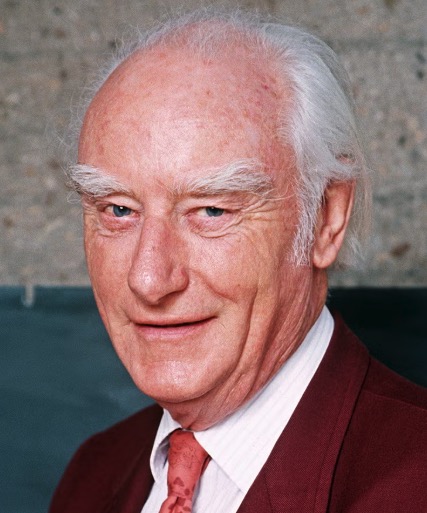 Francis Crick合作论文数Salk Institute for Biological Studies4Soumitra S. Ghosh合作论文数MitoKor Medical Center4Kui Gao合作论文数4H. Todd Miles合作论文数4
 Stanley L. Miller合作论文数Department of Chemistry and Biochemistry, University of California, San Diego4B.J. Weimann合作论文数4Wojciech S. Zielinski合作论文数4Jurgen G. Schmidt合作论文数3Ra Sanchez合作论文数3E. T. Kaiser合作论文数3Pe Nielsen合作论文数3Ws Zielinski合作论文数3
 Leman Luke J合作论文数Department of Chemistry and The Skaggs Institute for Chemical Biology, The Scripps Research Institute3
 Tobias C. Owen合作论文数Institute for Astronomy, University of Hawaii3
 Arthur Van Aerschot合作论文数Faculty of Pharmaceutical Sciences, KU Leuven3
 Alan W. Schwartz合作论文数Faculty of Science, University of Nijmegen3Gary F. Musso合作论文数3William D. Fuller合作论文数3John M. Beierle合作论文数3Libaniel Rodriguez合作论文数3
 Oscar Alejandro Acevedo合作论文数3Mahrokh Tohidi合作论文数3Paul M. Lizardi合作论文数3Yasuyuki Ura合作论文数3K Ehler合作论文数3B Gedulin合作论文数2Hansjörg Rembold合作论文数2G. J. Handschuh合作论文数2Marcus Koppitz合作论文数2
 Antonio Lazcano合作论文数2




