The development of aldose reductase inhibitors for the treatment of diabetic complications, such as cataract and retinopathy, has been of intense interest in the pharmaceutical community for the last 20 years. To date, aldose reductase inhibitors have been synthetically developed from leads obtained from in vitro screening studies. Recently, we have observed that mammalian tissues contain intrinsic inhibitors of aldose reductase, which may be used as potential drugs for treating diabetic complications with potentially less side effects than synthetic aldose reductase inhibitors. Intrinsic inhibitor(s) of aldose reductase have been observed in the methanolic extracts from rat and human kidneys and bovine lenses that were subjected to a number of chromatographic techniques, including counter current chromatography, flash chromatography, gel filtration and high pressure liquid chromatography. This inhibition results from a direct interaction between the inhibitor and enzyme. The intrinsic inhibitor, present in the lipophilic fraction of human kidney and bovine lens extracts, can easily penetrate into the lens to inhibit sugar alcohol formation. Intraperitoneal injection of partially purified bovine lens extract inhibited lens polyol formation in young rats fed 50% galactose diet.
A series of 17 compounds were synthesized based on the premise that the minimal pharmacophore for aldose reductase inhibition requires the presence of both an aryl group and polar group connected by a linking structure. Three groups of compounds were synthesized, the first possessing an aniline-4-(2'-6'-methylbenzothiazole) or 2-aminobenzothiazole group as the aryl group, the second possessing a 2-naphthyl as the aryl group and the third possessing either a 4-(2-phenylthiazole) or 2-(5-2'-nitrophenylfuran) as the aryl group. In all three of these groups the carboxylate or its methyl ester are linked to the aryl group through various lengths of methylene carbons and amide or cinnamide groups. Optimal activity was observed when the carboxylic group was separated from the aryl group by a linking structure of five atoms in length. Both a double bond and an amide moiety are well tolerated in the linking structure.
Aldose reductase (AR) inhibition provides a viable pharmacologically direct mode for the treatment of diabetic complications. We have synthesized a series of N-4 substituted analogues (15-21) of the known aldose reductase inhibitor phenyl-sulfonylnitromethane. The compounds are potent inhibitors of AR with IC(50)s between 0.01 and 0.19 mu M Some of the compounds are also potent affinity labels for AR. Compound 19 exhibits the highest and almost complete irreversible inhibition of AR known to date. (C) 1999 Editions scientifiques et medicales Elsevier SAS.
Anumber of dibenzocycloheptenone derivatives, a novel series of aldose reductase inhibitors, were synthesized and evaluated in vitro for their ability to inhibit rat lens aldose reductase enzyme. The design of these ARIs was based on previously published pharmacophore requirements. The most active compound in this series was a spirosuccinimide derivative, spiro{2,8-dihydroxy-5H-dibenzo[a, d]cycloheptene-5,3'-pyrrolidine}-2',5'-dione 11, having an IC50 of 3.0 μM.
Aldose reductase initiated sugar cataract formation in 9-month old galactose-fed dogs has been documented to progress from an accentuation of lens sutures (1 month after initial feeding) to the appearance of cortical vacuoles (3 months), cortical opacities (4–6 months) and eventually the progressive formation of a clear zone at the cortical equatorial regions of the cataractous lenses (>12 months). Here, the effect of age on the onset and degree of sugar cataract formation has been investigated in beagles fed a 30% galactose diet starting at 2, 6, and 24 months of age. Cataract formation was monitored by slit lamp and retroillumination microscopy. Compared to 9-month old dogs, cataract formation in the younger dogs was more rapid and the lens changes were more severe. In the 2-month old group of dogs, galactose-feeding resulted in a rapid formation of dense cataracts which began to resorb after 106 days of galactose feeding with only opaque nuclear remnants remaining after eight months. These changes were mirrored by age-dependent reductions of lenticular NADPH-dependent reductase activity.
Starch was characterized for analysis by high-performance size-exclusion chromatography (HPSEC) with detection by multiple-angle laser light-scattering and refractive index. Corn starches (amylopectin-to-amylose ratios of 1:0, 3:1, 1:1, and 3:7), presolubilized potato starch, and potato starch granules were analyzed. For corn starches, analysis by HPSEC revealed that weight average molar mass (M(w)) and z-average root mean square radius of gyration (R(gz)) decreased with increasing percentage of amylose. For potato starches, granules had a much higher M(w) and R(gz) than presolubilized starch. All chromatograms were polymodal in nature with at least two high M(w) amylopectin components. Except for high amylose corn starch, R(gz) values from this study were comparable with results from an earlier HPSEC/viscometry study. The R(gz) values from microscopic studies were lower than from chromatographic studies.
Several recent studies with the sorbitol dehydrogenase inhibitors 4-[4-(N,N-dimethylsulfamoyl)-piperazino]-2-methylpyrimidine, SDH-1, and its active metabolite 4-[4-(N, N-dimethylsulfamoyl)piperazino]-2-hydroxymethylpyrimidine , SDH-2, suggest that inhibition of sorbitol dehydrogenase may be beneficial in delaying the onset of diabetic complications due to their ability to ameliorate redox changes associated with polyol metabolism. To compare the relative importance of sorbitol dehydrogenase versus aldose reductase inhibition on sugar cataract formation, cataract formation was monitored in 50% galactose-fed and diabetic rats treated with/without the sorbitol dehydrogenase inhibitors SDH-1 or SDH-2 or the aldose reductase inhibitors AL 1576 or Ponalrestat. For these studies, diabetes was induced in young 50 g rats with streptozotocin while galactosemia was produced by feeding a diet containing 50% galactose. Inhibitors were administered in the diet with the diet containing 0.06% (w/w) of the sorbitol dehydrogenase inhibitors or Ponalrestat, and 0.0125% (w/w) of AL 1576. Cataract formation was monitored by hand-held slit lamp and polyol levels were measured by gas chromatography. Sugar cataract formation was accelerated in diabetic rats treated with sorbitol dehydrogenase inhibitors while no difference in cataract formation was observed in galactose-fed rats treated with/without SDH inhibitors. Cataract formation was inhibited in both diabetic and galactosemic rats by either Ponalrestat or AL 1576. These results support the concept that sugar cataract formation is initiated by the aldose reductase catalysed intracellular accumulation of polyols and that these sugar cataracts can be prevented through inhibition of aldose reductase.
Animal studies indicate that aldose reductase inhibitors represent a pharmacological method for inhibiting the onset of diabetic complications that is independent of blood sugar control. This has spurred the development of aldose reductase inhibitors (ARIs). To facilitate the rational development of more potent and direct ARIs, more specific knowledge of the structural and pharmacophoric requirements of the site at which ARIs interact are required. Co-crystallization of human placental aldose reductase with the inhibitor zopolrestat has been reported to result in a complex where the inhibitor is almost completely sequestered in the hydrophobic pocket which forms the substrate site. Zopolrestat's observed location, which makes the active site pocket inaccessible to solvent or further productive binding of substrate, is not supported by published inhibitor structure-activity relationships (SAR) studies or kinetic results which indicate that aldose reductase inhibitors such as zopolrestat are either non-competitive or uncompetitive inhibitors. Using a 5-iodoacetamido analog of alrestatin as an affinity labeled aldose reductase inhibitor, an inhibitor binding site on aldose reductase has been located. This inhibitor binding site contains a number of pharmacophoric elements previously proposed for the inhibitor site. Its location and composition is consistent with reported kinetic data, SAR observations, stereochemical requirements, and quantum chemical calculations.
Nucleoside-5'-phosphorimidazolides react readily with acylating agents to give N-substituted products that are highly activated. In most cases these acylated derivatives undergo rapid hydrolysis to give nucleoside 5'-phosphates, whether or not a complementary template is present. However, guanosine 5'-phosphorimidazolide reacts with diethyl pyrocarbonate to give a derivative that oligomerizes rapidly and efficiently in the presence of polycytidylic acid and Pb2+. The reaction is complete in about 1 h, whereas the corresponding reaction in the absence of an acylating agent takes several days. However, the final yield of long oligomers is lower when diethyl pyrocarbonate is present.
When an oligonucleotide primer pG10 is incubated with the nucleotide analogue 9-[3-hydroxy-2-(hydroxymethyl)prop-1-yl] guanine diphosphate (\(p\overline{\overline G} p\), I) in the presence of poly(C), addition of the monomer occurs almost exclusively at the 5′-terminal phosphate rather than the 3′-terminalcis-glycol. The implications of this finding in the context of prebiotic condensation reactions are discussed.
We have prepared molecules in which a guanosine 5′-phosphate (pG) residue is attached to the 3′ terminus of a decadeoxycytidylate (pdC)10 template via diamine linkers H2N(CH2) n NH2,n=4–7. The pG residue acts as a primer and is extended very efficiently by incubation with activated pG derivatives to give products containing 6–9 G residues in >80% yield. The detailed nature of the product distribution is discussed.
 Kador P F合作论文数11tomoyuki terada合作论文数3Schaffhauser M A合作论文数3
 Duane D. Miller合作论文数Neuroscience Institute, University of Tennessee Health Science Center;Department of Pharmaceutical Sciences, College of Pharmacy, University of Tennessee Health Science Center3Yukio Takahashi合作论文数3
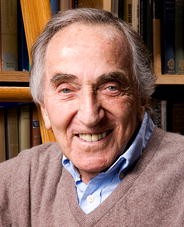 Leslie Orgel合作论文数Salk Institute for Biological Studies3Mj Lizak合作论文数2Nh Saab合作论文数2
 Isaac Donkor合作论文数2Sanai Sato合作论文数2Y Ma合作论文数1Ef Secchi合作论文数1Milton Wyman合作论文数1KAREN BLESSING合作论文数1jun inoue合作论文数1S Sato合作论文数1Marshall L. Fishman合作论文数1Rait V K合作论文数1Sun G合作论文数1Bartoszko-Malik A合作论文数1Zhou Chen合作论文数1Kazuhisa Sugiyama合作论文数1Ying-She Cui合作论文数1
 Yasser S abdel-ghany合作论文数Faculty of Pharmacy, University of Alexandria1Martin Schlitzer合作论文数1Hoa K. Chau合作论文数1
 Yong-Sok Lee合作论文数Center for Information Technology, National Institutes of Health1




