In the field of energetic materials, the mixing or blending of various material components into a composite material with certain desired properties is common practice. The compound properties are often not verified experimentally and one has to rely on composite properties derived from so-called property mixing rules. In this study we evaluate these composite properties in relation to details of the pure components. A brief overview of mixing rules, as proposed by Dobratz, Bruggeman, and Poon and Shin, is given. These commonly used mixing rules are applied on different propellant simulants, tetryl and TNT in order to predict the relative permittivity (or dielectric constant). These predictions are discussed and, subsequently, compared to experimental observations.
In previous work, we have discussed projectile penetration experiments into a variety of wooden targets, i.e. natural wood, and medium density fibreboard (MDF) targets. However, this paper will discuss normal projectile impacts on three different types of wood-based materials: bamboo, oriented strand board (OSB) and low-density fibreboard (LDF). Impact experiments have been performed using flat targets. Two different 9 mm projectiles are used: Ball and Ball Subsonic. Penetration depths of projectiles are determined using x-ray photography. The experimental data are analysed using the Poncelet model and the Robins- Euler model. As in previous work on wooden materials, penetration depths of the projectiles are related to physical properties of the target material. For bamboo, OSB, and LDF Janka hardness measurements have been performed. Results obtained are compared with earlier results on MDF and natural wood. Again, the observed dynamic strength R shows a good correlation with the Janka hardness.
Most of the injuries and deaths from ricocheting bullets in shooting incidents are usually reported due to misaimed shots that had ricocheted close to the victims. Although the destabilisation of ricocheted bullets during their ricochet flights is a generally known phenomenon, no significant quantitative-based scientific studies have attempted to understand bullets' post-ricochet orientations at close distances. This empirical study explores close-range post-ricochet orientations of AK bullets (7.62 mm × 39 mm) on a range of domestic surface types typically encountered during bullet ricochet incidents. This study has revealed that ricocheting AK bullets off of various wood types and tile samples produce side-on impacts into closely located targets following a rightwards yaw action. It has also been shown that AK bullets ricocheting off concrete and cement samples at 5-degree incident angles produced nose-forward impacts on paper witness screens, similar to an orthogonal impact of a direct-fired shot. The findings present important new information on the post-ricochet yawing behaviour of AK bullets, which has the potential to aid future shooting reconstructions in which victims are hit by closely ricocheted bullets.
This paper presents the results of an experimental research aimed at assessing the material performance of adobe bricks in compression for a wide range of induced strain rates, from statics to high velocity impact. Adobe connotes a traditional masonry whose bricks are made of sundried soil mixtures possibly reinforced with natural fibres and joined together using mud mortar. The inclusion of fibre and the presence of water in the mixture have a dominant effect on the mechanical performance of adobe bricks and masonry. Their influence on the dynamic behaviour of this material is quantified and interpreted in this study at high strain rates also with data produced through Hopkinson bar testing. Appropriate dynamic increase factors and constitutive equations for adobe materials in dynamics are also investigated. The paper presents the experimental campaign, shows the main results and offers qualitative and quantitative interpretations for the principal damage patterns observed.
This research is dedicated to the effect of underwater contact explosions on steel rods. The work is inspired by problems the Dutch Army Engineers experienced with the effective demolition of steel structures under water. Selected parameters which could affect incomplete demolition were investigated experimentally. These parameters included the amount of explosive, the contact geometry and the thickness of the spacer between explosive and steel. For the experiments a plastic explosive and cylindrical steel bars of 100 cm length and 5 cm diameter were used. A main cause of failing demolition can be attributed to insufficiently following the guidelines. The explosive charge should be in close contact with the target material. Furthermore, the optimal geometric arrangement of the plastic explosives was found to be a 120 degrees covering around the steel bars. The latter strategy achieved a demolition of the rods at half the amount of explosive as prescribed.
This paper discusses normal projectile impacts on medium density fibreboard (MDF), a wood-based material. Impact experiments have been performed using flat MDF targets. Two different 9 mm projectiles are used, viz. Ball and Ball Subsonic. Penetration depths of projectiles are determined using x-ray photography. The experimental data can be described using both the Robins-Euler model and the Poncelet model. This implies that the resistance to penetration offered by the target can be resolved using two physically interpretable components, viz. the contribution of inertial stresses and the dynamic strength of the material. Results on MDF and wooden targets are compared. For MDF Janka hardness measurements were performed for comparison with natural wood. The observed dynamic strength R shows a good correlation with the Janka hardness. In principle, Janka hardness could be used to predict the resistance of wooden materials to projectile penetration. Finally, possible future research is discussed.
A local damage model is proposed for the numerical assessment of the static performance of Adobe masonry components. The model was applied to simulate the experimental behaviour of sundried soil bricks and mud mortar tested in uniaxial compression and bending. Numerical simulations of the model are made mesh objective by means of a rate dependent regularization algorithm in statics. This is achieved using a generalization of the damage delay concept based on a decomposition of the Dirichlet boundary condition. It allows non-dimensionality of model parameters mathematically needed to prevent loss of ellipticity of the equilibrium equations of the model. The entire regularization algorithm is integrated within an implicit Newton-Raphson solver.
Adobe is an ancient building technology made of sun dried bricks joined together by mud mortar. This paper deals with the physical and mechanical characterization of three different typologies of adobe bricks and one typology of mud mortar produced in Europe. They differed in terms of internal soil element proportions and amount of organic content. Physical tests consisted of granulometry, moisture content and density tests. The mechanical characterization consisted of uniaxial compressive tests and three point bending tests. Tests were performed according to modern material standards. The main mechanical properties both in tension and compression were determined at different curing conditions. The outcome provided in this study offers a general overview on the assessment of the mechanical performance of adobe in relation to the properties and interactions of its soil constituents. In fact, the comparison between components with the same soil mineralogical family and production process made it possible to assess both at a qualitative and quantitative level the effect of the physical properties of the mixture (such as fiber and clay percentages or moisture content) on the mechanical parameters of the resulting bricks and mortar. This paper proposes new predictive formulations of the most relevant material parameters in strength and deformation, such as compressive strength, deformation at peak stress and ultimate displacement for both adobe bricks and mortar. They quantify the influence that water content, clay percentage and fiber reinforcement produce on the mechanical performance of the tested adobe components. This was made possible by means of multivariate statistical analyses on the mechanical parameters derived from all the tested samples.
A local damage model has been developed for interpreting the dynamic performance of Adobe, a traditional form of masonry whose components are made of sun-dried and unpressed soil possibly reinforced with fibres. This paper presents a numerical model to assess the static performance of bricks and mortar of Adobe. It has been validated with reference to the results of a characterization campaign performed in 2016 on Adobe bricks and mortar produced in Germany. Although Adobe buildings are among the oldest examples of masonry constructions, spread in all continents of the world, the properties of the material and the overall mechanical performance are still poorly understood, especially with respect to the influence of the adopted mixture on the mechanical properties. As a consequence, very few numerical models are developed for Adobe. The assessment of Adobe structures is becoming a priority task because they are often spread in areas of the world prone to a wide range of dynamic hazards, whose disastrous consequences must be prevented. As for masonry, the overall performance of Adobe structures depends on the properties of bricks and mortar. Three types of bricks and one type of mortar with different element mixture compositions were tested in compression and bending tests and their behaviour was analysed. The interpretation of experimental results classifies Adobe as a quasi brittle material, with special reference to concrete. Moreover, it was found out that for the same mineralogical family, the amount of fibres in the mixture of Adobe controls the deformation capacity of Adobe. Overall, a numerical model for Adobe was cast within a damage concept originally defined for concrete. A modified version of the last damage model by Mazars was developed. In order to avoid the typical mesh dependency that characterizes simulations of softening materials, a local regularization algorithm was implemented, starting from the damage delay model developed by Allix. Overall, only two mechanical parameters in compression and tension are required to calibrate the loading evolution laws of the model. In fact, the initial damage strains and elastic moduli in tension and compression were derived directly from the mean values experimentally associated to each mixture. For each type of mixture, numerical simulations on resulting bricks were performed in statics for uniaxial compression and three point bending tests using the strength and strain values experimentally derived. The mechanical parameters of the model were calibrated in order to match the experimental force displacement curves. The Adobe delta damage model proves to constitute a suitable tool to predict the material performance of Adobe. This paper resumes the experimental campaign, presents the algorithmic details of the model and the comparisons with respect to experimental data and mesh dependence.
This paper presents a constitutive relationship to describe the uniaxial response in statics of brick and mortar samples of Adobe, a traditional masonry whose components are made of sundried soil mixture reinforced with fibres. Only recently Adobe has been attracting scientific attention, primarily as a consequence of the dramatic failures these structures have suffered in regions prone to earthquakes. Furthermore, it possesses eco-friendly material properties which are attractive features for western countries forced to reduce the environmental impact of modern building industry. Nevertheless, the mechanical properties of Adobe are still largely neglected, especially with regards to the influence of soil mixture components. The study of the structural performance of masonry starts from the assessment of the material performance of its components. Thus, an extensive characterization campaign was performed by Delft University of Technology and the Military Engineering Laboratory of the Netherlands. Three types of bricks and one type of mortar with different mixture components proportions, were subjected to granulometry, moisture content, density tests and uniaxial compressive and three point bending tests. Predictive formulations for compressive and tensile strength and deformation values have been proposed by the authors. These relations include the dependency of mixture components and moisture content. In this paper, constitutive laws are developed for Adobe in pure compression and tension validated by experimental results. In compression, the force-displacement curves were interpolated according to several existing constitutive laws and the model originally developed by Priestley for concrete masonry elements was finally selected as best fitting. Despite the differences in terms of mechanical parameters, the analytical assessment revealed that the experimental force-displacement graphs of all the different types of bricks could be interpolated using the same model with the same calibrating values. Furthermore, the uniaxial response in tension was derived according to an inverse approach. A numerical model recently developed by the authors and calibrated with respect to the compressive and bending tests was used to simulate uniaxial tensile tests. Also in tension, a common trend among types was observed. The results of the constitutive modelling frames components of Adobe within the class of quasi brittle (geo) materials, with particular reference to concrete. This paper presents the experimental results of the tested samples and the related analytical and numerical modelling.
Underwater explosive devices, such as improvised explosive devices (IED), offer a high-risk threat within the maritime domain. An attack on ships in harbours, coastal infrastructure, such as locks and quays, by underwater explosives could have a detrimental effect on infrastructure functionality and national economy. Here, the physical effects of underwater explosives are reviewed and compared to surface firings. Next, a few examples in the maritime domain are treated in more detail: ships, divers and swimmers, tourist beaches, dikes, infrastructural assets and near-shore sea-bed communication. Moreover, possible detection methods and counter-strategies are discussed. A methodology for risk analysis of underwater explosion threats is outlined. Finally, conclusions and challenges for the future, focused on scientific research and preventive approaches are given.
This paper will discuss normal projectile impacts on wood. Impact experiments have been performed using flat wooden targets with different physical properties. Materials of different hardness have been selected, viz. Douglas, European Pine, European Oak, Merbau, Bangkirai, and Azobe. Three different 9 mm projectiles are used, viz. Ball, Action NP and Ball Subsonic. Penetration depths of projectiles are determined using x-ray photography. The experimental data are analysed using both the Robins-Euler model and the Poncelet model. This implies that the resistance to penetration offered by the wood can be resolved using two physically interpretable components, viz. the contribution of inertial stresses and the dynamic strength of the material. The penetration depths of the projectiles are related to physical properties of the wood. The dynamic strength Rt derived from the models shows a good correlation with the Janka hardness of the wooden targets. Finally, future research is discussed.
In this study the importance of wind for acoustic gunshot localization, i.e. its influence on the accuracy of the direction of arrival, is studied. A correction factor is applied to account for the influence of wind on sound propagation. The final objective of this work is to locate marksmen using acoustic vector sensors (AVS) instead of arrays of conventional microphones. To allow for comparison with these AVS, experiments were performed, in which the direction of the sound source was evaluated using two microphones. By estimating the time difference of arrival and by cross-correlating both channels, it is possible to compute the source direction. The direction of arrival estimation was accurate to 1.9 degrees at wind speeds below 2 m/s. These measurements can serve as a baseline for accuracy tests with AVS.
Recently, in the Netherlands impact experiments were performed using flat wooden targets with different physical properties. Materials studied include Obeche, Meranti, Beech, Spruce, Pine, and Ipe. In these ricochet experiments 7.65 mm Browning (. 32 Auto) and 9 mm Luger projectiles were used. In this paper the critical impact angle a(c) for bullet ricochet is studied using analytical models. For the modelling work physical properties of wood and the projectile relevant to ricochet will be discussed. In a first approximation, deformations and grain structure of the wood will be neglected. The bullet ricochets will be evaluated using the analytical ricochet models of Tate and Rosenberg et al. developed for impacting rods. However, the ricochet model of Wijk predicts the critical impact angle ac best. Possible reasons for differences between the model and experimental results are given.
In combat situations it is important to locate the positions of enemy marksmen. In principle, it is possible to determine these using microphone arrays. An interesting alternative is using acoustic vector sensors (AVS) instead of conventional microphones. AVS, such as the Microflown, measure the flow of air particles to determine the direction of the sound source. To allow for comparison with these AVS, experiments were performed, in which the direction of the sound source is determined using two measurement condenser microphones. The direction of arrival estimation was accurate to +/- 1.8 degrees. This is less accurate than the advertised value for the Microflown acoustic vector sensor, viz. less than 1.5 degrees. These measurements can serve as a baseline for accuracy tests with AVS. Similar independent research should be performed with acoustic vector sensors, in order to be able to assess the manufacturer's claims.
Kinetic non-lethal weapons (KNLW) are explicitly designed and developed to incapacitate people with a low probability of fatality or permanent injury. More specifically, KNLW are designed to avoid penetration of the human skin. However, incidents causing permanent injuries are a practical reason why evaluation of skin penetration injury by non-lethal projectiles is necessary and relevant.A promising method to evaluate whether a projectile penetrates the skin is the surrogate method. This method uses a tissue simulant model for the skin and was developed using experiments conducted on post-mortem human subjects (PMHS). The model consists of ballistic gelatine covered with closed-cell foam and chamois leather.In this work, commercial and experimental projectiles have been evaluated using this method. The evaluation involves: gathering data of the lethality of non-lethal projectiles, such as the v50 and the minimum safe impact speed. In addition, the surrogate method itself is evaluated.
Satellites are an increasingly important tool in modern warfare and, as such, there is a renewed interest in developing anti-satellite weapons, as well as in assessing the vulnerability of satellites to being intercepted. In 2007 China used a modified ballistic missile to intercept a defunct Chinese weather satellite. This was followed by an American intercept, in 2008, in which a modified Standard Missile 3 (SM-3), which is being developed as an anti-ballistic missile system, was used against an out of control US reconnaissance satellite. In order to intercept a satellite, the satellite trajectory should pass through the volume of space that can be reached by the interceptor. The size and shape of this volume depend on the possible trajectories followed by the interceptor missile during its boost phase and the resulting burnout velocity at the end of its boost phase. The possible trajectories flown and velocity gained during the boost phase determine the geographical launcher locations from where a given interceptor missile can reach a particular satellite. Using computer simulations of an SM-3 missile, we calculate possible launcher positions for the 2008 US ASAT test. These are compared to the launcher positions that follow from a simpler analytical model, in which the earth rotation and the altitude reached and distance travelled at the end of the boost phase are neglected.
Impact experiments were performed using flat wooden targets with different physical properties. In all these ricochet experiments 7.65 mm Browning projectiles were used. As a function of the incident angle the ricochet angle and the deflection angle have been determined. In general, the deflection angle is related to the spin of the projectile. Our experiments show that this deflection is also related to the hardness of the target material and the direction of the grain of the wood. It is observed that the apparent ricochet angle can be larger than the incident angle. These results are reproducible and consistent with earlier results reported in literature. In addition, this phenomenon is well known in forensic studies of impact phenomena on soft targets. However, it is rarely described in other ballistic studies. In this paper we will give an explanation of this interesting phenomenon. It is associated with the shape of the crater.
Mechanical characterisation experiments have been performed with 20% ballistic gelatine, made according to NATO specifications. Quasi-static experiments at strain rates from 0.00059/s to 0.059/s have been done using a Zwick/Roell Z250 electromechanical testing machine. The Young's modulus E (at zero strain) is 88, 98, and 141 kPa for strain rates of 0.00059, 0.0059, and 0.059/s respectively. Dynamic experiments have been performed using a flywheel apparatus (118/s) and a polymeric split Hopkinson pressure bar (925 to 1350/s). It is shown that ballistic gelatine is both a viscoelastic and non-linear material. Experimental results seem essentially consistent with earlier published results.
Orienting paper about kinetic non-lethal weapons. One of its purposes is to help the non-specialist reader better understand scientific and technological aspects of these new weapon systems. Physical parameters and experimental methods are reviewed. Performance tests of two existing non-lethal weapon systems are shown, i.e. the FN303 and the Cougar with Bliniz projectile. Results are compared with other projectiles: our different balls and a beanbag. They sketch the state-of-the-art and challenges of this developing field
 P. B. Spoor合作论文数6
 Tiziano Li Piani合作论文数Technical University of Delft, TNO, Dutch Defense Academy, Netherlands6Ljj Jos Janssen合作论文数5
 Jaap Weerheijm合作论文数Department of Materials, Mechanics, Management & Design, Faculty of Civil Engineering and Geosciences, Delft University of Technology5W.R. ter Veen合作论文数4Ljj Janssen合作论文数4
 L.J. Sluys合作论文数Faculty of Civil Engineering and Geosciences, Delft University of Technology4M. Sluyters-Rehbach合作论文数3J.H. Sluyters合作论文数3
 Alexander Schmets合作论文数Department of Physics and Astronomy;University of Missouri3J. Lopez De La Cruz合作论文数2
 Miguel A. Gutierrez合作论文数2W. J. Hamer合作论文数1R Hermsen合作论文数1Amar Oukara合作论文数1Dennis Krabbenborg合作论文数1
 Alexandre Papy合作论文数1Randika Ariyarathna合作论文数Ministry of Defence, Centre for Defence Research and Development1Chris Shepherd合作论文数School of Physical Sciences, University of Kent1
 Bandula Nishshanka合作论文数Ministry of Defence, Centre for Defence Research and Development1
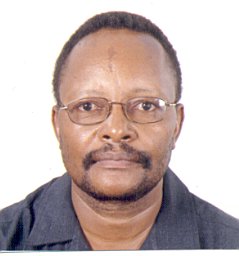 KAROLI NICHOLAS NJAU合作论文数The Nelson Mandela African Institute of Science and Technology1J.H.W. De Wit合作论文数1
 Philippe Viot合作论文数Esplanade des arts et métiers LAMEFIP, ENSAM de Bordeaux1
 M. A. Punyasena合作论文数1
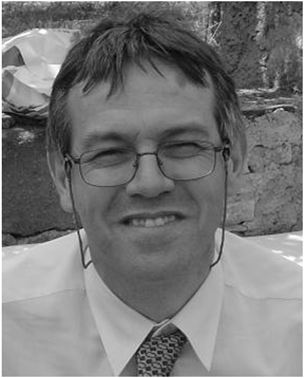 Marco Peroni合作论文数1
 Roy Lindelauf合作论文数Faculty of Economics and Business Administration, Tilburg University1
 George Solomos合作论文数Joint Research Centre European Commission1




