The objectives of this chapter are to:
We study an inventory–transportation problem where one product has to be shipped from an origin to a destination by vehicles of given capacity over an infinite time horizon. The product is made available at the origin and consumed at the destination at the same constant rate. The intershipment time must be not lower than a given minimum value. The problem is to decide when to make the shipments and how to load the vehicles to minimize the sum of the transportation and the inventory costs at the origin and at the destination per time unit. We study the case in which the intershipment time is a multiple of the minimum value, i.e., the problem with discrete shipping times. We show that, in this case, the best double frequency policy has a tight performance bound of about 1.1603 with respect to the optimal periodic policy and of about 1.1538 with respect to the best frequency-based policy. Moreover, we show that, from the worst-case point of view, the best double frequency policy is the optimal frequency-based policy.
In this article, a distribution system is studied where the sum of transportation and inventory costs is to be minimized. The inventory holding cost is assumed to be the same for all retailers. A fixed partition (FP) periodic policy is proposed with tight asymptotic worst-case performance of 3/2 with respect to the best possible policy. This bound cannot be improved in the class of FP periodic policies. In partition-based PB policies, the retailers are first partitioned into sets and then the sets are grouped in such a way that sets of retailers within a group are served together at selected times. A PB periodic, policy is presented with tight worst-case asymptotic performance of 11-4 root 6 approximate to 1.202 with respect to the best possible policy. This latter performance improves the worst-case asymptotic performance of root 2 of the previously best known policy for this problem. We also show that the proposed PB periodic policy has the best worst-case asymptotic performance within the class of PB policies. Finally, practical heuristics inspired by the analyzed policies are designed and tested. The asymptotic worst-case performances of the heuristics are shown to be the same of those of the analyzed policies. Computational results show that the heuristics suggested are less than 6.4% on average from a lower bound on the optimal cost when 50 or more retailers are involved. (c) 2013 Wiley Periodicals, Inc.
We consider the problem of scheduling operations in bufferless robotic cells that produce identical parts using either single‐gripper or dual‐gripper robots. The objective is to find a cyclic sequence of robot moves that minimizes the long‐run average time to produce a part or, equivalently, maximizes the throughput. Obtaining an efficient algorithm for an optimum k‐unit cyclic solution ( k ≥ 1) has been a longstanding open problem. For both single‐gripper and dual‐gripper cells, the approximation algorithms in this paper provide the best‐known performance guarantees (obtainable in polynomial time) for an optimal cyclic solution. We provide two algorithms that have a running time linear in the number of machines: for single‐gripper cells (respectively, dual‐gripper cells), the performance guarantee is 9/7 (respectively, 3/2). The domain considered is free‐pickup cells with constant intermachine travel time. Our structural analysis is an important step toward resolving the complexity status of finding an optimal cyclic solution in either a single‐gripper or a dual‐gripper cell. We also identify optimal cyclic solutions for a variety of special cases. Our analysis provides production managers valuable insights into the schedules that maximize productivity for both single‐gripper and dual‐gripper cells for any combination of processing requirements and physical parameters.
This paper studies the analytical and managerial implications of product substitutability on the joint pricing and procurement decisions. We consider a single-period model with two products: an existing product and an improved new product that can substitute the demand for the existing product in case of a shortage. Demand for each product follows a general distribution with an expected value that is a linear function of the price of the new product. While the price of the existing product is determined by the market, it is necessary to determine the new product’s price and the procurement quantities of both products so as to maximize the profits. We analytically show that the expected profit function is unimodal and in the existence of substitution: the expected total profit is higher; the optimal price and the safety stock of the new product are higher; and the optimal safety stock of the existing product is less. Using these properties an efficient algorithm is developed. We also provide a numerical analysis to demonstrate that considering substitution in advance could increase the profitability by 58% and the new product price by 5% while decreasing the total procurement quantity by 15%. 2007 Elsevier B.V. All rights reserved.
In this paper we consider a transportation problem where several products have to be shipped from an origin to a destination by means of vehicles with given capacity. Each product is made available at the origin and consumed at the destination at the same constant rate. The time between consecutive shipments must be greater than a given minimum time. All demand needs to be satisfied on time and backlogging is not allowed. The problem is to decide when to make the shipments and how to load the vehicles with the objective of minimizing the long run average of the transportation and the inventory costs at the origin and at the destination over an infinite horizon. We consider two classes of practical shipping policies, the zero inventory ordering (ZIO) policies and the frequency-based periodic shipping (FBPS) policies. We show that, in the worst-case, the Best ZIO policy has a performance ratio of root 2. A better performance guarantee of 16 root 3045/255 - 37/17 approximate to 1.286 is shown for the best possible FBPS policy. The performance guarantees are tight. Finally, combining the Best ZIO and the Best FBPS policies, a policy that guarantees a 4 performance is obtained. Computational results show that this policy gives an average percent optimality gap on all the tested instances of <1%. (c) 2007 Wiley Periodicals, Inc.
We study determining prices and production jointly in a multiple period horizon under a general, nonstationary stochastic demand function with a discrete menu of prices. We assume that the available production capacity is limited and that unmet demand is lost. We incorporate discretionary sales, when inventory may be set aside to satisfy future demand even if some present demand is lost. We analyze and compare partial planning or delayed strategies. In delayed strategies, one decision may be planned in advance, whereas a second decision is delayed until the beginning of each time period, after observing the results of previous decisions. For example, in delayed production (delayed pricing), pricing (production) is determined at the beginning of the horizon, and the production (pricing) decision is made at the beginning of each period before new customer orders are received. A special case is where a single price is chosen over the horizon. We describe policies and heuristics for the strategies based on deterministic approximations and analyze their performances. Computational analysis yields additional insights about the strategies, such as that delayed production is usually better than delayed pricing except sometimes when capacity is tight. On average, the delayed production (pricing) heuristic achieved 99.3% (99.8%) of the corresponding optimal strategy.
The Internet is changing the automotive industry as the traditional manufacturer and dealer structure faces increased threats from third party e-tailers. Dynamic pricing together with the Direct-to-Customer business model can be used by manufacturers to respond to these challenges. Indeed, by coordinating production and inventory decisions with dynamic pricing, the automotive industry can increase profits and improve supply chain performance. To illustrate these benefits, we discuss a strategy that incorporates pricing, production scheduling, and inventory control under production capacity limits in a multi-period horizon. We show that under concave revenue curves, a greedy algorithm provides the optimal solution, and we describe extensions to the model such as multiple products sharing production capacity. Using computational analysis, we quantify the profit potential and sales variability due to dynamic pricing, and we suggest that it is possible to achieve significant benefit with few price changes.
In this paper we consider the familiar bin-packing problem and its associated set-partitioning formulation. We show that the optimal solution to the bin-packing problem can be no larger than 4/3 ⌈Z LP⌉, whereZ LP is the optimal solution value of the linear programming relaxation of the set-partitioning formulation. An example is provided to show that the bound is tight. A by-product of our analysis is a new worst-case bound on the performance of the well studied First Fit Decreasing and Best Fit Decreasing heuristics.
 David Simchi-Levi合作论文数Institute for Data, Systems, and Society, Massachusetts Institute of Technology;Department of Civil and Environmental Engineering, Massachusetts Institute of Technology;Data Science Lab, Massachusetts Institute of Technology4
 Luca Bertazzi合作论文数Department of Quantitative Methods Italy, University of Brescia3
 Julie Swann合作论文数Edward P. Fitts Department of Industrial and Systems Engineering, College of Engineering, North Carolina State University;Department of Biomedical Engineering, North Carolina State University;Department of Biomedical Engineering, University of North Carolina at Chapel Hill2
 Milind Dawande合作论文数Naveen Jindal Sch Management, Univ Texas Dallas2
 Chelliah Sriskandarajah合作论文数Department of Information and Operations Management, Mays Business School, Texas A & M University2
 H. Neil Geismar合作论文数Prairie View A&M University2
 Speranza Maria Grazia合作论文数Dipartimento di Economia e Management, Università degli Studi di Brescia2
 Mustafa Karakul合作论文数School of Administrative Studies, York University2
 peter boey合作论文数1
 Laxminarayan Sahoo合作论文数1
 Awi Federgruen合作论文数Graduate School of Business, Columbia University1
 Ying Huang合作论文数IBM T.J. Watson Research Center1Ramakrishna Desiraju合作论文数1
 Stephan Biller合作论文数Edwardson School of Industrial Engineering, College of Engineering, Purdue University;Mitch Daniels School of Business, Purdue University1Julien Bramel合作论文数406 Uris Hall, Columbia University1
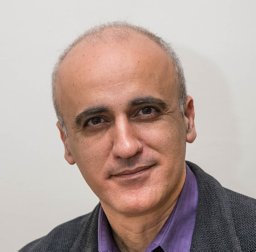 Yossi Aviv合作论文数Olin School of Business, Washington University1




