Looking Beyond the Frontiers of Science, pp. 7-9 (2022) No AccessKK, Particle Physicist, World Scientific and the Institute of Advanced StudiesLars BrinkLars BrinkDepartment of Physics, Chalmers University of Technology, S-412 96 Göteborg, Swedenhttps://doi.org/10.1142/9789811263699_0002Cited by:0 PreviousNext AboutSectionsPDF/EPUB ToolsAdd to favoritesDownload CitationsTrack CitationsRecommend to Library ShareShare onFacebookTwitterLinked InRedditEmail Abstract: The following sections are included: The Beginning Institute of Advanced Studies KK FiguresReferencesRelatedDetails Looking Beyond the Frontiers of ScienceMetrics History PDF download
In 2021, to mark the occasion of 2021 was Yôichirô Nambu's birth centenary, we engaged in writing a historical/scientific description of his most incisive papers. Nambu was the humblest genius we have known, and we expected to find some of his great but forgotten insights. We found one, written in 1947: “A Note on the Eigenvalue Problem in Crystal Statistics", where he formulates and solves the (N× N) Ising model in a 2N-dimensional Hilbert space
We analyze the residual gauge freedom in gravity, in four dimensions, in the light-cone gauge, in a formulation where unphysical fields are integrated out. By checking the invariance of the light-cone Hamiltonian, we obtain a set of residual gauge transformations, which satisfy the BMS algebra realized on the two physical fields in the theory. Hence, the BMS algebra appears as a consequence of residual gauge invariance in the bulk and not just at the asymptotic boundary. We highlight the key features of the light-cone BMS algebra and discuss its connection with the quadratic form structure of the Hamiltonian.
A new and brilliant diplomatic edition of »Kortt wendingh« appeared in 2013, following MS AM 808, 4°. The editor was †Leif Stedstrup. The edition contains a so-called »school comedy« written by Hans Christensen Sthen in c. 1570. Sthen was born in 1544 and grew up in Roskilde. His hymns, some of which are still sung, are well known, but his language is not particularly well researched. I have tried to extract all of the interesting pronunciations and a few of the grammatical features that occur in »Kortt wendingh«. It has not proven to be an easy task because Danish orthography in the sixteenth century was somewhat complex and can be difficult for us to evaluate today. But as all alphabetical writing encapsulates the pronunciation of its time, I think that such a linguistic investigation can be undertaken and provide information about late sixteenth-century Danish pronunciation on Sjælland. (Incidentally, »Kortt wendingh« is both the name of the main character (cf. the English name Curt) and a phrase in Danish meaning a ‘sharp vicissitude’ (concerning one’s fate), which is, indeed, the topic of the play).
A bstract We analyze possible local extensions of the Poincaré symmetry in light-cone gravity in four dimensions. We use a formalism where we represent the algebra on the two physical degrees of freedom, one with helicity 2 and the other with helicity − 2. The representation is non-linearly realized and one of the light-cone momenta is the Hamiltonian, which is hence a non-linear generator of the algebra. We find that this can be locally realized and the Poincaré algebra extended to the BMS symmetry without any reference to asymptotic limits.
When asked to write a contribution to the memorial volume for Peter Freund I went through my memory of the first time I met Peter. This was in 1971 when Dual Models were very popular and I had just joined in the efforts. For a number of years I worked on the problem of finding a realistic Dual Model/String Theory for hadrons, and here I will review those efforts as they happened, but also in the light of what we now know about hadrons from QCD. I will argue for when a string picture of hadrons is appropriate and discuss its limitations and the specific results you get from it.
Jacob Bekenstein, pp. 1-2 (2019) Free AccessTHE EARLY HISTORY AS SEEN FROM SOME WHO WERE INVOLVEDLars Brink, Viatcheslav Mukhanov, Eliezer Rabinovici and K K PhuaLars BrinkChalmers University of Technology, Sweden, Viatcheslav MukhanovLudwig-Maximilians-Universität of Munich, Germany, Eliezer RabinoviciHebrew University of Jerusalem, Israel and K K PhuaInstitute of Advanced Studies, Nanyang Technological University, Singaporehttps://doi.org/10.1142/9789811203961_others01Cited by:0 PreviousNext AboutSectionsPDF/EPUB ToolsAdd to favoritesDownload CitationsTrack CitationsRecommend to Library ShareShare onFacebookTwitterLinked InRedditEmail Abstract: "It can be seen that κ/8π is analogous to temperature in the same way as A is analogous to entropy. It should however be emphasized that κ/8π and A are distinct from the temperature and entropy of the black hole. In fact, the effective temperature of a black hole is absolute zero." This is a quote from the classical paper by J.M. Bardeen, B. Carter and S. Hawking, "The Four Laws of Black Hole Mechanics" published in Commun. Math. Phys. in 1973, a year after Jacob Bekenstein had announced his discovery of black hole entropy in Lett. al Nuovo Cimento. It is very clear from this quote the Bekenstein's idea was not accepted by the community straight away. Even more, it faced a strong resistance at the very beginning and one needs to have a character as strong as Jacob's not to give up and pursue in a subsequent paper what he believed is correct with the support of many beautiful gedanken experiments published in Phys. Rev. D in 1973. In fact, at the very beginning, it was not clear why the second law of thermodynamics should be legitimate for the external observer in the presence of a black hole. It might work or equally well it could fail. In fact, at this time it was already clear that black holes have no hairs and hence neither baryon nor lepton numbers are conserved from the point of view of the observer because they can simply disappear in the black hole without any trace. Why should entropy be exceptional? If a pedestrian turns around a corner he is not obliged to leave a message behind. Why could it not happen that entropy could just be hidden inside the black hole without leaving any trace to those who decided to stay outside? It could well happen and would not contradict any known fundamental physical law… FiguresReferencesRelatedDetails Jacob BekensteinMetrics Downloaded 96 times History PDF download
Jacob Bekenstein, pp. 193 (2019) Free AccessOTHER CONTRIBUTIONS IN MEMORY OF JACOB BEKENSTEINLars Brink, Viatcheslav Mukhanov, Eliezer Rabinovici and K K PhuaLars BrinkChalmers University of Technology, Sweden, Viatcheslav MukhanovLudwig-Maximilians-Universität of Munich, Germany, Eliezer RabinoviciHebrew University of Jerusalem, Israel and K K PhuaInstitute of Advanced Studies, Nanyang Technological University, Singaporehttps://doi.org/10.1142/9789811203961_others04Cited by:0 PreviousNext AboutSectionsPDF/EPUB ToolsAdd to favoritesDownload CitationsTrack CitationsRecommend to Library ShareShare onFacebookTwitterLinked InRedditEmail Abstract: Jacob Bekenstein had really broad scientific interests. In this section we have collected some of the contributions that describe other interests of Jacob and also contributions that the authors find important to publish in a memorial volume like this one… FiguresReferencesRelatedDetails Jacob BekensteinMetrics Downloaded 26 times History PDF download
Jacob Bekenstein, pp. 119 (2019) Free AccessTHE BEKENSTEIN BOUNDLars Brink, Viatcheslav Mukhanov, Eliezer Rabinovici and K K PhuaLars BrinkChalmers University of Technology, Sweden, Viatcheslav MukhanovLudwig-Maximilians-Universität of Munich, Germany, Eliezer RabinoviciHebrew University of Jerusalem, Israel and K K PhuaInstitute of Advanced Studies, Nanyang Technological University, Singaporehttps://doi.org/10.1142/9789811203961_others03Cited by:0 PreviousNext AboutSectionsPDF/EPUB ToolsAdd to favoritesDownload CitationsTrack CitationsRecommend to Library ShareShare onFacebookTwitterLinked InRedditEmail Abstract: Endowing black holes with entropy has led to the examination of the manner in which information can be stored in space time as well as to the question of whether there is a bound on the amount of information that can be contained within a region possessing a given energy. Jacob Bekenstein suggested such a bound using black holes to obtain a bound which itself did not contain Newton's constant. The bound raised as many questions as it attempted to answer. This chapter contains a description of attempts to sharpen the concepts involved in the bound and ways of generalizing them to space times including cosmologies… FiguresReferencesRelatedDetails Jacob BekensteinMetrics Downloaded 69 times History PDF download
Destruction of superconductivity in thin films was thought to be a simple instance of Berezinskii-Kosterlitz-Thouless physics in which only two phases exist: a superconductor with algebraic long range order in which the vortices condense and an insulator where the vortex-antivortex pairs proliferate. However, since 1989 this view has been challenged as now a preponderance of experiments indicate that an intervening bosonic metallic state obtains upon the destruction of superconductivity. We review here a glassy model which is capable of capturing both of these features. The finite resistance arises from three features. First, the disordered insulator-superconductor transition in the absence of fermionic degrees of freedom (Cooper pairs only), is controlled by a diffusive fixed point\cite{CN} rather than the critical point of the clean system. Hence, the relevant physics that generates the Bose metal should arise from a term in the action in which different replicas are mixed. We show explicitly how such physics arises in the phase glass. Second, in 2D (not in 3D) the phase stiffness of the glass phase vanishes explicitly as has been shown in extensive numerical simulations\cite{ky,kosterlitz1,kosterlitz2}. Third, bosons moving in such a glassy environment fail to localize as a result of the false minima in the landscape. We calculate the conductivity explicitly using Kubo response and show that it turns on as a power law and has a vanishing Hall response as a result of underlying particle-hole symmetry. We show that when particle-hole symmetry is broken, the Hall conductance turns on with the same power law as does the longitudinal conductance.
The action integral contains more information than the equations of motion. Since it is an integral, changes of the integration variables occasionally also expose symmetries more easily than working directly with the equations of motion. We have previously shown that there are signs of an extended exceptional symmetry for \( \mathcal{N}=8 \) supergravity in four dimensions. The symmetry is such that the fields used in the Lagrangian are not representations of the symmetry. Instead one has to add representations to obtain a representation of the extended symmetry group. In this paper we discuss an extended symmetry in four-dimensional gravity which is the “Ehlers Symmetry” in three dimensions. It cannot be spanned by the helicity states of four-dimensional gravity but it can be realised once we treat the helicity states just as field variables of the functional integral, which can be changed like variables in any integral. We also explain how this symmetry is inherent in formulations of \( \mathcal{N}=8 \) supergravity in four dimensions through a truncation in the field space to pure gravity. The establishment of these “hidden” symmetries should play an important role in the perturbative behaviour of the quantum theories. Since the method used n this paper is purely algebraic we will not provide any information on the geometric role of these symmetries.
We argue that N = 8 supergravity in four dimensions exhibits an exceptional E8(8) symmetry, enhanced from the known E7(7) invariance. Our procedure to demonstrate this involves dimensional reduction of the N = 8 theory to d = 3, a field redefinition to render the E8(8) invariance manifest, followed by dimensional oxidation back to d = 4.
We show that N = 8 supergravity may possess an even larger symmetry than previously believed. Such an enhanced symmetry is needed to explain why this theory of gravity exhibits ultraviolet behaviour reminiscent of the finite N = 4 Yang-Mills theory. We describe a series of three steps that leads us to this result.
We argue that \( \mathcal{N}=8 \) supergravity in four dimensions exhibits an exceptional E8(8) symmetry, enhanced from the known E7(7) invariance. Our procedure to demonstrate this involves dimensional reduction of the \( \mathcal{N}=8 \) theory to d = 3, a field redefinition to render the E8(8) invariance manifest, followed by dimensional oxidation back to d = 4.
 Pierre Ramond合作论文数Department of Physics, University of Florida17
 Sudarshan Ananth合作论文数14
 Marc Henneaux合作论文数Département de Physique, Université Libre de Bruxelles;Collège de France13
 John H. Schwarz合作论文数The Division of Physics, Mathematics and Astronomy, California Institute of Technology;Department of Physics, Math and Astronomy, California Institute of Technology11
 Sucheta Majumdar合作论文数Laboratoire de physique, CNRS8Sung-Soo Kim合作论文数6Eliezer Rabinovici合作论文数Racah Institute of Physics;Hebrew University;Racah Institute of Physics, Hebrew University6
 Viatcheslav Mukhanov合作论文数Ludwig Maximilian University of Munich6P DIVECCHIA合作论文数5Ma Vasiliev合作论文数5
 Michael B. Green合作论文数Clare Hall, University of Cambridge;Department of Applied Mathematics and Theoretical Physics, University of Cambridge;School of Physics and Astronomy, Queen Mary University of London5
 Kok Khoo Phua合作论文数Department of Physics, Faculty of Science, National University of Singapore;World Scientific Publishing Co Pte Ltd.4a dadda合作论文数4E. Napolitano合作论文数4Ferdinando Gliozzi合作论文数Dipartimento di Fisica Teorica4
 Marco Ademollo合作论文数4R. P. Saxena合作论文数4Roberto Pettorino合作论文数4
 Sergio Ferrara合作论文数Physics & Astronomy Department, College of Physical Sciences, University of California, Los Angeles4
 Holger Bech Nielsen合作论文数Niels Bohr Institute, University of Copenhagen4R. Musto合作论文数4r dauria合作论文数3r acharya合作论文数3
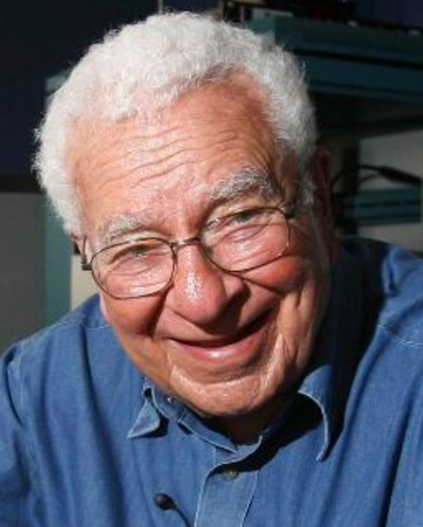 Murray Gell-Mann (默里·盖尔曼)合作论文数California Institute of Technology3A Bengtsson合作论文数3
 Martin Cederwall合作论文数Institute for Theoretical Physics;Goteborg University;Chalmers University of Technology;Goteborg University, Chalmers University of Technology3Joel Scherk合作论文数3Jan S Nilsson合作论文数3
 Xiaozhen Xiong合作论文数3
 Stefano Sciuto合作论文数and I.N.F.N. Sezione di Torino, Universitá di Torino3D. Olive合作论文数3Robert Marnelius合作论文数3Olof Lindgren合作论文数2
 Mahendra Mali合作论文数2Thors Hans Hansson合作论文数2P. Di Vecchia合作论文数2Per Salomonson合作论文数2
 Alexander Turbiner Rosenbaum合作论文数Departamento de Gravitación y Teoría de Campos, Instituto de Ciencias Nucleares, Universidad Nacional Autonoma de Mexico2Niclas Wyllard合作论文数2
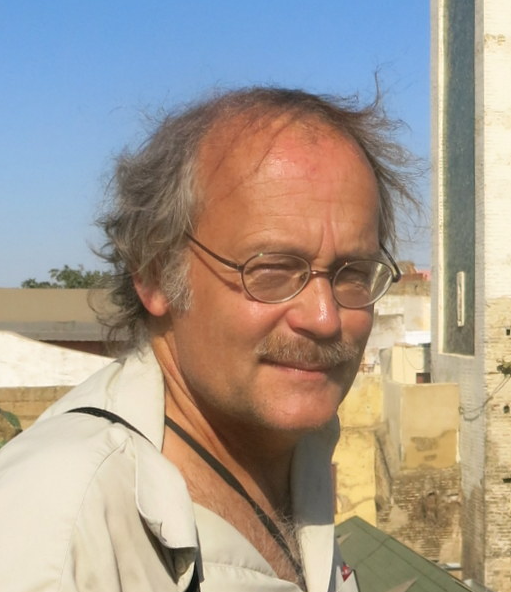 Ingemar Bengtsson合作论文数Department of Physics, Stockholm University2
 Bengt E. W. Nilsson合作论文数Department of Theoretical Physics;Goteborg University;Chalmers University of Technology;Goteborg University, Chalmers University of Technology2v g knizhnik合作论文数1B. Zumino合作论文数1A.M. Polyakov合作论文数1P HOWE合作论文数1birger karlsson合作论文数1erland hjelmquist合作论文数1Nabha Shah合作论文数1
 S-O Holmgren合作论文数1




