Snakebite envenomation is an uncommon condition in the northern hemisphere, but requires high vigilance with regard to both the systemic effects of the venom and the locoregional impact on the soft tissues. Bites from the adder, Vipera Berus, may have serious clinical consequences due to systemic effects. A case of a 44-year-old man is reported. The patient was bitten in the right hand. He developed fasciotomy-requiring compartment syndrome of the upper limb. Recognition of this most seldom complication of an adder bite is vital to save the limb. We recommend that the classical signs and symptoms of compartment syndrome serve as indication for surgical decompression.
Burn injury is a complex traumatic event with various local and systemic effects, affecting several organ systems beyond the skin. The pathophysiology of the burn patient shows the full spectrum of the complexity of inflammatory response reactions. In the acute phase, inflammation mechanism may have negative effects because of capillary leak, the propagation of inhalation injury and the development of multiple organ failure. Attempts to mediate these processes remain a central subject of burn care research. Conversely, inflammation is a necessary prologue and component in the later-stage processes of wound healing. In this review, we are attempting to present the current science of burn wound pathophysiology and wound healing. We also describe the evolution of innovative strategies for burn management.
The zone of stasis in partial thickness burn wounds is exposed to oxidative stress resulting from ischemia-reperfusion injury. Nitric oxide (NO) plays a significant role in the initiation of the inflammatory cascade. An experimental study of apoptotic cell injury was designed in the zone of stasis in a mouse deep partial thickness burn model with investigation of the effect of a specific i-NOS inhibitor on apoptosis. 40 mice received a 30 % TBSA dorsal scald burn. Control group (n = 20) received no interventional medicines besides standard resuscitation. Study group (n = 20) received 3 mg/kg i. p. S-methylisothiourea (SMT), a specific i-NOS inhibitor every 12 hours. 10 animals in each group were sacrificed at 24 h and 48 h. Visible burn wound and adjacent tissues in the zone of stasis were biopsied for histological review. TUNEL assay, M30 Cytodeath assay, PARP assay and measurement of apoptotic index were carried out on these specimens. Mean apoptotic index (AI) for control group were 0.248 (± 0.04 SE) and 0.181 (± 0.02 SE) at 24 and 48 hrs respectively. The AI for the i-NOS inhibitor group was 0.147 and 0.141 at 24 and 48 hrs respectively. The difference between the groups is statistically significant (p = 0.004). Our results suggest a protective role for i-NOS inhibition in partial thickness burn wounds. This effect may be due to modification in NO induced vascular permeability as well as free oxygen radical inhibition. This therapeutic intervention may have clinical application for tissue preservation in the thermally injured wound.
 Peter Mailaender合作论文数2Dhaval Bhavsar合作论文数Department of Plastic, Wound and Burn Surgery, University of Kansas Medical Center2A. Kathoefer合作论文数1Bruce Potenza合作论文数1
 Christoph Hartog合作论文数1
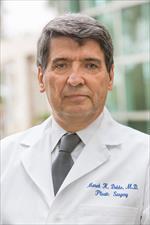 Marek Dobke合作论文数Department of Surgery, School of Medicine, University of California, San Diego1Thomas Lange合作论文数1
 Ziyang Zhang (张紫阳)合作论文数1
 Niren Angle合作论文数1Mayer Tenenhaus合作论文数1
 Hans-Gunther Machens合作论文数1Peter Mailänder合作论文数1Tanja Bartscher合作论文数1Hans Oliver Rennekampff合作论文数1A. Slobodianski合作论文数1




