The “HPI Future SOC Lab” is a cooperation of the Hasso Plattner Institute (HPI) and industry partners. Its mission is to enable and promote exchange and interaction between the research community and the industry partners. The HPI Future SOC Lab provides researchers with free of charge access to a complete infrastructure of state of the art hard and software. This infrastructure includes components, which might be too expensive for an ordinary research environment, such as servers with up to 64 cores and 2 TB main memory. The offerings address researchers particularly from but not limited to the areas of computer science and business information systems. Main areas of research include cloud computing, parallelization, and In-Memory technologies. This technical report presents results of research projects executed in 2017. Selected projects have presented their results on April 25th and November 15th 2017 at the Future SOC Lab Day events.
As pointed out by Zadeh, the mission of fuzzy logic in the era of big data is to create a relevant summary of huge amounts of data and facilitate decision-making. In this study, elements of fuzzy set theory are used to create a visual summary of telecom data, which gives a comprehensive idea concerning the desirability of boosting an operator’s presence in different neighborhoods and regions. The data used for validation cover historical mobility in a region of Sweden during a week. Fuzzy logic allows us to model inherently relative characteristics, such as “a tall man” or “a beautiful woman”, and importantly it also defines “anchors”, the situations (characterized with the value of the membership function for the characteristic) under which the relative notion receives a unique crisp interpretation. We propose color coding of the membership value for the relative notions such as “the desirability of boosting operator’s presence in the neighborhood” and “how well the operator is doing in the region”. The corresponding regions on the map (e.g., postcode zones or larger groupings) are colored in different shades passing from green (1) though yellow (0.5) to red (0). The color hues pass a clear intuitive message making the summary easy to grasp.
The main resource for any telecom operator is the physical radio cell network. We present two related methods for optimizing utilization in radio networks: Tetris optimization and selective cell expansion. Tetris optimization tries to find the mix of users from different market segments that provides the most even load in the network. Selective cell expansion identifies hotspot cells, expands the capacity of these radio cells, and calculates how many subscribers the radio network can handle after the expansions. Both methods are based on linear programming and use mobility data, i.e., data defining where different categories of subscribers tend to be during different times of the week. Based on real-world mobility data from a region in Sweden, we show that Tetris optimization based on six user segments made it possible to increase the number of subscribers by 58% without upgrading the physical infrastructure. The same data show that by selectively expanding less than 6% of the cells we are able to increase the number of subscribers by more than a factor of three without overloading the network. We also investigate the best way to combine Tetris optimization and selective cell expansion.
In this work, we apply cluster validation measures for analyzing email communications at an organizational level of a company. This analysis can be used to evaluate the company structure and to produce further recommendations for structural improvements. Our evaluations, based on data in the forms of email logs and organizational structure for a large European telecommunication company, show that cluster validation techniques can be useful tools for assessing the organizational structure using objective analysis of internal email communications, and for simulating and studying different reorganization scenarios.
 Lars Lundberg合作论文数School of Engineering, Blekinge Institute of Technology4
 Oliver Rosander合作论文数2
 Julia Sidorova合作论文数CIBER2Sonja Hecht合作论文数1
 Hajira Jabeen合作论文数Institute of Biomedical Informatics, Uniklinik Köln1Maria Grohmann合作论文数1Stefan Kelkel合作论文数1
 Marlene Knigge合作论文数1
 Loina Prifti合作论文数1
 Estée van der Walt合作论文数Univ Pretoria, Dept Comp Sci, Pretoria, South Africa1
 Ari Yair Barrera-Animas合作论文数Bristol Business School, University of West of the England1
 Lorenzo Servadei合作论文数Infineon Technol AG, Neubiberg, Germany1
 Gezim Sejdiu合作论文数Univ Bonn, Smart Data Analyt, Bonn, Germany1Felix Eberhardt合作论文数1
 Ralf Rothenberger合作论文数Hasso Plattner Institute1
 Annika Baumann合作论文数1
 Andrey Sapegin合作论文数1
 Felix Willnecker合作论文数Fortiss GmbH, Munich, Germany1
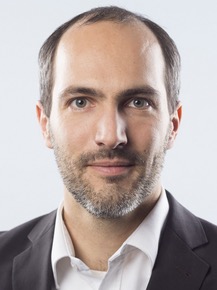 Tobias Friedrich合作论文数Algorithm Engineering Group, Hasso Plattner Institute, University of Potsdam;Digital Engineering Faculty, University of Potsdam1
 Pollo Marquez合作论文数Stevens Institute of Technology, The Innovation University1
 López-Cuevas Armando合作论文数1
 Jan H. P. Eloff合作论文数Rand Afrikaans Univ.1
 Andrew M. Sutton合作论文数Colorado State University1
 Veselka Boeva合作论文数Department of Computer Science, Blekinge Institute of Technology1
 Florian Bär合作论文数1
 Håkan Lennerstad合作论文数Department of Mathematics and Natural Sciences, Blekinge Tekniska Högskola1
 Luis A. Trejo合作论文数1
 Max Plauth合作论文数Hasso Plattner Institute1
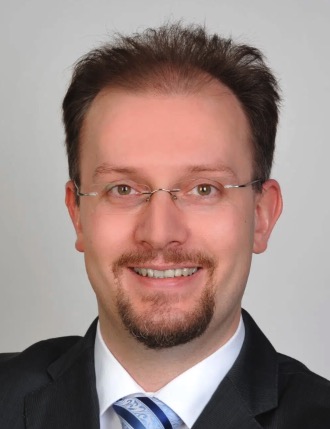 Jens Lehmann合作论文数Amazon;Technische Universität Dresden;SDA Research1
 Andreas Polze合作论文数Operating Systems and Middleware Group, Hasso Plattner Institute, University Potsdam1
 Shuhao Zhang (张书豪)合作论文数School of Computer Science & Technology, Huazhong University of Science and Technology1
 Miguel Angel Medina-Perez合作论文数University of Ciego de Ávila1
 Johannes Huegle合作论文数SAP Signavio1
 Tatiana Ermakova合作论文数1
 Helmut Krcmar合作论文数School of Management, Technical University of Munich;Faculty of Informatics, Technical University of Munich1




