Significant achievements have been reported in the last few years regarding the stabilization and functionalisation of gold nanoparticles (AuNPs), mainly through the use of thiols and imidazolylidene N-heterocyclic carbenes capping ligands. Herein, we report that mesoionic carbenes (MICs) ligands, based on the 1,2,3-triazol-5-ylidene scaffold, allow the expeditive preparation of AuNPs of exceptional stability through a simple and straightforward one-pot protocol directly from triazolium salts and discrete Au(III) sources. Control over the size of the AuNPs has been achieved by varying the Au/ligand ratio as well as the nature of the triazolium salts, the latter being facilitated by the ease of synthesis of the MIC precursors through click chemistry. Characterisation of these MIC-AuNPs by X-ray photoelectron spectroscopy (XPS) hints at the exclusive presence of MICs on the nanoparticle surface.
N-Heterocyclic carbenes (NHCs) have drawn considerable interest in the field of nanomaterials chemistry as highly stabilizing ligands enabling the formation of strong and covalent carbon-metal bonds. Applied to gold nanoparticles synthesis, the most common strategy consists of the reduction of a preformed NHC-Au-I complex with a large excess of a reducing agent that makes the particle size difficult to control. In this paper, we report the straightforward synthesis of NHC-coated gold nanoparticles (NHC-AuNPs) by treating a commercially available gold(I) precursor with an easy-to-synthesize NHC-BH3 reagent. The latter acts as both the reducing agent and the source of surface ligands operating under mild conditions. Mechanistic studies including NMR spectroscopy and mass spectrometry demonstrate that the reduction of gold(I) generates NHC-BH2Cl as a by-product. This strategy gives efficient control over the nucleation and growth of gold particles by varying the NHC-borane/gold(I) ratio, allowing unparalleled particle size variation over the range of 4.9 & PLUSMN;0.9 to 10.0 & PLUSMN;2.7 nm. Our strategy also allows an unprecedented precise and controlled seeded growth of gold nanoparticles. In addition, the as-prepared NHC-AuNPs exhibit narrow size distributions without the need for extensive purification or size-selectivity techniques, and are stable over months.
N-Heterocyclic carbene (NHC)-stabilized copper nanoparticles (NPs) were synthesized from an NHC-borane adduct and mesitylcopper(I) under thermal conditions (refluxing toluene for 2.5 h). NPs with a size distribution of 11.6 +/- 1.8 nm were obtained. The interaction between Cu NPs and NHC ligands was probed by X-ray photoelectron spectroscopy, which showed covalent binding of the NHC to the surface of the NPs. Mechanistic studies suggested that NHC-borane plays two roles: contributing to the reduction of [CuMes](2) to release Cu-0 species and providing NHC ligands to stabilize the copper NPs.
 Louis Fensterbank合作论文数Collège de France3
 Philippe Marcus合作论文数Institut Franco-Chinois De I'Energie Nucléaire Université Sun Yat-Sen3
 Corinne Chaneac合作论文数Laboratoire chimie de la matière condensée, université Pierre-et-Marie-Curie3
 Dimitri Mercier合作论文数Laboratoire Analyse et Modélisation pour la Biologie et l’Environnement, Université d’Evry Val d’Essonne-CNRS-CEA3
 François Ribot合作论文数Laboratoire de Chimie de la Matière Condensée de Paris, Université Pierre et Marie Curie-Paris 63Alexandre Porcheron合作论文数2Salem Ba Sowid合作论文数2
 Omar Sadek合作论文数Sorbonne Université2
 Clement Chauvier合作论文数2
 Nathalie Bridonneau合作论文数IPCM-CNRS-7201, UPMC-Univ Paris 62Lukmonjon Mutalliev合作论文数1Gatineau David合作论文数1
 Xavier Frogneux-Ple合作论文数1
 Clément Sanchez合作论文数Sorbonne University;University of Bordeaux;Institut of Advanced Studies, University of Strasbourg1
 Gimbert Yves合作论文数Laboratoire de Physique des Solides, Université de Paris Sud1Sébastien Blanchard合作论文数1
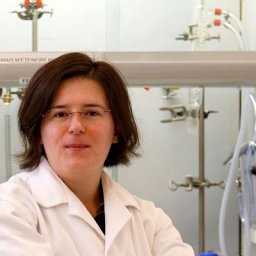 Sophie Carenco合作论文数Lab Chim Matiere Condensee Paris, Sorbonne Univ1
 David Portehault合作论文数Collège de France, université Pierre-et-Marie-Curie–Paris 61
 Marine Desage-El Murr合作论文数1




