Understanding how widespread species adapt to variation in abiotic conditions across their ranges is fundamental to ecology. Insight may come from studying how among-population variation (APV) in the common garden corresponds with the environmental conditions of source populations. However, there are no such studies comparing native vs non-native populations across multiple life stages. We examined APV in the performance and functional traits of 59 Conyza canadensis populations, in response to drought, across large aridity gradients in the native (North America) and non-native (Eurasia) ranges in three experiments. Our treatment (dry vs wet) was applied at the recruitment, juvenile, and adult life stages. We found contrasting patterns of APV in drought responses between the two ranges. In the native range, plant performance was less reduced by drought in populations from xeric than mesic habitats, but such relationship was not apparent for non-native populations. These range-specific patterns were consistent across the life stages. The weak adaptive responses of non-native populations indicate that they can become highly abundant even without complete local adaptation to abiotic environments and suggest that long-established invaders may still be evolving to the abiotic environment. These findings may explain lag times in invasions and raise concern about future expansions.
A global scale understanding of how cities promote biodiversity and ecosystem services in city planning is underdeveloped. Urban planning scholars use the concept of policy mobility to explore similarities in planning ideas across different settings. If there are wide variations in the ways planning documents discuss biodiversity and ecosystem services, that could indicate planners are working without a broadly shared set of ideas. Taking a snapshot of urban planning practices, we did two comparisons of the ways 135 planning documents from 40 cities around the world discuss biodiversity and ecosystem services. Our comparisons found similar combinations of goals and targets for biodiversity and ecosystem services across cities. First, in plans from cities in the Global North versus the Global South, and second, across five categories of planning documents. These results indicate there is a loosely coherent set of goals and measurable targets for biodiversity and ecosystem services that is not yet standardized. Practices that could be used more widely are setting measurable targets and including biodiversity and ecosystem services topics more consistently in climate plans and comprehensive master plans.
The evolutionary transition from outcross- to self-fertilization is one of the most common in angiosperms and is often associated with a parallel shift in floral morphological and developmental traits, such as reduced flower size and pollen to ovule ratios, known as the "selfing syndrome." How these convergent phenotypes arise, the extent to which they are shaped by selection, and the nature of their underlying genetic basis are unsettled questions in evolutionary biology. The genus Collinsia (Plantaginaceae) includes seven independent transitions from outcrossing or mixed mating to high selfing rates accompanied by selfing syndrome traits. Accordingly, Collinsia represents an ideal system for investigating this parallelism, but requires genomic resource development. We present a high quality de novo genome assembly for the highly selfing species Collinsia rattanii. To begin addressing the basis of selfing syndrome developmental shifts, we evaluate and contrast patterns of gene expression from floral transcriptomes across three stages of bud development for C. rattanii and its outcrossing sister species Collinsia linearis. Relative to C. linearis, total gene expression is less variable among individuals and bud stages in C. rattanii. In addition, there is a common pattern among differentially expressed genes: lower expression levels that are more constant across bud development in C. rattanii relative to C. linearis. Transcriptional regulation of enzymes involved in pollen formation specifically in early bud development may influence floral traits that distinguish selfing and outcrossing Collinsia species through pleiotropic functions. Future work will include additional Collinsia outcrossing-selfing species pairs to identify genomic signatures of parallel evolution.
QuestionsThe study of organisms living in extreme environments has shaped our knowledge of the deterministic and stochastic factors that contribute to community assembly. With hardscape habitats (HH), humans have created a novel land-cover type that is physically analogous to extreme terrestrial environments such as deserts, barrens, and rocky outcrops and may harbor rare or specialist species and communities. We addressed the following questions: (a) which plant species inhabit hardscapes; (b) do hardscapes serve as a refuge for rare or specialist species; (c) how taxonomically similar are hardscape plant communities to one another and the regional species pool; (d) is phylogenetic diversity of hardscape communities different from that of the regional species pool; and (e) which functional traits and life history strategies are filtered for or against in hardscape plant communities? Location and MethodsWe surveyed the vascular plant communities of 17 asphalt parking lots in New Jersey, USA, to use as a focal hardscape habitat for this study. ResultsParking-lot plant communities contained 119 vascular plant taxa out of the 2,199 regional species and had a lower beta and phylogenetic diversity than the regional species pool. The parking-lot flora had significantly higher frequencies of annuals, biennials, C-4 plants, ruderal strategists, non-natives, herbaceous plants, self-compatible species, and species from the Caryophyllales, Asterales, Ulmaceae, and Plantaginaceae clades compared to the regional pool and contained no New Jersey threatened or endangered species. ConclusionsHardscape habitats may be similar to naturally occurring, extreme terrestrial environments in that they impose stringent filters on ecological communities leading to increased proportions of short-lived and C-4 plant species compared to the regional pool. Nevertheless, hardscapes are unlikely to serve as biodiversity refuges in the Northeastern USA as they create novel abiotic conditions that may be hostile to many native, rare, and specialist species.
Urban ecosystems are rapidly expanding throughout the world, but how urban growth affects the evolutionary ecology of species living in urban areas remains largely unknown. Urban ecology has advanced our understanding of how the development of cities and towns change environmental conditions and alter ecological processes and patterns. However, despite decades of research in urban ecology, the extent to which urbanization influences evolutionary and eco‐evolutionary change has received little attention. The nascent field of urban evolutionary ecology seeks to understand how urbanization affects the evolution of populations, and how those evolutionary changes in turn influence the ecological dynamics of populations, communities, and ecosystems. Following a brief history of this emerging field, this Perspective article provides a research agenda and roadmap for future research aimed at advancing our understanding of the interplay between ecology and evolution of urban‐dwelling organisms. We identify six key questions that, if addressed, would significantly increase our understanding of how urbanization influences evolutionary processes. These questions consider how urbanization affects nonadaptive evolution, natural selection, and convergent evolution, in addition to the role of urban environmental heterogeneity on species evolution, and the roles of phenotypic plasticity versus adaptation on species’ abundance in cities. Our final question examines the impact of urbanization on evolutionary diversification. For each of these six questions, we suggest avenues for future research that will help advance the field of urban evolutionary ecology. Lastly, we highlight the importance of integrating urban evolutionary ecology into urban planning, conservation practice, pest management, and public engagement.
Cities represent considerable opportunities for forwarding global biodiversity and sustainability goals. We developed key attributes for conserving biodiversity and for ecosystem services that should be included in urban-planning documents and reviewed 135 plans from 40 cities globally. The most common attributes in city plans were goals for habitat conservation, air and water quality, cultural ecosystem services, and ecological connectivity. Few plans included quantitative targets. This lack of measurable targets may render plans unsuccessful for an actionable approach to local biodiversity conservation. Although most cities include both biodiversity and ecosystem services, each city tends to focus on one or the other. Comprehensive planning for biodiversity should include the full range of attributes identified, but few cities do this, and the majority that do are mandated by local, regional, or federal governments to plan specifically for biodiversity conservation. This research provides planning recommendations for protecting urban biodiversity based on ecological knowledge.
 Myla Aronson合作论文数University of Minnesota4
 Peter Werner合作论文数2
 Cynnamon Dobbs合作论文数School of Botany, The University of Melbourne;Melbourne School of Land and Environment, The University of Melbourne;The University of Melbourne, The University of Melbourne2
 Ken Yocom合作论文数College of Built Environments, University of Washington2
 Debra Roberts合作论文数Environm Planning & Climate Protect Dept, Ethekwini Municipal2
 Karen O'Neill合作论文数Sociology Department, University of California-Los Angeles2
 Mark Goddard合作论文数School of Geography and Natural Sciences, Faculty of Science and Environment, Northumbria University;Department of Geography and Environmental Sciences, Northumbria University2
 Charles H. Nilon合作论文数Department of Fisheries and Wildlife Sciences, University of Missouri2
 S. S. Cilliers合作论文数2
 Emilie Stander合作论文数2Alannie-Grace Grant合作论文数1Dinusha C. Maheepala合作论文数1Yang Liu合作论文数1
 Charlotte de Keyzer合作论文数1
 Mohammad Al-Gharaibeh合作论文数Dept Plant Prod, Jordan Univ Sci & Technol1
 Amanda J Gorton合作论文数Dept Ecol Evolut & Behav, Univ Minnesota1
 Mandy Slate合作论文数Department of Ecology and Evolutionary Biology, University of Colorado Boulder1
 Mason R Stothart合作论文数Faculty of Veterinary Medicine, University of Calgary1Joanna L Rifkin合作论文数Dept Ecol & Evolutionary Biol, Univ Toronto1
 Brian C Verrelli合作论文数Center for Biological Data Science, Virginia Commonwealth University1
 James S Santangelo合作论文数Ctr Urban Environm, Univ Toronto Mississauga1
 Matthias Hartmann合作论文数Czech Acad Sci, Inst Bot1
 Amy Litt合作论文数1
 Lindsay Miles合作论文数Ctr Urban Environm, Univ Toronto Mississauga1
 Stephen Wright合作论文数Department of Ecology and Evolutionary Biology, Faculty of Arts and Science, University of Toronto1
 Marc Johnson合作论文数Department of Ecology and Evolutionary Biology, Faculty of Arts and Science, University of Toronto1
 Scott MacIvor合作论文数Department of Ecology and Evolutionary Biology, Faculty of Arts and Science, University of Toronto1
 Andrew Hendry合作论文数Department of Biology, Faculty of Science, McGill University;Redpath Museum, McGill University1
 Robert Pal合作论文数1
 Rachel B. Spigler合作论文数Department of Biological Sciences, University of Pittsburgh1
 Diamond Sarah E合作论文数Department of Biology, North Carolina State University1
 Ryan Martin合作论文数Department of Mathematics, Statistics, and Computer Science, University of Illinois at Chicago1
 Stein Claudia合作论文数Center for Infectious Diseases and Infection's Control, Jena University Hospital1
 Ragan Callaway合作论文数Division of Biological and Biomedical Sciences, University of Montana;Center for Integrated Research on the Environment, University of Montana1Rivkin L Ruth合作论文数1
 Katerina Jandova合作论文数1
 Panagiotis Theodorou合作论文数1Tsunoda Tomonori合作论文数Department of Biological Sciences, Tokyo Metropolitan University1
 Marten Winter合作论文数SDiv - Synthesis Centre, German Center for Integrative Biodiversity Research1
 Marina Alberti合作论文数Department of Urban Design and Planning, College of Built Environments, University of Washington1
 Christoph Rosche合作论文数1
 Min Sheng (盛敏)合作论文数College of Forestry, Northwest A&F University1
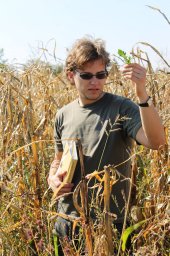 David Nagy U合作论文数1
 Ken A. Thompson合作论文数1
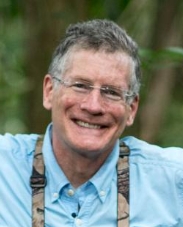 Jonathan B. Losos合作论文数Department of Biology, College of Arts & Sciences, Washington University in St. Louis1
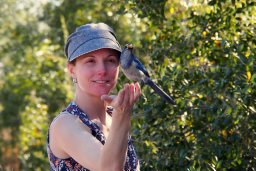 Amy E.M. Newman合作论文数Graduate Program in Neuroscience, and Brain Research Centre, University of British Columbia1
 Lena Struwe合作论文数School of Environmental & Biological Sciences, Rutgers University1
 Andrew Whitehead合作论文数Department of Biological Sciences, Louisiana State University1
 Marie-Josée Fortin合作论文数Department of Ecology and Evolutionary Biology, University of Toronto1




