The tangled nature model of evolution (reviewed in the main text) is adapted for use in the study of antibody resistance acquired by horizontal gene transfer. Exchanges of DNA and the acquisition of resistant gene sequences are considered. For the parameters used, resistant strains rapidly proliferate and dominate, although initial intense antibiotic treatment can occasionally prevent this. Variation in genome distribution appears to be long tailed. If this is reflected in nature, the occurrence of resistant bacterial strains can be expected, as well as considerable variation in patient outcomes.
A number of ways to detect future, low-entropy, boundary conditions are considered. The most important of these is the use of slowly-decaying isotopes and the observation (or prediction) of galactic dynamics. There is the expectation that future developments in experimental or observational technique will yield positive results.
Causality follows the thermodynamic arrow of time, where the latter is defined by the direction of entropy increase. After a brief review of an earlier version of this article, rooted in classical mechanics, we give a quantum generalization of the results. The quantum proofs are limited to a gas of Gaussian wave packets.
Power laws often lead to the conclusion that self-organized criticality is at work. This is not the case, and power laws can also occur away from criticality or can occur for other reasons.
The observable representation (OR) is an embedding of the space on which a stochastic dynamics is taking place into a low dimensional Euclidean space. The most significant feature of the OR is that it respects the dynamics. Examples are given in several areas: the definition of a phase transition (including metastable phases), random walks in which the OR recovers the original space, complex systems, systems in which the number of extrema exceed convenient viewing capacity, and systems in which successful features are displayed, but without the support of known theorems.
Establishing (or falsifying) the special state theory of quantum measurement is a program with both theoretical and experimental directions. The special state theory has only pure unitary time evolution, like the many worlds interpretation, but only has one world. How this can be accomplished requires both “special states” and significant modification of the usual assumptions about the arrow of time. All this is reviewed below. Experimentally, proposals for tests already exist and the problems are first the practical one of doing the experiment and second the suggesting of other experiments. On the theoretical level, many problems remain and among them are the impact of particle statistics on the availability of special states, finding a way to estimate their abundance and the possibility of using a computer for this purpose. Regarding the arrow of time, there is an early proposal of J. A. Wheeler that may be implementable with implications for cosmology.
Decoherence has been the basis for understanding the emergence of the classical world from its quantum underpinnings. Unfortunately the calculations establishing decoherence overshoot and, based on assumptions that break down, predict that with the passage of time the off-diagonal elements of the density matrix become arbitrarily small. It has been recognized by some authors that the thermal state, assumed to hold for systems in equilibrium, places a bound on off diagonal terms. In this article we establish-preserving the conservation of energy, as is not the case for previous work-that indeed the thermal state is an attractor under scattering. Moreover, the bound on the off-diagonal terms present in the thermal state does not contradict everyday experience.
Photoluminescence of Y2O3:Bi nanopowder synthesized by the modified sol–gel method is studied using time-resolved luminescence spectroscopy in the 4.2–300K temperature range. Bi3+ ions are substituted for Y3+ ions in two different crystal lattice sites, one having S6 symmetry (Bi(S6)) and the other C2 symmetry (Bi(C2)). The luminescence characteristics of these two centers are found to have strongly different electron–phonon interactions. The luminescence of Bi(S6) and Bi(C2) centers peak at 3.04eV and 2.41eV, respectively, and arise from the radiative decay of the triplet relaxed excited state (RES) of Bi3+ ions. The model and structure of the RES, responsible for the luminescence of Bi(S6) and Bi(C2) centers in Y2O3:Bi, as well as radiative and nonradiative processes, taking place in the excited states of these centers, are investigated. The parameters of the triplet RES (the separation between the metastable and radiative levels and probabilities of radiative and nonradiative transitions from these levels) are determined. Low-temperature quenching of the triplet luminescence of these centers is explained by nonradiative quantum tunneling transitions from the metastable minima of their triplet RES to closely located defect- or exciton-related levels.
We study the low temperature contribution to delayed recombination decay in several complex oxide scintillating crystals. We experimentally test the previously suggested hypothesis that the losses of fast scintillation light even at the lowest temperatures can be due to quantum effects. The results obtained for several material systems confirm that quantum tunneling between the luminescence center and a nearby defect is a good candidate for the origin of the observed phenomena.
Many thermodynamic relations involve inequalities, with equality if a process does not involve dissipation. In this article we provide equalities in which the dissipative contribution is shown to involve the relative entropy (a.k.a. Kullback-Leibler divergence). The processes considered are general time evolutions both in classical and quantum mechanics, and the initial state is sometimes thermal, sometimes partially so. By calculating a transport coefficient we show that indeed—at least in this case—the source of dissipation in that coefficient is the relative entropy.
In the physics literature "ergodicity" is taken to mean that a system, including a macroscopic one, visits all microscopic states in a relatively short time. We show that this is an impossibility even if that time is billions of years. We also suggest that this feature does not contradict most physical considerations since those considerations deal with correlations of only a few particles.
In a system of coupled nonlinear oscillators, the breather (or local mode) solution is studied fully quantum mechanically, as well as by a semiclassical initial value representation of the propagator and classical Wigner dynamics. We show that the initial breather state is a superposition of almost degenerate eigenstates. From this simple observation it follows that the breather must decay and revive (i.e., oscillate with energy localization for extended times). Numerical results are shown for a two degree of freedom system. The fact that the semiclassical real-time result reproduces the full quantum one to a large degree, whereas the classical Wigner dynamics based on a similar set of trajectories does not, indicates that the breather oscillation can be viewed as an interference phenomenon.
Interacting systems with opposite thermodynamic arrows are considered. From previous work on this topic it is known that each system will perceive the other as contributing to noise. However, it was not known whether such noise could be recognized as being due to an opposite-arrow system. We show here that there are signature properties of such interference. The observational implication is that opposite-arrow systems would be physically identifiable. The issue of signals passing between the systems is less well defined, but we show that with one interpretation of the signalling concept communication —but not conversational exchanges— could take place.
We determine the thermal ionization energy of the excited state of Ce3+ in a SrHfO3 host by a contactless optical method based on the measurement and analysis of delayed recombination decay following UV excitation. We show the applicability of the method for microcrystalline powder samples. The method provides a consistent value of thermal ionization energy of about 0.25 eV, as previously determined by a thermally stimulated luminescence (TSL) study after UV illumination. We reveal a low temperature contribution to the delayed recombination signal and address its origin. This contribution indicates a complex interaction of the luminescence center with the host lattice neighborhood and the presence of temperature independent losses of fast scintillation light. (C) 2013 WILEY-VCH Verlag GmbH & Co. KGaA, Weinheim
This article has been withdrawn at the request of the author(s) and/or editor. The Publisher apologizes for any inconvenience this may cause. The full Elsevier Policy on Article Withdrawal can be found at http://www.elsevier.com/locate/withdrawalpolicy .
Possible definitions for the relative momentum of identical particles are considered.
An experimental test of the “special state” theory of quantum measurement is proposed. It should be feasible with present-day laboratory equipment and involves a slightly elaborated Stern–Gerlach setup. The “special state” theory is conservative with respect to quantum mechanics, but radical with respect to statistical mechanics, in particular regarding the arrow of time. In this article background material is given on both quantum measurement and statistical mechanics aspects. For example, it is shown that future boundary conditions would not contradict experience, indicating that the fundamental equal-a-priori-probability assumption at the foundations of statistical mechanics is far too strong (since future conditioning reduces the class of allowed states). The test is based on a feature of this theory that was found necessary in order to recover standard (Born) probabilities in quantum measurements. Specifically, certain systems should have “noise” whose amplitude follows the long-tailed Cauchy distribution. This distribution is marked by the occasional occurrence of extremely large signals as well as a non-self-averaging property. The proposed test is a variant of the Stern–Gerlach experiment in which protocols are devised, some of which will require the presence of this noise, some of which will not. The likely observational schemes would involve the distinction between detection and non-detection of that “noise”. The signal to be detected (or not) would be either single photons or electric fields (and related excitations) in the neighborhood of the ends of the magnets.
The observable representation provides an embedding of a discrete space in a low dimensional continuous space. Typically, the discrete space is a model of a complex system. This graphical representation is known to highlight significant properties of the original space and can serendipitously reveal unanticipated relationships. We report on the current status of this technique and give examples of its applications and rationale.
 Bernard Gaveau合作论文数14Eva Mihokova合作论文数8
 Martin Nikl合作论文数Department of Optical Materials, Institute of Physics of the Czech Academy of Sciences;Czech Technical University4
 Charles M. Newman合作论文数Courant Institute of Mathematical Sciences, New York University;Department of Mathematics, New York University4v jarý合作论文数3
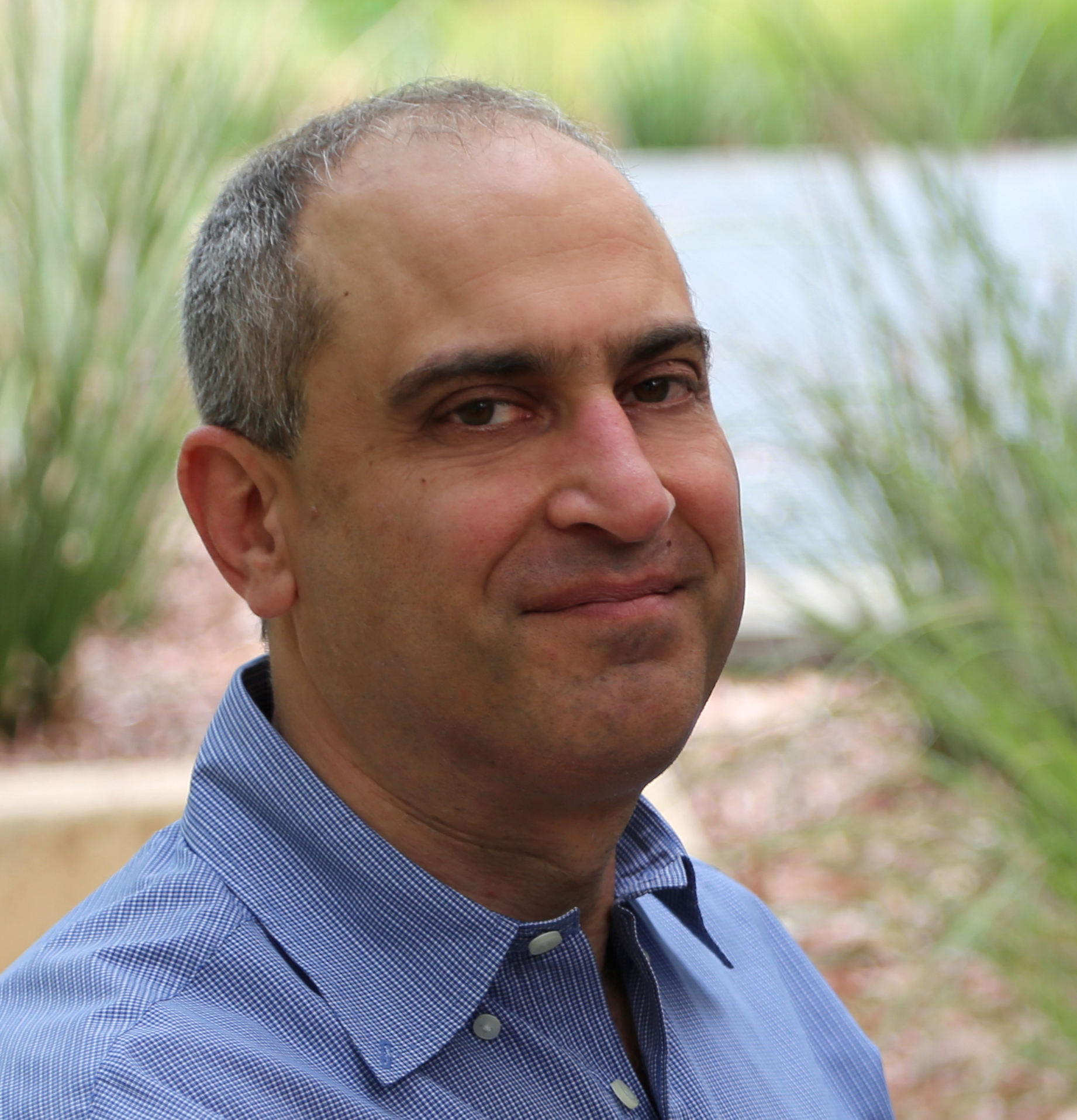 Leonard J. Schulman合作论文数Computing and Mathematical Sciences Department, Division of Engineering and Applied Science, California Institute of Technology2Daniela Mugnai合作论文数2Anedio Ranfagni合作论文数2Cecile Dewitt-Morette合作论文数2
 Gerhard C. Hegerfeldt合作论文数Institut fur Theoretische Physik, Universitat Gottingen2
 Stephen G. Low合作论文数Hewlett-Packard2
 A. Y. Shiekh合作论文数Dine College2Philip E. Seiden合作论文数2H. Gerola合作论文数1Pasquale Fabeni合作论文数1frank steiner合作论文数1carlos zagoya合作论文数1P. E. Seiden合作论文数1V. Babin合作论文数1K. A. Chernenko合作论文数Peter Great St Petersburg Polytech Univ1Ilaria Cacciari合作论文数1
 Lucien Benguigui合作论文数Department of Physics, Technion - Israel Institute of Technology1
 Assa Auerbach合作论文数Department of Physics, Technion – Israel Institute of Technology1Adler Joan合作论文数1Andrzej Suchocki合作论文数1Saverio Pascazio合作论文数1Svetlana Zazubovich合作论文数1
 Richard W. Ziolkowski合作论文数Department of Electrical & Computer Engineering, College of Engineering, The University of Arizona;Global Big Data Technologies Centre, University of Technology Sydney1
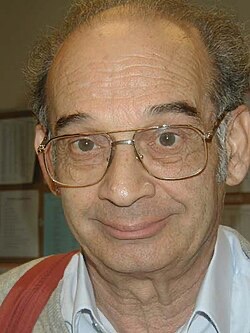 Asher Peres合作论文数Technion – Israel Institute of Technology1
 Frank Großmann合作论文数Institut fur Theoretische Physik, Technische Universitat Dresden1Alwyn Van Der Merwe合作论文数1
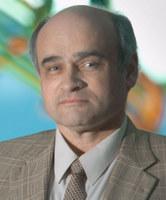 Vladimir Privman合作论文数Department of Physics, Clarkson University;Department of Chemistry, Clarkson University;Department of Electrical and Computer Engineering, Clarkson University1
 Michael Stone合作论文数Department of Physics, The Grainger College of Engineering, University of Illinois Urbana-Champaign1Ludwika Lipinska合作论文数Institute of Electronic Materials Technology1C.G. Kuper合作论文数1
 Marcos Luz合作论文数1Gian Paolo Pazzi合作论文数1
 Juan Manuel Rodríguez Parrondo合作论文数Departamento de Estructura de la Materia, Fisica Termica y Electronica, Facultad de Ciencias Fisicas, Universidad Complutense de Madrid1Maria A. Vitali合作论文数1Jens Timo Neumann合作论文数1
 Ya. Zhydachevskii合作论文数1
 David W. McLaughlin合作论文数New York University1
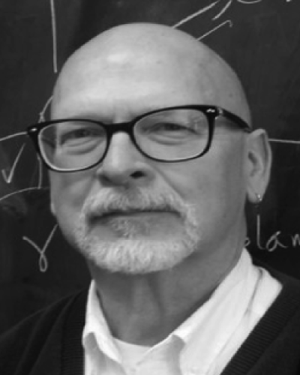 Charles R. Doering合作论文数1Carlo Susini合作论文数1
 James P. Bagrow合作论文数University of Vermont1Michel Moreau合作论文数1
 Tatiana Shalapska合作论文数Physics Department, Ivan Franko National University of Lviv1Léo Granger合作论文数1
 Henni Ouerdane合作论文数Department of Computing Science;University of Glasgow;Department of Computing Science, University of Glasgow1




