A recently developed standard-model extension (SME) formalism for neutrino oscillations that includes Lorentz and CPT violation is used to analyze the sidereal time variation of the neutrino event excess measured by the liquid scintillator neutrino detector (LSND) experiment. The LSND experiment, performed at Los Alamos National Laboratory, observed an excess, consistent with neutrino oscillations, of (nu) over bar (e) in a beam of (nu) over bar (mu). It is determined that the LSND oscillation signal is consistent with no sidereal variation. However, there are several combinations of SME coefficients that describe the LSND data; both with and without sidereal variations. The scale of Lorentz and CPT violation extracted from the LSND data is of order 10(-19) GeV for the SME coefficients a(L) and Exc(L). This solution for Lorentz and CPT violating neutrino oscillations may be tested by other short baseline neutrino oscillation experiments, such as the MiniBooNE experiment.
A recently developed standard-model extension (SME) formalism for neutrino oscillations that includes Lorentz and $CPT$ violation is used to analyze the sidereal time variation of the neutrino event excess measured by the liquid scintillator neutrino detector (LSND) experiment. The LSND experiment, performed at Los Alamos National Laboratory, observed an excess, consistent with neutrino oscillations, of ${\overline{\ensuremath{\nu}}}_{e}$ in a beam of ${\overline{\ensuremath{\nu}}}_{\ensuremath{\mu}}$. It is determined that the LSND oscillation signal is consistent with no sidereal variation. However, there are several combinations of SME coefficients that describe the LSND data; both with and without sidereal variations. The scale of Lorentz and $CPT$ violation extracted from the LSND data is of order ${10}^{\ensuremath{-}19}\text{ }\text{ }\mathrm{GeV}$ for the SME coefficients ${a}_{L}$ and $E\ifmmode\times\else\texttimes\fi{}{c}_{L}$. This solution for Lorentz and $CPT$ violating neutrino oscillations may be tested by other short baseline neutrino oscillation experiments, such as the MiniBooNE experiment.
We observe a net beam excess of 8.7+/-6.3(stat)+/-2.4(syst) events, above 160 MeV, resulting from the charged-current reaction of nu(mu) and/or (nu) over bar (mu) on C and H in the LSND detector. No beam-related muon background is expected in this energy regime. Within an analysis framework of pi(0)-->nu(mu)(nu) over bar (mu), we set a direct upper limit for this branching ratio of Gamma(pi(0)-->nu(mu)(nu) over bar (mu))/Gamma(pi(0)-->all)<1.6x10(-6) at 90% confidence level.
We observe a net beam excess of 8.7+/-6.3(stat)+/-2.4(syst) events, above 160 MeV, resulting from the charged-current reaction of nu(micro) and/or nu;(mu) on C and H in the LSND detector. No beam-related muon background is expected in this energy regime. Within an analysis framework of pi(0)-->nu(mu)nu;(mu), we set a direct upper limit for this branching ratio of Gamma(pi(0)-->nu(mu)nu;(mu))/Gamma(pi(0)-->all)<1.6 x 10(-6) at 90% confidence level.
The physics program in Hall A at Jefferson Lab commenced in the summer of 1997 with a detailed investigation of the $^{16}\mathrm{O}(e,{e}^{\ensuremath{'}}p)$ reaction in quasielastic, constant $(q,\ensuremath{\omega})$ kinematics at ${Q}^{2}\ensuremath{\approx}0.8\phantom{\rule{0.3em}{0ex}}{(\mathrm{GeV}∕c)}^{2}$, $q\ensuremath{\approx}1\phantom{\rule{0.3em}{0ex}}\mathrm{GeV}∕c$, and $\ensuremath{\omega}\ensuremath{\approx}445\phantom{\rule{0.3em}{0ex}}\mathrm{MeV}$. Use of a self-calibrating, self-normalizing, thin-film waterfall target enabled a systematically rigorous measurement. Five-fold differential cross-section data for the removal of protons from the $1p$-shell have been obtained for $0<{p}_{\mathrm{miss}}<350\phantom{\rule{0.3em}{0ex}}\mathrm{MeV}∕c$. Six-fold differential cross-section data for $0<{E}_{\mathrm{miss}}<120\phantom{\rule{0.3em}{0ex}}\mathrm{MeV}$ were obtained for $0<{p}_{\mathrm{miss}}<340\phantom{\rule{0.3em}{0ex}}\mathrm{MeV}∕c$. These results have been used to extract the ${A}_{LT}$ asymmetry and the ${R}_{L}$, ${R}_{T}$, ${R}_{LT}$, and ${R}_{L+TT}$ effective response functions over a large range of ${E}_{\mathrm{miss}}$ and ${p}_{\mathrm{miss}}$. Detailed comparisons of the $1p$-shell data with Relativistic Distorted-Wave Impulse Approximation (RDWIA), Relativistic Optical-Model Eikonal Approximation (ROMEA), and Relativistic Multiple-Scattering Glauber Approximation (RMSGA) calculations indicate that two-body currents stemming from meson-exchange currents (MEC) and isobar currents (IC) are not needed to explain the data at this ${Q}^{2}$. Further, dynamical relativistic effects are strongly indicated by the observed structure in ${A}_{LT}$ at ${p}_{\mathrm{miss}}\ensuremath{\approx}300\phantom{\rule{0.3em}{0ex}}\mathrm{MeV}∕c$. For $25<{E}_{\mathrm{miss}}<50\phantom{\rule{0.3em}{0ex}}\mathrm{MeV}$ and ${p}_{\mathrm{miss}}\ensuremath{\approx}50\phantom{\rule{0.3em}{0ex}}\mathrm{MeV}∕c$, proton knockout from the $1{s}_{1∕2}$-state dominates, and ROMEA calculations do an excellent job of explaining the data. However, as ${p}_{\mathrm{miss}}$ increases, the single-particle behavior of the reaction is increasingly hidden by more complicated processes, and for $280<{p}_{\mathrm{miss}}<340\phantom{\rule{0.3em}{0ex}}\mathrm{MeV}∕c$, ROMEA calculations together with two-body currents stemming from MEC and IC account for the shape and transverse nature of the data, but only about half the magnitude of the measured cross section. For $50<{E}_{\mathrm{miss}}<120\phantom{\rule{0.3em}{0ex}}\mathrm{MeV}$ and $145<{p}_{\mathrm{miss}}<340\phantom{\rule{0.3em}{0ex}}\mathrm{MeV}∕c$, $(e,{e}^{\ensuremath{'}}pN)$ calculations which include the contributions of central and tensor correlations (two-nucleon correlations) together with MEC and IC (two-nucleon currents) account for only about half of the measured cross section. The kinematic consistency of the $1p$-shell normalization factors extracted from these data with respect to all available $^{16}\mathrm{O}(e,{e}^{\ensuremath{'}}p)$ data is also examined in detail. Finally, the ${Q}^{2}$-dependence of the normalization factors is discussed.
We observe a net beam excess of 8.7 ′ 6.3(stat) ′ 2.4(syst) events, above 160 MeV, resulting from the charged-current reaction of v μ and/or v μ on C and H in the LSND detector. No beam-related muon background is expected in this energy regime. Within an analysis framework of π 0 → v μ v μ , we set a direct upper limit for this branching ratio of Γ(π 0 → v μ v μ )/Γ(π 0 → all) < 1.6 × 10 - 6 at 90% confidence level.
Charged current scattering of \nu_\mu on ^{12}C has been studied using a \pi^+ decay-in-flight \nu_\mu beam at the Los Alamos Neutron Science Center. A sample of 66.9+-9.1 events satisfying criteria for the exclusive reaction ^{12}C(\nu_\mu,\mu^-)^{12}N_{g.s.} was obtained using a large liquid scintillator neutrino detector. The observed flux-averaged cross section (5.6+-0.8+-1.0) x 10^{-41} cm^2 agrees well with reliable theoretical expectations. A measurement was also obtained for the inclusive cross section to all accessible ^{12}N states ^{12}C(\nu_\mu,\mu^-)X. This flux-averaged cross section is (10.6+-0.3+-1.8) x 10^{-40} cm^2 which is lower than present theoretical calculations.
Charged current reactions of nu (e) on C-12 have been studied using a mu (+) decay-at-rest nu (e) beam at the Los Alamos Neutron Science Center. The cross section for the exclusive reaction C-12(nu (e), e) N-12(g.s). was measured to be (8.9 +/-0.3 +/-0.9) x 10(-42) cm(2). The observed energy dependence of the cross section and angular distribution of the outgoing electron agree well with theoretical expectations. Measurements are also presented for inclusive transitions to N-12 excited states, C-12(nu (e), e(-))N-12* and compared with theoretical expectations, The measured cross section, (4.3 +/-0.4 +/-0.6) x 10(-42) cm(2), is somewhat lower than previous measurements and than a continuum random phase approximation calculation. It is in better agreement with a recent shell model calculation.
We measured the cross section and response functions for the quasielastic 16O(e,e'p) reaction for missing energies 25< or =E(m)< or =120 MeV at missing momenta P(m)< or =340 MeV/c. For 25
A search for muon anti-neutrino to electron anti-neutrino oscillations was conducted by the Liquid Scintillator Neutrino Detector at the Los Alamos Neutron Science Center using muon anti-neutrinos from positive muon decay at rest. A total excess of 87.9 +/- 22.4 +/- 6.0 events consistent with electron anti-neutrino plus proton scattering to positron plus neutron was observed above the expected background. This excess corresponds to an oscillation probability of (0.264 +/- 0.067 +/- 0.045), which is consistent with an earlier analysis. In conjunction with other known limits on neutrino oscillations, the LSND data suggest that neutrino oscillations occur in the 0.2-10 eV^2/c^4 Delta-m^2 range, indicating a neutrino mass greater than 0.4 eV/c^2.
The cross section for the elastic scattering reaction nu (e)+e(-)-->nu (e)+e(-) was measured by the Liquid Scintillator Neutrino Detector using a mu (+) decay-at-rest nu (e) beam at the Los Alamos Neutron Science Center. The standard model of electroweak physics predicts a large destructive interference between the charge current and neutral current channels for this reaction. The measured cross section, sigma (nu ee)-=[10.1+/-1.1(stat) +/-1.0(syst)]x E-nue (MeV)x 10(-45) cm(2), agrees well with standard model expectations. The measured value of the interference parameter, I = -1.01+/-0.13(stat)+/- 0.12(syst), is in good agreement with the standard model expectation of I-SM = - 1.09. Limits are placed on neutrino flavor-changing neutral currents. An upper limit on the muon-neutrino magnetic moment of 6.8 x 10(-10) mu (Bohr) is obtained using the nu (mu) and <()over bar>(mu) fluxes from pi (+) and mu (+) decay.
A search for ${\overline{\ensuremath{\nu}}}_{\ensuremath{\mu}}\ensuremath{\rightarrow}{\overline{\ensuremath{\nu}}}_{e}$ oscillations was conducted by the Liquid Scintillator Neutrino Detector at the Los Alamos Neutron Science Center using ${\overline{\ensuremath{\nu}}}_{\ensuremath{\mu}}$ from ${\ensuremath{\mu}}^{+}$ decay at rest. A total excess of $87.9\ifmmode\pm\else\textpm\fi{}22.4\ifmmode\pm\else\textpm\fi{}6.0$ events consistent with ${\overline{\ensuremath{\nu}}}_{e}\stackrel{\ensuremath{\rightarrow}}{p}{e}^{+}n$ scattering was observed above the expected background. This excess corresponds to an oscillation probability of $(0.264\ifmmode\pm\else\textpm\fi{}0.067\ifmmode\pm\else\textpm\fi{}0.045)%,$ which is consistent with an earlier analysis. In conjunction with other known limits on neutrino oscillations, the LSND data suggest that neutrino oscillations occur in the $0.2--10 {\mathrm{eV}}^{2}{/c}^{4} \ensuremath{\Delta}{m}^{2}$ range, indicating a neutrino mass greater than $0.4 \mathrm{eV}{/c}^{2}.$
 J. B. Donahue合作论文数Los Alamos National Laboratory42D. H. White合作论文数40Gt Garvey合作论文数39Rl Burman合作论文数39Vd Sandberg合作论文数39I. Stancu合作论文数37
 William C. Louis合作论文数Physics Division, Los Alamos National Laboratory37
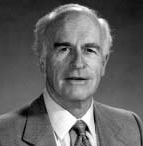 David O. Caldwell合作论文数Department of Physics, University of California, Santa Barbara37Wayne Vernon合作论文数37S. Yellin合作论文数36
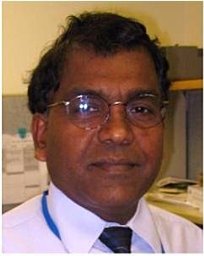 R. M. Gunasingha合作论文数Louisiana State University35G.J. Vandalen合作论文数34Rex Tayloe合作论文数33R. Imlay合作论文数31R. Majkic合作论文数30N. Wadia合作论文数30Kevin L. Mcilhany合作论文数Radiation Laboratory;California Institute of Technology;Radiation Laboratory, California Institute of Technology27k w mcfarlane合作论文数26Constantinos M Athanassopoulos合作论文数University of New Mexico26Randolph Reeder合作论文数26D. Works合作论文数25W. Metcalf合作论文数25F. J. Federspiel合作论文数24
 A. R. Fazely合作论文数24G. B. Mills合作论文数Los Alamos National Laboratory22Virgil L. Highland合作论文数22J. Margulies合作论文数21W. Strossman合作论文数19V. L. Highland合作论文数19K. Johnston合作论文数19Am Eisner合作论文数17I. Cohen合作论文数17B. D. Dieterle合作论文数16D. White合作论文数15
 John Dobbs合作论文数15Alireza Fazely合作论文数15Hj Kim合作论文数14E. D. Church合作论文数14A. Mann合作论文数13
 Michael Sivertz合作论文数University of California13M Eckhause合作论文数12L. S. Cardman合作论文数12j f ginkel合作论文数12
 Karol Lang合作论文数Department of Physics, College of Natural Sciences, University of Texas at Austin;Center for Particles and Fields, University of Texas at Austin;High Energy Physics Laboratory, University of Texas at Austin12e church合作论文数12M. Gray合作论文数12Jr Kane合作论文数12
 Robert Cousins合作论文数Department of Physics and Astronomy, College of Physical Sciences, University of California, Los Angeles12
 Jacobo Konigsberg合作论文数Institute for High Energy Physics and Astrophysics, University of Florida;Department of Physics, College of Liberal Arts and Sciences, University of Florida12




