A description is given of a new experiment to measure the muon electric dipole moment (EDM) to between sigma = 10(-24) e-cm and 10(-25) e-cm, which would be 5 to 6 orders of magnitude improvement over the current world average. Muons are stored in a magnetic ring. Precession due to Thomas precession and the magnetic moment are canceled with the proper combination of applied E and B fields. Only precession due to a non-vanishing EDM remains, resulting in a large amplification of the EDM signal. The method has general applicability to charged particles.
We report on results of a dedicated search for the CP-violating decay ${\mathit{K}}_{\mathit{L}}$\ensuremath{\rightarrow}${\mathrm{\ensuremath{\pi}}}^{0}$${\mathit{e}}^{+}$${\mathit{e}}^{\mathrm{\ensuremath{-}}}$. We have found no evidence for this decay mode and obtain a 90%-confidence upper limit of 5.5\ifmmode\times\else\texttimes\fi{}${10}^{\mathrm{\ensuremath{-}}9}$ for its branching ratio.
We report on measurements of the ${\mathit{K}}_{\mathit{L}}$ Dalitz decay ${\mathit{K}}_{\mathit{L}}$\ensuremath{\rightarrow}${\mathit{e}}^{+}$${\mathit{e}}^{\mathrm{\ensuremath{-}}}$\ensuremath{\gamma}. The results are based on a sample of 919 events. Through an evaluation of the form factor, we have established evidence for a nonvanishing contribution due to the ${\mathit{KK}}^{\mathrm{*}}$\ensuremath{\gamma} coupling. We have determined the branching ratio to be B(${\mathit{K}}_{\mathit{L}}$\ensuremath{\rightarrow}${\mathit{e}}^{+}$${\mathit{e}}^{\mathrm{\ensuremath{-}}}$\ensuremath{\gamma})=(9.1\ifmmode\pm\else\textpm\fi{}0.${4}_{\mathrm{\ensuremath{-}}0.5}^{+0.6}$)\ifmmode\times\else\texttimes\fi{}${10}^{\mathrm{\ensuremath{-}}6}$.
A search for the vector boson ($W$ particle), postulated as the mediator of the weak interaction, has been carried out by determining the intensity and polarization of muons originating very near the point of interaction of 28-GeV protons with nucleons. Bosons were not observed and the upper limit on the production cross section for $W$'s with masses between 2.0 and 4.5 $\frac{\mathrm{GeV}}{{c}^{2}}$ is $B{\ensuremath{\sigma}}_{W}\ensuremath{\lesssim}6\ifmmode\times\else\texttimes\fi{}{10}^{\ensuremath{-}36}$ ${\mathrm{cm}}^{2}$, where $B$ is the branching ratio for the $W$ decay to a muon and a neutrino. A comparison between the measured flux of muon pairs and the flux expected on the basis of a plausible model for the production and decay of both $W$'s and heavy virtual $\ensuremath{\gamma}$'s suggests that the experiment may not have been sensitive to $W$'s, if they exist in this mass region. The flux of high-energy muons produced directly by an unknown process, an $X$ process, is determined to be no greater than ${10}^{\ensuremath{-}6}$ times the pion flux.
 H. Kasha合作论文数10Rk Adair合作论文数9R. Larsen合作论文数9Wm Morse合作论文数5Mp Schmidt合作论文数5Lw Smith合作论文数4Mr Vagins合作论文数3Ke Ohl合作论文数3Cb Schwarz合作论文数3Eb Mannelli合作论文数3Hb Greenlee合作论文数3E. Jastrzembski合作论文数3M. Lauterbach合作论文数2R.G. Kellogg合作论文数Department of Physics and Astronomy, University of Maryland2J. P. Miller合作论文数1R. Prigl合作论文数1B. Khazin合作论文数1p cushman合作论文数1
 Lee Roberts合作论文数Department of Physics, College of Arts & Sciences, Boston University1Al Sessoms合作论文数1F. J. M. Farley合作论文数1
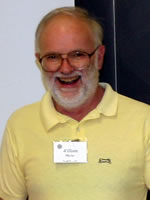 William Morse合作论文数Department of Physics, Brookhaven National Laboratory1P. J. Wanderer合作论文数1W. W. Sapp合作论文数1Rm Carey合作论文数1Dm Lazarus合作论文数1Stefansk.Rj合作论文数1CJG Onderwater合作论文数1c ankenbrandt合作论文数1Carither.Wc合作论文数1W Meng合作论文数1
 Masahiko Iwasaki合作论文数1
 Kevin R. Lynch合作论文数Department of Pharmacology, School of Medicine, University of Virginia1
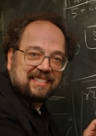 William Marciano合作论文数Physics Department, Brookhaven National Laboratory1G. W. Bennett合作论文数1
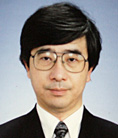 Yoshitaka Kuno合作论文数Department of Physics, Graduate School of Science, Osaka University1
 Klauspeter Jungmann合作论文数Physikalisches Institut der, Universitat Heidelberg1E. J. Stephenson合作论文数1
 P. T. Debevec合作论文数Department of Physics;University of Illinois at Urbana-Champaign;Department of Physics, University of Illinois at Urbana-Champaign1
 Yannis K. Semertzidis合作论文数Center for Axion and Precision Physics Research, Institute for Basic Science, Korea Advanced Institute for Science and Technology;Department of Physics, College of Natural Science, Korea Advanced Institute for Science and Technology1Koji Yoshimura合作论文数Department of Urology, Kyoto University Graduate School of Medicine1D. Grannan合作论文数1G. Sylvestrov合作论文数1A. Bazhan合作论文数1Ryan P Mcnabb合作论文数1
 I. B. Khriplovich合作论文数1
 C. Ozben合作论文数Istanbul Technical University, Istanbul University1Yuri Orlov合作论文数1
 Marcis Auzinsh合作论文数Fizikas Nodaļa, Fizikas un Matemātikas Fakultāte, Latvijas Universitāte;Eksperimentālās Fizikas Katedra, Fizikas un Matemātikas Fakultāte, Latvijas Universitāte1




