In high-stakes English Language Assessments, low-skill test takers may employ memorized materials called “templates” on essay questions to “game” or fool the automated scoring system. In this study, we introduce the automated detection of inauthentic, templated responses (AuDITR) task, describe a machine learning-based approach to this task and illustrate the importance of regularly updating these models in production.
Subtrait (latent-trait components) assessment presents a promising path toward enhancing transparency of automated writing scores. We prototype explainability and subtrait scoring with generative language models and show modest correlation between human subtrait and trait scores, and between automated and human subtrait scores. Our approach provides details to demystify scores for educators and students.
Knowledge tracing refers to the dynamic assessment of a learner's mastery of skills. There has been widespread adoption of the self-attention mechanism in knowledge-tracing models in recent years. These models consistently report performance gains over baseline knowledge tracing models in public datasets. However, why the self-attention mechanism works in knowledge tracing is unknown. This study argues that the ability to encode when a learner attempts to answer the same item multiple times in a row (henceforth referred to as repeated attempts) is a significant reason why self-attention models perform better than other deep knowledge tracing models. We present two experiments to support our argument. We use context-aware knowledge tracing (AKT) as our example self-attention model and dynamic key-value memory networks (DKVMN) and deep performance factors analysis (DPFA) as our baseline models. Firstly, we show that removing repeated attempts from datasets closes the performance gap between the AKT and the baseline models. Secondly, we present DPFA+, an extension of DPFA that is able to consume manually crafted repeated attempts features. We demonstrate that DPFA+ performs better than AKT across all datasets with manually crafted repeated attempts features.
We explore the possibility of using word-level transcription to detect non-native English speaker (NNES)'s phoneme mispronunciation tendencies. We focus on word-level instead of phoneme-level transcription as the former is readily accessible and mature. We define phoneme mispronunciation tendency as the recurring imperfect pronunciation of a phoneme across different words. We use an Automatic Speech Recognition (ASR) service to generate alternative transcripts from speaker's reading aloud audio data. We build features based on the divergence of the audio transcriptions and the texts, as well as the confidence of the audio transcriptions. We found the features are informative for detecting phoneme mispronunciation tendencies.
Automated Essay Scoring (AES) can be used to automatically generate holistic scores with reliability comparable to human scoring. In addition, AES systems can provide formative feedback to learners, typically at the essay level. In contrast, we are interested in providing feedback specialized to the content of the essay, and specifically for the content areas required by the rubric. A key objective is that the feedback should be localized alongside the relevant essay text. An important step in this process is determining where in the essay the rubric designated points and topics are discussed. A natural approach to this task is to train a classifier using manually annotated data; however, collecting such data is extremely resource intensive. Instead, we propose a method to predict these annotation spans without requiring any labeled annotation data. Our approach is to consider AES as a Multiple Instance Learning (MIL) task. We show that such models can both predict content scores and localize content by leveraging their sentence-level score predictions. This capability arises despite never having access to annotation training data. Implications are discussed for improving formative feedback and explainable AES models.
Automated essay scoring (AES) allows writing to be assigned in large courses and can provide instant formative feedback to students. However, creating models for AES can be costly, requiring the collection and human scoring of hundreds of essays. We have developed and are piloting a web-based tool that allows instructors to incrementally score responses to enable AES scoring while minimizing the number of essays the instructors must score. Previous work has shown that techniques from the machine learning subfield of active learning can reduce the amount of training data required to create effective AES models. We extend those results to a less idealized scenario: one driven by the instructor's need to score sets of essays, in which the model is trained iteratively using batch mode active learning. We propose a novel approach inspired by a class of topological methods, but with reduced computational requirements, which we refer to as topological maxima. Using actual student data, we show that batch mode active learning is a practical approach to training AES models. Finally, we discuss implications of using this technology for automated customized scoring of writing across the curriculum.
ClearTK adds machine learning functionality to the UIMA framework, providing wrappers to popular machine learning libraries, a rich feature extraction library that works across different classifiers, and utilities for applying and evaluating machine learning models. Since its inception in 2008, ClearTK has evolved in response to feedback from developers and the community. This evolution has followed a number of important design principles including: conceptually simple annotator interfaces, readable pipeline descriptions, minimal collection readers, type system agnostic code, modules organized for ease of import, and assisting user comprehension of the complex UIMA framework.
Objective To research computational methods for discovering body site and severity modifiers in clinical texts.Methods We cast the task of discovering body site and severity modifiers as a relation extraction problem in the context of a supervised machine learning framework. We utilize rich linguistic features to represent the pairs of relation arguments and delegate the decision about the nature of the relationship between them to a support vector machine model. We evaluate our models using two corpora that annotate body site and severity modifiers. We also compare the model performance to a number of rule-based baselines. We conduct cross-domain portability experiments. In addition, we carry out feature ablation experiments to determine the contribution of various feature groups. Finally, we perform error analysis and report the sources of errors.Results The performance of our method for discovering body site modifiers achieves F1 of 0.740-0.908 and our method for discovering severity modifiers achieves F1 of 0.905-0.929.Discussion Results indicate that both methods perform well on both in-domain and out-domain data, approaching the performance of human annotators. The most salient features are token and named entity features, although syntactic dependency features also contribute to the overall performance. The dominant sources of errors are infrequent patterns in the data and inability of the system to discern deeper semantic structures.Conclusions We investigated computational methods for discovering body site and severity modifiers in clinical texts. Our best system is released open source as part of the clinical Text Analysis and Knowledge Extraction System (cTAKES).
 david skiba合作论文数12
 George Erhart合作论文数11Wayne Ward合作论文数Center for Spoken Language Research, University of Colorado10
 Valentine C. Matula合作论文数Ohio State University8Scott Hellman合作论文数Pearson7
 Sarel Van Vuuren合作论文数Oregon Graduate;Institute of Science & Technology;Institute of Science & Technology6
 Martha Palmer合作论文数Department of Linguistics, College of Arts and Sciences, University of Colorado Boulder;Department of Computer Science, College of Arts and Sciences, University of Colorado Boulder5
 William R. Murray合作论文数Peter MacCallum Cancer Centre4
 Peter Foltz合作论文数Institute of Cognitive Science, University of Colorado Boulder4Mark Rosenstein合作论文数4Andrew Gorman合作论文数3
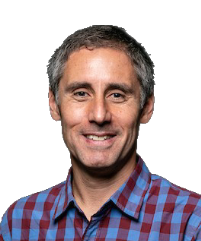 Dmitriy Dligach合作论文数Department of Computer Science, Loyola University Chicago3
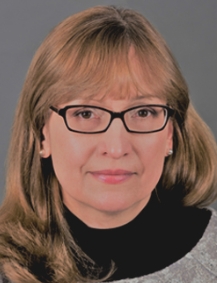 Guergana Savova合作论文数Department of Pediatrics Research, Boston Children's Hospital;Natural Language Processing Laboratory Research, Boston Children's Hospital;Harvard Medical School3
 Alok Baikadi合作论文数North Carolina State University3
 Rodney D. Nielsen合作论文数University of Colorado at Boulder3
 Jill S. Budden合作论文数3
 Shi Pu合作论文数2
 Christopher G. Chute合作论文数Department of Medicine, School of Medicine, Johns Hopkins University;Institute for Clinical Translational Research, Johns Hopkins2
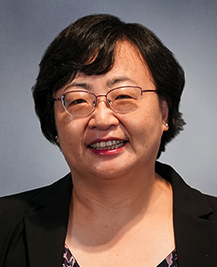 Hongfang Liu合作论文数Department of Health Data Science and Artificial Intelligence, D. Bradley McWilliams School of Biomedical Informatics, The University of Texas Health Science Center at Houston2
 Sumit Basu合作论文数Microsoft Research2
 Wendy Chapman合作论文数Digital Health and Informatics, University of Melbourne;Centre for Digital Transformation of Health, University of Melbourne2
 Stephen Wu合作论文数2
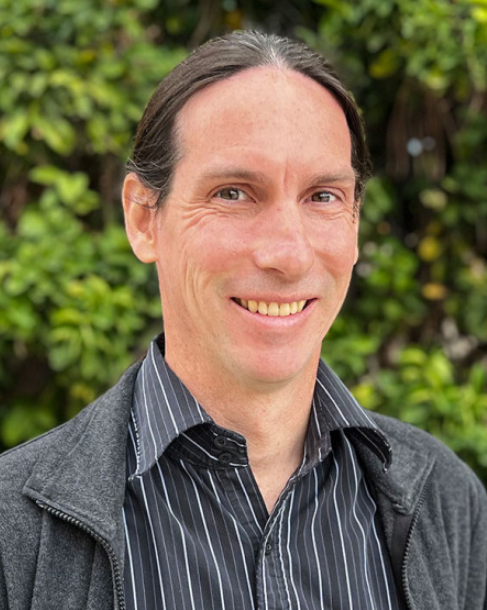 Steven Bethard合作论文数School of Information, University of Arizona2
 Pei Chen (陈培)合作论文数Methods and Application of Food Composition Laboratory, Agricultural Research Service, U.S. Department of Agriculture, Beltsville;Food Composition Laboratory, Beltsville Human Nutrition Research Center, Agricultural Research Service, U.S. Department of Agriculture, Beltsville2
 James Joseph Masanz合作论文数Division of Biomedical Informatics;College of Medicine, Mayo Clinic;Division of Biomedical Informatics, Mayo Clinic College of Medicine2lucretia vanderwende合作论文数1
 Tim Miller合作论文数Boston Children’s Hospital, Harvard Medical School1Jing Zheng合作论文数1Timothy J. Weston合作论文数1
 Adam Wiemerslage合作论文数Kensho Technologies1
 Misaki Kato合作论文数Univ. of Oregon, Eugene, OR1Kaggal Vinod C合作论文数1
 Ronald A. Cole合作论文数1
 Tamara Sumner合作论文数University of Colorado at Boulder1Edward Svirsky合作论文数1
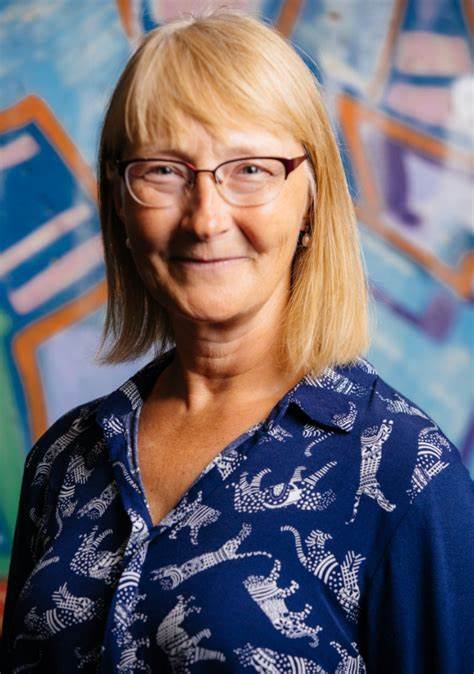 Lucy Vanderwende合作论文数Microsoft Research;Department of Biomedical Health Informatics, University of Washington1Philip V. Ogren合作论文数1
 Caleb Phillips合作论文数Department of Computer Science, University of Colorado1Elizabeth Bradley合作论文数University of Colorado;Department of Computer Science1
 Daniel Bolanos合作论文数Boulder Language Technologies1Cindy Buchenroth-Martin合作论文数1
 Marcia A. Derr合作论文数Department of Psychology, University of Wisconsin1Ifeyinwa Okoye合作论文数1
 Reinhard Klemm合作论文数1




