Background: Efforts to harmonize genomic data standards used by the biodiversity and metagenomic research communities have shown that prokaryotic data cannot be understood or represented in a traditional, classical biological context for conceptual reasons, not technical ones.Results: Biology, like physics, has a fundamental duality-the classical macroscale eukaryotic realm vs. the quantum microscale microbial realm-with the two realms differing profoundly, and counter-intuitively, from one another. Just as classical physics is emergent from and cannot explain the microscale realm of quantum physics, so classical biology is emergent from and cannot explain the microscale realm of prokaryotic life. Classical biology describes the familiar, macroscale realm of multi-cellular eukaryotic organisms, which constitute a highly derived and constrained evolutionary subset of the biosphere, unrepresentative of the vast, mostly unseen, microbial world of prokaryotic life that comprises at least half of the planet's biomass and most of its genetic diversity. The two realms occupy fundamentally different mega-niches: eukaryotes interact primarily mechanically with the environment, prokaryotes primarily physiologically. Further, many foundational tenets of classical biology simply do not apply to prokaryotic biology.Conclusions: Classical genetics one held that genes, arranged on chromosomes like beads on a string, were the fundamental units of mutation, recombination, and heredity. Then, molecular analysis showed that there were no fundamental units, no beads, no string. Similarly, classical biology asserts that individual organisms and species are fundamental units of ecology, evolution, and biodiversity, composing an evolutionary history of objectively real, lineage-defined groups in a single-rooted tree of life. Now, metagenomic tools are forcing a recognition that there are no completely objective individuals, no unique lineages, and no one true tree. The newly revealed biosphere of microbial dark matter cannot be understood merely by extending the concepts and methods of eukaryotic macrobiology. The unveiling of biological dark matter is allowing us to see, for the first time, the diversity of the entire biosphere and, to paraphrase Darwin, is providing a new view of life. Advancing and understanding that view will require major revisions to some of the most fundamental concepts and theories in biology.
Biodiversity informatics is a field that is growing rapidly in data infrastructure, tools, and participation by researchers worldwide from diverse disciplines and with diverse, innovative approaches. A recent ‘decadal view’ of the field laid out a vision that was nonetheless restricted and constrained by its European focus. Our alternative decadal view is global, i.e., it sees the worldwide scope and importance of biodiversity informatics as addressing five major, global goals: (1) mobilize existing knowledge; (2) share this knowledge and the experience of its myriad deployments globally; (3) avoid ‘siloing’ and reinventing the tools of knowledge deployment; (4) tackle biodiversity informatics challenges at appropriate scales; and (5) seek solutions to difficult challenges that are strategic.
The study of biodiversity spans many disciplines and includes data pertaining to species distributions and abundances, genetic sequences, trait measurements, and ecological niches, complemented by information on collection and measurement protocols. A review of the current landscape of metadata standards and ontologies in biodiversity science suggests that existing standards such as the Darwin Core terminology are inadequate for describing biodiversity data in a semantically meaningful and computationally useful way. Existing ontologies, such as the Gene Ontology and others in the Open Biological and Biomedical Ontologies (OBO) Foundry library, provide a semantic structure but lack many of the necessary terms to describe biodiversity data in all its dimensions. In this paper, we describe the motivation for and ongoing development of a new Biological Collections Ontology, the Environment Ontology, and the Population and Community Ontology. These ontologies share the aim of improving data aggregation and integration across the biodiversity domain and can be used to describe physical samples and sampling processes (for example, collection, extraction, and preservation techniques), as well as biodiversity observations that involve no physical sampling. Together they encompass studies of: 1) individual organisms, including voucher specimens from ecological studies and museum specimens, 2) bulk or environmental samples (e.g., gut contents, soil, water) that include DNA, other molecules, and potentially many organisms, especially microbes, and 3) survey-based ecological observations. We discuss how these ontologies can be applied to biodiversity use cases that span genetic, organismal, and ecosystem levels of organization. We argue that if adopted as a standard and rigorously applied and enriched by the biodiversity community, these ontologies would significantly reduce barriers to data discovery, integration, and exchange among biodiversity resources and researchers.
The workshop-hackathon was convened by the Global Biodiversity Information Facility (GBIF) at its secretariat in Copenhagen over 22–24 May 2013 with additional support from several projects (RCN4GSC, EAGER, VertNet, BiSciCol, GGBN, and Micro B3). It assembled a team of experts to address the challenge of adapting the Darwin Core standard for a wide variety of sample data. Topics addressed in the workshop included 1) a review of outstanding issues in the Darwin Core standard, 2) issues relating to publishing of biodiversity data through Darwin Core Archives, 3) use of Darwin Core Archives for publishing sample and monitoring data, 4) the case for modifying the Darwin Core Text Guide specification to support many-to-many relations, and 5) the generalization of the Darwin Core Archive to a “Biodiversity Data Archive”. A wide variety of use cases were assembled and discussed in order to inform further developments.
Building on the planning efforts of the RCN4GSC project, a workshop was convened in San Diego to bring together experts from genomics and metagenomics, biodiversity, ecology, and bioinformatics with the charge to identify potential for positive interactions and progress, especially building on successes at establishing data standards by the GSC and by the biodiversity and ecological communities. Until recently, the contribution of microbial life to the biomass and biodiversity of the biosphere was largely overlooked (because it was resistant to systematic study). Now, emerging genomic and metagenomic tools are making investigation possible. Initial research findings suggest that major advances are in the offing. Although different research communities share some overlapping concepts and traditions, they differ significantly in sampling approaches, vocabularies and workflows. Likewise, their definitions of 'fitness for use' for data differ significantly, as this concept stems from the specific research questions of most importance in the different fields. Nevertheless, there is little doubt that there is much to be gained from greater coordination and integration. As a first step toward interoperability of the information systems used by the different communities, participants agreed to conduct a case study on two of the leading data standards from the two formerly disparate fields: (a) GSC's standard checklists for genomics and metagenomics and (b) TDWG's Darwin Core standard, used primarily in taxonomy and systematic biology.
The Global Biodiversity Informatics Outlook helps to focus effort and investment towards better understanding of life on Earth and our impacts upon it. It proposes a framework that will help harness the immense power of information technology and an open data culture, to gather unprecedented evidence about biodiversity and to inform better decisions. Much progress has been made in the past ten years to fulfil the potential of biodiversity informatics. However, it is dwarfed by the scale of what is still required. The Global Biodiversity Informatics Outlook (GBIO) offers a framework for reaching a much deeper understanding of the world’s biodiversity, and through that understanding the means to conserve it better and to use it more sustainably. The GBIO identifies four major focal areas, each with a number of core components, to help coordinate efforts and funding. The co-authors, from a wide range of disciplines, agree these are the essential elements of a global strategy to harness biodiversity data for the common good.
At the GSC11 meeting (4–6 April 2011, Hinxton, England, the GSC’s genomic biodiversity working group (GBWG) developed an initial model for a data management testbed at the interface of biodiversity with genomics and metagenomics. With representatives of the Global Biodiversity Information Facility (GBIF) participating, it was agreed that the most useful course of action would be for GBIF to collaborate with the GSC in its ongoing GBWG workshops to achieve common goals around interoperability/data integration across (meta)-genomic and species level data. It was determined that a quick comparison should be made of the contents of the Darwin Core (DwC) and the GSC data checklists, with a goal of determining their degree of overlap and compatibility. An ad-hoc task group lead by Renzo Kottman and Peter Dawyndt undertook an initial comparison between the Darwin Core (DwC) standard used by the Global Biodiversity Information Facility (GBIF) and the MIxS checklists put forward by the Genomic Standards Consortium (GSC). A term-by-term comparison showed that DwC and GSC concepts complement each other far more than they compete with each other. Because the preliminary analysis done at this meeting was based on expertise with GSC standards, but not with DwC standards, the group recommended that a joint meeting of DwC and GSC experts be convened as soon as possible to continue this joint assessment and to propose additional work going forward.
The Global Biodiversity Information Facility (GBIF) has a mandate to facilitate free and open access to primary biodiversity data worldwide. This Special Issue of Biodiversity Informatics publishes the findings of the recent GBIF Task Group on a Global Strategy and Action Plan for Mobilisation of Natural History Collections Data (GSAP-NHC). The GSAP-NHC Task Group has made three primary recommendations dealing with discovery, capture, and publishing of natural history collections data. This overview article provides insight on various activities initiated by GBIF to date to assist with an early uptake and implementation of these recommendations. It calls for proactive participation by all relevant players and stakeholder communities. Given recent technological progress and growing recognition and attention to biodiversity science worldwide, we think rapid progress in discovery, publishing and access to large volumes of useful collection data can be achieved for the immediate benefit of science and society.
This companion catalogue to the Spencer’s spring 2009 exhibition Trees & Other Ramifications: Branches in Nature & Culture is the Museum’s first full-length electronic book. The publication includes contributions from SMA Director Saralyn Reece Hardy, SMA Senior Curator and Curator of Prints & Drawings Stephen Goddard, and Biodiversity Institute Director Leonard Krishtalka. A full checklist is also included, with images of the exhibition's prints, drawings, books, and photographs, which were drawn from University of Kansas and area collections.
Taxonomy is a critical tool in understanding biodiversity, and we applaud the view taken by Q. D. Wheeler et al. (“Taxonomy: impediment or expedient?”, Editorial, 16 Jan., p. [285][1]) that natural history collections and an evolving cyber-infrastructure are central to the taxonomic mission. But
 Richard K. Stucky合作论文数Department of Earth Sciences, Denver Museum of Nature & Science29Mary R. Dawson合作论文数9Craig C. Black合作论文数6Éamonn Ó. Tuama合作论文数6
 Stan Blum合作论文数Research Informatics, California Academy of Sciences5John Wooley合作论文数5
 Norman Morrison合作论文数School of Computer Science, University of Manchester5george f englemann合作论文数4Daniel J. Chure合作论文数4
 Lance Grande合作论文数Committee on Evolutionary Biology, The University of Chicago4
 Deck John合作论文数Berkeley Natural History Museums, University of California4
 John J. Flynn合作论文数Division of Paleontology, American Museum of Natural History;Institute for Comparative Genomics, American Museum of Natural History;Richard Gilder Graduate School, American Museum of Natural History;Department of Biology, City University of New York;Department of Earth and Environmental Sciences, Columbia University4
 Dag Endresen合作论文数Natural History Museum, University in Oslo4John Wieczorek合作论文数4J. Keith Rigby合作论文数4
 K Christopher Beard合作论文数Section of Vertebrate Paleontology, Carnegie Museum of Natural History4William A. Clemens合作论文数Department of Integrative Biology and Museum of Paleontology;University of California;Department of Integrative Biology and Museum of Paleontology, University of California , Berkeley4
 Robert Robbins合作论文数Fred Hutchinson Cancer Research Center4
 Malcolm McKenna合作论文数Columbia University;American Museum of Natural History4
 Neil Davies合作论文数Department of Earth Sciences, University of Cambridge4Reed Beaman合作论文数3Jamie Whitacre合作论文数3
 Andrea K. Thomer合作论文数School of Information, University of Arizona3
 Maria Alejandra Gandolfo Nixon合作论文数Plant Biology Section, College of Agriculture and Life Sciences, Cornell University3
 Philip D. Gingerich合作论文数Department of Ecology and Evolutionary Biology, University of Michigan;Department of Anthropology, University of Michigan;Department of Earth and Environmental Sciences, University of Michigan;Museum of Paleontology, University of Michigan3Brian J. Stucky合作论文数3
 Barry Smith合作论文数Department of Philosophy, University at Buffalo;Department of Biomedical Informatics, University at Buffalo;Department of Computer Science and Engineering, University at Buffalo;National Center for Ontological Research, University at Buffalo3
 Jeffrey H. Schwartz合作论文数Department of Anthropology, University of Pittsburgh;Department of History and Philosophy of Science, Dietrich School of Arts & Sciences, University of Pittsburgh3Dawn Field合作论文数Center for Ecology and Hydrology, NERC3
 Ramona L. Walls合作论文数Data Collaboration Center, Critical Path Institute3Alyssa Janning合作论文数3
 Rob Guralnick合作论文数Department of Natural History, Florida Museum of Natural History, University of Florida3
 Pier Luigi Buttigieg合作论文数Max Planck Institute for Marine Microbiology, Jacobs University Bremen gGmbH3
 Peter E Midford合作论文数Department of Zoology;University of Wisconsin;Department of Zoology, University of Wisconsin3
 Cynthia Parr合作论文数College of Engineering and Information Technology, Department of Computer Science and Electrical Engineering, University of Maryland;National Agricultural Library3
 Steven J Baskauf合作论文数3
 Andréa M. Matsunaga合作论文数Advanced Computing and Information Systems Laboratory (ACIS),, University of Florida3
 Robert H. Hanner合作论文数Department of Integrative Biology, University of Guelph3Shawn Bowers合作论文数Genome Center;UC Davis3
 Mark Schildhauer合作论文数National Center for Ecological Analysis and Synthesis, University of California, Santa Barbara3Erick Mata合作论文数2
 Donald Hobern合作论文数2James H. Beach合作论文数Biodiversity Research Center, University of Kansas2
 Roderic Page合作论文数School of Biodiversity, One Health & Veterinary Medicine, University of Glasgow2
 Alex Hardisty合作论文数Cardiff University2
 Inigo San Gil合作论文数LTER Network Oce;Department of Biology;University of New Mexico;Department of Biology, University of New Mexico2
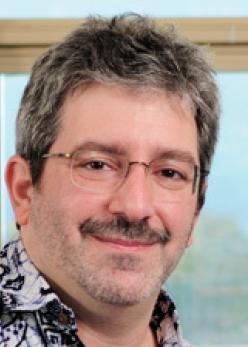 A. Townsend Peterson合作论文数Biodiversity Institute, University of Kansas2Harold R. Lang合作论文数2
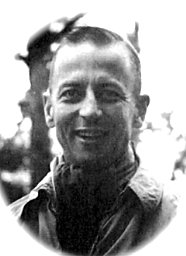 Philip S. Humphrey合作论文数DEPT SYSTEMAT & ECOL, UNIV KANSAS2




