We study the complex eigenvalue statistics of the asymmetric quantum baker map with partial projective openings. The classical asymmetric baker map, with its discontinuity at q=2/3, is fully chaotic, has no reflection symmetry, and provides a clean setting with tunable escape rate and fractal repeller dimension. We consider three distinct opening geometries in position space: localized (contiguous channels), random, and uniform (equispaced channels), all controlled by a tunable amplitude reflectivity parameter ρ that interpolates between the fully open (ρ=0) and the closed (ρ=1) limits. We use the partially truncated circular unitary ensemble (PTCUE) as the random matrix theory benchmark. The main focus is on the joint distribution of the complex spacing ratio z, defined as the ratio of the distances from an eigenvalue to its nearest and next-nearest neighbors in the complex plane. We find a smooth crossover from a quasi-1D spectral regime, where eigenvalues cluster near the unit circle and the phase distribution of z is peaked, to a two-dimensional Ginibre-like regime, where the distribution becomes nearly uniform and level repulsion is fully developed. Both the number of open channels M and the reflectivity ρ modulate this crossover, and ρ provides an additional continuous control even at fixed opening size. All three opening models converge to PTCUE statistics at large M, while differences are most pronounced for the localized model at small M. No evidence of an abrupt transition is found. This crossover which suggests a universal behavior, has deep consequences for open quantum and wave-chaotic experiments.
According to the recent Wealth Thermalization Hypothesis (WTH) the wealth inequality in the world is described by the Rayleigh-Jeans (RJ) thermal distribution of interacting agents in a society with social stratification. In this concept, the wealth layers of society are associated with energy levels from a nonlinear dynamical system conserving two integrals of motion being total energy and probability norm. This leads to RJ condensation and the formation of a huge poverty phase of low wealth and a tiny oligarchic phase that captures a main part of total society wealth. This RJ phenomenon has similarities with self cleaning in multimode optical fibers and constraint driven condensation in various physical systems. We analyze real Lorenz and Pareto curves for wealth of households in countries and the world, Gross Domestic Product of countries, market capitalization of companies at stock exchange of Hong Kong, Shanghai, London, bitcoin transactions, world trade between countries and show that the WTH theory gives a good description of these curves. On the basis of this comparison we argue that the RJ thermal distribution provides a universal description of wealth inequality in the world.
We study analytically and numerically the time evolution of a nonlinear field described by the nonlinear Schrödinger equation in a chaotic D-shape billiard. In the absence of nonlinearity the system has standard properties of quantum chaos. This model describes a longitudinal light propagation in a multimode D-shape optical fiber and also those in a Kerr nonlinear medium of atomic vapor. We show that, above a certain chaos border of nonlinearity, chaos leads to dynamical thermalization with the Rayleigh–Jeans (RJ) thermal distribution and the formation of the RJ condensate in a vicinity of the ground state accumulating about 80%–90% of total probability. Certain similarities of this phenomenon with the Fröhlich condensate are discussed. Below the chaos border the dynamics is quasi-integrable corresponding to the Kolmogorov–Arnold–Moser integrability. We also describe the time evolution during the process of relaxation to the thermal state and the time dependence of quantum von Neumann and classical Boltzmann entropies during this process. At a strong focusing nonlinearity we show that the wave collapse can take place even at sufficiently high positive energy being very different from the open space case. Finally for the defocusing case we establish the superfluid regime for vortex dynamics at strong nonlinearity. System parameters for optical fiber experimental studies of these effects are also discussed.
The Boltzmann-Loschmidt dispute of 1876 questioned the possibility of a statistical irreversible description by time reversible classical equations of motion of atoms. Here we show analytically and numerically that the quantum chaos diffusion of cold atoms, or ions, in a harmonic trap and pulsed optical lattice can be inverted back in time with up to 100% efficiency. This is in sharp contrast to classical evolution where exponentially small errors break time reversibility. We argue that the existing experimental skills allow highlighting the Boltzmann-Loschmidt dispute from a quantum perspective.
This work assesses the robustness of the public transport systems in three Latin American metropolitan areas: Mexico City, Rio de Janeiro, and Buenos Aires. By integrating infrastructure and mobility data, we propose metrics to quantify both structural robustness and functional performance. We analyze the similarities and differences among these cities under complete bus-line removal scenarios that emulate realistic disruptions, such as service suspensions or operator closures. Open infrastructure data allow us to quantify structural robustness in terms of network topology and fragmentation. Complementarily, mobility data allow us to assess functional robustness by measuring trip feasibility and the additional travel costs that arise as lines are progressively removed. We recover known results for topological metrics, such as the fact that strategies based on line betweenness are the most efficient for fragmenting the network topologically. Across the three cities, we observe a strong correspondence between structural and functional robustness metrics. Furthermore, we highlight the role of line redundancy, with Rio de Janeiro exhibiting a more robust structural profile than the other cities.
We introduce an efficient neural network (NN) architecture for classifying wave functions in terms of their localization. Our approach integrates a versatile quantum phase space parametrization leading to a custom 'quantum' NN, with the pattern recognition capabilities of a modified convolutional model. This design accepts wave functions of any dimension as inputs and makes accurate predictions at an affordable computational cost. This scalability becomes crucial to explore the localization rate at the semiclassical limit, a long standing question in the quantum scattering field. Moreover, the physical meaning built in the model allows for the interpretation of the learning process
The question of how classical thermodynamic laws emerge from the underlying quantum substrate lies at the foundations of physics. Here, we examine the validity of the ideal gas law (IGL) for a single quantum particle confined within a two-dimensional cavity. By interpreting the quantum wave function as a probability density analogous to that of an ideal gas, we employ the energy equipartition principle to define the temperature of the quantum state. For the mean pressure we take two definitions, one straightforwardly based on the radiation pressure concept and the other taking advantage of a quasi-orthogonality relation valid for billiard eigenstates. We analyze systems with regular dynamics-the circular and rectangular billiards-and compare them with the classically chaotic Bunimovich stadium. We find that the IGL for the first definition of pressure holds exactly in isotropic systems (as the circular case), while for anisotropic geometries, quantum eigenfunctions generally conform to the IGL only on average, exhibiting meaningful deviations. These deviations are diminished in the presence of chaotic dynamics and for coherent states. This observation is consistent with the Eigenstate Thermalization Hypothesis (ETH). Notably, the second definition of pressure allows for a good matching with the IGL.
This work assesses the robustness of the public transport systems in three Latin American metropolitan areas: Mexico City, Rio de Janeiro, and Buenos Aires.By integrating infrastructure and mobility data, we propose metrics to quantify both structural robustness and functional performance.We analyze the similarities and differences among these cities under complete bus-route removal scenarios that emulate realistic disruptions, such as service suspensions or operator closures. Open infrastructure data allow us to quantify structural robustness in terms of network topology and fragmentation. Complementarily, mobility data allow us to assess functional robustness by measuring trip feasibility and the additional travel costs that arise as routes are progressively removed. We recover known results for topological metrics, such as the fact that strategies based on route betweenness are the most efficient for fragmenting the network topologically. Across the three cities, we observe a strong correspondence between structural and functional robustness metrics. Furthermore, we highlight the role of route redundancy, with Rio de Janeiro exhibiting a more robust structural profile than the other cities.
We introduce the Ising Network Opinion Formation (INOF) model and apply it to the analysis of networks of six Wikipedia language editions. In the model, Ising spins are placed at network nodes/articles and the steady-state opinion polarization of spins is determined from the Monte Carlo iterations in which a given spin orientation is determined by in-going links from other spins. The main consideration was the opinion confrontation between capitalism, imperialism (blue opinion) and socialism, communism (red opinion). These nodes have fixed spin/opinion orientation while other nodes achieve their steady-state opinions in the process of Monte Carlo iterations. We found that the global network opinion favors socialism, communism for all six editions. The model also determined the opinion preferences for world countries and political leaders, showing good agreement with heuristic expectations. We also present results for opinion competition between Christianity and Islam, and USA Democratic and Republican parties. We argue that the INOF approach can find numerous applications for directed complex networks.
We investigate the robustness of Public Transport Networks (PTNs) when subjected to route attacks, focusing specifically on public bus lines. Such attacks, mirroring real-world scenarios, offer insight into the multifaceted dynamics of cities. Our study delves into the consequences of systematically removing entire routes based on strategies that use centrality measures. We evaluate the network’s robustness by analyzing the sizes of fragmented networks, focusing on the largest components and derived metrics. To assess the efficacy of various attack strategies, we employ them on both a synthetic PTN model and a real-world example, specifically the Buenos Aires Metropolitan Area in Argentina. We examine these strategies and contrast them with random, and one-step most and least harmful procedures. Our findings indicate that betweenness-based attacks and the one-step most (maximal) harmful procedure emerge as the most effective attack strategies. Remarkably, the betweenness strategy partitions the network into components of similar sizes, whereas alternative approaches yield one dominant and several minor components.
We consider a system of composite bosons given by strongly bound fermion pairs tunneling through sites that form a low-dimensional network. It has been shown that the ground state of this system can have condensatelike properties in the very dilute regime for two-dimensional lattices but displays fermionization for one-dimensional lattices. Studying graphs with fractal dimensions, we explore intermediate situations between these two cases and observe a correlation between increasing dimension and increasing condensatelike character. However, this is only the case for graphs for which the average path length grows with power smaller than 1 in the number of sites and which have an unbounded circuit rank. We thus conjecture that these two conditions are relevant for condensation of composite bosons in arbitrary networks and should be considered jointly with the well-established criterion of high entanglement between constituents.
We complement previous studies of an ion coupled with an optical cavity in the dispersive regime, for a model which exhibits bistability of different configurations in the semiclassical description. Our approach is based on a truncated evolution in phase space and is intended to explore an especially interesting parameter region where the fully quantum-mechanical solution becomes hard but the crudest semiclassical approach fails to capture essential phenomena. We compare the results of our techniques with the ones from numerical diagonalization of the quantum evolution and find that although the treatment leads to a smoothening and a slight shift of the transitions in the system, it still provides a clear improvement over localized semiclassical approximations.
We study numerically the properties of entanglement of two interacting, or noninteracting, particles evolving in a regime of quantum chaos in the quantum Chirikov standard map. Such pairs can be viewed as interacting, on noninteracting, Einstein-Podolsky-Rosen pairs in a regime of quantum chaos. The analysis is done with such tools as the Loschmidt echo of entanglement and the Poincaré recurrences of entanglement in presence of absorption. The obtained results show unusual features of the entropy of entanglement and the spectrum of Schmidt decomposition with their dependence on interactions at different quantum chaos regimes.
We analyze how the COVID-19 pandemic affected the trade of products between countries. With this aim, using the United Nations Comtrade database, we perform a Google matrix analysis of the multiproduct World Trade Network (WTN) for the years 2018–2020, comprising the emergence of the COVID-19 as a global pandemic. The applied algorithms—PageRank, CheiRank and the reduced Google matrix—take into account the multiplicity of the WTN links, providing new insights into international trade compared to the usual import–export analysis. These complex networks analysis algorithms establish new rankings and trade balances of countries and products considering all countries on equal grounds, independent of their wealth, and every product on the basis of its relative exchanged volumes. In comparison with the pre-COVID-19 period, significant changes in these metrics occurred for the year 2020, highlighting a major rewiring of the international trade flows induced by the COVID-19 pandemic crisis. We define a new PageRank–CheiRank product trade balance, either export or import-oriented, which is significantly perturbed by the pandemic.
We study numerically and analytically the behavior of classical Yang-Mills color fields in a random one-dimensional potential described by the Anderson model with disorder. Above a certain threshold, the nonlinear interactions of Yang-Mills fields lead to chaos and deconfinement of color wavepackets with their subdiffusive spreading in space. The algebraic exponent of the second moment growth in time is found to be in the range of 0.3-0.4. Below the threshold, color wavepackets remain confined even if a very slow spreading at very long times is not excluded due to subtle nonlinear effects and the Arnold diffusion for the case when initially color packets are located in close vicinity. In the case of large initial separation of color wavepackets, they remain well confined and localized in space. We also present the comparison with the behavior of the one-component field model of discrete Anderson nonlinear Schrödinger equation with disorder.
Using the United Nations COMTRADE database [United Nations Commodity Trade Statistics Database, available at: http://comtrade.un.org/db/ . Accessed November (2014)] we construct the Google matrix G of multiproduct world trade between the UN countries and analyze the properties of trade flows on this network for years 1962−2010. This construction, based on Markov chains, treats all countries on equal democratic grounds independently of their richness and at the same time it considers the contributions of trade products proportionally to their trade volume. We consider the trade with 61 products for up to 227 countries. The obtained results show that the trade contribution of products is asymmetric: some of them are export oriented while others are import oriented even if the ranking by their trade volume is symmetric in respect to export and import after averaging over all world countries. The construction of the Google matrix allows to investigate the sensitivity of trade balance in respect to price variations of products, e.g. petroleum and gas, taking into account the world connectivity of trade links. The trade balance based on PageRank and CheiRank probabilities highlights the leading role of China and other BRICS countries in the world trade in recent years. We also show that the eigenstates of G with large eigenvalues select specific trade communities.
We consider an optomechanical system composed of a trapped ion dispersively coupled to a single mode of a pumped optical cavity. We focus on a parameter range for which the semiclassical description predicts two clearly distinct equilibrium configurations in the limits of small and large photon pumping, while a bistable regime is found for intermediate pumping. This semiclassical description, however, is not valid in close proximity to the system transitions or when the mean photon number is low. Here, we provide a numerical analysis of the fully quantum state in the few-photon regime, exploring the features of the asymptotic state across the transition and analyzing possible markers of semiclassical bistability. We find an increase in the entropy of the system and of the entanglement in the transition region but no clear signatures of metastability in the spectrum of the evolution.
We study analytically and numerically the properties of the Jaynes-Cummings model under monochromatic driving. The analytical results allow us to understand the regime of two branches of multiphoton excitation in the case of close resonance between resonator and driven frequencies. The rotating wave approximation allows us to reduce the description of the original driven model to an effective Jaynes-Cummings model with strong coupling between photons and qubit. The analytical results are in good agreement with the numerical ones even if there are certain deviations between the theory and numerics in the close vicinity of the resonance. We argue that the rich properties of the driven Jaynes-Cummings model represent a new area for experimental investigations with superconducting qubits and other systems.
Using the United Nations COMTRADE database (United Nations Commodity Trade Statistics Database, http://comtrade.un.org/db/ (accessed January 2019)) we apply the reduced Google matrix (REGOMAX) algorithm to analyze the multiproduct world trade in years 2004–2016. Our approach allows determining the trade balance sensitivity of a group of countries to a specific product price increase from a specific exporting country taking into account all direct and indirect trade pathways via all world countries exchanging 61 UN COMTRADE identified trade products. On the basis of this approach we present the influence of trade in petroleum and gas products from Russia, USA, Saudi Arabia and Norway determining the sensitivity of each EU country. We show that the REGOMAX approach provides a new and more detailed analysis of trade influence propagation comparing to the usual approach based on export and import flows.
 Dima L. Shepelyansky合作论文数Laboratoire de Physique Quantique, UMR 5626 du CNRS, Universite Paul Sabatier35Gabriel G. Carlo合作论文数Departamento de F;Comision Nacional de Energ ´ õa At ´;Comision Nacional de Energ ´ õa At ´18Marcos Saraceno合作论文数11
 Klaus M. Frahm合作论文数Laboratoire de Physique;Universite Paul Sabatier;Laboratoire de Physique, Universite Paul Sabatier10Alexei Chepelianskii合作论文数Laboratoire de physique des Solides, Universite Paris Sud9
 Alejandro M.F. Rivas合作论文数8
 Cecilia Cormick合作论文数Departamento de F;Ciudad Universitaria Pabell;Departamento de F|Ciudad Universitaria Pabell5Maria E. Spina合作论文数4
 Florentino Borondo合作论文数Departamento de Qu ´ õmica C-IX;noma de Madrid, Universidad Auto;Departamento de Qu ´ õmica C-IX, Universidad Autonoma de Madrid3Alan Kahan合作论文数2
 Celestin Coquide合作论文数Institut UTINAM, Université Bourgogne Franche-Comté2
 Juan Manuel Pedrosa合作论文数Univ Nacl Hurlingham, Villa Tesei, Argentina2
 Ines Caridi合作论文数Consejo Nacl Invest Cient & Tecn2
 D. A. Wisniacki合作论文数Departamento de F ´2
 Jose Lages合作论文数Laboratoire de Physique;Universite Paul Sabatier;Laboratoire de Physique, Universite Paul Sabatier2R. M. Benito合作论文数Grupo de Sistemas Complejos and Departamento de F ´ õsica;Escuela Tecnica Superior de Ingenieros Agronomos;Universidad Politecnica de Madrid;Escuela Tecnica Superior de Ingenieros Agronomos, Universidad Politecnica de Madrid2Eduardo G. Vergini合作论文数2Róbert Pálovics合作论文数1E. Vergini合作论文数1J. Montes合作论文数1Marta C. Gonzalez合作论文数City + Regional Planning, College of Environmental Design, University of California, Berkeley1
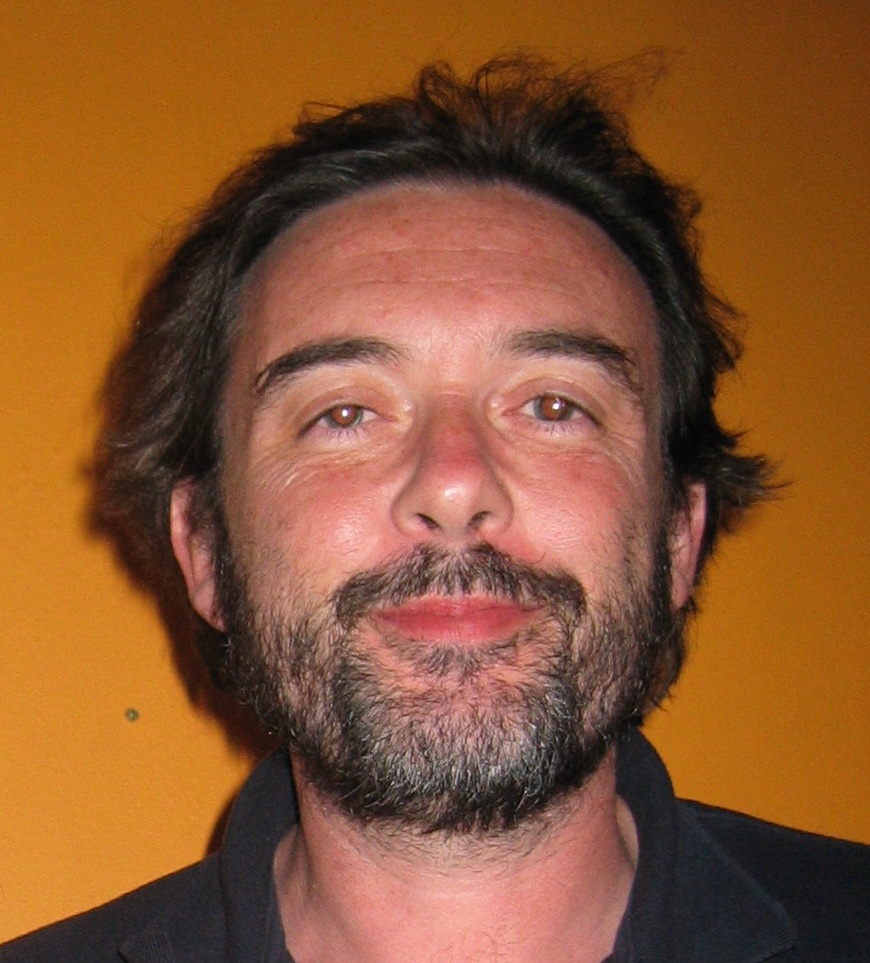 Juan Pablo Paz合作论文数Departamento de Física, Facultad de Ciencias Exactas y Naturales, Universidad de Buenos Aires1
 András Benczúr合作论文数Informatics Laboratory, Institute for Computer Science and Control1
 Dario Poletti合作论文数Singapore University of Technology and Design1
 Júlia Pap合作论文数MTA-ELTE Egerváry Research Group, Eötvös University1
 Bálint Daróczy合作论文数Computer and Automation Research Institute, the Hungarian Academy of Sciences1




