We introduce and characterize different models for an active quantum particle where activity arises from engineered dissipation– specifically, from a suitably coupled nonequilibrium environment. These include a model of a particle moving on a lattice with coherent and dissipative hopping, as well as quantum generalizations of well-studied models of active behavior, such as the active Ornstein-Uhlenbeck process, run-and-tumble dynamics, and the active Brownian particle. Despite the different microscopic mechanisms at play, we show that all these models display key features of active motion. Notably, we observe a crossover from diffusive to active-diffusive behavior at long times, leading to an effective Péclet number, as well as a strong sensitivity to boundary conditions which, in our open quantum system context, arises from the Liouville skin effect. We discuss the role of quantum fluctuations and experimental realizations with superconducting circuits or cold gases, closing with perspectives for many-body effects in quantum active matter.
In recent years, the Rosenzweig-Porter (RP) ensemble, obtained by adding a diagonal matrix with independent and identically distributed elements to a Gaussian random matrix, has been widely used as a minimal model for the emergence of fractal eigenstates in complex many-body systems. A key open question concerns the robustness of its phase diagram when the assumption of independent and uncorrelated entries is relaxed-an assumption that simplifies its analysis but is generally violated in realistic quantum systems. In this work, we take a first step in this direction by considering a deformed Wishart (rather than Gaussian) random matrix, which we dub the 'Wishart-RP' ensemble. Using perturbation theory, as well as the cavity and replica methods and the Dyson Brownian motion approach, we characterize its phase diagram and localization properties. Remarkably, we show that the level compressibility, which quantifies spectral correlations in the fractal phase, coincides with that of the Gaussian RP model, thereby extending the universality conjectured in Venturelli et al (2023 SciPost Phys. 14 110) beyond the fully uncorrelated setting. We confirm our results with numerical tests.
The effect of rare system-wide resonances in the many-body localization (MBL) transition has recently attracted significant attention. They are expected to play a prominent role in the stability of the MBL phase, prompting the development of new theoretical frameworks to properly account for their statistical weight. We employ a method based on an analogy with mean-field disordered glassy systems to characterize the statistics of transmission amplitudes between distant many-body configurations in Hilbert space, and apply it to the random-field XXZ spin chain. By introducing a Lagrange multiplier, which formally plays the role of an effective temperature controlling the influence of extreme outliers in the heavy-tailed distribution of propagators, we identify three distinct regimes: (i) an ergodic phase with uniform spreading in Hilbert space, (ii) an intermediate regime where delocalization is driven by rare, disorder-dependent long-range resonances, and (iii) a robust MBL phase where such resonances cannot destabilize localization. We derive a finite-size phase diagram in the disorder–interaction plane both in the spin and in the Anderson basis that quantitatively agrees with recent numerical results based on real-space spin-spin correlation functions. We further demonstrate that even infinitesimal interactions can destroy the Anderson insulator at finite disorder, with the critical disorder remaining finite down to small interaction strengths. By visualizing resonant transmission pathways on the Hilbert space graph, we provide a complementary perspective to real-space and spectral probes, revealing how the destabilization of the MBL phase at finite sizes stems from the emergence of resonant paths that become progressively rarer and shorter-ranged deep in the localized phase.
After fifty years of lattice gauge theories (LGTs), the nature of the transition between their topological phases (confinement or deconfinement) remains challenging due to the absence of a local order parameter. In this work, we conduct a percolation analysis of Wegner's three-dimensional Z_{2} lattice gauge model using intensive Monte Carlo simulations and finite-size scaling, offering fresh insights into the topological phase transitions of gauge-invariant systems. We demonstrate that, regardless of the connection rules, geometrical loops, constructed by piercing excited plaquettes percolate precisely at the thermal critical point T_{c}, with critical exponents coinciding with those of the loop representation of the dual 3D Ising model. Further, we construct Fortuin-Kasteleyn (FK) clusters in a random-cluster representation, showing that they also percolate at T_{c}, enabling access to all thermal critical exponents. Strikingly, the Binder cumulants of the percolation order parameters for both loops and FK clusters reveal a pseudo-first-order transition. This work sheds new light on the critical behavior of pure LGTs, with potential implications for condensed matter systems and quantum error correction.
A milestone of phase separation kinetics is the emergence of universal power laws ∼ t^1/z governing the domain growth evolution. We investigate a phase-separating polar active model comprising a scalar density field with an advective coupling to a polarization field. Our analysis reveals a novel ∼ t^0.6 regime, which agrees well with the accelerated growth recently observed in simulations of polar active particles. We provide analytical arguments to explain how advection facilitates the creation of topological defects and compresses the domains leading to faster growth. We also show that the ∼ t^0.6 regime is robust to several model generalizations.
With intensive Monte Carlo simulations and finite size scaling we undertake a percolation analysis of Wegner's three-dimensional $\mathbb{Z}_2$ lattice gauge model in equilibrium. We confirm that the loops threading excited plaquettes percolate at the thermal critical point $T_{\rm c}$ and we show that their critical exponents coincide with the ones of the loop representation of the dual 3D Ising model. We then construct Fortuin-Kasteleyn (FK) clusters using a random-cluster representation and find that they also percolate at $T_c$ and moreover give access to all thermal critical exponents. The Binder cumulants of the percolation order parameter of both loops and FK clusters demonstrate a pseudo first order transition. This study sheds light on the critical properties of quantum error correction and lattice gauge theories.
We adapted the SWAP molecular dynamics algorithm for use in lattice Ising spin models. We dressed the spins with a randomly distributed length and we alternated long-range spin exchanges with conventional single spin flip Monte Carlo updates, both accepted with a stochastic rule which respects detailed balance. We show that this algorithm, when applied to the bidimensional Edwards-Anderson model, speeds up significantly the relaxation at low temperatures and manages to find ground states with high efficiency and little computational cost. The exploration of spin models should help in understanding why SWAP accelerates the evolution of particle systems and shed light on relations between dynamics and free-energy landscapes.
Rich out-of-equilibrium collective dynamics of strongly interacting large assemblies emerge in many areas of science. Some intriguing and not fully understood examples are the glassy arrest in atomic, molecular, or colloidal systems; flocking in natural or artificial active matter; and the organization and subsistence of ecosystems. The learning process, and ensuing amazing performance, of deep neural networks bears resemblance with some of the before-mentioned examples. Quantum mechanical extensions are also of interest. In exact or approximate manner, the evolution of these systems can be expressed in terms of a dynamical mean-field theory that not only captures many of their peculiar effects but also has predictive power. This short review presents a summary of recent developments of this approach with emphasis on applications on the examples mentioned above.
These lecture notes provide an introduction to Langevin processes and briefly discuss some interesting properties and simple applications. They compile material presented at the "School of Physics and Mathematics Without Frontiers" (ZigZag), held at La Havana, Cuba, in March 2024, the School "Information, Noise and Physics of Life" held at Niš, Serbia, in June 2024, both sponsored by ICTP, the PEBBLE summer camp at Westlake University, China, in August 2024, the Barcelona school on "Non-equilibrium Statistical Physics", in April 2025, and the 2012-2016 course "Out of Equilibrium Dynamics of Complex Systems" for the Master 2 program "Physics of Complex Systems" in the Paris area.
We present a comprehensive numerical study of the phase behavior and dynamics of a three-dimensional active dumbbell system with attractive interactions. We demonstrate that attraction is essential for the system to exhibit nontrivial phases. We construct a detailed phase diagram by exploring the effects of the system's activity, density, and attraction strength. We identify several distinct phases, including a disordered, a gel, and a completely phase-separated phase. Additionally, we discover a novel dynamical phase, that we name percolating network, which is characterized by the presence of a spanning network of connected dumbbells. In the phase-separated phase we characterize numerically and describe analytically the helical motion of the dense cluster.
We investigate the periodically driven dynamics of many-body systems, either classical or quantum, finite-dimensional or mean-field, displaying an unbounded phase-space. Using the lattice ϕ^4 model and the p-spin spherical model as representative examples, we find that the inclusion of a smooth periodic drive atop an otherwise ergodic dynamics leads to a long-lived prethermalization, even at moderate driving frequencies. In specific asymptotic limits, we compute the corresponding prethermal Hamiltonian from an analytical perturbation scheme.
By considering the quench dynamics of two-dimensional frustrated Ising models through numerical simulations, we investigate the dynamical critical behavior on the multicritical Nishimori point (NP). We calculate several dynamical critical exponents, namely, the relaxation exponent z_{c}, the autocorrelation exponent λ_{c}, and the persistence exponent θ_{c}, after a quench from the high temperature phase to the NP. We confirm their universality with respect to the lattice geometry and bond distribution. For a quench from a power-law correlated initial state to the NP, the aging dynamics are much slower. We also look up the issue of multifractality during the critical dynamics by investigating different moments of the spatial correlation function. We observe a single growth law for all the length scales extracted from different moments, indicating that the equilibrium multifractality at the NP does not affect the dynamics.
We study the spectral properties of the adjacency matrix in the giant connected component of Erd & ouml;s-R & eacute;nyi random graphs, with average degree p and randomly distributed hopping amplitudes. By solving the self-consistent cavity equations satisfied by the matrix elements of the resolvent, we compute the probability distribution of the local density of states, which governs the scaling with the system size of the moments of the eigenvectors' amplitudes, as well as several other observables related to the spectral statistics. For small values of p > 1 above the percolation threshold, we unveil the presence of an exotic delocalized but (weakly) multifractal phase in a broad region of parameter space, which separates the localized phase found for p 1 from the fully delocalized and Gaussian orthogonal ensemble-like phase expected for p -> infinity. We explore the fundamental physical mechanism underlying the emergence of delocalized multifractal states, rooted in the pronounced heterogeneity in the topology of the graph. This heterogeneity arises from the interplay between strong fluctuations in local degrees and hopping amplitudes, and leads to an effective fragmentation of the graph. We further support our findings by characterizing the level statistics and the two-point spatial correlations within the multifractal phase, and address the ensuing anomalous transport and relaxation properties affecting the quantum dynamical evolution.
This article summarises the outstanding scientific career of Giorgio Parisi, who was awarded the 2021 Nobel Prize in Physics, with special emphasis on his contributions to the description of the equilibrium properties of disordered systems.
We use spin-lattice dynamics simulations to study the possibility of modeling the magnetic hysteresis behavior of a ferromagnetic material. The temporal evolution of the magnetic and mechanical degrees of freedom is obtained through a set of two coupled Langevin equations. Hysteresis loops are calculated for different angles between the external field and the magnetocrystalline anisotropy axes. The influence of several relevant parameters is studied, including the field frequency, magnetic damping, magnetic anisotropy (magnitude and type), magnetic exchange, and system size. The role played by a moving lattice is also discussed. For a perfect bulk ferromagnetic system we find that, at low temperatures, the exchange and lattice dynamics barely affect the loops, while the field frequency and magnetic damping have a large effect on it. The influence of the anisotropy magnitude and symmetry are found to follow the expected behavior. We show that a careful choice of simulation parameters allows for an excellent agreement between the spin-lattice dynamics measurements and the paradigmatic Stoner-Wohlfarth model. Furthermore, we extend this analysis to intermediate and high temperatures for the perfect bulk system and for spherical nanoparticles, with and without defects, reaching values close to the Curie temperature. In this temperature range, we find that lattice dynamics has a greater role on the magnetic behavior, especially in the evolution of the defective samples. The present study opens the possibility for more accurate inclusion of lattice defects and thermal effects in hysteresis simulations
The ±J Ising model is a simple frustrated spin model, where the exchange couplings independently take the discrete value -J with probability p and +J with probability 1-p. It is especially appealing due to its connection to quantum error correcting codes. Here, we investigate the nonequilibrium critical behavior of the two-dimensional ±J Ising model, after a quench from different initial conditions to a critical point T_{c}(p) on the paramagnetic-ferromagnetic (PF) transition line, especially above, below, and at the multicritical Nishimori point (NP). The dynamical critical exponent z_{c} seems to exhibit nonuniversal behavior for quenches above and below the NP, which is identified as a preasymptotic feature due to the repulsive fixed point at the NP, whereas for a quench directly to the NP, the dynamics reaches the asymptotic regime with z_{c}≃6.02(6). We also consider the geometrical spin clusters (of like spin signs) during the critical dynamics. Each universality class on the PF line is uniquely characterized by the stochastic Loewner evolution with corresponding parameter κ. Moreover, for the critical quenches from the paramagnetic phase, the model, irrespective of the frustration, exhibits an emergent critical percolation topology at the large length scales.
The generalized Rosenzweig-Porter model with real (GOE) off-diagonal entries arguably constitutes the simplest random matrix ensemble displaying a phase with fractal eigenstates, which we characterize here by using replica methods. We first derive analytical expressions for the average spectral density in the limit in which the size $N$ of the matrix is large but finite. We then focus on the number of eigenvalues in a finite interval and compute its cumulant generating function as well as the level compressibility, i.e., the ratio of the first two cumulants: these are useful tools to describe the local level statistics. In particular, the level compressibility is shown to be described by a universal scaling function, which we compute explicitly, when the system is probed over scales of the order of the Thouless energy. Interestingly, the same scaling function is found to describe the level compressibility of the complex (GUE) Rosenzweig-Porter model in this regime. We confirm our results with numerical tests.
Path integrals are a ubiquitous tool in theoretical physics. However, their use is sometimes hindered by the lack of control on various manipulations–such as performing a change of the integration path–one would like to carry out in the light-hearted fashion that physicists enjoy. Similar issues arise in the field of stochastic calculus, which we review to prepare the ground for a proper construction of path integrals. At the level of path integration, and in arbitrary space dimension, we not only report on existing Riemannian geometry-based approaches that render path integrals amenable to the standard rules of calculus, but also bring forth new routes, based on a fully time-discretized approach, that achieve the same goal. We illustrate these various definitions of path integration on simple examples such as the diffusion of a particle on a sphere.
We build and analytically calculate the Generalised Gibbs Ensemble partition function of the integrable Soft Neumann Model. This is the model of a classical particle which is constrained to move, on average over the initial conditions, on an $N$ dimensional sphere, and feels the effect of anisotropic harmonic potentials. We derive all relevant averaged static observables in the (thermodynamic) $N\rightarrow\infty$ limit. We compare them to their long-term dynamic averages finding excellent agreement in all phases of a non-trivial phase diagram determined by the characteristics of the initial conditions and the amount of energy injected or extracted in an instantaneous quench. We discuss the implications of our results for the proper Neumann model in which the spherical constraint is imposed strictly.
These notes focus on the description of the phases of matter in two dimensions. Firstly, we present a brief discussion of the phase diagrams of bidimensional interacting passive systems, and their numerical and experimental measurements. The presentation will be short and schematic. We will complement these notes with a rather complete bibliography that should guide the students in their study of the development of this very rich subject over the last century. Secondly, we summarise very recent results on the phase diagrams of active Brownian disks and active dumbbell systems in two dimensions. The idea is to identify all the phases and to relate, when this is possible, the ones found in the passive limit with the ones observed at large values of the activity, at high and low densities, and for both types of constituents. Proposals for the mechanisms leading to these phases will be discussed. The physics of bidimensional active systems open many questions, some of which will be listed by the end of the Chapter.
 Gustavo S. Lozano合作论文数Departamento de F ´ õsica;Universidad de Buenos Aires;Departamento de F ´ õsica, Universidad de Buenos Aires24
 Marco Picco合作论文数LPTHE23
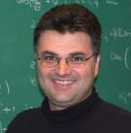 Claudio Chamon合作论文数Nanotechnology Innovation Center, Boston University22
 Jorge Kurchan合作论文数École Normale Supérieure20
 Giuseppe Gonnella合作论文数Theoretical Physics;Oxford University;Oxford University19
 Marco Tarzia合作论文数Institut de Physique Theorique15
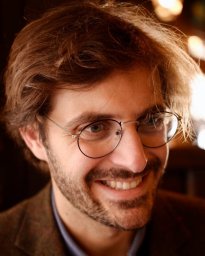 Demian Levis合作论文数Université Pierre et Marie Curie-Paris 6, Laboratoire de Physique Théorique et Hautes Energies, 4, Place Jussieu, Tour 13, 5ème étage, 75252 Paris Cedex 05, France.11
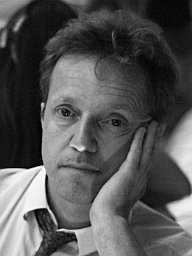 Federico Corberi合作论文数Istituto Nazionale per la Fisica della Materia;Unita di Salerno;Dipartimento di Fisica;Universita di Salerno;Unita di Salerno, Universita di Salerno11
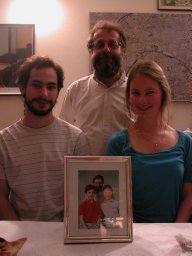 Fidel Schaposnik合作论文数Laboratorio de Fisica Teórica, U.N.L.P. La Plata Argentina11
 Pasquale Digregorio合作论文数Ctr Europe Calcul Atom & Mole, Ecole Polytech Fed Lausanne10
 Giulio Biroli合作论文数Laboratoire de Physique de l’Ecole Normale Supérieure;Paris Artificial Intelligence Research Institute10
 Laura Foini合作论文数9
 Antonio Suma合作论文数SISSA-Scuola Internazionale Superiore di Studi Avanzati8
 Malcolm Kennett合作论文数Department of Physics;Princeton University;Department of Physics, Princeton University8
 Alberto Sicilia合作论文数8
 Andrea Gambassi合作论文数Max-Planck-Institut fur Metallforschung8
 Jeferson J. Arenzon合作论文数Instituto de F ´ õsica;Universidade Federal do Rio Grande do Sul;Instituto de F ´ õsica, Universidade Federal do Rio Grande do Sul8
 Camille Aron合作论文数Institut de Physique Theorique8
 Damien Barbier合作论文数Stat Phys Computat Lab, CH-1015 Lausanne, Switzerland6
 Nessi N合作论文数Instituto de Física La Plata (IFLP)-CONICET and Departamento de Física, Universidad Nacional de La Plata6Horacio E. Castillo合作论文数6ecole dete de physique theorique合作论文数5École d'été de physique théorique合作论文数5Alessandro Tartaglia合作论文数5
 Jose L Iguain合作论文数5Daniel R Grempel合作论文数5
 Mathias Casiulis合作论文数Dept Phys, NYU4Isabella Petrelli合作论文数4Blanchard T合作论文数LPTHE, Université Pierre et Marie Curie4
 Ignacio Pagonabarraga合作论文数Departament de Física Fonamental, Universitat de Barcelona4
 Pierre Le Doussal合作论文数Laboratoire de Physique Theorique, Ecole Normale Superieure4
 A J Bray合作论文数Department of Physics and Astronomy, The University of Manchester4
 Sebastian Bustingorry合作论文数Centro Atomico Bariloche4
 Guilhem Semerjian合作论文数ENS4Lara Faoro合作论文数Department of Physics and Astronomy;Rutgers University;Department of Physics and Astronomy, Rutgers University4
 Robert Konik合作论文数Department of Condensed Matter Physics & Materials Science, Brookhaven National Laboratory4
 Daniel Adrian Stariolo合作论文数Departamento de Física;Universidade Federal do Rio Grande do Sul;Departamento de Física, Universidade Federal do Rio Grande do Sul4H.F. Lozza合作论文数4
 Lev Ioffe合作论文数Google Inc4Frédéric Van Wijland合作论文数MSC4
 Vivien Lecomte合作论文数Universited e Paris-Sud4
 Olivier Dauchot合作论文数CEA Saclay4ecole thematique du cnrs合作论文数3A. Suma合作论文数3Jl Iguain合作论文数3
 Ferdinando Insalata合作论文数Dept Math, Imperial Coll London3
 Ramgopal Agrawal合作论文数Sch Phys Sci, Jawaharlal Nehru Univ3
 Daniel Domínguez合作论文数Ctr Atom Bariloche, Univ Nacl Cuyo3
 Davide Venturelli合作论文数Green Sands Equity;ensoriumTL;Carnegie Mellon University3




