A deep comprehension of the development of scientific knowledge is necessary to properly appreciate technological advancement and the process of knowledge innovation. However, fine-grained citation networks are less frequently utilized to characterize the evolution of scientific knowledge. To bridge this gap, we first constructed the fine-grained citation networks based on the PubMed and Web of Science (WOS) databases, then extracted the ego-centered networks of scientific knowledge, and finally employed Exponential Random Graph Models (ERGMs) to analyze the factors influencing the formation of Ego-centered Fine-granularity Citation Networks (EFCNs), taking into account the endogenous network structure and exogenous knowledge attribute variables. The results reveal that both types of variables play pivotal roles in the evolution of scientific knowledge. Furthermore, we found that (1) the in-degree and the out-degree centrality have a positive effect on knowledge evolution, respectively, in the 98.5 % and 99.9 % sample networks, while the clustering coefficient only has a positive effect on the edge formation of the 6.8 % sample network at the 0.05 significance level. (2) The citation behavior and domain impact of authors positively influence the scientific knowledge evolution, respectively, in the 63.2 % and 78.3 % sample networks. (3) There is a tendency to form citation relationships between scientific knowledge units of similar age in 67.1 % of the sample networks. (4) There is a greater possibility of developing a citation relationship between scientific knowledge with the same journal impact rank and knowledge type. Our findings indicate that the evolution of scientific knowledge is influenced not only by the process of scholarly communication but also by self-organizing mechanisms at the fine granularity level.
This paper explores the factors influencing scientists' persistent collaboration. More specifically, we employ Social Exchange Theory to examine the relationship between scholars' prior collaborative experiences and their subsequent collaborative behavior. Integrated with Cost-Benefit Theory, this study utilizes a comprehensive cost-benefit framework to deconstruct the elements affecting collaboration into two main dimensions: costs and benefits. Leveraging a large-scale dataset of scientific papers, we empirically test our framework, revealing the significant impact of previous collaboration's benefits and costs on the persistence of scientists' collaboration. Our findings indicate that production, economic, and informational factors play a substantial role in promoting persistent collaboration. Conversely, social factors exhibit a notable negative influence on persistent collaboration. Within the dimensions of time and effort, besides a roughly inverse U-shaped relationship between research topic proximity and persistent collaboration, geographical distance, gender, and age all exert adverse effects on enduring collaboration. Opportunity costs also pose a disadvantage to persistent collaboration. Furthermore, we discover that these influencing factors demonstrate heterogeneity in their impact on scholars' persistent collaborative behavior at various stages of their academic careers. Our results provide valuable insights into understanding the dynamics and complexities of collaborative behavior.
The unprecedented COVID-19 outbreak at the end of 2019 has produced a worldwide health crisis. Scientific research, especially international research collaboration, is crucial to deal successfully with the epidemic. This article aims to review the response modes, and especially the international collaboration characteristic, of the academic community to similar public health events in the past. Based on relevant studies of four major public health emergencies in the past, the major public health emergencies were regarded as ‘new knowledge’ in the academic field. By using knowledge diffusion indicators, such as the breadth and speed of diffusion, and combined with the development characteristics of the event, this article explores the diffusion characteristics of the four major public health emergencies in the academic exchange system and then identifies the academic community’s response mode to the outbreaks. In addition, the characteristics of international collaboration in response to the public health events and the impact of international collaboration on the academic community’s response are analysed. Through the analysis of the international collaboration network, the cooperative groups and core countries in the research collaboration network related to the major public health emergencies are obtained. In terms of COVID-19, it is found that the response speed and intensity of scientists have been significantly improved, but more focus should be given to international collaboration. Our findings could be beneficial to both decision-makers and researchers in policy formulation and conducting research, respectively, to optimally deal with COVID-19 and possible outbreaks in the future.
为探究面向学科新兴主题探测领域多源科技文献融合过程中的时滞性问题,本文设计了多源科技文献时滞计算方案.首先,从获取的4种科技文献数据集中提取学科主题,计算学科主题间的相似度,构建相似矩阵;其次,基于匈牙利最优匹配算法寻求相似度损耗最小条件下的最优组合;最后,构建线性方程模型并拟合计算时滞程度.本文以2009—2016年农业学科领域337790篇摘要文本为实验数据,抽取基金项目文本学科主题为250个、专利文献为260个、期刊论文为260个、会议论文为240个,利用上述多源科技文献时滞计算方案实验.结果表明:期刊论文滞后于基金项目文本和会议论文1年,专利文献滞后于期刊论文1年,结合以往对不同学科领域数据的研究结果,验证了多源科技文献时滞计算方案的可行性和有效性,同时也为多源科技文献融合策略的制定提供新思路.
[目的/意义]本文构建了一个大规模学术文献致谢功能数据集,并提出一种基于SciBERT的致谢功能识别模型,为致谢文本的挖掘和分析提供高质量的数据支持和有效的识别方法.[方法/过程]采用人工的方式扩展和完善致谢功能分类规则,生成学术文献致谢功能自动标引规则模板,对1,750,275条致谢文本进行功能标引.在此基础上,采用SciBERT模型对致谢文本句进行向量表达,引入Softmax回归模型实现致谢功能自动分类,采用warmup策略进行模型调优,并与基准实验进行对比.[结果/结论]得到一个大规模、高质量的学术文献致谢功能数据集,经人工检验准确率达到93%;基于SciBERT的识别模型比基准模型表现更好,在扩展数据集上的Fl值高于98%,在各个类别上的预测结果也有不同程度的提升.[创新/局限]致谢功能识别模型缺少对致谢文本独有特征的考虑和融合.
[目的 /意义]文章旨在探究不同载体科技文献中学科主题涌现的时间差异性及演化的动态性,从细粒度角度剖析科技文献知识传递的时滞差异特征.[方法/过程]分别获取了中美农业领域的期刊论文和基金文本数据,对比分析中美多源科技文献间知识传递的时滞差异,同时借助时间序列和复杂网络分析方法,深入分析学科主题结构演变以及主题知识时序演进的过程,对比分析学科主题延续发展过程中的差异,以剖析多源科技文献知识传递的时滞差异特征.[结果/结论]实验结果表明:中美多源科技文献间知识传递的时滞存在差异,美国基金项目文本与期刊论文时滞为2年,中国基金项目文本与期刊论文时滞为1年.在学科主题知识网络演化过程中,中国农业领域学科主题知识网络关联更为紧密,学科主题知识节点间的可达性和传递效率相对较高,核心学科主题知识连续性指数波动较小,学科知识网络演化较为均衡、稳定.
 Jinqing Yang合作论文数Wuhan Univ, Sch Informat Management, Wuhan, Hubei, Peoples R China4
 Wei Lu (陆伟)合作论文数School of Information Management, Wuhan University4Lucheng Lyu合作论文数1Peng-cheng LI (李鹏程)合作论文数1Jia Du (杜佳)合作论文数1
 Yi Bu (步一)合作论文数Department of Information Management, Peking University1
 Qikai Cheng (程齐凯)合作论文数Department of Archives and Government Information Studies, School of Information Management, Wuhan University1
 Jiamin Wang (王佳敏)合作论文数School of Economics and Management, Xidian University1
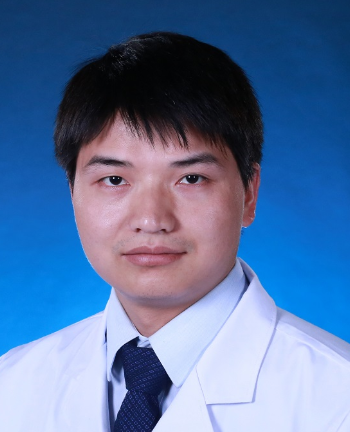 Yong Huang (黄勇)合作论文数Zhongnan Hospital, Wuhan University1




