In the real world of medical training & clinical conditions, learning situations is multi-dimensional. Doctors derive clinical data from a variety of procedures, and assemble such complex information to provide the most appropriate care for patients. In this paper, we describe a collaboration project between NUS and Temasek Polytechnic staff and student joint project on a VR application for visualising dental Oral Keratocyst (OKC). The main thrust and focus of this collaboration project is to build immersive macro- and micro-environments of the anatomic cyber-face and cyber-mouth models rich anatomic data and biological model information. Both the anatomic data and biological information are linked to specific and relevant sites within the cyber-face and cyber-mouth environments. The training system is currently under user evaluation by the Faculty of Dentistry at the National University of Singapore.
High-throughput mass spectrometry technologies, such as surface enhanced laser desorption/ionization time-of-flight mass spectrometry (SELDI-ToF-MS), generate large sets of complex data. The high dimensionality of these datasets poses analytical and computational challenges to the task of spectrum classification. In this paper, we describe a common characteristics and noise filter, which hones in on spectrum subsets with high discriminatory power. The filter is incorporated in a proteomic pattern recognition system. Our method is demonstrated on a set of 322 SELDI-ToF mass spectra of serum samples from prostate cancer patients and a control group. We show that our system can extract the discriminatory subsets from these spectra, and improve classification accuracy and computational speed compared to existing techniques.
Fluorescence Activated Cytometry is a research tool whose potential has yet to be fully exploited., Currently it is used for cluster hunting and cell counting. In this study, we separate cell clusters by identifying local minima in the cell density gradient to identify boundaries between cell types. These clusters were then analyzed for changes in intensity of four parameters marked by fluorescent antibody labels. The results are a statistical analysis of differences in the cell clusters which can be interpreted to understand what changes are occurring in the various cell populations on many levels.
High-throughput mass spectrometry technologies, such as surface enhanced laser desorption/ionization time-of-flight mass spectrometry (SELDI-ToF-MS), generate large sets of complex data. The high dimensionality of these datasets poses analytical and computational challenges to the task of spectrum classification. In this paper, we describe a fast pattern recognition system for SELDI-ToF mass spectra, which hones in on spectrum subsets with high discriminatory power. The system incorporates a new filter for removal of common characteristics and noise. Our method is demonstrated on a set of 215 SELDI-ToF mass spectra of serum samples from ovarian cancer patients. We show that our system can extract the discriminatory subsets, and that the use of the new filter improves classification accuracy and computational speed.
Fluorescence activated cytometry, or flow cytometry is a standard research tool with a wide range of applications. Analysis of flow data currently relies on expert decision-making based on heuristic rules. In this study, we automate the process and test our procedures on a commonly used hematopoietically active drug. The centerpiece of the automated method is common characteristic removal to identify cell populations of interest. The cell populations that are identified undergo statistical analysis to determine if there is a shift in population means, spreads, or enumeration across treatment groups. This information is used to identify populations that are affected by a treatment from those that are not, and make a quantitative characterization of the populations in which changes occur.
We use clustering-based algorithms to classify polypeptide spectra of treated rat liver samples obtained through surface enhanced laser desorption/ionization mass spectrometry (SELDI-MS). Variance analysis is used to extract useful features from the high dimensional datasets. The features are then clustered using a hierarchical clustering algorithm based on scaled Euclidean distances. The clusters created are found to be correlated to the toxicity of the rat liver samples
A group of cooperating vehicles (smart bombs, robots) moves toward a set of (possibly moving) prioritized destinations. During their journey towards the destinations, some of the vehicles may be damaged, but it is also possible that reinforcements may arrive. The objective is to maximize the number of encounters between the vehicles and the high-priority destinations. In this preliminary study, we explore how position sensors and (possibly fading) communication channels can assist the group in performing its task. We show how joint operation, and exchange of observations and estimates, improve convergence. On the other hand unfavorable cooperation attempts can sometimes lead to oscillations and confusion. In unfavorable circumstances our agents suspend cooperation and engage in "every agent for itself" mode. One of the interesting features of the proposed architecture is that individual team members can predict the success or failure of the cooperation mechanism by testing the consistency of assigned target destinations.
The drug discovery process is far from optimal; only 1 in 10 compounds selected for development successfully reach the clinical trial phase. In an attempt to improve the efficiency of this process, we have applied feature analysis techniques to polypeptide spectral data from the liver of rats that have been exposed to various dosages of pharmaceuticals. Our goal is to use these techniques to predict the toxicity of a compound in vivo and help eliminate potentially dangerous pharmaceuticals from advancing past early stages of discovery
 Moshe Kam合作论文数Newark College of Engineering, New Jersey Institute of Technology7
 L. Hrebien合作论文数Drexel University7
 John Quinn合作论文数6Peter J. Bugelski合作论文数4
 Hayley C. Cordingley合作论文数4Samuel Roberts合作论文数3
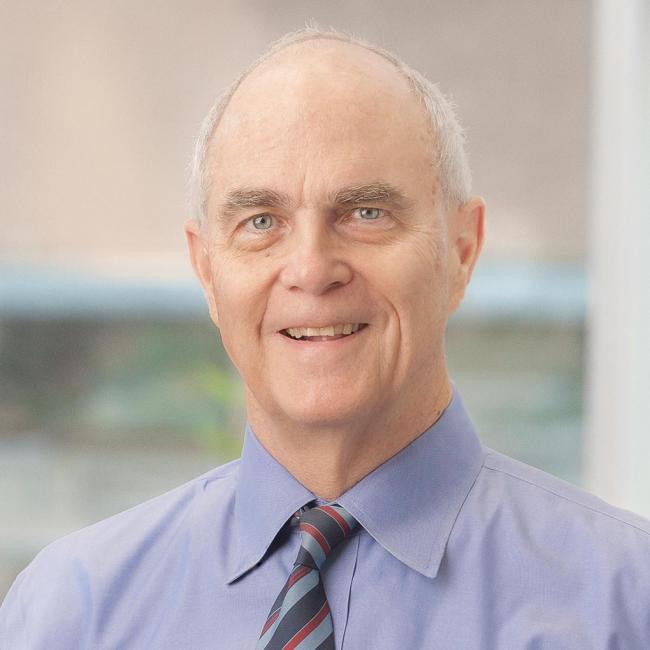 James O. Armitage合作论文数Division of Oncology and Hematology, Department of Internal Medicine, College of Medicine, University of Nebraska Medical Center2R Capocasale合作论文数2Erwei Lin合作论文数1
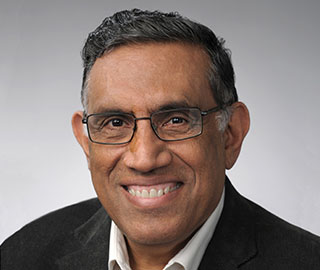 Pramod K. Varshney合作论文数Department of Electrical Engineering and Computer Science, College of Engineering and Computer Science, Syracuse University1Emilia Joey Yim Shao'En合作论文数1Jin-San Yoon合作论文数1Jae Hun Shim合作论文数1
 Kelvin Weng Chiong Foong合作论文数NUS Graduate School for Integrative Sciences and Engineering, National University of Singapore1Djasliana Binte Hussain合作论文数1Suraj Balasubramanian合作论文数1Sung Hun Jung合作论文数1Sheryl Lim Jia Jin合作论文数1Jeremiah K. S. Seah合作论文数1Tok Wee Wah合作论文数1Lim Minmin合作论文数1




