We introduce SolarWM, a fully open foundation for building interactive video world models from data preparation through long-horizon inference. Training across heterogeneous data sources and video backbones is challenging: datasets differ in temporal scale, camera geometry, visual quality, motion, and captioning styles, while video generators use distinct representations and architectures. Naive data mixing and model-specific implementations therefore produce inconsistent supervision and make results difficult to reproduce and compare. SolarWM addresses this coupling with a reconfigurable multi-source data engine and a backbone-native adaptation framework. The engine converts 1.43 million canonical clips from 10 datasets into a unified, frame-aligned contract covering visual observations, metric camera geometry, captions, quality metadata, selection decisions, and provenance, while decoupling source processing from mixture construction. Under shared camera-conditioning, training, and inference interfaces, we instantiate four 5B–33B models based on Wan2.2, LTX-2.5, and MiniMax-H3 while preserving their native representations and objectives. A unified three-stage recipe combines bidirectional adaptation, teacher-forced autoregressive initialization, and distribution matching distillation. The resulting causal models enable real-time interaction over rollouts ranging from minutes to hours after being trained on only 5s sequences. By releasing the resulting data, pipeline, recipes, weights, and framework, SolarWM provides a reproducible and extensible foundation for interactive world-model research.
Pretrained foundation models have become an important basis for end-to-end autonomous driving. In contrast to vision-language models pretrained primarily on static image-text pairs, video generative models capture temporal dynamics and motion priors that are naturally suited for driving. We present DriveWAM, a driving world-action model that adapts a pretrained video diffusion transformer into an autoregressive video-action policy. DriveWAM organizes video and action streams into a unified temporal token sequence and trains them under a joint flow-matching objective, preserving the pretrained video-generation architecture while adapting its large-scale video priors to action generation. To incorporate high-level scene understanding, we introduce scene-evolving driving guidance, where a frozen VLM produces chunk-specific semantic intent to guide video-action generation. To keep long-horizon rollout bounded, we further introduce selective KV memory, which maintains bounded modality-aware video and action memory pools through relevance-redundancy cache selection at inference time. Experiments on NAVSIM and the PhysicalAI-Autonomous-Vehicles benchmark show that DriveWAM achieves strong planning performance, and a data-scaling study from 4k to 100k driving clips further confirms the scaling potential of world-action modeling for end-to-end autonomous driving.
Vision-Language-Action (VLA) models have shown promise for robotic manipulation, yet most existing policies operate reactively by directly regressing actions from current observations, without explicitly modeling future dynamics. This limits their ability to generalize under out-of-distribution perturbations. To address this issue, we propose ELAN4D, an embodiment-centric, 4D-aware training framework that enhances VLA policies with future robot keypoint tracks as predictive spatio-temporal supervision. Using only forward kinematics from proprioceptive states, we derive 3D displacement tracks of robot keypoints, such as joints and the end-effector, with negligible preprocess cost. These tracks provide metric and compact supervision without requiring external trackers or reconstruction. A plug-and-play auxiliary branch with a lightweight track decoder injects this 4D signal into the action expert while preserving the pretrained vision-language backbone through gradient isolation. The track decoder is discarded during inference, leaving the base policy interface unchanged. Extensive experiments on LIBERO, LIBERO-Plus, RoboTwin2.0 and real-world manipulation tasks demonstrate that ELAN4D consistently improves over strong VLA baselines, achieving the best overall performance and substantial gains under out-of-distribution perturbations, including camera, background, and layout shifts. These results highlight the effectiveness of embodiment-centric 4D supervision for building more robust and generalizable manipulation policies.
Action chunking has become a common inference strategy for flow-based robot policies, improving action coherence by modeling multi-step temporal dependencies in demonstrations. However, the execution horizon is still typically set as an empirical fixed value, overlooking that predictable free-space motions and precision-critical interaction phases often require different replanning frequencies. In this work, we first show that the denoising process of flow-based policies contains an intrinsic signal of task phases: clean-action estimates remain stable during predictable motion phases, but fluctuate more strongly around contact-rich or precision-sensitive operations. Motivated by this observation, we propose DVAC (Denoising-Variance Adaptive Chunking), a test-time method that adaptively determines how many actions to execute from each predicted chunk. DVAC measures the variance of clean-action estimates over the final denoising steps, executes the stable low-variance prefix, and replans before high-variance future actions are committed. To transfer across tasks and rollouts, DVAC further calibrates the threshold with a rolling estimate of the local variance scale. Experiments on LIBERO, RoboTwin, CALVIN, and real-world manipulation show that DVAC improves task success while reducing replanning frequency. With a π_0.5-based policy, DVAC improves LIBERO success from 94.75
Autoregressive video world models predict future visual observations conditioned on actions. While effective over short horizons, these models often struggle with long-horizon generation, as small prediction errors accumulate over time. Prior methods alleviate this by introducing pre-trained teacher models and sequence-level distribution matching, which incur additional computational cost and fail to prevent error propagation beyond the training horizon. In this work, we propose LIVE, a Long-horizon Interactive Video world modEl that enforces bounded error accumulation via a novel cycle-consistency objective, thereby eliminating the need for teacher-based distillation. Specifically, LIVE first performs a forward rollout from ground-truth frames and then applies a reverse generation process to reconstruct the initial state. The diffusion loss is subsequently computed on the reconstructed terminal state, providing an explicit constraint on long-horizon error propagation. Moreover, we provide an unified view that encompasses different approaches and introduce progressive training curriculum to stabilize training. Experiments demonstrate that LIVE achieves state-of-the-art performance on long-horizon benchmarks, generating stable, high-quality videos far beyond training rollout lengths.
Video generative models commonly rely on latent spaces learned by 3D Variational Autoencoders (3D-VAEs). However, conventional 3D-VAEs are mainly optimized for pixel-level reconstruction, which can limit the semantic and spatio-temporal structure captured by their latents. Meanwhile, Video Foundation Models (VFMs) such as V-JEPA 2 and VideoMAEv2 show strong video understanding capabilities, yet whether their frozen representations can be transformed into compact, reconstruction-capable, and generation-friendly video latents remains largely unexplored. We answer this question with VideoRAE, a representation autoencoder that leverages multi-scale hierarchical features from a frozen video foundation encoder and compresses them with a lightweight 1D self-attention projector. VideoRAE supports both continuous latents for Diffusion Transformers and discrete tokens for autoregressive models via multi-codebook high-dimensional quantization. During decoding, a local-and-global representation alignment objective with the frozen VFM teacher improves semantic preservation and enables training without KL regularization. Experiments show that VideoRAE achieves strong reconstruction in both continuous and discrete regimes. On UCF-101, it obtains state-of-the-art class-to-video gFVDs of 40 and 93 with AR and DiT generators, respectively, while converging approximately 5x faster than competing autoencoder baselines. In a controlled 2B-scale text-to-video study, replacing LTX-VAE with VideoRAE leads to faster convergence under comparable settings. These results validate frozen VFM representations as versatile and generation-friendly video latents. The model and code will be released on https://zhxie0117.github.io/VideoRAE.
Vision-Language-Action (VLA) models achieve strong generalization in robotic manipulation but remain largely reactive and 2D-centric, making them unreliable in tasks that require precise 3D reasoning. We propose GeoPredict, a geometry-aware VLA framework that augments a continuous-action policy with predictive kinematic and geometric priors. GeoPredict introduces a trajectory-level module that encodes motion history and predicts multi-step 3D keypoint trajectories of robot arms, and a predictive 3D Gaussian geometry module that forecasts workspace geometry with track-guided refinement along future keypoint trajectories. These predictive modules serve exclusively as training-time supervision through depth-based rendering, while inference requires only lightweight additional query tokens without invoking any 3D decoding. Experiments on RoboCasa Human-50, LIBERO, and real-world manipulation tasks show that GeoPredict consistently outperforms strong VLA baselines, especially in geometry-intensive and spatially demanding scenarios.
Controlling both camera motion and object dynamics is essential for coherent and expressive video generation, yet current methods typically handle only one motion type or rely on ambiguous 2D cues that entangle camera-induced parallax with true object movement. We present SymphoMotion, a unified motion-control framework that jointly governs camera trajectories and object dynamics within a single model. SymphoMotion features a Camera Trajectory Control mechanism that integrates explicit camera paths with geometry-aware cues to ensure stable, structurally consistent viewpoint transitions, and an Object Dynamics Control mechanism that combines 2D visual guidance with 3D trajectory embeddings to enable depth-aware, spatially coherent object manipulation. To support large-scale training and evaluation, we further construct RealCOD-25K, a comprehensive real-world dataset containing paired camera poses and object-level 3D trajectories across diverse indoor and outdoor scenes, addressing a key data gap in unified motion control. Extensive experiments and user studies show that SymphoMotion significantly outperforms existing methods in visual fidelity, camera controllability, and object-motion accuracy, establishing a new benchmark for unified motion control in video generation.
Coordinating navigation and manipulation with robust performance is essential for embodied AI in complex indoor environments. However, as tasks extend over long horizons, existing methods often struggle due to catastrophic forgetting, spatial inconsistency, and rigid execution. To address these issues, we propose ESCAPE (Episodic Spatial Memory Coupled with an Adaptive Policy for Execution), operating through a tightly coupled perception-grounding-execution workflow. For robust perception, ESCAPE features a Spatio-Temporal Fusion Mapping module to autoregressively construct a depth-free, persistent 3D spatial memory, alongside a Memory-Driven Target Grounding module for precise interaction mask generation. To achieve flexible action, our Adaptive Execution Policy dynamically orchestrates proactive global navigation and reactive local manipulation to seize opportunistic targets. ESCAPE achieves state-of-the-art performance on the ALFRED benchmark, reaching 65.09
Although Video Large Language Models (VLLMs) have shown remarkable capabilities in video understanding, they are required to process high volumes of visual tokens, causing significant computational inefficiency. Existing VLLMs acceleration frameworks usually compress spatial and temporal redundancy independently, which overlooks the spatiotemporal relationships, thereby leading to suboptimal spatiotemporal compression. The highly correlated visual features are likely to change in spatial position, scale, orientation, and other attributes over time due to the dynamic nature of video. Building on this insight, we introduce FlashVID, a training-free inference acceleration framework for VLLMs. Specifically, FlashVID utilizes Attention and Diversity-based Token Selection (ADTS) to select the most representative tokens for basic video representation, then applies Tree-based Spatiotemporal Token Merging (TSTM) for fine-grained spatiotemporal redundancy elimination. Extensive experiments conducted on three representative VLLMs across five video understanding benchmarks demonstrate the effectiveness and generalization of our method. Notably, by retaining only $\textbf{10}$% of visual tokens, FlashVID preserves $\textbf{99.1}$% of the performance of LLaVA-OneVision. Consequently, FlashVID can serve as a training-free and plug-and-play module for extending long video frames, which enables a $\textbf{10$\times$}$ increase in video frame input to Qwen2.5-VL, resulting in a relative improvement of $\textbf{8.6}$% within the same computational budget. Code will be made publicly available.
Feed-forward 3D reconstruction for autonomous driving has advanced rapidly, yet existing methods struggle with the joint challenges of sparse, non-overlapping camera views and complex scene dynamics. We present UniSplat, a general feed-forward framework that learns robust dynamic scene reconstruction through unified latent spatio-temporal fusion. UniSplat constructs a 3D latent scaffold, a structured representation that captures geometric and semantic scene context by leveraging pretrained foundation models. To effectively integrate information across spatial views and temporal frames, we introduce an efficient fusion mechanism that operates directly within the 3D scaffold, enabling consistent spatio-temporal alignment. To ensure complete and detailed reconstructions, we design a dual-branch decoder that generates dynamic-aware Gaussians from the fused scaffold by combining point-anchored refinement with voxel-based generation, and maintain a persistent memory of static Gaussians to enable streaming scene completion beyond current camera coverage. Extensive experiments on real-world datasets demonstrate that UniSplat achieves state-of-the-art performance in novel view synthesis, while providing robust and high-quality renderings even for viewpoints outside the original camera coverage.
Data-driven learning has advanced autonomous driving, yet task-specific models struggle with out-of-distribution scenarios due to their narrow optimization objectives and reliance on costly annotated data. We present DriveX, a self-supervised world model that learns generalizable scene dynamics and holistic representations (geometric, semantic, and motion) from large-scale driving videos. DriveX introduces Omni Scene Modeling (OSM), a module that unifies multimodal supervision-3D point cloud forecasting, 2D semantic representation, and image generation-to capture comprehensive scene evolution. To simplify learning complex dynamics, we propose a decoupled latent world modeling strategy that separates world representation learning from future state decoding, augmented by dynamic-aware ray sampling to enhance motion modeling. For downstream adaptation, we design Future Spatial Attention (FSA), a unified paradigm that dynamically aggregates spatiotemporal features from DriveX's predictions to enhance task-specific inference. Extensive experiments demonstrate DriveX's effectiveness: it achieves significant improvements in 3D future point cloud prediction over prior work, while attaining state-of-the-art results on diverse tasks including occupancy prediction, flow estimation, and end-to-end driving. These results validate DriveX's capability as a general-purpose world model, paving the way for robust and unified autonomous driving frameworks.
Land cover classification in High-resolution remote sensing image (HRRSI) aims to achieve pixel-level identification of ground objects on earth. However, the existing methods encounter difficulties in promoting accuracy due to vague contours of HRRSI. This paper proposes a semantic segmentation network called the Focusing-Attention Deformable Convolution and Transformer Network with Multi-Scale Contour-Render (MCFDTNet) to address two main causes of blurred or indistinct contours in HRRSIs. First, we design a Focusing-Attention Module (FAM) in the deformable convolution to enhance the representation of focused regions, mitigating blurring caused by out-of-focus regions and alleviating the foreground-background imbalance. Second, to fully utilize the semantic information in contours, we introduce a novel Double-Branch Multi-Scale Fusion Module (DMFM) to fuse local and global semantic features in the encoder using Multi-Scale Input (MI). We also propose a contour re-rendering mechanism, which dynamically controls the re-rendering region of blurred contour points (CR, ContourRend), aligning the input image edges with the edges in the label image. Comparative experiments were conducted with advanced semantic segmentation models on two datasets: the ISPRS Potsdam dataset and the Gaofen Image Dataset (GID). Ablation studies confirm the effectiveness of the proposed modules. Experimental results demonstrate that MCFDTNet outperforms existing models, achieving improvements of 0.88 % and 5.35 % in Mean Intersection over Union (MIoU) on the Potsdam and GID datasets, respectively.
Multimodal large language models (MLLMs) have revolutionized cross-modal understanding but continue to struggle with hallucinations - fabricated content contradicting visual inputs. Existing hallucination mitigation methods either incur prohibitive computational costs or introduce distribution mismatches between training data and model outputs. We identify a critical insight: hallucinations predominantly emerge at the early stages of text generation and propagate through subsequent outputs. To address this, we propose **SENTINEL** (**S**entence-level **E**arly i**N**tervention **T**hrough **IN**-domain pr**E**ference **L**earning), a framework that eliminates dependency on human annotations. Specifically, we first bootstrap high-quality in-domain preference pairs by iteratively sampling model outputs, validating object existence through cross-checking with two open-vocabulary detectors, and classifying sentences into hallucinated/non-hallucinated categories. Subsequently, we use context-coherent positive samples and hallucinated negative samples to build context-aware preference data iteratively. Finally, we train models using a context-aware preference loss (C-DPO) that emphasizes discriminative learning at the sentence level where hallucinations initially manifest. Experimental results show that SENTINEL can reduce hallucinations by over 90% compared to the original model and outperforms the previous state-of-the-art method on both hallucination benchmarks and general capabilities benchmarks, demonstrating its superiority and generalization ability. The models, datasets, and code are available at https://github.com/pspdada/SENTINEL.
Deep-learning-based autonomous driving (AD) perception introduces a promising picture for safe and environment-friendly transportation. However, the over-reliance on real labeled data in LiDAR perception limits the scale of on-road attempts. 3D real world data is notoriously time-and-energy-consuming to annotate and lacks corner cases like rare traffic participants. On the contrary, in simulators like CARLA, generating labeled LiDAR point clouds with corner cases is a piece of cake. However, introducing synthetic point clouds to improve real perception is non-trivial. This stems from two challenges: 1) sample efficiency of simulation datasets 2) simulation-to-real gaps. To overcome both challenges, we propose a plug-and-play method called JiSAM , shorthand for Jittering augmentation, domain-aware backbone and memory-based Sectorized AlignMent. In extensive experiments conducted on the famous AD dataset NuScenes, we demonstrate that, with SOTA 3D object detector, JiSAM is able to utilize the simulation data and only labels on 2.5% available real data to achieve comparable performance to models trained on all real data. Additionally, JiSAM achieves more than 15 mAPs on the objects not labeled in the real training set. We will release models and codes.
Recent advances in diffusion models have significantly improved image generation and editing, but extending these capabilities to 3D assets remains challenging, especially for fine-grained edits that require multi-view consistency. Existing methods typically restrict editing to predetermined viewing angles, severely limiting their flexibility and practical applications. We introduce Edit360, a tuning-free framework that extends 2D modifications to multi-view consistent 3D editing. Built upon video diffusion models, Edit360 enables user-specific editing from arbitrary viewpoints while ensuring structural coherence across all views. The framework selects anchor views for 2D modifications and propagates edits across the entire 360-degree range. To achieve this, Edit360 introduces a novel Anchor-View Editing Propagation mechanism, which effectively aligns and merges multi-view information within the latent and attention spaces of diffusion models. The resulting edited multi-view sequences facilitate the reconstruction of high-quality 3D assets, enabling customizable 3D content creation.
Current 3D Large Multimodal Models (3D LMMs) have shown tremendous potential in 3D-vision-based dialogue and reasoning. However, how to further enhance 3D LMMs to achieve fine-grained scene understanding and facilitate flexible human-agent interaction remains a challenging problem. In this work, we introduce 3D-LLaVA, a simple yet highly powerful 3D LMM designed to act as an intelligent assistant in comprehending, reasoning, and interacting with the 3D world. Unlike existing top-performing methods that rely on complicated pipelines—such as offline multi-view feature extraction or additional task-specific heads—3D-LLaVA adopts a minimalist design with integrated architecture and only takes point clouds as input. At the core of 3D-LLaVA is a new Omni Superpoint Transformer (OST), which integrates three functionalities: (1) a visual feature selector that converts and selects visual tokens, (2) a visual prompt encoder that embeds interactive visual prompts into the visual token space, and (3) a referring mask decoder that produces 3D masks based on text description. This versatile OST is empowered by the hybrid pretraining to obtain perception priors and leveraged as the visual connector that bridges the 3D data to the LLM. After performing unified instruction tuning, our 3D-LLaVA reports impressive results on various benchmarks. The code and model will be released at https://github.com/djiajunustc/3D-LLaVA.
Recent advances in point cloud perception have demonstrated remarkable progress in scene understanding through vision-language alignment leveraging large language models (LLMs). However, existing methods may still encounter challenges in handling complex instructions that require accurate spatial reasoning, even if the 3D point cloud data provides detailed spatial cues such as size and position for identifying the targets. To tackle this issue, we propose Relevant Reasoning Segmentation (R^2S), a reasoning-based segmentation framework. The framework emulates human cognitive processes by decomposing spatial reasoning into two sequential stages: first identifying relevant elements, then processing instructions guided by their associated visual priors. Furthermore, acknowledging the inadequacy of existing datasets in complex reasoning tasks, we introduce 3D ReasonSeg, a reasoning-based segmentation dataset comprising 25,185 training samples and 3,966 validation samples with precise annotations. Both quantitative and qualitative experiments demonstrate that the R^2S and 3D ReasonSeg effectively endow 3D point cloud perception with stronger spatial reasoning capabilities, and we hope that they can serve as a new baseline and benchmark for future work.
Video identity customization seeks to synthesize realistic, temporally coherent videos of a specific subject, given a single reference image and a text prompt. This task presents two core challenges: (1) maintaining identity consistency while aligning with the described appearance and actions, and (2) generating natural, fluid motion without unrealistic stiffness. To address these challenges, we introduce Proteus-ID, a novel diffusion-based framework for identity-consistent and motion-coherent video customization. First, we propose a Multimodal Identity Fusion (MIF) module that unifies visual and textual cues into a joint identity representation using a Q-Former, providing coherent guidance to the diffusion model and eliminating modality imbalance. Second, we present a Time-Aware Identity Injection (TAII) mechanism that dynamically modulates identity conditioning across denoising steps, improving fine-detail reconstruction. Third, we propose Adaptive Motion Learning (AML), a self-supervised strategy that reweights the training loss based on optical-flow-derived motion heatmaps, enhancing motion realism without requiring additional inputs. To support this task, we construct Proteus-Bench, a high-quality dataset comprising 200K curated clips for training and 150 individuals from diverse professions and ethnicities for evaluation. Extensive experiments demonstrate that Proteus-ID outperforms prior methods in identity preservation, text alignment, and motion quality, establishing a new benchmark for video identity customization. Codes and data are publicly available at https://grenoble-zhang.github.io/Proteus-ID/.
Autoregressive video diffusion models have proved effective for world modeling and interactive scene generation, with Minecraft gameplay as a representative application. To faithfully simulate play, a model must generate natural content while exploring new scenes and preserve spatial consistency when revisiting explored areas. Under limited computation budgets, it must compress and exploit historical cues within a finite context window, which exposes a trade-off: Temporal-only memory lacks long-term spatial consistency, whereas adding spatial memory strengthens consistency but may degrade new scene generation quality when the model over-relies on insufficient spatial context. We present Memory Forcing, a learning framework that pairs training protocols with a geometry-indexed spatial memory. Hybrid Training exposes distinct gameplay regimes, guiding the model to rely on temporal memory during exploration and incorporate spatial memory for revisits. Chained Forward Training extends autoregressive training with model rollouts, where chained predictions create larger pose variations and encourage reliance on spatial memory for maintaining consistency. Point-to-Frame Retrieval efficiently retrieves history by mapping currently visible points to their source frames, while Incremental 3D Reconstruction maintains and updates an explicit 3D cache. Extensive experiments demonstrate that Memory Forcing achieves superior long-term spatial consistency and generative quality across diverse environments, while maintaining computational efficiency for extended sequences.
 Shaoshuai Shi合作论文数AI Research, DiDi Autonomous Driving;Max Planck Institute for Informatics24
 Jiaya Jia (贾佳亚)合作论文数Department of Computer Science and Engineering, The Hong Kong University of Science and Technology20
 Hengshuang Zhao (赵恒爽)合作论文数Division of AI & Data Science, School of Computing and Data Science, The University of Hong Kong16
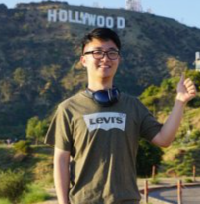 Zhuotao Tian (田倬韬)合作论文数School of Computer Science and Technology, Harbin Institute of Technology (Shenzhen)16
 Shu Liu (刘枢)合作论文数SmartMore11
 Chi-Wing Fu合作论文数Department of Computer Science and Engineering, Faculty of Engineering, Chinese University of Hong Kong9
 Bernt Schiele合作论文数Max Planck Institute for Informatics;Saarland University9
 Xin Lai (赖昕)合作论文数Department of Computer Science and Engineering, Chinese University of Hong Kong;Tencent Co.,Ltd.7
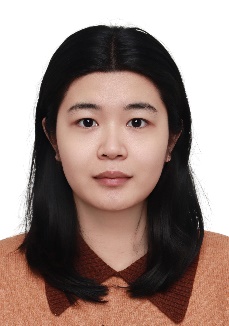 Xinting Hu (胡心亭)合作论文数School of Artificial Intelligence and Data Science, University of Science and Technology of China7
 Dengxin Dai (代登信)合作论文数Huawei Zurich Research Center5
 Xiaoyang Wu (吴虓杨)合作论文数Department of Computer Science, Faculty of Engineering, The University of Hong Kong;Apple4
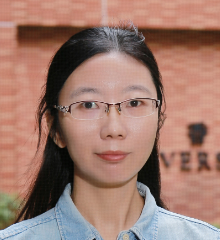 Xiaojuan Qi (齐晓娟)合作论文数Department of Electrical and Electronic Engineering, Faculty of Engineering, The University of Hong Kong4
 Wu Zheng (郑武)合作论文数Department of Computer Science and Engineering, The Chinese University of Hong Kong4
 Jinhao Liu (刘晋浩)合作论文数The School of Technology, Beijing Forestry University4
 Bo Zhang合作论文数3
 Philip H. S. Torr合作论文数Department of Engineering Science, University of Oxford;St Catherine's College, University of Oxford;Orphic3
 Tianyu He合作论文数Microsoft Research Asia3
 Hongsheng Li (李鴻升)合作论文数Department of Electronic Engineering, The Chinese University of Hong Kong;Multimedia Laboratory, The Chinese University of Hong Kong3
 Junchao Huang (黄俊超)合作论文数School of Data Science, The Chinese University of Hong Kong, Shenzhen;Tencent2
 Chen Shi (史辰)合作论文数School of Data Science, The Chinese University of Hong Kong, Shenzhen2
 Senqiao Yang (杨森乔)合作论文数The Chinese University of Hong Kong;TikTok;SmartMore Ltd2
 Jianping Shi (石建萍)合作论文数SenseTime Group Limited2
 Bohao Peng合作论文数The Chinese University of Hong Kong2Weiliang Tang合作论文数Chinese Univ Hong Kong, Hong Kong, Peoples R China2
 Xiaogang Wang (王曉剛)合作论文数Department of Electronic Engineering, The Chinese University of Hong Kong2
 Zhe Wang (王哲)合作论文数SenseTime2
 Michelle Shu合作论文数Cornell University2
 Jiajun Deng (邓家俊)合作论文数Australian Institute for Machine Learning, University of Adelaide2
 Yukang Chen (陈玉康)合作论文数NVIDIA Research2
 Qingqing Huang (黄青青)合作论文数The School of Technology, Beijing Forestry University2
 Chaoxu Guo (郭超旭)合作论文数TikTok2
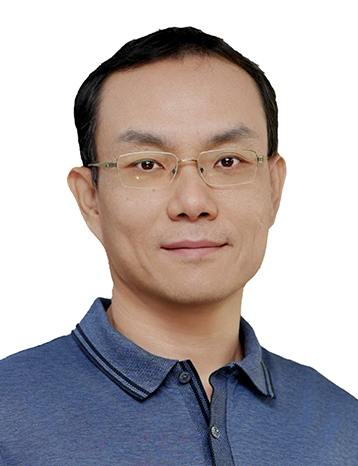 Liwei Wang (王立威)合作论文数Department of Machine Intelligence, School of Electronics Engineering and Computer Science, Peking University;School of Intelligence Science Technology, Peking University2
 Xihui Liu (刘希慧)合作论文数Department of Electrical and Electronic Engineering, Faculty of Engineering, The University of Hong Kong;Institute of Data Science, The University of Hong Kong;Department of AI and Data Science, The University of Hong Kong2Zetong Yang合作论文数Chinese University of Hong Kong2
 Xiaoyong Shen (沈小勇)合作论文数SmartMore Corporation2
 Jingjing Qian (钱晶晶)合作论文数School of Data Science, The Chinese University of Hong Kong, Shenzhen1Daojing He合作论文数1Kehua Sheng合作论文数1Tianyu Wang合作论文数1Zhikai Zhang合作论文数1
 Ziyang Fan合作论文数Tencent;School of Computer Science and Technology, Harbin Institute of Technology, Shenzhen1
 Shangpin Peng (彭尚品)合作论文数Harbin Institute of Technology, Shenzhen1Zhenhua Ning合作论文数Harbin Institute of Technology, Shenzhen1
 Xun Huang (黄勋)合作论文数Fujian Key Laboratory of Sensing and Computing for Smart Cities, School of Informatics, Xiamen University;School of Information Technology, Xiamen University;Zhongguancun Academy1
 Guiyu Zhang (张桂宇)合作论文数School of Data Science, The Chinese University of Hong Kong, Shenzhen;SILab, The Chinese University of Hong Kong, Shenzhen1Xin Wang合作论文数1Zijun Chen合作论文数1Guoliang Wang合作论文数1Weize Li合作论文数1




