Nonlinear entanglement witnesses constructed from multiple linear entanglement witnesses and multiple copies of quantum states have recently been proposed as a powerful tool for entanglement detection. In this work, we show, via an explicit counterexample, that the fineness of linear witnesses generally fails to transfer to their tensor-product nonlinear counterparts. For the canonical family of nonlinear witnesses in the form of (αI-L)⊗(βI-T), we rigorously prove that the optimal nonlinear witness is uniquely attained with weakly optimal parameters of α=λmax(L) and β=λmax(T). Meanwhile, we analytically demonstrate that the self-tensor products of two representative linear witnesses fail to detect any entangled state. The question of whether a nonlinear entanglement witness capable of detecting entanglement can be constructed by tensoring a linear witness with itself remains open.
Quantum resource theories (QRTs) provide a versatile framework for quantifying and manipulating quantum resources, with widespread applications in quantum communication, computation, and information processing. While the ϵ -D version of resource measures has been previously studied, its applicability has been largely restricted to addressing experimental imperfections. To tackle broader challenges such as adversarial interference and probabilistic noise, this paper introduces three novel approaches: the δ - 𝒯 version and two weighted integral versions. These measures extend the robustness framework of QRTs, enabling a more comprehensive evaluation of quantum resource resilience under realistic conditions. We rigorously analyze their theoretical properties, including non-negativity, monotonicity, convexity, asymptotic continuity, and monogamy, demonstrating their robustness and versatility. As applications to resource dilution protocols, we establish these measures as fundamental lower bounds for resource costs, showcasing their practical relevance in the design of resilient quantum protocols. This work provides fresh insights into resource quantification within QRTs and offers strong theoretical support for secure and reliable quantum communication and computation protocols.
Abstract We investigate the analogue of a rotating BTZ black hole using vortex beams in azo-dye-doped liquid crystals in this paper. Compared to previous thermo-optic solution approaches, azo-dye-doped liquid crystals exhibit higher third-order nonlinearity and better long-term stability, and in principle, allow continuous tuning of molecular orientation and nonlinear response via electric fields. In this paper, we first present a method for measuring the nonlinear coefficient of azo-dye-doped liquid crystals and experimentally determine the nonlinear coefficient required for simulating the black hole. In the simulation experiments, we mapped the phase gradient and intensity distribution of the vortex optical field to the local flow velocity and the speed of sound propagation, respectively, thereby determining the positions of the inner horizon, outer horizon, and ergosphere of the analog BTZ black hole. Our research expands the experimental platforms for realizing optical black holes and provides a new experimental pathway for further exploring scattering and energy extraction processes related to BTZ spacetime on compact, room-temperature platforms.
Quantum entanglement is a highly valuable resource for quantum information processing, among which genuine multipartite entanglement (GME) plays a pivotal role in quantum information science. In this paper, we propose a Siamese convolutional neural network–Transformer model, together with an enhanced version incorporating a squeeze-and-excitation mechanism, for detecting GME in three- and four-qubit systems. Experimental results show that the proposed Siamese network models achieve classification accuracies above 99
If G is a compact group, continuous normalized positive definite functions are in one-to-one correspondence with unital quantum channels acting as Fourier multipliers on the group von Neumann algebra VN(G). We study the convex geometry of the convex set P_1(G) of normalized positive definite functions, equipped with the topology induced by the norm topology of the Fourier algebra A(G), and its relation with the structure of VN(G). We show that the von Neumann algebras of two compact groups G and H are *-isomorphic if and only if the convex sets P_1(G) and P_1(H) are affinely homeomorphic. We also describe the group of affine homeomorphisms of P_1(G) in terms of Jordan *-automorphisms of VN(G).
Entanglement witnesses (EWs) based on a restricted set of local measurements are experimentally more accessible. For two-qubit systems, we provide a complete characterization of extremal decomposable EWs constructed from local measurements with an anti-diagonal correlation structure. These witnesses can be employed for the detection of gravitational entanglement. We then extend this characterization to higher-dimensional quantum systems and explicitly construct the corresponding extremal decomposable witnesses using generalized Gell-Mann matrices.
Hybrid classical-quantum computing requires frequent data exchange between classical processors and quantum control hardware. However, existing superconducting quantum control systems are commonly connected through loosely coupled interfaces such as Ethernet, resulting in high communication latency and limited task throughput. To address this issue, we present HI-HCQC, an RFSoC-based hardware interface for tightly coupled hybrid classical-quantum computing. HI-HCQC integrates high-speed RF-DACs, RF-ADCs, programmable logic, embedded processors, clock synchronization circuits, and a PCIe Gen3 x8 interface, enabling direct microwave pulse synthesis, qubit readout, and high-throughput data transfer between host servers and quantum measurement-control units. Experimental results show that HI-HCQC supports six control channels and one multiplexed readout channel, achieves stable microwave generation and acquisition, and successfully performs qubit spectroscopy, Rabi oscillation, T1 measurement, single-shot readout, randomized benchmarking, and CZ-gate characterization. Compared with a conventional control system, HI-HCQC reduces end-to-end execution latency for representative quantum gate and circuit tasks and significantly improves task throughput. These results demonstrate that PCIe-coupled RFSoC control hardware provides a practical foundation for scalable and efficient hybrid classical-quantum computing systems.
We investigate the control of the parity-time (PT-)symmetry-breaking threshold in a periodically driven onedimensional dimerized lattice with spatially symmetric gain and loss defects. We elucidate the contrasting roles played by Floquet topological edge states in determining the PT-symmetry-breaking threshold within the highand low-frequency driving regimes. In the high-frequency regime, the participation of topological edge states in PT-symmetry breaking is contingent upon the position of the PT-symmetric defect pairs, whereas in the lowfrequency regime, their participation is unconditional and independent of the defect pairs placement, resulting in a universal zero threshold. We establish a direct link between the symmetry-breaking threshold and how the spatial profile of the Floquet topological edge states evolves over one driving period. We further demonstrate that lattices with an odd number of sites exhibit unique threshold patterns, in contrast to even-sized systems. Moreover, applying cofrequency periodic driving to the defect pairs, which preserves time-reversal symmetry, can significantly enhance the PT-symmetry-breaking threshold.
An entanglement witness, used as a tool for detecting entanglement, is widely applied in periments. Compared with methods that rely on the quantum-state tomography, entanglement witnesses based on local measurements require only partial statistical information, avoiding need for complete state reconstruction. Extremal decomposable entanglement witnesses from ited fixed sets of local measurements were constructed in [Phys. Rev. A 101, 062,319 (2020)]. However, the characterization of extremal decomposable entanglement witnesses in general twoqudit systems is not thoroughly studied. In this paper, we present a complete characterization of extremal decomposable entanglement witnesses derived from this limited fixed set of local measurements in two-qudit systems.
Based on the violation of Bell inequalities, we can verify quantum random numbers by examining the correlation between device inputs and outputs. In this paper, we derive the maximum quantum value of the parity-CHSH inequality for a three-qubit system, establishing a tight upper bound applicable to any quantum state. Simultaneously, the necessary constraints for achieving saturation are analyzed. Utilizing this method, we present necessary and sufficient conditions for certain states to violate the parity-CHSH inequality. Building upon our proposal, the relationship between the noise parameter and the certifiable randomness in a bipartite entangled state is probed. Furthermore, we derive a monogamy relationship between the average values of the parity-CHSH inequality associated with the reduced three-qubit density matrices of GHZ-class states comprising four qubits.
This paper proposes a determination method for cascaded lumped parameter circuits (LPCs) to describe steady-state resonance characteristics of transmission lines, with a focus on the cascaded number. The physical simulation of long-distance transmission lines is achieved by cascaded LPCs. The existing methods for determining the cascaded number are applicable to transient-state operating conditions. The LPC with a cascaded number adequate for transient-state needs causes misjudgment in physical simulation. The number is determined by simulation and is limited by computational simulation software tools. This paper proposes a fitting participation factor (PF)-based method to determine the cascaded number. With the proposed method, the LPC and the transmission line have approximately proportional harmonic propagation distribution and harmonic voltage. Errors of resonance frequency and resonance center in the LPC are investigated based on numerical analysis and resonance mode analysis. The misjudgment in physical simulation is discussed through PF. Next, the general expression for the measuring impedance of the LPC is deducted. The applicable operating conditions and equivalent conditions for various LPCs are examined. In addition, the proposed method is independent of skin effect and suitable for lossy lines. The validity of the proposed method is verified by simulations.
This paper investigates the generation and stabilization of bound states in the continuum (BICs) in a one-dimensional dissipative Floquet lattice. We find a different mechanism for the generation of stable BICs in the open one-dimensional lattice system, which stems from a peculiar dark Floquet state, a state with zero quasi-energy and negligible population on the lossy sites. Our results reveal that the evolutionary stability of BICs resulting from the dark Floquet state can be significantly enhanced, as evidenced by their very low decay rate, by increasing the driving frequency or, counterintuitively, increasing the dissipation strength. We further demonstrate that stable dark Floquet BICs can robustly persist even in nonlinear regimes. The existence of these stable dark Floquet BICs can be attributed to the role of higher-order correction terms in the effective Floquet Hamiltonian derived via the high-frequency expansion (HFE) method. Furthermore, we demonstrate that incorporating non-Hermitian dissipation can extend the parameter regime for the existence of BICs, and the dissipation-induced BICs can lead to complete reflection of wave packets. Our findings provide theoretical support for the experimental realization of stable BICs in dissipative quantum systems.
We study how to include the inner horizon in the analog of rotating black holes using photon fluids. We find that a vortex beam carrying an improved phase can simulate the rotating BTZ black holes experimentally. In the experiment, we develop a new photon fluid model in a graphene/methanol thermal optical solution, and measure the variation of photon fluid velocity with the radial position using a Fourier plane light spot localization method, while also determining the variation of phonon velocity with the same radial position from the optical vortex intensity distribution. The result provides an extension for the application of optical vortex and a potential possibility for the future experimental exploration about the properties of BTZ black holes and even the anti-de Sitter space.
In this paper, we study the problem of sampling complexity for channel discrimination with respect to two different strategies: product strategy and adaptive strategy. We first formally introduce the definitions of the sampling complexity of the channels under the framework of hypothesis testing , wherein the goal is to determine the minimum number of samples needed to reach a desired error probability. We then establish the lower and upper bounds on the sampling complexity of the symmetric, asymmetric, and error exponent hypothesis testing settings. We show that, by imposing product strategy on testing, the bounds are always characterized by the generalized channel divergence, while with adaptive strategy, the bounds are characterized by the amortized channel divergence. Finally, we analyze two concrete examples, and obtain that the adaptive strategy can not lead to an advantage to the problem of determining the sampling complexity for classical-quantum channels, which can bring advantages for generalized amplitude damping channels.
Concurrence is a crucial entanglement measure in quantum theory used to describe the degree of entanglement between two or more qubits. Local unitary (LU) invariants can be employed to describe the relevant properties of quantum states. Compared to quantum state tomography, observing LU invariants can save substantial physical resources and reduce errors associated with tomography. In this paper, we use LU invariants as explanatory variables and employ methods such as multiple regression, tree models, and BP neural network models to fit the concurrence of 2-qubit quantum states. For pure states and Werner states, by analyzing the correlation between data, a functional formula for concurrence in terms of LU invariants is obtained. Additionally, for any two-qubit quantum states, the prediction accuracy for concurrence reaches 98.5%.
We study quantum synchronization under the nonequilibrium reservoirs. We consider a two-qubit XXZ chain coupled independently to their own reservoirs modeled by the collisional model. Two reservoir particles, initially prepared in a thermal state or a state with coherence, are correlated through a unitary transformation and afterward interact locally with the two quantum subsystems. We study the quantum effect of reservoir on synchronous dynamics of system. By preparing different reservoir initial states or manipulating the reservoir particles coupling and the temperature gradient, we find that quantum entanglement of reservoir is the key to control quantum synchronization of system qubits.
Quantum entanglement plays a pivotal role in quantum information processing. Quantifying quantum entanglement is a challenging and essential research area within the field. This manuscript explores the relationships between bipartite entanglement concurrence, multipartite entanglement concurrence, and genuine multipartite entanglement (GME) concurrence. We derive lower bounds on GME concurrence from these relationships, demonstrating their superiority over existing results through rigorous proofs and numerical examples. Additionally, we investigate the connections between GME concurrence and other entanglement measures, such as tangle and global negativity, in multipartite quantum systems.
The multiple signal classification method for direction-of-arrival estimation is widely applied in practical scenarios. However, the multiple signal classification method with planar array requires 2-dimensional on-grid spectrum searches, which would lead to the grid mismatch and high computational complexity. Therefore, a high-precision fast direction-of-arrival estimation method for planar array is proposed. In the proposed method, a 2-stage grid search approach over the 2-dimensional spectrum is firstly applied to obtain a quick coarse estimation of direction of arrival. Then, the estimation of higher precision is achieved via a quadratic surface fitting method. Simulation results verified the effectiveness of the proposed method.
Mutual information of quantum channel is a natural extension of a basic concept in quantum information theory that of measuring the correlation of a composite quantum state. We first propose the mutual information of quantum channel based on max-relative entropy in multiple ways. We find that these quantities obey the data processing inequality under the action of superchannel. The super-additivity of mutual max-information of quantum channel is studied. Then, we investigate the corresponding smooth versions of mutual max-information of quantum channel, which also obey the data processing inequality under superchannel. We derive consistent lower and upper bounds for different one-shot testing channel ^, s mutual max-information in terms of the mutual information of output state through such channel. Furthermore, these bounds allow us to provide an alternative approach to prove the asymptotic equipartition property (AEP) for quantum channel ^, s smooth mutual max-information. Finally, by using this AEP, we obtain a channel version of the quantum Stein’s lemma when discriminating between a large number of independent arbitrary channels and some special replacer channels.
 Ming Li (李明)合作论文数College of Science, China University of Petroleum24
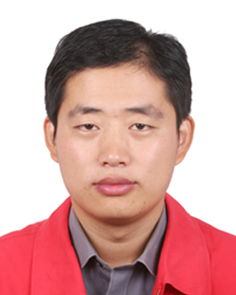 Shuqian Shen (申淑谦)合作论文数College of Science, China University of Petroleum24
 Qingwen Wang (王卿文)合作论文数Collaborative Innovation Center for the Marine Artificial Intelligence, Department of Mathematics, College of Sciences, Shanghai University10
 Baiyuan Yang合作论文数8
 Jian Zou (邹健)合作论文数School of Physics, Beijing Institute of Technology8Zhao-Yun Zeng合作论文数6Jinpeng Xiao合作论文数5
 Bin Shao (邵彬)合作论文数School of Physics, Beijing Institute of Technology5
 Jing Wang (王晶)合作论文数School of Information, Renmin University of China5Ke-Lin Wang合作论文数5Hai Li合作论文数4Chen Aixi合作论文数4
 Shaoming Fei (费少明)合作论文数School of Mathematical Sciences, Capital Normal University4
 Yajiang Chen合作论文数Departement Fysica;Universiteit;Departement Fysica, Universiteit Antwerpen4Baoming Xu合作论文数3
 Baocheng Zhang (张保成)合作论文数School of Mathematics and Physics, China University of Geosciences3
 Li Huagang合作论文数3
 Wuming Liu (刘伍明)合作论文数Key Lab of Condensed Matter Theory & Materials Computation, Institute of Physics, Chinese Academy of Sciences3Xiaoguang Yu (余晓光)合作论文数3Guohui Yang合作论文数3Xuezao Ren (任学藻)合作论文数3Jin Cui合作论文数2
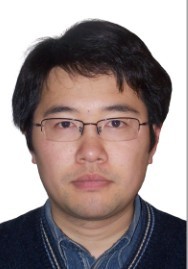 Wanli Yang (杨万里)合作论文数Innovation Academy for Precision Measurement Science and Technology, Chinese Academy of Sciences;University of Chinese Academy of Sciences2Ling-Yun Sun合作论文数2Zhou Hu合作论文数2Yuan-Mei Wang合作论文数2
 Li Xu合作论文数2
 Jin-Min Liang合作论文数Sch Math Sci, Capital Normal Univ2Xu Liao (廖旭)合作论文数2
 Yu Guo (郭钰)合作论文数Institute of Quantum Information Science, Shanxi Datong University;Shanxi Datong University2
 Mang Feng (冯芒)合作论文数Wuhan Institute of Physics and Mathematics, Chinese Academy of Sciences;University of Chinese Academy of Sciences2
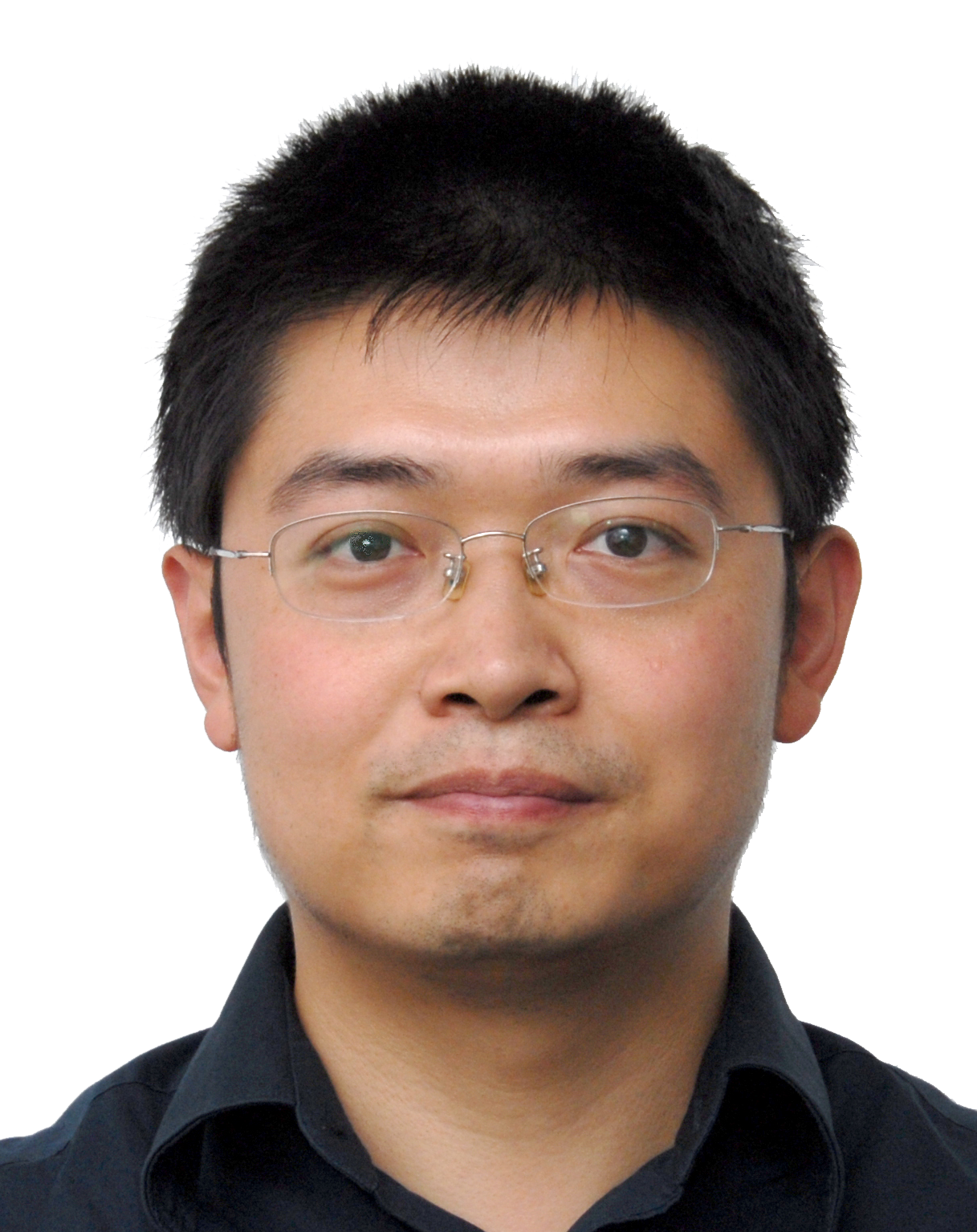 Tao Liu (刘涛)合作论文数National Time Service Center, Chinese Academy of Sciences2
 Xiaoyu Li (李晓宇)合作论文数School of Computer and Artificial Intelligence, Zhengzhou University2
 Xing Zhu (朱星)合作论文数Department of History of Science Technology and Medicine, Peking University2
 Yunrong Luo (罗云荣)合作论文数School of Physics and Electronics, Hunan Normal University2
 Tianshu Lai (赖天树)合作论文数State Key Laboratory of Optoelectronic Materials and Technologies, Sun Yat-sen University;School of Physics, Sun Yat-sen University2Qiang-Lin Hu (胡强林)合作论文数2
 Xiaobing Luo (罗小兵)合作论文数School of Energy and Power Engineering, Huazhong University of Science and Technology2
 Juan Yu (于娟)合作论文数College of Science, China University of Petroleum2Wenting Jiang合作论文数1Rui-Qi Zhang合作论文数1Fengchun Leng合作论文数1
 Yihao Song合作论文数1Xiaoqi Liu合作论文数1Youwang Xiao合作论文数1Jia Tang合作论文数1
 Jie Ren合作论文数1
 Xiaofei Zhang (张晓斐)合作论文数National Time Service Center, Chinese Academy of Sciences1Wen Ruan合作论文数1




