BACKGROUND AND AIMS:Desert plants possess excellent water-conservation capacities to survive in extreme environments. Cuticular wax plays a pivotal role in reducing water loss through plant aerial surfaces. However, the role of cuticular wax in water retention by desert plants is poorly understood.METHODS:We investigated leaf epidermal morphology and wax composition of five desert shrubs from north-west China and characterized the wax morphology and composition for the typical xerophyte Zygophyllum xanthoxylum under salt, drought and heat treatments. Moreover, we examined leaf water loss and chlorophyll leaching of Z. xanthoxylum and analysed their relationships with wax composition under the above treatments.KEY RESULTS:The leaf epidermis of Z. xanthoxylum was densely covered by cuticular wax, whereas the other four desert shrubs had trichomes or cuticular folds in addition to cuticular wax. The total amount of cuticular wax on leaves of Z. xanthoxylum and Ammopiptanthus mongolicus was significantly higher than that of the other three shrubs. Strikingly, C31 alkane, the most abundant component, composed >71 % of total alkanes in Z. xanthoxylum, which was higher than for the other four shrubs studied here. Salt, drought and heat treatments resulted in significant increases in the amount of cuticular wax. Of these treatments, the combined drought plus 45 °C treatment led to the largest increase (107 %) in the total amount of cuticular wax, attributable primarily to an increase of 122 % in C31 alkane. Moreover, the proportion of C31 alkane within total alkanes remained >75 % in all the above treatments. Notably, the water loss and chlorophyll leaching were reduced, which was negatively correlated with C31 alkane content.CONCLUSION:Zygophyllum xanthoxylum could serve as a model desert plant for study of the function of cuticular wax in water retention because of its relatively uncomplicated leaf surface and because it accumulates C31 alkane massively to reduce cuticular permeability and resist abiotic stressors.
A new variety of Fagopyrum caudatum—Fagopyrum caudatum var. grandiflorum—is described and illustrated from Longnan City, Gansu Province, China. The new variety could be easily distinguished from F. caudatum var. caudatum mainly by its larger flower size (5.3–5.6 mm vs. 3.2–3.5 mm). The detailed description and photographs of the new variety were provided.
Epidermis-specific promoters are necessary for ectopic expression of specific functional genes such as the cuticle-related genes. Previous studies indicated that both ECERIFERUM 6 (AtCER6) and MERISTEM L1 LAYER (ATML1) promoters from Arabidopsis thaliana can drive gene expression specifically in the epidermis of shoot apical meristems (SAMs) and leaves. However, the epidermis-specific promoters from legume plants have not been reported. Here, we cloned a 5' flanking sequence from the upstream -2150 bp to the translational start ATG codon of MtML1 gene of legume model plant Medicago truncatula. PlantCARE analysis indicated that this sequence matches the characteristics of a promoter, having TATA box and CAAT box, as well as contains some conserved elements of epidermis-specific promoters like AtCER6 and ATML1 promoters. The β-glucuronidase (GUS) histochemical analysis showed that MtML1 promoter can drive GUS gene expression in transiently transformed Nicotiana tabacum leaves under non-inducing condition. Furthermore, it can also control GUS expression in leaves and siliques rather than roots of the stably transformed Arabidopsis. More importantly, the leaf cross-section observations indicated that MtML1 exclusively expressed in the epidermis of leaves. These results suggested that MtML1 promoter performed the epidermis-specific in plant shoot. Our study establishes the foundation for driving the cuticle-related gene to express in epidermis, which may be very useful in genetic engineering of legume plants.
Proanthocyanidins (PA), also known as condensed tannins, contribute to important forage legumes traits including disease resistance and forage quality. PA in forage plants has both positive and negative effects on feed digestibility and animal performance. The analytical methods and their applicability in measuring the contents of PA in forage plants are essential to studies on their nutritional effects. In spite of important breakthroughs in our understanding of the PA biosynthesis, important questions still remain to be answered such as the PA polymerization and transport. Recent advances in the understanding of transcription factor-mediated gene regulation mechanisms in anthocyanin and PA biosynthetic pathway in model plants suggest new approaches for the metabolic engineering of PA in forage plants. The present review will attempt to present the state-of-the-art of research in these areas and provide an update on the production and metabolic engineering of PA in forage plants. We hope that this will contribute to a better understanding of the ways in which PA production to manipulate the content of PA for beneficial effects in forage plants.
The Shaker AKT1-like channels are considered to be involved in both high- and low-affinity K+ uptake and correlated with salt tolerance in glycophytes. Suaeda salsa (Suaeda maritima subsp. salsa), as a typical salt-accumulating halophyte, is able to absorb K+ efficiently while growing under saline conditions and taking in a large amount of Na+, thus maintaining the K+ concentration in its cells. In this study, the possible functions of the inward-rectifying K+ channel SsAKT1 in K+ uptake and salt tolerance in the halophyte S. salsa were investigated.
Two major adaptive strategies used by Zygophyllum xanthoxylum, a C3 succulent xerophyte, against arid environments are absorbing a great quantity of Na+ from low-salinity soil which is efficiently transported to the leaves, and maintaining the stability of K+ concentration in those leaves. The plasma membrane Na+/H+ antiporter SOS1 has been suggested to be involved in Na+ transport and correlated with K+ nutrition in glycophytes. In this study, we investigated the function of the plasma membrane Na+/H+ antiporter ZxSOS1 in long-distance transport and spatial distribution of Na+ and K+ in the xerophyte Z. xanthoxylum.
 Suomin Wang (王锁民)合作论文数College of Pastoral Agriculture Science and Technology, Lanzhou University5
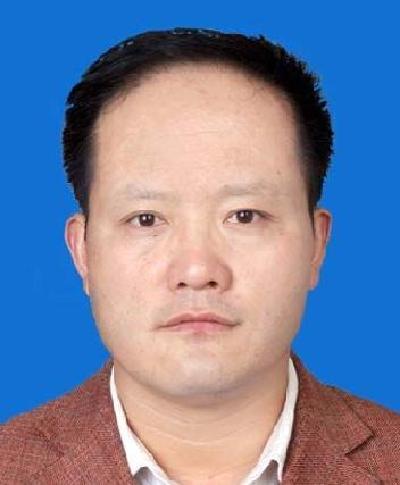 Jinlin Zhang (张金林)合作论文数College of Pastoral Agriculture Science and Technology, Lanzhou University4
 Lin-Bo Liu合作论文数3
 Aike Bao (包爱科)合作论文数College of Pastoral Agriculture Science and Technology, Lanzhou University3
 Tanweer Kumar合作论文数2Tian-Ge Gao合作论文数2Mengci Chen合作论文数2Jing Hu合作论文数2
 Meiliang Zhou (周美亮)合作论文数Institute of Crop Science, Chinese Academy of Agricultural Sciences2
 Hongju Yin (尹红菊)合作论文数College of Pastoral Agriculture Science and Technology, Lanzhou University2Hu-Jun Li合作论文数1Timothy M Garant合作论文数1Rebecca S Kalinger合作论文数1Wan-Peng Bai合作论文数1Hai-Shuang Liu合作论文数1Gaini Wang合作论文数1Yi-Xiao Li合作论文数1
 Sun Zhanmin (孙战民)合作论文数1Qian Wang (王倩)合作论文数State Key Lab Grasslan, Lanzhou Univ1Li Gao合作论文数1
 Mengqi Ding (丁梦琦)合作论文数College of Agronomy and Biotechnology, Southwest University1HuiRong Duan (段慧荣)合作论文数1
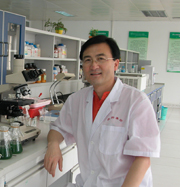 Yanmin Wu (吴燕民)合作论文数Biotechnology Research Institute, Chinese Academy of Agriculture Sciences1Meng Yu合作论文数1Gao Lihua合作论文数1
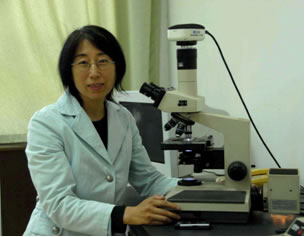 Qing Ma (马青)合作论文数College of Plant Protection, Northwest A&F University1Kaixuan Zhang合作论文数1
 Huijun Yuan (袁惠君)合作论文数兰州理工大学生命科学与工程学院1
 Tang yu (唐宇)合作论文数1Yi-Xiong Tang合作论文数1
 Sheng Luan (栾升)合作论文数Department of Plant and Microbial Biology, Rausser College of Natural Resources, University of California, Berkeley1
 Owen Rowland合作论文数Department of Biology and Institute of Biochemistry, Carleton University1




