We address the class of Time Petri Nets (TPNs) where time intervals are associated with transitions and constrain when those transitions can be fired. For TPN with strong semantics, i.e. where time elapsing cannot disable transitions, reachability, coverability and boundedness problems are undecidable. They are however decidable with the weak semantics in which time elapsing can disable transitions. We first propose an intermediate semantics allowing us to study the decidability border between weak and strong semantics. We prove that with only one transition in strong semantics, reachability, coverability and boundedness are undecidable. We then consider the so-called read, reset and transfer arcs for which the coverability problem is decidable in the untimed context and we study their impact on TPN with a weak semantics (weak TPN). We prove that coverability becomes undecidable for weak TPN when we add either 2 read arcs, or 2 reset arcs, or 2 transfer arcs. Lastly, considering bounded nets, we propose a state space computation algorithm for weak TPN with read, reset and transfer arcs that proves the decidability of the reachability problem.
Verification of real-time systems with multiple components controlled by multiple parties is a challenging task due to its computational complexity. We present an on-the-fly algorithm for verifying timed alternating-time temporal logic (TATL), a branching-time logic with quantifiers over outcomes that results from coalitions of players in such systems. We combine existing work on games and timed CTL verification in the abstract dependency graph (ADG) framework, which allows for easy creation of on-the-fly algorithms that only explore the state space as needed. In addition, we generalize the conventional inclusion check to the ADG framework which enables dynamic reductions of the dependency graph. Using the insights from the generalization, we present a novel abstraction that eliminates the need for inclusion checking altogether in our domain. We implement our algorithms in Uppaal and our experiments show that while inclusion checking considerably enhances performance, our abstraction provides even more significant improvements, almost two orders of magnitude faster than the naive method. In addition, we outperform Uppaal Tiga, which can verify only a strict subset of TATL. After implementing our new abstraction in Uppaal Tiga, we also improve its performance by almost an order of magnitude.
The analysis of timed properties of programs is a complex task, as it is highly dependent on both the software and the hardware. In this work, we propose a framework for modeling with timed formal models the execution of programs, taking into account the micro-architecture of the machine on which it executes. We model both the program, at the instruction set architecture level, and the hardware, including the processor micro-architecture, using time Petri nets. Our implementation uses the ARM Cortex-M instruction set architecture and a hardware architecture representative of micro-controllers used in IoT nodes. The whole translation is fully automated and allows, starting from binary code, to automatically produce the models usable by the state-of-the-art time Petri net model checker Romeo. In addition, and as a proof of concept, we show how we can check, and enforce to some extent, opacity properties on programs, leveraging the ability of Romeo to verify a parametric timed extension of the classical computation tree logic.
In the early stages of development, parameters are useful to verify timed systems that are not fully specified and symbolic algorithms or semi-algorithms are known to compute (integer) values of the parameters ensuring some properties. They rely on the representation of the reachable state-space as convex polyhedra. In the case of Parametric Timed Automata or Parametric Time Petri Nets (PTPN), those convex polyhedra have a special form that can be represented with a dedicated data structure called Parametric Difference Bound Matrices (PDBM). Surprisingly few results are available for PDBMs, so we take a fresh look at them and show how they can be computed efficiently in PTPNs. In the process, we define tropical PDBMs (tPDBMs) that generalize the original definition and allows, in contrast to that former definition, to avoid splitting the represented polyhedra. We argue in particular that while tPDBMs are more costly to handle than their split counterpart, they allow for better convergence. We have implemented both versions in Roméo, our tool for model-checking time Petri nets, and we compare the performance of the different polyhedron and (t)PDBM-based representations of symbolic states on several classical examples from the literature.
We propose a new algorithm for reachability controller synthesis with time Petri nets (TPN). We consider an unusual semantics of time Petri nets in which the firing date of a transition is chosen in its static firing interval when it becomes enabled. This semantics is motivated i) by a practical concern: it aims at approaching the implementation of the controller on a real-time target; ii) by a theoretical concern: it ensures that in the classical state class graph [6], every state in each state class is an actual reachable state from the TPN, which is not the case with the usual interval-based semantics. We define a new kind of two-player timed game over the state class graph and we show how to efficiently and symbolically compute the winning states using state classes. The approach is implemented in the tool Roméo [23]. We illustrate it on various examples including a case-study from [2].
Timing information leakage occurs whenever an attacker successfully deduces confidential internal information by observing some timed information such as events with timestamps. Timed automata are an extension of finite-state automata with a set of clocks evolving linearly and that can be tested or reset, making this formalism able to reason on systems involving concurrency and timing constraints. In this paper, we summarize a recent line of works using timed automata as the input formalism, in which we assume that the attacker has access (only) to the system execution time. First, we address the following execution-time opacity problem: given a timed system modeled by a timed automaton, given a secret location and a final location, synthesize the execution times from the initial location to the final location for which one cannot deduce whether the secret location was visited. This means that for any such execution time, the system is opaque: either the final location is not reachable, or it is reachable with that execution time for both a run visiting and a run not visiting the secret location. We also address the full execution-time opacity problem, asking whether the system is opaque for all execution times; we also study a weak counterpart. Second, we add timing parameters, which are a way to configure a system: we identify a subclass of parametric timed automata with some decidability results. In addition, we devise a semi-algorithm for synthesizing timing parameter valuations guaranteeing that the resulting system is opaque. Third, we report on problems when the secret has itself an expiration date, thus defining expiring execution-time opacity problems. We finally show that our method can also apply to program analysis with configurable internal timings.
We investigate a timed non-interference property for security systems modeled as timed automata, in which a low-security level user should not be able to deduce the occurrence of some high-security level actions. We assume an attack model in which the malicious (low-level) user has the ability to partially observe and memorize the set of runs of the timed automaton modeling the system. We first formalize a non-interference property that ensures the system security under such an attack model and we then prove the undecidability of that property when the attacker can have an arbitrarily big memory, i.e., when they are able to memorize sequences of previous observations, with time-stamps, of any length. We next assume bounded memory for the attacker and show that the property can then be decided in PSPACE for a subclass of timed automata ensuring finite duration between distinct observations.
Information leakage can have dramatic consequences on systems security. Among harmful information leaks, the timing information leakage occurs whenever an attacker successfully deduces confidential internal information. In this work, we consider that the attacker has access (only) to the system execution time. We address the following timed opacity problem: given a timed system, a private location and a final location, synthesize the execution times from the initial location to the final location for which one cannot deduce whether the system went through the private location. We also consider the full timed opacity problem, asking whether the system is opaque for all execution times. We show that these problems are decidable for timed automata (TAs) but become undecidable when one adds parameters, yielding parametric timed automata (PTAs). We identify a subclass with some decidability results. We then devise an algorithm for synthesizing PTAs parameter valuations guaranteeing that the resulting TA is opaque. We finally show that our method can also apply to program analysis.
In recent works we proposed a lazy algorithm for reachability analysis in networks of automata. This algorithm is optimistic and tries to take into account as few automata as possible to perform its task. In this paper we extend the approach to the more general settings of reachability analysis in unbounded Petri nets and reachability analysis in bounded Petri nets with inhibitor arcs. We consider we are given a reachability algorithm and we organize queries to it on bigger and bigger nets in a lazy manner, trying thus to consider as few places and transitions as possible to make a decision. Our approach has been implemented in the Romeo model checker and tested on benchmarks from the model checking contest.
We address concurrent games with a qualitative notion of time with parity objectives. This setting allows to express how potential controllers interact with their environment and more specifically includes relevant features: transient states where the environment will eventually act, controller avoiding of an environment action either by an immediate controller action or by masking it, etc. In order to solve the controller synthesis in this framework, we design a linear-time building of a timeless turn-based game and show a close connection between strategies of the controller in the two games. Thus we reduce the synthesis problem to a standard problem of turn-based game with parity objectives establishing as a side effect that pure memoryless strategies are enough for winning. Moreover we introduce permissiveness for safety and reachability games as a criterion to choose between winning strategies and prove that one can compute a most permissive strategy (when it exists) in linear time.
We investigate the problem of parameter synthesis for time Petri nets with a cost variable that evolves both continuously with time, and discretely when firing transitions. More precisely, parameters are rational symbolic constants used for time constraints on the firing of transitions and we want to synthesise all their values such that some marking is reachable, with a cost that is either minimal or simply less than a given bound. We first prove that the mere existence of values for the parameters such that the latter property holds is undecidable. We nonetheless provide symbolic semi-algorithms for the two synthesis problems and we prove them both sound and complete when they terminate. We also show how to modify them for the case when parameter values are integers. Finally, we prove that these modified versions terminate if parameters are bounded. While this is to be expected since there are now only a finite number of possible parameter values, our algorithms are symbolic and thus avoid an explicit enumeration of all those values. Furthermore, the results are symbolic constraints representing finite unions of convex polyhedra that are easily amenable to further analysis through linear programming. We finally report on the implementation of the approach in Romeo, a software tool for the analysis of time Petri nets.
The synthesis of controllers for reactive systems can be done by computing winning strategies in two-player games. Timed (game) Automata are an appropriate formalism to model real-time embedded systems but are not easy to use for controller synthesis for two reasons: i) timed models require the knowledge of the precise timings of the system; for example, if an action must occur in the future, the deadline of this occurrence must be known, ii) in practice, the dense state space makes the computation of the controller often impossible for complex systems. This paper introduces an extension of untimed game automata with logical time. The new semantics introduces two new types of uncontrollable actions: delayed actions which are possibly avoidable, and ineluctable actions which will eventually happen if nothing is done to abort it. The controller synthesis problem is adapted to this new semantics. This paper focuses specifically on the reachability and safety objectives and gives algorithms to generate a controller. The paper then extends these results to Game Petri Nets which can express concurrent timed behaviors and where an avoidable transition can lose its avoidability by the elapsing of time. The usefulness of this new model is illustrated by a real device driver synthesis example.
We consider weighted graphs with parameterized weights and we propose an algorithm that, given such a graph and a source node, builds a collection of trees, each one describing the shortest paths from the source to all the other nodes of the graph for a particular zone of the parameter space. Moreover, the union of these zones covers the full parameter space: given any valuation of the parameters, one of the trees gives the shortest paths from the source to all the other nodes of the graph when the weights are computed using this valuation.
We consider the problem of synthesizing controllers for real-time systems where some timing features are not known with precision. We model the plant as a parametric timed automaton (PTA), i.e., a finite automaton equipped with real-valued clocks constraining its behavior, in which the timing constraints on these clocks can make use of parameters. The most general problem we study then consists in synthesizing both a controller and values for the parameters such that some control location of the automaton is reachable. It is, however, well-known that most nontrivial problems on parametric timed automata are undecidable and the classical techniques for the verification (and a fortiori for the control) of timed systems do not terminate in that setting. We, therefore, provide a restriction on the use of parameters to ensure the decidability of the control problems. Since in classical timed automata, real-valued clocks are always compared to integers for all practical purposes, we search for parameter values as bounded integers. Hence, we solve undecidability and termination issues, we provide terminating symbolic synthesis procedures, and our method retains most of the practical usefulness of PTA for the modeling of real-time systems.
We study timed systems in which some timing features are unknown parameters. Parametric timed automata (PTAs) are a classical formalism for such systems but for which most interesting problems are undecidable. Notably, the parametric reachability emptiness problem, i.e., the emptiness of the parameter valuations set allowing to reach some given discrete state, is undecidable. Lower-bound/upper-bound parametric timed automata (L/U-PTAs) achieve decidability for reachability properties by enforcing a separation of parameters used as upper bounds in the automaton constraints, and those used as lower bounds. In this paper, we first study reachability. We exhibit a subclass of PTAs (namely integer-points PTAs) with bounded rational-valued parameters for which the parametric reachability emptiness problem is decidable. Using this class, we present further results improving the boundary between decidability and undecidability for PTAs and their subclasses such as L/U-PTAs. We then study liveness. We prove that: (1) deciding the existence of at least one parameter valuation for which there exists an infinite run in an L/U-PTA is PSpace-complete; (2) the existence of a parameter valuation such that the system has a deadlock is however undecidable; (3) the problem of the existence of a valuation for which a run remains in a given set of locations exhibits a very thin border between decidability and undecidability.
Transactional memory (TM) draws the attention of both academic and development groups; indeed this concept offers an alternative to lock-based approaches, easing programmers' work. Despite the large amount of investigations around this topic, the question of the correctness of most TM implementations remains open. More specifically, the lack of upper bounds on the execution time of transactions prevents the use of TM in real-time systems. To address this issue, we introduce new realistic assumptions relative to real-time systems, which allow to ensure wait-freedom guarantees progress (i.e. all transactions progress) when Polka contention manager is considered. In that context, through a thorough formalization of the system, we prove upper bounds both on the number of abortions and on the execution time of transactions.
We address the problem of computing the infimum accumulated weight for the reachability of some goal location in weighted timed automata. While there already exist efficient techniques to solve this problem, we propose here a backwards symbolic algorithm computing the accumulated weight to the goal, instead of the accumulated weight from the initial state. Going backwards has in itself a few advantages: most notably it does not require any extrapolation operation to ensure termination. Also it may be more efficient than going forward if the set of co-reachable states is smaller than the set of reachable states. Backwards algorithms are also instrumental in several problems beyond reachability, like control problems for instance. We obtain our backward algorithm by proposing extensions of the classical action and time predecessor operations on zones to account for weights. We have implemented the approach and report on its performance.
We present MADA, a deployment approach to facilitate the design of efficient and safe distributed software commissioning. MADA is built on top of the Madeus formal model that focuses on the efficient execution of installation procedures. Madeus puts forward more parallelism than other commissioning models, which implies a greater complexity and a greater propensity for errors. MADA provides a new specific language on top of Madeus that allows the developer to easily define the properties that should be ensured during the commissioning process. Then, MADA automatically translates the description to a time Petri net and a set of TCTL formulae. MADA is evaluated on the OpenStack commissioning.
The synthesis of controllers for reactive systems can be done by computing winning strategies in two-player games. Timed (game) Automata are an appropriate formalism to model real-time embedded systems but are not easy to use for controller synthesis for two reasons: i) timed models require the knowledge of the precise timings of the system (for example, if an action must occur in the future, the deadline of this occurrence must be known) ii) in practice, the dense state space makes the computation of the controller often impossible for complex systems. This paper introduces an extension of untimed game automata with logical time. The new semantics introduces two new types of uncontrollable actions: delayed actions which are possibly avoidable, and ineluctable actions which will eventually happen if nothing is done to abort it. The controller synthesis problem is adapted to this new semantics. This paper focuses specifically on the reachability and safety objectives and gives algorithms to generate a controller. The usefulness of this new model is illustrated by a device driver synthesis example.
 Olivier H. Roux合作论文数Doctoral School MaSTIC 641, École Centrale de Nantes66
 Etienne Andre合作论文数LIPN, Université Paris 13,16
 Béatrice Bérard合作论文数University Pierre et Marie Curie13
 Claude Jard合作论文数Distribcom research group;Bretagne;ENS-Cachan11
 F. Cassez合作论文数CNRS10
 Aleksandra Jovanovic合作论文数9
 Serge Haddad合作论文数Inria, Université Paris-Saclay9
 Kim Guldstrand Larsen合作论文数Department of Computer Science, The Technical Faculty of IT and Design, Aalborg University;Northeastern University6
 Louis-Marie Traonouez合作论文数INRIA6Gilles Benattar合作论文数6Morgan Magnin合作论文数National Institute of Informatics5Gerd Behrmann合作论文数5
 Loïg Jezequel合作论文数5
 Charlotte Seidner合作论文数CNRS UMR 6597, IRCCyN5
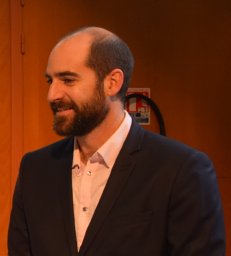 Benoît Delahaye合作论文数Université de Rennes 1/IRISA5
 Jamil Ahmad合作论文数4Mathias Ramparison合作论文数Université Paris 13, LIPN, CNRS, UMR 70304
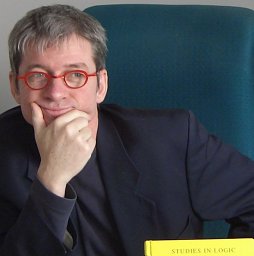 John Mullins合作论文数4Alexandre David合作论文数Department of Computer Science4Mathieu Sassolas合作论文数4Emmanuel Fleury合作论文数LaBRI, Domaine Universitaire,4
 Gilles Bernot合作论文数École Polytechnique Universitaire of the Université Côte d'Azur4
 Jeanpaul Comet合作论文数Universite d\'Evry Val d\'Essonne4Kay Saalfeld合作论文数3Marie-Laure Moulinard合作论文数3Gustavo Ramos合作论文数3
 Sabbir Hasan合作论文数ASCOLA Res. Group, Ecole des Mines de Nantes, Nantes, France|c|3Gordon Broderick合作论文数3Nicolas David合作论文数3
 Yunbo Li合作论文数Mines Nantes, LINA, Nantes, France3Gilles Madi-Wamba合作论文数3
 Thomas Ledoux合作论文数STACK Team - IMT Atlantique, Inria3
 Jean-Marc Menaud合作论文数3Nicolas Beldiceanu合作论文数École des Mines de Nantes3
 Michel Yves Morvan合作论文数Institute TELECOM - TELECOM Bretagne3
 Jun Sun合作论文数School of Information Systems, Singapore Management University;Centre for Research for Intelligent Software Engineering, Singapore Management University3K. Sriram合作论文数3
 Jean-Louis Pazat合作论文数IRISA3
 Anne-Cécile Orgerie合作论文数IRISA, CNRS3Agnes Cougnard合作论文数3Sébastien Faucou合作论文数IRCCyN, Université de Nantes3
 Barbara Dumas Feris合作论文数3
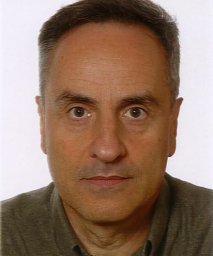 François Képès合作论文数Institut des Sciences du Végétal, CNRS UPR 23553
 H. Boucheneb合作论文数Ecole Polytechnique de Montreal3Nelson M. Vaz合作论文数3Eitan Rubin合作论文数Department of Plant Genetics;Weizmann Institute of Science;Department of Plant Genetics, Weizmann Institute of Science3
 Laure Petrucci合作论文数Institut Galilée, Université Paris 13;LIPN, CNRS UMR 70303




